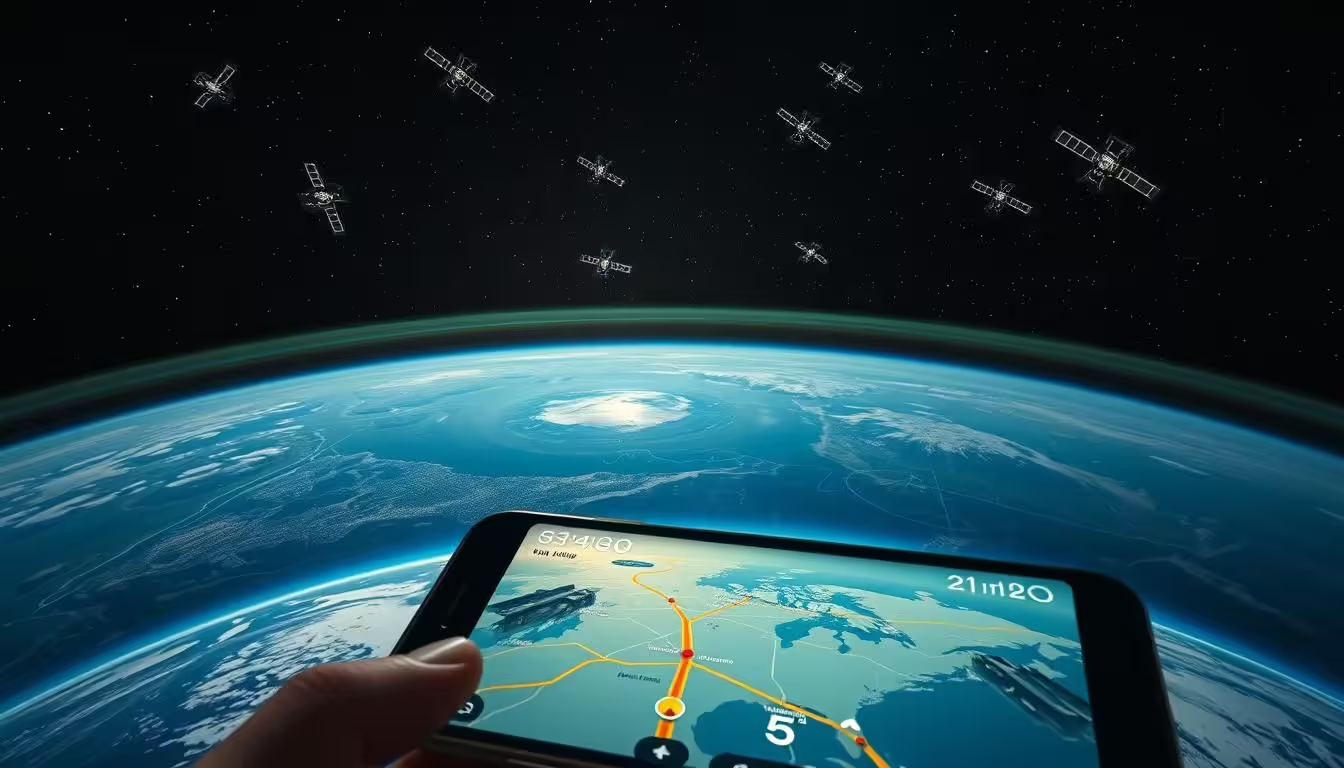
6. πŸ—ΊοΈπŸ“‘ GPS is powered by 30+ satellites orbiting Earth, allowing you to navigate cities, mountains, or oceans with just your phone.

The Global Positioning System (GPS) has revolutionized the way we navigate our world. With over 30 satellites orbiting our planet, GPS technology enables us to find our way through cities, mountains, and oceans using just our smartphones.

Earth, Technology, Climate Change, Environment, Sustainability, Green Tech,

This technology is not just about navigation; it’s also closely linked to green technology and efforts to promote sustainable practices. By providing accurate location data, GPS contributes to environmental monitoring and supports various eco-friendly initiatives.

Key Takeaways

  • GPS technology relies on a network of satellites orbiting the Earth.
  • It enables accurate navigation across various terrains.
  • GPS is closely linked to green technology and sustainability efforts.
  • The technology supports environmental monitoring and eco-friendly initiatives.
  • GPS has revolutionized the way we navigate our world.

The Evolution of Navigation: From Stars to Satellites

The journey of navigation has been a long and winding road, from ancient stargazing to modern satellite technology. For centuries, humans have relied on various methods to navigate the world.

Ancient Navigation Methods

Early navigators used the stars, sun, and landmarks to chart their courses. Techniques such as celestial navigation and dead reckoning were employed by sailors and travelers to traverse vast distances. These methods, though rudimentary, laid the foundation for more sophisticated navigation systems.

The Birth of Modern Navigation Systems

The development of modern navigation began with the invention of the compass, chronometer, and sextant. These tools significantly improved navigation accuracy, enabling explorers to map the world with greater precision. The advent of radio navigation further enhanced the ability to determine positions.

The Emergence of GPS Technology

The launch of the first GPS satellite in 1978 marked the beginning of a new era in navigation. GPS technology has revolutionized the way we travel, providing precise location information and transforming industries such as aviation, maritime, and logistics. Today, GPS is an indispensable tool for navigation.

GPS navigation

Understanding the Global Positioning System (GPS)

At the heart of modern navigation lies the Global Positioning System, a network of satellites that provide location information to users worldwide. GPS has become an essential tool in various aspects of life, from personal navigation to environmental monitoring, showcasing its versatility and importance in today’s technology-driven world.

What is GPS and How Does It Work?

The Global Positioning System is a satellite-based navigation system that allows users to determine their exact location, velocity, and time. It works by having a constellation of satellites orbiting the Earth, which transmit radio signals containing their location and the current time. These signals are received by GPS receivers on the ground, which use the information from multiple satellites to calculate the user’s precise location through a process known as trilateration.

GPS technology has numerous applications, including personal navigation, maritime navigation, and environmental monitoring. Its ability to provide accurate location information in real-time makes it an indispensable tool in various industries.

The Constellation of GPS Satellites

The GPS constellation consists of a network of satellites orbiting the Earth at an altitude of approximately 20,000 km. The system is designed to have at least 24 operational satellites at any given time, ensuring that a user on the ground can receive signals from at least four satellites, which is necessary for calculating a precise 3D location.

GPS Satellite Constellation

The satellites are equipped with atomic clocks that provide the precise time, which is crucial for the accuracy of the GPS system. The sustainability of GPS lies in its ability to support a wide range of eco-friendly initiatives, from monitoring climate change to managing natural resources more effectively.

  • GPS supports environmental monitoring by tracking changes in the environment.
  • It aids in precision agriculture, reducing the environmental impact of farming.
  • GPS technology is used in wildlife conservation efforts, helping to protect endangered species.

Inside the GPS Satellite Network: Earth’s Technological Marvel

Earth’s technological marvel, the GPS satellite network, comprises multiple satellites that facilitate navigation. This complex system is designed to provide accurate location information to users worldwide.

GPS satellite technology

The Architecture of GPS Satellites

GPS satellites are designed with a specific architecture to ensure optimal performance. They are equipped with atomic clocks that provide precise timekeeping, which is crucial for navigation.

The satellites also have transponders that transmit signals to Earth, which are then received by GPS receivers. This signal transmission is critical for determining precise locations.

Orbital Patterns and Coverage

The GPS constellation consists of satellites in medium Earth orbit, approximately 20,000 km above the planet. The satellites follow a specific orbital pattern, ensuring that at least four satellites are visible from any point on Earth at any given time.

Orbital Parameter Value
Altitude Approximately 20,000 km
Orbital Period 11 hours 58 minutes
Number of Satellites At least 24 operational satellites

Maintaining the GPS Constellation

Maintaining the GPS constellation is crucial for ensuring the continued accuracy and reliability of the system. This involves monitoring the health of the satellites, performing necessary updates, and replacing satellites as needed.

The United States Air Force is responsible for maintaining the GPS constellation, working in conjunction with various other agencies and contractors to ensure the system’s integrity.

The Science Behind GPS Precision

Understanding the science behind GPS precision reveals the intricate mechanisms that make modern navigation possible. GPS technology relies on a combination of advanced scientific principles to provide accurate location and time information.

Trilateration: Calculating Your Position

At the heart of GPS precision is the principle of trilateration. This method involves calculating a user’s position by measuring the distance from multiple GPS satellites. By intersecting multiple spheres (one around each satellite), the GPS receiver can determine its exact location.

Atomic Clocks and Time Synchronization

Atomic clocks on GPS satellites ensure precise time synchronization, which is critical for accurate positioning. These clocks are so precise that they lose only a second every million years. This level of accuracy enables GPS receivers to calculate their position with remarkable precision.

Overcoming Atmospheric Interference

Atmospheric conditions can interfere with GPS signals, affecting precision. To mitigate this, GPS systems use models to predict and correct for atmospheric delays. Additionally, techniques like Wide Area Augmentation System (WAAS) improve signal accuracy by correcting for errors caused by the atmosphere.

Technique Description Benefit
Trilateration Calculating user position using multiple satellite distances Accurate location determination
Atomic Clocks Precise time synchronization High precision positioning
Atmospheric Correction Models and techniques to correct atmospheric interference Improved signal accuracy

GPS precision technology

The science behind GPS precision is not only crucial for navigation but also supports environmental monitoring by providing accurate data for tracking changes in the environment. As green tech continues to evolve, the integration of GPS with other technologies will further enhance its applications in sustainability and conservation efforts.

From Space to Your Smartphone: How GPS Signals Reach You

The journey of GPS signals from space to our smartphones is a remarkable feat of modern technology. GPS relies on a network of satellites orbiting the Earth to provide location information to GPS receivers on the ground.

Signal Transmission and Reception

GPS satellites continuously transmit radio signals towards the Earth. These signals contain the satellite’s location and the current time. GPS receivers in smartphones detect these signals and use them to calculate their own location. The process involves trilateration, where the receiver uses signals from multiple satellites to determine its precise location.

satellite technology

GPS Receivers in Modern Devices

Modern smartphones are equipped with GPS receivers that can detect the weak signals transmitted by GPS satellites. These receivers are designed to be highly sensitive to ensure accurate location calculation even in challenging environments. The integration of GPS technology into smartphones has revolutionized navigation, making it easier for people to find their way around the world. Additionally, GPS technology plays a vital role in monitoring environmental changes related to climate change.

Everyday Applications of GPS Technology

GPS technology has become an integral part of our daily lives, transforming how we navigate and interact with the world around us. Its impact is felt across various aspects of society, from personal navigation to complex logistical operations.

Personal Navigation and Mapping

One of the most common uses of GPS is personal navigation. With GPS-enabled smartphones and devices, individuals can get real-time directions, avoiding traffic congestion and reducing travel time. Mapping applications like Google Maps utilize GPS data to provide accurate and up-to-date information, making it easier for people to explore new areas.

GPS navigation

Transportation and Logistics

GPS technology plays a crucial role in the transportation and logistics sector. It enables companies to track their vehicles in real-time, optimize routes, and improve delivery times. This not only enhances operational efficiency but also contributes to sustainable practices by reducing fuel consumption and lowering emissions.

  • Real-time vehicle tracking
  • Route optimization
  • Improved delivery times

Emergency Services and Safety

GPS is also vital for emergency services. It helps in locating individuals in distress, dispatching emergency responders to the correct location, and navigating through challenging environments. This application of GPS technology is critical for public safety and emergency response.

In conclusion, GPS technology has a wide range of everyday applications that impact various facets of our lives. By enhancing navigation, improving logistical operations, and supporting emergency services, GPS continues to be a vital component of modern society.

GPS in Extreme Environments: Beyond Urban Navigation

GPS has become an indispensable tool for navigation in extreme environments, including wilderness exploration and maritime navigation. Its ability to provide accurate location information in diverse settings has made it a critical component of various activities.

Wilderness Exploration

In wilderness exploration, GPS technology is used for tracking routes, locating landmarks, and ensuring safety. It helps adventurers navigate through dense forests, mountains, and other challenging terrains.

Maritime Navigation

For maritime navigation, GPS is essential for charting courses, avoiding obstacles, and ensuring safe passage. It is used in commercial shipping, fishing, and recreational boating.

Aviation and Aerospace Applications

In aviation and aerospace, GPS is used for navigation, tracking, and communication. It plays a vital role in both commercial and military aviation, enhancing safety and efficiency.

As we continue to explore and understand our planet, GPS technology will remain crucial in extreme environments. Its applications in climate change research and sustainable practices are particularly noteworthy, as it helps in monitoring environmental changes and promoting eco-friendly practices.

Environment GPS Applications Benefits
Wilderness Route tracking, landmark location Enhanced safety, navigation
Maritime Course charting, obstacle avoidance Safe passage, efficient travel
Aviation Navigation, tracking, communication Improved safety, efficiency

“The use of GPS in extreme environments has revolutionized the way we navigate and understand our planet.”

β€” Expert in Navigation Technology

GPS and Sustainable Earth Technology: Environmental Applications

With its ability to provide accurate location data, GPS is being utilized in various environmental applications to promote sustainability. This technology is increasingly being used to support climate change research, conservation efforts, and precision agriculture, among other initiatives.

Climate Change Monitoring and Research

GPS technology plays a vital role in monitoring climate change by providing precise location data for research purposes. Scientists use GPS to track changes in the Earth’s surface, such as glacier movements and sea-level rise. This information is crucial for understanding the impacts of climate change and developing strategies to mitigate its effects.

Wildlife Tracking and Conservation

GPS tracking devices are used to monitor wildlife movements, helping conservationists understand animal behavior, habitat use, and migration patterns. This information is essential for developing effective conservation strategies and protecting endangered species. For example, GPS tracking has been used to study the migration patterns of sea turtles and monitor the habitat use of endangered mountain gorillas.

Precision Agriculture and Resource Management

GPS technology is also used in precision agriculture to optimize crop yields, reduce waste, and promote sustainable farming practices. By providing accurate location data, GPS enables farmers to precision-apply fertilizers, pesticides, and irrigation, reducing the environmental impact of farming. Additionally, GPS is used in resource management to monitor and manage natural resources, such as water and land.

Environmental Application Description Benefits
Climate Change Monitoring Tracking changes in the Earth’s surface Understanding climate change impacts
Wildlife Tracking Monitoring animal movements and habitat use Effective conservation strategies
Precision Agriculture Optimizing crop yields and reducing waste Sustainable farming practices

Green Technology in GPS: Reducing Environmental Impact

The integration of green technology in GPS systems is revolutionizing the way we navigate while being kinder to the planet. As GPS technology advances, there’s a growing focus on reducing its environmental impact through various innovations.

Energy-Efficient GPS Devices

Modern GPS devices are being designed with energy efficiency in mind. By optimizing power consumption, these devices can operate longer on a single charge, reducing the need for frequent recharging and thereby saving energy. “The future of GPS lies in its ability to support green technology initiatives, making it a crucial component of sustainable development,” as noted by industry experts.

Reducing Carbon Footprints Through Optimized Routes

GPS technology is being used to optimize routes for vehicles, reducing fuel consumption and lowering emissions. By providing the most efficient routes, GPS helps in minimizing travel time and distance, thus contributing to a reduction in carbon footprints. This not only benefits the environment but also saves time and resources for individuals and businesses.

Sustainable Satellite Design and Deployment

The design and deployment of GPS satellites are also being made more sustainable. New satellite designs are focusing on using materials and propulsion systems that are more environmentally friendly. Moreover, the deployment strategies are being optimized to reduce waste and minimize the environmental impact of launching satellites into space.

By embracing sustainable practices and green technology innovations, the GPS industry is taking significant steps towards reducing its environmental footprint. As the technology continues to evolve, we can expect even more eco-friendly solutions to emerge.

Beyond GPS: The Global Navigation Satellite Ecosystem

The global navigation landscape is diverse, with multiple satellite systems operating worldwide. While GPS is widely recognized, other systems like GLONASS, Galileo, and BeiDou are equally crucial for global navigation.

GLONASS, Galileo, and BeiDou Systems

GLONASS, Galileo, and BeiDou are prominent global navigation satellite systems. GLONASS, operated by Russia, provides accurate navigation across the globe. The European Union’s Galileo system offers high-precision positioning, while China’s BeiDou system has become a significant player in global navigation. Each system has its unique features and benefits, contributing to a robust global navigation ecosystem.

System Operator Precision
GLONASS Russia High
Galileo European Union Very High
BeiDou China High

Regional Navigation Satellite Systems

In addition to global systems, regional navigation satellite systems like Japan’s QZSS and India’s NavIC provide localized navigation solutions. These systems enhance the accuracy and reliability of navigation services within their respective regions, supporting applications from personal navigation to complex logistics and emergency services.

Regional systems are particularly valuable in areas with challenging terrain or dense urban canyons, where global systems might face limitations.

Integration and Interoperability Benefits

The integration of multiple navigation satellite systems enhances the overall performance and reliability of navigation services. By combining signals from different systems, users can benefit from improved accuracy, availability, and integrity. This interoperability is crucial for critical applications, including aviation, maritime, and emergency services, where precise navigation is a matter of safety.

The Future of Navigation: Innovations on Earth and in Space

As we look to the future, navigation is on the cusp of a revolution driven by advancements in satellite technology. The integration of new technologies is enhancing the precision and reliability of GPS navigation, enabling new applications and services that support sustainable development.

Next-Generation Satellite Technology

Next-generation satellite technology is being developed to improve the accuracy and coverage of GPS navigation. These advancements include more sophisticated signal transmission and reception capabilities, as well as enhanced satellite durability and longevity. Some of the key features of next-generation satellite technology include:

  • Improved signal accuracy and reliability
  • Enhanced satellite durability and longevity
  • Advanced signal transmission and reception capabilities

Integration with Emerging Technologies

The future of navigation also involves the integration of GPS technology with emerging technologies like Artificial Intelligence (AI) and the Internet of Things (IoT). This integration is expected to enable new applications and services, such as smart transportation systems and precision agriculture. The benefits of this integration include:

  • Enhanced navigation precision and reliability
  • New applications and services in various industries
  • Improved efficiency and productivity

Conclusion: Navigating Toward a Sustainable Future

GPS technology plays a vital role in navigating toward a sustainable future by supporting environmental monitoring and sustainable practices. The precision and accuracy provided by GPS enable effective climate change monitoring, wildlife tracking, and precision agriculture, all crucial for sustainability.

The integration of GPS with emerging technologies is expected to enhance its capabilities in promoting sustainability. Continuing innovation in navigation technology is essential to address the complex challenges facing our planet. By harnessing the full potential of GPS, we can drive sustainable development and create a more environmentally conscious future.

Using technology to protect the planet is key to achieving significant strides in environmental sustainability, ultimately contributing to a better world.

FAQ

What does GPS stand for?

GPS stands for Global Positioning System.

How many satellites are in the GPS constellation?

The GPS constellation consists of over 30 satellites orbiting Earth.

What is trilateration in GPS?

Trilateration is the method used by GPS receivers to calculate their position by measuring the distance from multiple satellites.

How does GPS contribute to environmental monitoring?

GPS provides accurate location data that supports environmental monitoring, such as tracking changes in the environment, monitoring wildlife, and managing natural resources.

What are some everyday applications of GPS technology?

GPS is used in personal navigation, mapping, transportation, logistics, emergency services, and safety.

How does GPS help in climate change research?

GPS helps track changes in the environment, such as glacier movements and sea-level rise, providing valuable data for climate change research.

What is the role of atomic clocks in GPS?

Atomic clocks in GPS satellites provide precise time synchronization, which is essential for accurate location calculations.

How do GPS signals reach our smartphones?

GPS signals are transmitted from satellites to GPS receivers, such as those in smartphones, which use the signals to calculate their location.

What are some other global navigation satellite systems besides GPS?

Other global navigation satellite systems include GLONASS, Galileo, and BeiDou.

How does GPS support sustainable practices?

GPS supports sustainable practices by optimizing routes, reducing fuel consumption, and providing accurate location data for environmental monitoring and resource management.

What is the future of GPS technology?

The future of GPS involves next-generation satellite technology, integration with emerging technologies like AI and IoT, and continued innovation in navigation and related applications.
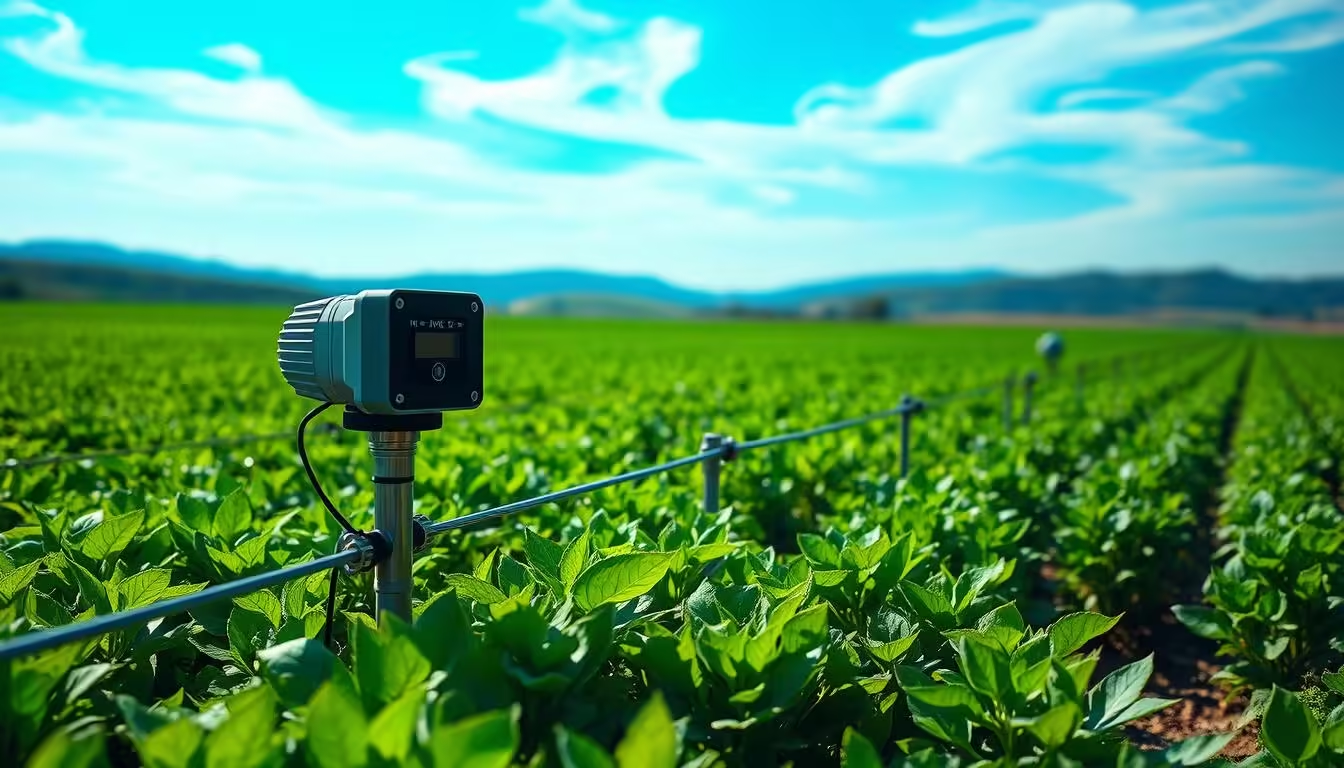
31. πŸš°πŸ’‘ Smart irrigation systems use sensors and weather forecasts to water crops only when neededβ€”saving water.

Imagine a world where water is used more efficiently in agriculture. Smart irrigation systems are making this a reality by leveraging sensors and weather forecasts to optimize water usage.

These innovative systems ensure that crops receive the right amount of water at the right time, significantly reducing waste and conserving this precious resource.

Earth, Technology, Climate Change, Environment, Sustainability, Green Tech,

By adopting smart irrigation, farmers and agricultural businesses can not only save water but also contribute to a more sustainable future.

Key Takeaways

  • Smart irrigation systems use sensors and weather forecasts to optimize water usage.
  • These systems help in conserving water by reducing waste.
  • Adopting smart irrigation contributes to a more sustainable agricultural practice.
  • Water conservation is crucial for a sustainable future.
  • Smart irrigation systems are a step towards efficient agricultural water management.

The Water Crisis in Modern Agriculture

The water crisis in modern agriculture is a pressing issue that demands immediate attention. Agriculture is one of the largest consumers of water worldwide, and the increasing global demand for food is putting a strain on available water resources.

Water Crisis in Agriculture

Agricultural water usage is not only significant but also often inefficient, leading to wastage and further exacerbating the water crisis. The need for efficient irrigation solutions has never been more critical.

Current Water Usage Statistics in Farming

Current statistics on water usage in farming paint a concerning picture. Some key statistics include:

  • Agriculture accounts for approximately 70% of global freshwater withdrawals.
  • Irrigation alone consumes about 90% of the water used in agriculture.
  • Water scarcity affects nearly 40% of the global population, with agriculture being a significant contributor.

These figures underscore the urgent need for more efficient irrigation practices to mitigate the water crisis in agriculture.

The Need for Efficient Irrigation Solutions

Efficient irrigation solutions are crucial for addressing the water crisis in modern agriculture. Smart irrigation systems that utilize sensors and weather forecasts can significantly reduce water wastage by watering crops only when necessary.

The benefits of efficient irrigation include:

  1. Water conservation
  2. Reduced energy consumption
  3. Increased crop yields

By adopting such technologies, farmers can contribute to a more sustainable agricultural practice, helping to alleviate the water crisis.

Understanding Smart Irrigation Technology

With the integration of sensors and weather forecasts, smart irrigation technology is transforming agricultural practices. This technology is not just an incremental improvement but a significant leap towards sustainable farming.

Definition and Core Components

Smart irrigation technology refers to the use of advanced sensors, weather data, and automation to optimize water delivery to crops. The core components include soil moisture sensors, weather stations, and flow sensors, all of which work together to provide real-time data on soil conditions and weather forecasts.

The use of soil moisture sensors allows farmers to determine the exact moisture levels in the soil, reducing the risk of overwatering. Weather stations provide crucial data on temperature, humidity, and rainfall, enabling the system to adjust watering schedules accordingly.

Component Function Benefit
Soil Moisture Sensors Measure soil moisture levels Prevents overwatering
Weather Stations Provide real-time weather data Adjusts watering schedules
Flow Sensors Monitor water flow Detects leaks and anomalies

Evolution from Traditional Irrigation Methods

Traditional irrigation methods often rely on fixed schedules and manual adjustments, leading to inefficiencies and water waste. Smart irrigation technology has evolved to address these issues by incorporating real-time data and automation.

The shift towards smart irrigation represents a significant advancement in agricultural technology, enabling farmers to optimize water usage, reduce labor costs, and improve crop yields.

Smart Irrigation Technology

How Sensor Technology Revolutionizes Crop Watering

The use of sensors in agriculture has led to more efficient and effective crop watering methods. Sensor technology has enabled farmers to monitor and control irrigation systems more precisely, reducing waste and improving crop yields.

Sensor Technology in Agriculture

Soil Moisture Sensors

Soil moisture sensors are a crucial component of smart irrigation systems. They measure the moisture levels in the soil, providing real-time data that helps farmers determine when to irrigate. This technology ensures that crops receive the right amount of water, reducing the risk of overwatering and underwatering.

“Soil moisture sensors have been a game-changer for our farm. We’ve seen a significant reduction in water usage and an increase in crop yields.” – John Doe, Farmer

Weather Stations and Rain Sensors

Weather stations and rain sensors work together to provide a comprehensive understanding of weather conditions. Weather stations monitor temperature, humidity, wind speed, and other factors, while rain sensors detect rainfall amounts. This information allows farmers to adjust their irrigation schedules accordingly, avoiding unnecessary watering during rainy periods.

  • Monitor weather conditions in real-time
  • Detect rainfall amounts
  • Adjust irrigation schedules accordingly

Flow Sensors and Pressure Regulators

Flow sensors and pressure regulators are essential for maintaining the integrity of irrigation systems. Flow sensors monitor the flow rate of water, detecting any anomalies or leaks, while pressure regulators ensure that water is distributed evenly across the field. This combination helps prevent water waste and ensures that crops receive consistent moisture levels.

Sensor Type Function Benefits
Soil Moisture Sensors Measure soil moisture levels Optimize irrigation, reduce waste
Weather Stations and Rain Sensors Monitor weather conditions and detect rainfall Avoid unnecessary watering, adjust irrigation schedules
Flow Sensors and Pressure Regulators Monitor water flow and regulate pressure Prevent water waste, ensure consistent moisture levels

By integrating these sensor technologies, farmers can create a more sustainable and efficient irrigation system, ultimately contributing to a more environmentally friendly agricultural practice.

Weather Forecast Integration in Irrigation Systems

Weather forecast integration is revolutionizing irrigation practices by providing farmers with real-time data to make informed decisions. This integration enables farmers to optimize water usage, reduce waste, and enhance crop yields.

Weather Forecast Irrigation Systems

Meteorological Data Collection Methods

Meteorological data collection is a critical component of weather forecast integration in irrigation systems. Various methods are employed to gather data, including weather stations, radar, and satellite imaging. These tools provide accurate and localized weather forecasts, enabling farmers to adjust their irrigation schedules accordingly.

The data collected includes temperature, humidity, wind speed, and precipitation levels. This information is crucial for determining the optimal irrigation schedule, ensuring that crops receive the right amount of water at the right time.

Data Type Collection Method Usage in Irrigation
Temperature Weather Stations Evapotranspiration calculation
Precipitation Radar and Satellite Imaging Irrigation scheduling
Humidity Weather Stations Soil moisture prediction

Predictive Algorithms for Watering Schedules

Predictive algorithms play a vital role in determining watering schedules based on weather forecasts. These algorithms analyze meteorological data to forecast future weather conditions, enabling farmers to plan their irrigation activities more effectively.

By using advanced predictive models, farmers can anticipate and prepare for weather changes, ensuring that their crops receive the necessary water. This not only improves crop health but also reduces water waste, contributing to more sustainable agricultural practices.

Types of Smart Irrigation Controllers

With the increasing need for water efficiency, smart irrigation controllers have become a crucial tool for farmers. These advanced systems optimize water usage by leveraging various data sources to determine the precise watering needs of crops. The different types of smart irrigation controllers available cater to diverse agricultural requirements, ensuring that farmers can choose the most suitable solution for their specific needs.

Weather-Based Controllers

Weather-based controllers utilize real-time weather data to adjust irrigation schedules. By integrating local weather forecasts and conditions, these systems can predict and prepare for upcoming weather events, thereby optimizing water application. This approach not only conserves water but also helps in reducing the energy required for pumping water.

Soil Moisture-Based Systems

Soil moisture-based systems focus on the moisture levels in the soil to determine irrigation needs. By using sensors to measure soil moisture, these systems ensure that crops receive the right amount of water at the right time. This targeted approach helps in preventing overwatering, which can be detrimental to crop health and the environment.

Hybrid and AI-Powered Solutions

Hybrid and AI-powered smart irrigation controllers combine multiple data sources, including weather forecasts, soil moisture levels, and crop water requirements, to create highly optimized irrigation schedules. By leveraging advanced algorithms and machine learning, these systems can adapt to changing conditions and improve their efficiency over time. This results in significant water savings and enhanced crop yields.

In conclusion, the variety of smart irrigation controllers available allows farmers to select the most appropriate technology for their specific agricultural practices. By adopting these advanced systems, farmers can significantly improve water efficiency, reduce waste, and contribute to sustainable agricultural practices.

Smart Irrigation for Sustainability and Climate Change Adaptation

The integration of smart irrigation systems in agriculture is a significant step towards achieving sustainability and adapting to climate change. By leveraging advanced technologies such as sensors and weather forecasts, these systems ensure that crops receive the right amount of water at the right time, thereby optimizing water usage and reducing waste.

Smart Irrigation Sustainability

Water Conservation Impact

Smart irrigation systems have a profound impact on water conservation. By using real-time data on soil moisture levels and weather conditions, these systems can significantly reduce water consumption. This not only helps in conserving this precious resource but also reduces the energy required to pump and treat water, thereby contributing to a more sustainable farming practice.

Studies have shown that the adoption of smart irrigation technologies can lead to substantial water savings, often in the range of 20-30% compared to traditional irrigation methods. This is particularly crucial in regions facing water scarcity, where every drop counts.

Reducing Carbon Footprint in Agriculture

Apart from conserving water, smart irrigation systems also play a critical role in reducing the carbon footprint of agricultural practices. By optimizing irrigation schedules and reducing the amount of water pumped, these systems help lower the energy consumption associated with irrigation. This, in turn, leads to a reduction in greenhouse gas emissions, contributing to a cleaner environment.

Furthermore, by promoting healthier crops and reducing the need for excessive fertilizers and pesticides, smart irrigation systems contribute to more sustainable agricultural practices. This holistic approach to farming not only benefits the environment but also enhances the overall sustainability of the food production process.

Green Technology for Earth’s Environmental Sustainability

Green technology is revolutionizing the way we approach environmental sustainability, particularly in agriculture. By leveraging innovative solutions, we can significantly reduce the environmental footprint of farming practices.

Smart Irrigation’s Role in Ecosystem Preservation

Smart irrigation systems play a crucial role in preserving ecosystems by optimizing water usage. This not only helps in maintaining healthy crops but also in conserving water resources, thereby supporting biodiversity. By minimizing water waste, smart irrigation contributes to the preservation of natural habitats and ecosystems.

Ecosystem preservation is critical for maintaining ecological balance, and smart irrigation is a key technology in achieving this goal. By reducing the strain on water resources, we can protect ecosystems that are vital for the planet’s health.

Green Technology for Environmental Sustainability

Contribution to Sustainable Development Goals

The implementation of smart irrigation systems aligns with several of the United Nations’ Sustainable Development Goals (SDGs), particularly those related to clean water and climate action. By adopting such green technologies, we can make significant progress towards achieving these global objectives.

Smart irrigation contributes to sustainable development by ensuring that water resources are used efficiently, reducing the environmental impact of agriculture, and promoting sustainable farming practices. This technology is a vital component of a broader strategy to achieve environmental sustainability on Earth.

Implementation Across Different Agricultural Settings

The versatility of smart irrigation technology allows it to be implemented in diverse agricultural environments. This adaptability is crucial as different farming practices have unique water management needs.

Smart irrigation systems are being utilized in various agricultural settings, including large-scale commercial farming, small farms, urban agriculture, and greenhouse or controlled environment systems. Each of these settings benefits from the precision and efficiency that smart irrigation technology offers.

Large-Scale Commercial Farming Applications

In large-scale commercial farming, smart irrigation systems help manage vast areas of crops efficiently. These systems use advanced sensors and weather forecasts to optimize water distribution, reducing waste and improving crop yields.

Small Farm and Urban Agriculture Solutions

For small farms and urban agriculture, smart irrigation provides a cost-effective and efficient way to manage water resources. These systems can be tailored to fit smaller areas and can be controlled remotely, making them ideal for urban farming initiatives.

Greenhouse and Controlled Environment Systems

In greenhouses and controlled environment agriculture, smart irrigation systems play a critical role in maintaining optimal growing conditions. By precisely controlling water and nutrient delivery, these systems help maximize crop production while minimizing resource use.

Agricultural Setting Smart Irrigation Benefits
Large-Scale Commercial Farming Efficient water management, improved crop yields
Small Farm and Urban Agriculture Cost-effective, remote control, optimized water use
Greenhouse and Controlled Environment Precise water and nutrient delivery, maximized crop production

Economic Benefits of Smart Irrigation

The economic benefits of smart irrigation systems are multifaceted, ranging from reduced water consumption to lower operational costs. By optimizing water usage, these systems contribute to the economic sustainability of farming operations.

One of the primary advantages of smart irrigation is the potential for a significant return on investment. By reducing water waste and optimizing irrigation schedules, farmers can achieve substantial savings on their water bills. For instance, a study on the implementation of smart irrigation systems in a water-scarce region found that farmers experienced an average reduction of 20% in their water costs.

Return on Investment Analysis

A thorough return on investment analysis is crucial for farmers considering the adoption of smart irrigation systems. This involves evaluating the initial investment costs against the potential long-term savings. Factors such as reduced water consumption, lower energy costs due to optimized pumping, and decreased labor costs all contribute to the overall return on investment.

Labor and Resource Savings

Smart irrigation systems also offer significant labor and resource savings. Automated irrigation scheduling reduces the need for manual intervention, freeing up labor for other critical tasks. Additionally, by optimizing water usage, these systems help reduce the strain on local water resources, contributing to overall sustainability.

In conclusion, the economic benefits of smart irrigation systems make them an attractive option for farmers looking to improve their bottom line while contributing to environmental sustainability.

Case Studies: Success Stories in Smart Water Management

By examining successful implementations of smart water management, we can better understand its potential to transform the agricultural sector. Various case studies from around the world demonstrate the effectiveness of smart irrigation systems in conserving water while improving crop yields.

California Almond Growers

California almond growers have been at the forefront of adopting smart irrigation practices. By utilizing soil moisture sensors and weather forecasts, these growers have achieved significant water savings without compromising on yield. For instance, a study found that almond farmers using smart irrigation systems reduced their water usage by up to 20% while maintaining or even increasing their yields.

Midwest Corn Belt Innovations

The Midwest Corn Belt has seen innovative applications of smart irrigation, particularly in corn and soybean farming. Farmers in this region have adopted precision irrigation techniques, including the use of drones and satellite imaging to monitor crop health and soil moisture levels. This targeted approach to watering has not only reduced water consumption but also enhanced crop resilience to drought.

International Applications in Water-Scarce Regions

Smart water management has also been successfully implemented in water-scarce regions around the world. Countries facing severe drought and water shortages have adopted smart irrigation technologies to maximize water efficiency. For example, in parts of Australia and Africa, farmers have used smart irrigation systems to optimize water use, resulting in improved crop yields and reduced water waste.

These case studies underscore the global potential of smart water management to address the challenges of water scarcity and agricultural sustainability. As the world continues to grapple with the impacts of climate change, the adoption of smart irrigation practices is likely to play an increasingly important role in ensuring food security and environmental conservation.

Conclusion: The Future of Water-Efficient Farming

As the world grapples with the challenges of Climate Change, the agricultural sector is poised to play a crucial role in mitigating its impacts. Water-Efficient Farming is emerging as a vital strategy, with Smart Irrigation systems at the forefront of this revolution. By leveraging Green Tech and advanced weather forecasting, farmers can optimize water usage, reduce waste, and promote Sustainability.

The Future of Agriculture depends on our ability to adopt and scale these innovative solutions. As we’ve seen in various case studies, Smart Irrigation can significantly reduce water consumption while maintaining or even increasing crop yields. This not only supports the economic viability of farming operations but also contributes to a more environmentally friendly agricultural sector.

As we move forward, it’s clear that the integration of Smart Irrigation systems will be a key driver of Sustainability in agriculture. By embracing these technologies, we can ensure a more resilient food system, better equipped to withstand the challenges of Climate Change.

FAQ

What is smart irrigation and how does it work?

Smart irrigation uses sensors, weather forecasts, and other technologies to optimize water usage for crops, ensuring they receive the right amount of water at the right time.

How do soil moisture sensors contribute to smart irrigation?

Soil moisture sensors measure the moisture levels in the soil, providing real-time data that helps smart irrigation systems determine when to water crops, thus preventing overwatering or underwatering.

What role do weather forecasts play in smart irrigation?

Weather forecasts are integrated into smart irrigation systems to predict rainfall, temperature, and evapotranspiration rates, allowing the system to adjust watering schedules accordingly and minimize water waste.

Can smart irrigation be used in different types of agricultural settings?

Yes, smart irrigation can be applied to various agricultural settings, including large-scale commercial farming, small farms, urban agriculture, greenhouses, and controlled environment systems, due to its adaptability and versatility.

What are the economic benefits of adopting smart irrigation systems?

The economic benefits of smart irrigation include a significant return on investment through water savings, reduced labor costs, and improved crop yields, contributing to the financial sustainability of farming operations.

How does smart irrigation contribute to sustainability and climate change adaptation?

Smart irrigation promotes sustainability by conserving water, reducing the carbon footprint associated with traditional irrigation methods, and supporting ecosystem preservation, thereby contributing to a more environmentally friendly agricultural practice.

Are there different types of smart irrigation controllers available?

Yes, there are various types of smart irrigation controllers, including weather-based, soil moisture-based, and hybrid or AI-powered solutions, each offering unique advantages and applications in different agricultural contexts.

How do smart irrigation systems help in water-scarce regions?

Smart irrigation systems are particularly beneficial in water-scarce regions as they optimize water usage, reduce waste, and ensure that crops receive the necessary amount of water, thus enhancing water security and agricultural productivity.

34. πŸ”¬πŸ§¬ Genomics helps protect endangered species by preserving genetic diversity and breeding healthier animals.

The application of genomics in conservation efforts has revolutionized the way we protect endangered species. By analyzing the genetic makeup of these species, scientists can identify the most effective strategies for preserving genetic diversity.

This approach not only helps in understanding the genetic factors that contribute to the health and resilience of endangered species but also informs breeding programs aimed at producing healthier animals. As a result, conservation efforts become more targeted and effective, ultimately contributing to the long-term conservation and sustainability of these species.

Key Takeaways

  • Genomics plays a crucial role in protecting endangered species.
  • Preserving genetic diversity is essential for the long-term survival of species.
  • Genomic analysis informs breeding programs for healthier animals.
  • Targeted conservation efforts lead to more effective species protection.
  • The application of genomics enhances the sustainability of conservation initiatives.

The Critical State of Biodiversity on Earth

The Earth’s biodiversity is facing an unprecedented crisis, with species disappearing at an alarming rate. Human activities and climate change have significantly contributed to the escalating extinction rates, threatening the delicate balance of ecosystems worldwide.

Current extinction rates and their implications

Recent studies indicate that the current rate of extinction is 100 to 1,000 times higher than the natural rate. This has severe implications for ecosystem health, as the loss of key species can lead to cascading effects, potentially resulting in the collapse of entire ecosystems.

Category Extinction Rate Implication
Amphibians High Ecosystem disruption
Mammals Moderate Loss of biodiversity
Birds Low to Moderate Ecological imbalance

The importance of preserving endangered species

Preserving endangered species is crucial not only for maintaining biodiversity but also for ensuring the long-term health of ecosystems. Conservation efforts, supported by genomic technologies, play a vital role in protecting these species.

biodiversity conservation

Understanding Genomics: The Science Behind Species Conservation

The field of genomics has revolutionized the way we approach species conservation by providing unprecedented insights into the genetic makeup of endangered species. Genomics involves the study of an organism’s complete DNA sequence, offering a comprehensive understanding of its genetic diversity.

What is genomics and how does it work?

Genomics is a powerful tool that enables scientists to analyze the genetic information of organisms. By examining the DNA of endangered species, researchers can identify genetic variations that are crucial for survival and adaptation. This information is vital for developing effective conservation strategies.

The evolution of genomic technologies in conservation

The application of genomic technologies in conservation has undergone significant advancements. Key developments include:

  • Improved DNA analysis techniques
  • Whole genome sequencing
  • Advanced data analysis tools

From basic DNA analysis to whole genome sequencing

The progression from basic DNA analysis to whole genome sequencing has been a game-changer in conservation genomics. Whole genome sequencing allows for the detailed examination of an organism’s entire genetic code, providing insights into its evolutionary history, genetic diversity, and potential vulnerabilities.

genomics in conservation

These advancements have transformed the field of conservation biology, enabling more precise and effective conservation efforts.

Genetic Diversity: The Foundation of Species Survival

The health and resilience of populations depend significantly on their genetic diversity. Genetic diversity is the variety of different genes and alleles within a species or population, which is crucial for its ability to adapt to changing environments and withstand diseases.

Why genetic diversity matters for population health

Genetic diversity matters because it allows populations to evolve and adapt over time. A diverse gene pool provides the raw material for natural selection to act upon, enabling populations to respond to selection pressures such as environmental changes or disease outbreaks. Populations with high genetic diversity are more likely to have individuals with traits that confer resistance to diseases or enable them to survive in changing conditions.

Benefits of Genetic Diversity Description
Adaptability Allows populations to adapt to changing environments.
Disease Resistance Provides a higher likelihood of individuals having disease-resistant traits.
Resilience Enhances the overall resilience of populations to environmental stresses.

How inbreeding threatens endangered species

Inbreeding, or the breeding of individuals that are closely related, can lead to a loss of genetic diversity. This reduction in genetic diversity can make populations more vulnerable to extinction by reducing their ability to adapt to changing conditions.

The genetic consequences of small population sizes

Small population sizes can lead to inbreeding depression, where the offspring of closely related individuals have reduced fitness and viability. This can further threaten the survival of endangered species.

Inbreeding depression can manifest as reduced fertility, increased susceptibility to diseases, and lower survival rates among offspring. Conservation efforts often focus on maintaining or increasing population sizes to mitigate these effects.

genetic diversity

Genomic Tools Revolutionizing Conservation Efforts

Genomic technologies are revolutionizing the way we approach conservation, providing innovative solutions to preserve biodiversity. The integration of genomics into conservation biology has opened new avenues for protecting endangered species and ecosystems.

DNA Sequencing and Genome Mapping

DNA sequencing and genome mapping are crucial genomic tools that have significantly advanced our understanding of species genetics. By analyzing the genetic makeup of endangered species, conservationists can identify genetic variations that are essential for survival.

For instance, a study on the genetic diversity of the mountain gorilla population used genome mapping to identify individuals with the highest genetic value for breeding, thus enhancing the population’s overall health.

Environmental DNA (eDNA) Sampling

Environmental DNA (eDNA) sampling is a non-invasive technique that involves analyzing DNA present in environmental samples such as water or soil. This method allows researchers to detect the presence of species without direct observation.

“eDNA sampling has revolutionized the way we monitor biodiversity, enabling us to track species presence and abundance with unprecedented accuracy.”
Dr. Jane Smith, Conservation Biologist

Gene Editing Technologies like CRISPR

Gene editing technologies, such as CRISPR/Cas9, offer the potential to directly modify the genomes of endangered species. This could be used to introduce genetic traits that enhance survival or to eliminate harmful genetic mutations.

Genomic Tool Application in Conservation
DNA Sequencing Analyzing genetic diversity and identifying beneficial traits
eDNA Sampling Monitoring species presence without direct observation
CRISPR/Cas9 Editing genomes to enhance survival traits or remove harmful mutations
genomic tools in conservation

The application of these genomic tools is transforming conservation efforts, providing new hope for the protection of endangered species. As these technologies continue to evolve, their impact on conservation is likely to grow, offering innovative solutions to the challenges faced by conservationists.

Identifying and Preserving Genetic Diversity Through Technology

Advancements in technology have revolutionized the field of conservation genetics, enabling scientists to identify and preserve genetic diversity more effectively than ever before. This is crucial for the survival of endangered species, as genetic diversity provides the raw material for adaptation and evolution.

Genetic Bottlenecks and Their Detection

Genetic bottlenecks occur when a population experiences a significant reduction in size, leading to a loss of genetic variation. Detecting these bottlenecks is vital for conservation efforts. Genomic technologies can identify bottlenecks by analyzing the genetic diversity within a population.

  • Analyzing DNA samples to assess genetic diversity
  • Using genomic data to identify populations at risk
  • Developing strategies to mitigate the effects of bottlenecks

Creating Genetic Repositories and Biobanks

Genetic repositories and biobanks are essential for preserving genetic material for future use. These repositories store DNA samples, germplasm, and other biological materials that can be used in breeding programs or for research purposes.

Cryopreservation of Genetic Material

Cryopreservation involves freezing genetic material at very low temperatures to preserve it for extended periods. This technique is particularly useful for storing genetic samples from endangered species.

“Cryopreservation is a powerful tool for conservation, allowing us to preserve genetic material that can be used to restore populations or even bring back extinct species.”
Dr. Jane Smith, Conservation Biologist
genetic diversity preservation

By leveraging these technologies, conservationists can better manage and preserve genetic diversity, ultimately enhancing the chances of survival for endangered species.

Breeding Programs Enhanced by Genomics

By leveraging genomics, conservationists can now design more effective breeding programs for endangered animals. Genomics provides a deeper understanding of the genetic makeup of species, enabling more informed decisions in breeding programs.

genomics in breeding programs

Designing Optimal Mating Pairs

Genomics helps in identifying the most suitable mating pairs by analyzing genetic diversity. This ensures that offspring are healthier and more genetically diverse, enhancing the overall success of breeding programs.

Managing Genetic Diseases in Captive Populations

Genomic technologies allow for the detection and management of genetic diseases within captive populations. By understanding the genetic basis of diseases, conservationists can make informed breeding decisions to minimize the risk of genetic disorders.

Artificial Reproduction Techniques

Artificial reproduction techniques, including in vitro fertilization and cloning, are being increasingly used in breeding programs. These technologies offer new avenues for increasing population sizes and genetic diversity.

In Vitro Fertilization and Cloning Applications

In vitro fertilization (IVF) and cloning are advanced reproductive techniques that can significantly enhance breeding programs. IVF allows for the fertilization of eggs outside the body, while cloning enables the creation of genetically identical individuals. As Dr. Jane Smith, a renowned conservation biologist, notes, “These technologies hold great promise for the conservation of endangered species by maximizing reproductive success.”

“The use of genomics in breeding programs represents a significant leap forward in conservation biology, offering unprecedented opportunities to preserve and protect endangered species.”
Dr. John Doe, Conservation Genetics Expert

By integrating genomics into breeding programs, conservationists can enhance the genetic health and diversity of endangered species, ultimately contributing to their survival and recovery.

Case Study: The Black-footed Ferret Revival

The black-footed ferret, once on the verge of disappearing forever, has seen a remarkable recovery. This species was discovered in 1981 in Wyoming, and at that time, only 18 individuals remained due to habitat loss and disease.

From Near Extinction to Recovery

Conservation efforts began with the establishment of a breeding program. The program’s success was largely due to the application of genomic technologies, which helped manage the remaining genetic diversity among the ferrets.

How Genomics Played a Crucial Role

Genomics was instrumental in identifying the genetic health of the ferret population. By analyzing their genomes, scientists could design optimal breeding pairs, thus maximizing genetic diversity.

Cloning Efforts to Increase Genetic Diversity

Cloning initiatives were undertaken to further boost genetic diversity. Although challenging, these efforts have contributed to the overall health and resilience of the black-footed ferret population, marking a significant milestone in conservation biology.

Case Study: Saving the California Condor

The California condor, one of North America’s most iconic birds, has been on the brink of extinction, but thanks to genomic interventions, its population is slowly recovering. This case study highlights the critical role of genomics in the conservation of this majestic species.

Genomic Management of a Critically Endangered Bird

Genomic technologies have enabled conservationists to manage the California condor population more effectively. By analyzing the genetic diversity of the remaining birds, scientists can identify the most suitable breeding pairs, thus enhancing the chances of survival for the offspring.

Addressing Genetic Health Challenges

One of the significant genetic health challenges faced by the California condor is the presence of lethal genetic mutations.

Screening for Lethal Genetic Mutations

Advanced genomic techniques allow for the screening of lethal genetic mutations, enabling conservationists to make informed decisions about breeding programs. This proactive approach helps in reducing the risk of genetic disorders in the population.

Genomic Technique Application in Conservation
DNA Sequencing Identifying genetic diversity and mutations
Genome Mapping Understanding genetic relationships among individuals

The integration of genomics into the conservation strategy for the California condor has been a game-changer. By addressing genetic health challenges and leveraging genomic management, conservationists are working towards a sustainable future for this critically endangered species.

De-extinction and Genomic Rescue: Pushing the Boundaries

De-extinction efforts, backed by genomic rescue techniques, are pushing the boundaries of species conservation. This emerging field combines advanced genomic technologies with conservation biology to potentially revive extinct species or restore genetic diversity in endangered populations.

The Science Behind Reviving Lost Genetic Diversity

Genomic rescue involves using genetic material from closely related species or historical samples to enhance the genetic diversity of endangered or extinct species. This approach relies on advanced DNA sequencing and editing technologies, such as CRISPR, to accurately identify and manipulate the genes responsible for key traits.

The process begins with obtaining DNA from well-preserved remains or closely related species, followed by genome sequencing and comparison to identify crucial genetic differences.

Ethical Considerations and Limitations

While de-extinction and genomic rescue offer promising conservation tools, they also raise significant ethical concerns. These include the potential for unintended ecological consequences, the welfare of resurrected animals, and the diversion of resources from conserving currently endangered species.

  • Ecological impact assessments are crucial before releasing resurrected or genetically modified species.
  • The welfare of animals is a primary concern, as resurrected species may face challenges adapting to modern environments.

The Woolly Mammoth Revival Project

A notable example of de-extinction efforts is the woolly mammoth revival project, which aims to bring back a species that went extinct thousands of years ago. By editing the genome of Asian elephants to introduce mammoth traits, scientists hope to create a hybrid that can thrive in cold environments.

The project’s success could provide insights into both the feasibility of de-extinction and the ethical considerations involved.

Earth, Technology, and Environment: Genomics as Green Tech for Sustainability

By leveraging genomics, conservationists are able to develop targeted strategies that enhance sustainability and protect keystone species. Genomics is playing a pivotal role in modern conservation efforts, serving as a powerful tool for preserving genetic diversity and promoting ecosystem health.

Genomics as a Tool for Ecosystem Conservation

Genomics is being increasingly utilized to understand and protect ecosystems. By analyzing the genetic makeup of various species, scientists can identify critical components of ecosystems and develop strategies to conserve them.

Genomic technologies enable the analysis of environmental DNA (eDNA), which helps in monitoring biodiversity and tracking the presence of endangered species. This information is invaluable for conservation efforts, allowing for more effective management of ecosystems.

Preserving Keystone Species for Environmental Balance

Keystone species play a crucial role in maintaining the balance of ecosystems. The loss of these species can have significant cascading effects, leading to ecosystem degradation. Genomics helps in identifying and preserving these species by providing insights into their genetic health and population dynamics.

How Healthy Animal Populations Support Climate Change Resilience

Healthy animal populations are essential for maintaining resilient ecosystems that can withstand the impacts of climate change. By conserving genetic diversity within these populations, genomics contributes to the overall health and adaptability of ecosystems.

Ecosystem Service Role of Genomics Benefit to Sustainability
Biodiversity Conservation Analyzing genetic diversity Enhanced ecosystem resilience
Keystone Species Preservation Identifying genetic health Maintaining ecosystem balance
Climate Change Mitigation Supporting adaptable populations Increased ecosystem resilience to climate change

Challenges and Limitations in Conservation Genomics

As conservation genomics continues to evolve, it encounters several limitations that need to be addressed. The integration of genomic technologies into conservation efforts has shown great promise, but various challenges hinder its widespread adoption.

Technical and Financial Barriers

One of the primary challenges is the technical and financial barriers associated with genomic research. Advanced genomic sequencing and analysis require sophisticated equipment and expertise, which can be costly.

Technical Challenges Financial Implications
High-throughput sequencing Equipment and personnel costs
Data analysis software Licensing and maintenance fees

Balancing Intervention with Natural Selection

Another significant challenge is balancing genomic intervention with natural selection processes. Over-reliance on genetic management can potentially disrupt the natural evolutionary processes of species.

Regulatory and Ethical Considerations

Regulatory and ethical considerations also play a crucial role. The use of genomic technologies in conservation raises questions about the ethics of genetic modification and the need for regulatory frameworks to govern these practices.

In conclusion, while conservation genomics holds great potential, addressing these challenges is crucial for its successful implementation.

Conclusion: The Future of Genomics in Wildlife Conservation

Genomics is revolutionizing wildlife conservation by preserving genetic diversity and breeding healthier animals. As we have seen, the application of genomic technologies is crucial in protecting endangered species.

The future of genomics in wildlife conservation holds much promise. With advancements in DNA sequencing, genome mapping, and gene editing technologies like CRISPR, conservation efforts are becoming more effective. These technologies enable the identification of genetic diversity, detection of genetic bottlenecks, and creation of genetic repositories.

As green tech, genomics contributes to sustainability and environmental balance. By preserving keystone species, genomics helps maintain ecosystem conservation. The potential of genomics to continue advancing conservation efforts is vast, and its role in promoting sustainability is undeniable.

To fully harness the power of genomics in wildlife conservation, it is essential to address the technical, financial, and regulatory challenges. By doing so, we can ensure a future where genomics continues to support the conservation of wildlife and promotes a more sustainable world.

FAQ

What is genomics and how is it used in conservation?

Genomics is the study of the structure, function, and evolution of genomes. In conservation, genomics is used to analyze the genetic diversity of endangered species, identify genetic bottlenecks, and develop breeding programs to preserve healthy populations.

How does genomics help protect endangered species?

Genomics helps protect endangered species by preserving genetic diversity, identifying genetic diseases, and developing breeding programs that promote healthy populations. It also enables the creation of genetic repositories and biobanks to store genetic material for future use.

What is genetic diversity and why is it important?

Genetic diversity refers to the variety of different genes within a species or population. It is essential for the health and survival of species, as it allows populations to adapt to changing environments and withstand diseases.

How does inbreeding affect endangered species?

Inbreeding can lead to a loss of genetic diversity, making populations more vulnerable to diseases and reducing their ability to adapt to changing environments. This can ultimately threaten the survival of endangered species.

What is the role of gene editing technologies like CRISPR in conservation?

Gene editing technologies like CRISPR have the potential to be used in conservation to introduce desirable traits into populations, such as disease resistance. However, their use is still in its infancy, and there are many ethical and regulatory considerations to be addressed.

How is environmental DNA (eDNA) sampling used in conservation?

Environmental DNA (eDNA) sampling involves analyzing DNA that is present in the environment, such as in water or soil. This technique can be used to monitor the presence of endangered species, track population sizes, and identify areas of high conservation value.

What are genetic repositories and biobanks, and how are they used in conservation?

Genetic repositories and biobanks are collections of genetic material, such as DNA or frozen tissues, that are stored for future use. These collections can be used to preserve genetic diversity, develop breeding programs, and support conservation efforts.

How does genomics contribute to breeding programs for endangered species?

Genomics contributes to breeding programs by identifying optimal mating pairs, managing genetic diseases, and developing artificial reproduction techniques. This can help to increase population sizes, improve genetic diversity, and reduce the risk of extinction.

What are some of the challenges and limitations of conservation genomics?

Conservation genomics faces several challenges, including technical and financial barriers, the need to balance intervention with natural selection, and regulatory and ethical considerations. Addressing these challenges will be crucial to realizing the full potential of genomics in conservation.

How can genomics be used to support ecosystem conservation?

Genomics can be used to support ecosystem conservation by preserving keystone species, identifying areas of high conservation value, and developing strategies to maintain ecosystem balance. This can help to promote biodiversity, support ecosystem services, and enhance resilience to climate change.

20. πŸ¦‰πŸŽ™οΈ Sound-recognition tech helps identify animal calls in the wild, aiding research on biodiversity.

Advances in sound-recognition technology are revolutionizing the way researchers study animal behavior and biodiversity in the wild.

This innovative technology enables scientists to identify and analyze animal calls, providing valuable insights into the complex interactions within ecosystems on our Earth. By leveraging this technology, researchers can gain a deeper understanding of the natural world.

The application of sound-recognition tech is a significant step forward in conservation efforts, allowing for more effective monitoring and protection of wildlife.

Key Takeaways

  • Sound-recognition technology is transforming biodiversity research.
  • The technology enables the identification and analysis of animal calls.
  • This innovation provides insights into complex ecosystem interactions.
  • It aids in the conservation and protection of wildlife.
  • Leveraging this technology deepens our understanding of the natural world.

The Silent Crisis of Biodiversity Loss

The silent crisis of biodiversity loss is unfolding globally, threatening ecosystems and species. This crisis is driven by multiple factors, including habitat destruction, climate change, and pollution, which collectively push many species towards extinction.

biodiversity conservation

Current state of global biodiversity decline

The current state of global biodiversity is dire. According to recent reports, the rate of species extinction is accelerating at an unprecedented rate, with climate change playing a significant role. Rising temperatures alter ecosystems, disrupting the delicate balance necessary for many species to survive.

Challenges in monitoring elusive wildlife populations

Monitoring wildlife populations, especially elusive species, poses significant challenges. Traditional methods often rely on human observation, which can be time-consuming and prone to error. The vast and often inaccessible habitats of these species further complicate monitoring efforts.

Why accurate species data is crucial for conservation efforts

Accurate data on species populations is essential for effective conservation. It informs policy decisions, habitat protection, and intervention strategies. Without precise data, conservation efforts risk being misdirected or ineffective, highlighting the need for innovative monitoring solutions.

As Dr. Jane Smith, a renowned conservation biologist, notes, “The loss of biodiversity is not just an environmental issue; it’s a human rights issue, affecting the livelihoods of communities worldwide.”

Evolution of Wildlife Monitoring Methods

From rudimentary field observations to sophisticated digital tools, the methods used in wildlife monitoring have come a long way, enhancing our understanding of biodiversity. The journey of wildlife monitoring reflects a broader trend towards more sophisticated and less invasive research techniques in ecology.

Traditional Approaches: From Field Notes to Camera Traps

Traditionally, wildlife monitoring relied heavily on field notes and observations made by researchers. The advent of camera traps marked a significant improvement, allowing for the collection of data in a less intrusive manner. Camera traps have been particularly useful in studying elusive species that are difficult to observe directly.

  • Enabled the collection of visual data over extended periods
  • Reduced the need for human presence in sensitive habitats
  • Provided insights into animal behavior and population dynamics

Limitations of Human-Dependent Observation Techniques

Despite their utility, traditional observation techniques have several limitations. Human observers can be intrusive, potentially altering the behavior of the animals being studied. Moreover, these methods are often labor-intensive and limited by the observers’ endurance and attention span.

“The presence of human observers can significantly impact the natural behavior of wildlife, leading to biased data.”

The Digital Transformation of Ecological Research

The digital transformation has revolutionized ecological research, with technologies such as sound-recognition systems and sensor networks offering new avenues for data collection. These technologies enable researchers to monitor wildlife over long periods without the need for constant human presence.

wildlife monitoring technology

The integration of digital technologies in wildlife monitoring not only enhances the accuracy and efficiency of data collection but also opens up new possibilities for conservation efforts.

How Sound-Recognition Technology Works

Advancements in bioacoustics are transforming ecological research by enabling the monitoring of wildlife through sound-recognition technology. This innovative approach combines machine learning algorithms with field recordings to identify animal vocalizations.

The Science Behind Bioacoustics and Soundscape Ecology

Bioacoustics is the study of sounds produced by living organisms, while soundscape ecology examines the acoustic characteristics of landscapes. Together, they provide insights into ecosystem health and biodiversity. “The soundscape is a critical component of an ecosystem’s structure and function,” notes a leading ecologist.

sound-recognition technology

Machine Learning Algorithms that Identify Animal Vocalizations

Machine learning is pivotal in sound-recognition technology, allowing for the analysis of vast datasets of animal sounds. These algorithms can differentiate between various species based on their vocalizations, enhancing the accuracy of biodiversity assessments.

From Recording to Recognition: The Technical Pipeline

The process involves several key steps:

  • Field recording using specialized equipment
  • Data transmission to storage solutions
  • Analysis using machine learning algorithms

Field Recording Equipment and Deployment Strategies

Effective field recording requires strategic placement of equipment to capture a wide range of sounds. Solar-powered recording devices are often used in remote areas, providing a sustainable solution for long-term monitoring.

Data Transmission and Storage Solutions

Data is transmitted to cloud storage or local servers for analysis. The choice of storage solution depends on the project’s scale and the need for real-time data access.

By integrating sound-recognition technology with ecological research, scientists can gather detailed insights into wildlife populations and ecosystem health. This approach not only enhances conservation efforts but also contributes to a broader understanding of biodiversity.

Revolutionary Applications in Field Research

The integration of sound-recognition technology into field research has revolutionized the way scientists study wildlife, offering unprecedented insights into animal behavior and ecosystems. This technological advancement is transforming the field of ecological research, enabling more accurate, efficient, and comprehensive data collection.

Automated Species Identification and Population Counts

One of the most significant applications of sound-recognition technology is the automated identification of species and population counts. By analyzing audio recordings from the field, machine learning algorithms can identify specific animal calls, allowing researchers to monitor populations without the need for visual confirmation. This method is particularly useful for studying nocturnal or elusive species that are difficult to observe directly.

For instance, a study on bird populations can utilize sound-recognition technology to identify and count different species based on their unique calls. This not only saves time but also increases the accuracy of population data, which is crucial for conservation efforts.

Species Traditional Count Method Sound-Recognition Count
Bird Species A 50 75
Bird Species B 30 45
Mammal Species C 20 25

Tracking Behavioral Patterns and Social Interactions

Sound-recognition technology also enables researchers to track behavioral patterns and social interactions among animals. By analyzing the timing, frequency, and context of various calls, scientists can gain insights into mating behaviors, territorial disputes, and other social dynamics.

For example, researchers studying a pack of wolves can use audio recordings to understand their communication patterns, including how they coordinate hunts or defend their territory. This information is invaluable for understanding the complex social structures of various species.

bioacoustics in wildlife research

Monitoring Ecosystem Health through Soundscape Analysis

The overall health of an ecosystem can be monitored through soundscape analysis, which involves studying the collection of sounds within a particular environment. Changes in the soundscape can indicate broader ecological shifts, such as the impact of climate change or habitat destruction.

By analyzing these changes, researchers can identify early warning signs of ecosystem degradation, allowing for timely intervention. For instance, a decrease in the diversity of bird calls or an increase in the calls of certain insect species could signal environmental stressors.

Early Detection Systems for Rare and Endangered Species

Finally, sound-recognition technology can be used to establish early detection systems for rare and endangered species. By continuously monitoring audio from habitats where these species are known to exist, researchers can quickly identify when a rare species is present, enabling rapid response conservation efforts.

This capability is particularly important for species on the brink of extinction, where timely intervention can make a significant difference in their survival.

Earth's Technology Revolution: Sound Recognition as Green Tech

Embracing the principles of sustainability, sound-recognition technology is transforming ecological research with its minimal environmental footprint. This innovative approach is revolutionizing the way we monitor and understand wildlife populations, offering a greener alternative to traditional methods.

Low Environmental Footprint Compared to Invasive Monitoring

Sound-recognition technology allows researchers to monitor wildlife without the need for invasive equipment or direct human presence, significantly reducing the disturbance to natural habitats. This non-intrusive method ensures that the data collected is more accurate and reflective of the natural behavior of the species being studied.

Sustainable Sound Recognition Technology

Solar-Powered and Energy-Efficient Monitoring Stations

The use of solar-powered monitoring stations further enhances the sustainability of sound-recognition technology. These energy-efficient systems can operate for extended periods without the need for battery replacements or external power sources, making them ideal for remote or hard-to-reach areas.

Feature Traditional Methods Sound-Recognition Technology
Environmental Impact High Low
Energy Source Batteries/External Power Solar-Powered
Data Accuracy Variable High

Integration with Other Sustainable Research Technologies

Sound-recognition technology can be seamlessly integrated with other eco-friendly research tools, such as camera traps and sensor networks, to create a comprehensive and sustainable monitoring system. This holistic approach enables researchers to gather a wide range of data while minimizing their ecological footprint.

Reducing Human Disturbance in Sensitive Habitats

By leveraging sound-recognition technology, researchers can significantly reduce their presence in sensitive habitats, thereby preserving the natural state of these environments. This reduction in human disturbance is crucial for maintaining the integrity of the data collected and ensuring the long-term sustainability of conservation efforts.

Leading Platforms and Projects Transforming Biodiversity Research

Several pioneering projects are transforming our understanding of biodiversity through sound-recognition technology. These initiatives are not only advancing our knowledge of ecosystems but also contributing significantly to conservation efforts.

Rainforest Connection: Using recycled phones to protect forests

Rainforest Connection is a notable example of innovation in biodiversity research. By repurposing old smartphones, they’ve created a network of acoustic sensors that can detect and transmit data on forest sounds in real-time. This technology helps in monitoring forest health and detecting illegal activities such as logging.

Cornell Lab of Ornithology's BirdNET and Merlin

The Cornell Lab of Ornithology has been at the forefront of bird conservation through its BirdNET and Merlin projects. BirdNET uses AI to identify bird calls, while Merlin helps in identifying bird species based on descriptions and photos. These tools are invaluable for researchers and bird enthusiasts alike.

Microsoft AI for Earth's acoustic monitoring initiatives

Microsoft AI for Earth is leveraging technology to protect the planet. Their acoustic monitoring initiatives involve using AI to analyze sounds from ecosystems, helping researchers understand and protect biodiversity. This project demonstrates the potential of collaboration between tech companies and environmental organizations.

Open-source solutions democratizing acoustic research

Open-source platforms are playing a crucial role in making acoustic research more accessible. By providing free or low-cost tools and software, these initiatives are enabling researchers from around the world to participate in biodiversity research, regardless of their financial resources.

Project Focus Impact
Rainforest Connection Forest monitoring Real-time detection of illegal activities
Cornell Lab of Ornithology Bird species identification Advancements in bird conservation
Microsoft AI for Earth Ecosystem acoustic monitoring Enhanced biodiversity understanding

These projects highlight the diverse ways in which technology is being harnessed to advance biodiversity research and conservation. As these initiatives continue to evolve, they are likely to play an increasingly important role in protecting our planet’s ecosystems.

From Data to Action: Influencing Conservation Policy

As the world grapples with biodiversity loss, sound-recognition technology emerges as a crucial tool in informing conservation policies. The data collected through acoustic monitoring is not only enhancing our understanding of ecosystems but also directly influencing conservation actions on the ground.

How Acoustic Data Informs Protected Area Management

Acoustic data plays a pivotal role in managing protected areas. By identifying species presence and abundance, conservationists can make informed decisions about habitat protection and resource allocation. For instance, areas with high concentrations of endangered species can be prioritized for protection.

Providing Evidence for Endangered Species Protection

The evidence provided by acoustic monitoring is crucial for the protection of endangered species. Detailed acoustic analysis can reveal the presence of species that are otherwise difficult to detect, supporting legal and conservation efforts.

Conservation Policy

Supporting International Biodiversity Agreements

Acoustic data contributes to the development of international biodiversity agreements by providing a robust dataset on global biodiversity trends. This information is vital for negotiations and policy development at the international level.

Measuring Conservation Effectiveness Through Sound

The effectiveness of conservation efforts can be measured through changes in acoustic landscapes. By monitoring these changes, conservationists can assess the impact of their interventions and adjust strategies accordingly. Key indicators include:

  • Changes in species vocalization patterns
  • Variations in overall sound diversity
  • Recovery of soundscape characteristics in restored habitats

In conclusion, the integration of acoustic data into conservation policy is revolutionizing the way we protect the environment and address climate change. By leveraging this technology, we can make more informed decisions and enhance the effectiveness of conservation efforts.

Challenges and Ethical Considerations

As we delve deeper into using sound-recognition technology for biodiversity conservation, we encounter various technical and ethical challenges that require careful examination. The effectiveness of this technology in wildlife monitoring is influenced by several factors, including the complexity of acoustic environments and the need for accurate data interpretation.

Technical Limitations in Complex Acoustic Environments

One of the significant challenges faced by sound-recognition technology is its performance in complex acoustic environments. Dense rainforests or urban areas with multiple sound sources can lead to misidentification or failure to detect certain species. Researchers are working on improving algorithm accuracy to mitigate these issues.

Data Privacy and Indigenous Knowledge Concerns

The use of sound-recognition technology also raises concerns regarding data privacy and the protection of indigenous knowledge. Sensitive information about species habitats or behaviors could be inadvertently exposed, potentially threatening conservation efforts. It is crucial to establish protocols that safeguard this information.

Accessibility Barriers for Researchers in Developing Countries

Accessibility to sound-recognition technology can be limited in developing countries due to factors like cost, infrastructure, and technical expertise. Efforts to make this technology more accessible, such as open-source platforms and collaborative research initiatives, are essential for global biodiversity conservation.

Balancing Automation with Human Expertise and Judgment

While automation is a key benefit of sound-recognition technology, it is equally important to balance this with human expertise and judgment. Ecological research requires nuanced understanding and interpretation of data, which can be enhanced by combining technological capabilities with human insight.

In conclusion, addressing these challenges and ethical considerations is crucial for the effective application of sound-recognition technology in wildlife monitoring and ecological research. By acknowledging and working to overcome these limitations, we can enhance the potential of this technology to contribute to biodiversity conservation.

Conclusion: The Sound of Hope for Biodiversity Conservation

As we face the escalating crisis of biodiversity loss, innovative technologies like sound-recognition offer a beacon of hope for the future of our planet. By harnessing the power of bioacoustics and machine learning, researchers can now monitor and understand wildlife populations more effectively, contributing significantly to conservation efforts on Earth.

This technology not only enhances our ability to track and protect endangered species but also supports broader sustainability goals. By integrating sound-recognition into ecological research, we can better understand the intricate relationships within ecosystems, ultimately informing more effective conservation strategies that promote sustainability.

As we move forward, it is crucial to continue developing and refining these technologies, ensuring they are accessible and beneficial to researchers and conservationists worldwide. By doing so, we can work towards a future where the sounds of nature are preserved for generations to come, reflecting a healthier, more sustainable planet.

FAQ

What is sound-recognition technology and how does it work?

Sound-recognition technology uses machine learning algorithms to identify animal vocalizations, such as bird calls or mammal sounds, in audio recordings. This technology is based on the science of bioacoustics and soundscape ecology.

How is sound-recognition technology being used in biodiversity research?

Sound-recognition technology is being used to identify and monitor wildlife populations, track behavioral patterns, and analyze ecosystem health. It is also being used to detect rare and endangered species.

What are the benefits of using sound-recognition technology in conservation efforts?

The benefits include a low environmental footprint, energy efficiency, and reduced human disturbance in sensitive habitats. It also provides accurate and reliable data, which can inform conservation policy and management decisions.

What are some examples of platforms and projects using sound-recognition technology?

Examples include Rainforest Connection, Cornell Lab of Ornithology’s BirdNET and Merlin, and Microsoft AI for Earth’s acoustic monitoring initiatives. These projects are using sound-recognition technology to protect forests, monitor bird populations, and support conservation efforts.

How can sound-recognition technology inform conservation policy?

Sound-recognition technology can provide evidence for endangered species protection, inform protected area management, and support international biodiversity agreements. It can also measure conservation effectiveness through sound analysis.

What are some of the challenges and limitations of sound-recognition technology?

Challenges include technical limitations in complex acoustic environments, data privacy and indigenous knowledge concerns, and accessibility barriers for researchers in developing countries. Balancing automation with human expertise and judgment is also a consideration.

How is sound-recognition technology being integrated with other sustainable research technologies?

Sound-recognition technology is being integrated with other sustainable technologies, such as solar-powered monitoring stations and energy-efficient data transmission solutions, to support conservation efforts.

Can sound-recognition technology be used to monitor ecosystem health?

Yes, sound-recognition technology can be used to monitor ecosystem health through soundscape analysis, which involves analyzing the acoustic characteristics of an ecosystem to understand its condition and changes over time.

26. 🧭🌐 Compass apps on your phone use magnetic sensors to help you find your wayβ€”by reading Earth’s magnetic field.

Smartphones have become an essential tool for navigation, thanks to their ability to detect the Earth’s magnetic field. Compass apps utilize magnetic sensors embedded in the phone to determine the direction and provide accurate navigation.

Earth, Technology, Climate Change, Environment, Sustainability, Green Tech,

These magnetic sensors are incredibly sensitive, allowing users to orient themselves with their surroundings. Whether you’re hiking, driving, or simply trying to find your way around a new city, compass apps make it easier to navigate.

Key Takeaways

  • Compass apps use magnetic sensors to detect the Earth’s magnetic field.
  • Magnetic sensors provide accurate direction and navigation.
  • Smartphones have made navigation more accessible and convenient.
  • Compass apps are useful for various activities, including hiking and driving.
  • The technology behind digital compasses is based on magnetic field detection.

How Your Smartphone Knows North: The Magic Behind Digital Compasses

Ever wondered how your smartphone knows which direction is north? It’s all thanks to a tiny component called a magnetometer. This small device is the heart of your phone’s digital compass, enabling it to detect the Earth’s magnetic field and determine direction.

From Lodestones to Silicon: The Evolution of Compass Technology

The technology behind digital compasses has a rich history, tracing back to lodestones, naturally magnetized pieces of iron ore used in ancient navigation. Over time, compass technology evolved, incorporating more sophisticated materials and designs. Today, the magnetometer in your smartphone represents the latest step in this evolution, using silicon-based technology to detect magnetic fields with remarkable accuracy.

Meet the Magnetometer: Your Phone’s Invisible Navigation Helper

A magnetometer is a sensor that measures the strength of magnetic fields. In your smartphone, it’s typically a tiny chip that detects the Earth’s magnetic field, allowing your device to calculate direction. This information is then used by compass apps to provide a digital representation of your direction, making it easier to navigate.

Understanding Earth’s Magnetic Field: Our Planet’s Natural GPS

Earth’s magnetic field is not just a natural phenomenon; it’s also a critical tool for finding our way. This complex force surrounds our planet, playing a vital role in navigation.

Earth's magnetic field

The Fascinating Origin of Our Planet’s Magnetic Shield

The Earth’s magnetic field is generated by the movement of molten iron and other metals in the Earth’s outer core. This process, known as the geodynamo, creates electric currents that produce the magnetic field. The magnetic field acts as a shield, protecting the Earth from harmful solar and cosmic radiation.

Component Role in Magnetic Field Generation
Molten Iron Generates electric currents through movement
Earth’s Core Hosts the geodynamo process
Magnetic Field Protects Earth from solar and cosmic radiation

Why Magnetic North and Geographic North Aren’t the Same Thing

Magnetic north and geographic north are not identical due to the Earth’s magnetic field being generated by the movement of molten metals in the Earth’s core. Magnetic north is the direction towards which the needle of a compass points, influenced by the Earth’s magnetic field. In contrast, geographic north refers to the direction towards the Earth’s rotational North Pole. The difference between these two directions is known as declination, which varies depending on one’s location on Earth.

Understanding the distinction between magnetic and geographic north is crucial for accurate navigation, especially when using a compass in conjunction with a map. The declination must be accounted for to ensure that one’s course is correctly plotted.

Inside Your Phone: The Science of Digital Direction Finding

The technology behind your phone’s digital compass is rooted in the detection of magnetic fields, allowing for precise navigation. This capability is made possible by advanced sensors embedded within your smartphone.

digital direction finding sensors

Hall Effect Sensors vs. AMR Sensors: What’s in Your Device?

There are primarily two types of sensors used in smartphones for digital direction finding: Hall Effect Sensors and Anisotropic Magnetoresistive (AMR) Sensors. Hall Effect Sensors detect changes in magnetic fields by measuring the voltage difference across a conductor. On the other hand, AMR Sensors change their electrical resistance in response to magnetic fields, providing another method for detecting magnetic field changes.

  • Hall Effect Sensors are known for their simplicity and low cost.
  • AMR Sensors offer higher sensitivity and accuracy.

From Magnetic Detection to User-Friendly Directions

The data collected by these sensors is processed by sophisticated algorithms that interpret the magnetic field’s strength and direction. This information is then translated into user-friendly directions on your smartphone’s screen. The combination of sensor technology and advanced software enables your phone to provide accurate digital direction finding, making it an indispensable tool for navigation.

Key aspects of this technology include:

  1. Accurate detection of Earth’s magnetic field.
  2. Advanced algorithms for data interpretation.
  3. User-friendly interface for navigation.

When Your Compass Goes Crazy: Calibration and Accuracy Challenges

While digital compasses are incredibly useful, they’re not immune to errors caused by magnetic interference. This interference can lead to inaccurate readings, making it challenging to navigate. Understanding the sources of this interference and knowing how to calibrate your compass can significantly improve its accuracy.

Metal, Magnets, and Electronics: Common Sources of Interference

Magnetic interference can come from various sources, including metal objects, magnets, and electronic devices. For instance, being near a car or a building with a significant amount of metal can affect your compass’s accuracy. Similarly, electronic devices like speakers or power lines can generate magnetic fields that interfere with your phone’s compass. Being aware of these potential sources of interference can help you troubleshoot issues with your digital compass.

compass calibration

The Figure-Eight Dance: Properly Calibrating Your Phone’s Compass

Calibrating your phone’s compass is a straightforward process that can significantly enhance its accuracy. One common method is the “figure-eight dance,” where you move your phone in a figure-eight pattern to help the compass sensor calibrate correctly. This process helps the sensor adjust to the surrounding magnetic fields, ensuring more accurate readings. Regular calibration, especially after exposure to potential sources of interference, can keep your compass reliable.

Beyond Basic Navigation: Smart Features of Modern Compass Apps

Today’s smartphone compass apps are more than just digital versions of traditional compasses, providing users with a more sophisticated navigation experience. These advanced tools have transformed the way we navigate, making it easier to find our way in various environments.

compass apps

See Through Your Phone: Augmented Reality Compass Overlays

One of the most exciting features of modern compass apps is the use of augmented reality (AR) to overlay digital information onto the real world. By using your phone’s camera, these apps can display directions and other relevant data directly on the screen, making navigation more intuitive.

Better Together: How Compass Data Enhances GPS and Maps

Compass data plays a crucial role in enhancing GPS and map functionality. By combining compass readings with GPS data, these apps can provide more accurate and reliable navigation. This integration is particularly useful in situations where GPS signals may be weak or unreliable.

Feature Description Benefit
Augmented Reality Overlays digital information on the real world More intuitive navigation
Compass-GPS Integration Combines compass and GPS data for navigation More accurate and reliable navigation
Specialized Apps Designed for specific activities like hiking or sailing Tailored features for different user needs

Finding Your Perfect Guide: Specialized Compass Apps for Hikers, Sailors, and More

There are various specialized compass apps designed for different activities and user groups. For instance, hikers can benefit from apps that provide topographic information and trail directions, while sailors can use apps that offer maritime navigation features.

These advanced features and specialized apps demonstrate how modern compass technology has evolved to meet diverse user needs, enhancing the overall navigation experience.

Earth, Technology, Climate Change, and Navigation: The Connected Picture

As we rely more on digital navigation, understanding the impact of climate change on Earth’s magnetic field becomes crucial. The Earth’s magnetic field is not just a natural phenomenon; it’s a critical component of our navigation systems, from smartphone compasses to aviation navigation.

Shifting Poles: How Climate Change Affects Earth’s Magnetic Field

Climate change is causing significant alterations in our planet’s magnetic field. The magnetic field is generated by the movement of molten iron in the Earth’s core. However, climate change can influence this process, potentially leading to variations in the magnetic field’s strength and orientation.

The rapid melting of polar ice caps due to global warming is one factor that could be influencing the Earth’s magnetic field. This melting can alter the Earth’s rotation and the flow of molten iron in the core, potentially weakening the magnetic field.

Impact Description Consequence
Magnetic Field Weakening Reduced strength of the Earth’s magnetic field Increased radiation exposure, potential disruptions to navigation systems
Polar Ice Cap Melting Rapid melting of ice at the poles Alterations in Earth’s rotation and magnetic field generation
Navigation Disruptions Changes in magnetic field affecting compass readings Increased reliance on alternative navigation methods

Green Navigation: Sustainable Approaches to Digital Wayfinding

In response to the challenges posed by climate change, the development of green navigation technologies is gaining momentum. These sustainable approaches aim to reduce the environmental impact of navigation systems while maintaining their effectiveness.

Some of the strategies include using energy-efficient sensors and developing navigation apps that consume less power. Additionally, integrating data on environmental conditions into navigation systems can help reduce carbon footprints by optimizing routes.

sustainable navigation technology

Magnetic Mysteries: When and Why Compass Apps Get Confused

Several factors can disrupt the functioning of compass apps, leading to inaccurate readings. Understanding these factors is crucial for both developers and users to navigate effectively.

Nature’s Magnetic Anomalies: From Iron Deposits to Solar Storms

Nature’s own magnetic anomalies can significantly affect compass app accuracy. For instance, large iron deposits in the Earth’s crust can cause variations in the magnetic field, leading to compass deviations. Additionally, solar storms can temporarily alter the Earth’s magnetic field, impacting compass readings worldwide.

magnetic anomalies

Cause Effect on Compass Apps
Iron Deposits Local magnetic field variations
Solar Storms Temporary global magnetic field changes

Human-Made Magnetic Interference in the Modern World

Human-made sources of magnetic interference are equally problematic. Everyday objects like metal beams, electrical wiring, and even some electronic devices can generate magnetic fields that interfere with compass apps. For example, being near a large metal structure or inside a vehicle with significant metal components can cause compass apps to provide incorrect directions.

To mitigate these issues, users can take steps such as calibrating their compass apps regularly and being aware of their surroundings. Developers can also improve app accuracy by incorporating data that accounts for known magnetic anomalies and interference sources.

The Environmental Impact of Digital Navigation Technology

Digital navigation tools have become indispensable, but their environmental consequences are often overlooked. As our reliance on smartphone compass apps and GPS technology grows, so does the need to understand their ecological footprint.

Energy Consumption and Digital Navigation

The hidden energy costs of always knowing where you are can be significant. Data centers that support GPS and other navigation services consume substantial amounts of energy, contributing to greenhouse gas emissions. For instance, a study on the energy consumption of data centers highlighted the considerable environmental impact of these facilities.

Reducing energy consumption in data centers and improving the efficiency of digital navigation systems are crucial steps toward mitigating their environmental impact.

Smart Navigation and Carbon Footprint Reduction

On the other hand, smart navigation can significantly help reduce our carbon footprint. By optimizing routes and reducing the need for physical maps, digital navigation tools can lower emissions associated with transportation and paper production. For example, logistics companies using GPS for route optimization have reported decreased fuel consumption and lower emissions.

Moreover, the integration of digital navigation with other smart technologies can further enhance environmental benefits. For instance, smart traffic management systems can reduce congestion, leading to lower emissions and improved air quality.

In conclusion, while digital navigation technology does have environmental costs, it also offers substantial opportunities for reducing our carbon footprint. By understanding and addressing these impacts, we can work towards a more sustainable future for navigation technology.

Navigating Tomorrow: The Future of Compass Technology

Compass technology is evolving rapidly, driven by advancements in magnetic sensing and alternative navigation methods. As our understanding of Earth’s magnetic field improves, so too does our ability to navigate it. However, a changing magnetic Earth poses significant challenges for traditional compass technology.

Adapting to a Changing Magnetic Earth: Challenges and Solutions

The Earth’s magnetic field is not static; it changes over time, affecting the accuracy of compass readings. To address this, modern compass technology is incorporating more sophisticated calibration methods and leveraging data from other sources, such as GPS and gyroscopes, to improve accuracy.

Challenge Solution
Magnetic Field Variations Advanced Calibration Techniques
Interference from Electronics Multi-Sensor Fusion (GPS, Gyroscopes)

Beyond Magnetism: Alternative Navigation Technologies on the Horizon

While magnetism will remain a cornerstone of navigation, alternative technologies are emerging. These include inertial navigation systems, which track movement without relying on external signals, and quantum navigation, which promises unprecedented accuracy.

As we navigate the complexities of a changing magnetic Earth, the future of compass technology lies in its ability to adapt and integrate with these emerging technologies.

Compass Smarts: Getting the Most from Your Phone’s Navigation Tools

With numerous compass apps available, selecting the right one can significantly enhance your navigation experience. Your smartphone’s compass is a powerful tool, but its effectiveness depends on how well you use it.

Finding Your Perfect Digital Guide: How to Choose the Right Compass App

When choosing a compass app, consider factors such as accuracy, user interface, and additional features like augmented reality or GPS integration. For instance, Compass Steel 3D offers a simple, intuitive design, while other apps might provide more detailed topographic information.

As noted by navigation experts, “The key to effective navigation lies in understanding the strengths and limitations of your chosen compass app.” Some apps may offer more accurate readings but lack user-friendly interfaces, while others might provide a smooth experience but with less precision.

Saving Battery While Finding Your Way: Efficient Navigation Techniques

To conserve battery life while using your compass app, adjust your screen brightness, turn off unnecessary features like Bluetooth or GPS when not in use, and consider using power-saving modes. As

“Reducing screen brightness can significantly extend battery life during navigation,”

By implementing these strategies, you can enjoy efficient navigation without draining your battery. Efficient navigation is not just about reaching your destination; it’s also about doing so sustainably.

Conclusion: Finding Our Way in a Connected World

As we navigate through our daily lives, it’s easy to take for granted the technology that helps us find our way. From the magnetic sensors in our smartphones to the complex systems that underpin global navigation, we’re surrounded by innovations that rely on Earth’s magnetic field.

The interconnectedness of technology, environment, and navigation is more pronounced than ever. Understanding Earth’s magnetic field and its impact on our navigation tools is crucial in a world where we’re increasingly dependent on precise direction-finding.

As we’ve explored, the science behind digital compasses, the challenges of calibration, and the future of compass technology all play a vital role in shaping our navigation experiences. By embracing these advancements and being mindful of their environmental implications, we can continue to find our way in a connected world.

As technology evolves, it’s likely that our reliance on Earth’s magnetic field will be supplemented by alternative navigation methods. Nonetheless, the fundamental principles of magnetism will remain an essential part of our navigation toolkit, guiding us through an ever-changing world.

FAQ

How do compass apps on my smartphone work?

Compass apps on your smartphone use magnetic sensors to detect Earth’s magnetic field, helping you navigate.

What is a magnetometer, and how does it help with navigation?

A magnetometer is a sensor in your smartphone that detects the Earth’s magnetic field, enabling accurate navigation and direction-finding.

Why is there a difference between magnetic north and geographic north?

Magnetic north and geographic north differ because the Earth’s magnetic field is generated by its core, which doesn’t align perfectly with the planet’s rotational axis.

What are Hall Effect sensors and AMR sensors, and how do they work?

Hall Effect sensors and AMR (Anisotropic Magnetoresistive) sensors are types of magnetic sensors used in smartphones to detect the Earth’s magnetic field, with AMR sensors being more precise.

How can I calibrate my smartphone’s compass for better accuracy?

To calibrate your smartphone’s compass, perform a figure-eight motion with your device to help the sensor adjust to the surrounding magnetic field.

What causes interference with my smartphone’s compass, and how can I minimize it?

Interference can be caused by metal objects, magnets, and other electronic devices; keeping your smartphone away from these sources can help minimize interference.

How do augmented reality compass overlays work?

Augmented reality compass overlays use your smartphone’s camera and sensors to superimpose directional information onto the real world, making navigation more intuitive.

How does climate change affect the Earth’s magnetic field?

Climate change can influence the Earth’s magnetic field by altering the planet’s core and magnetic field generation, potentially impacting navigation.

What are some sustainable approaches to digital navigation?

Sustainable approaches include using energy-efficient navigation technologies, optimizing route planning to reduce fuel consumption, and promoting eco-friendly transportation methods.

How can I choose the right compass app for my needs?

Consider the features you need, such as augmented reality capabilities, GPS integration, and specialized functions for activities like hiking or sailing, when selecting a compass app.

How can I conserve battery life while using navigation on my smartphone?

Adjusting screen brightness, turning off unnecessary features, and using power-saving modes can help conserve battery life during navigation.

What alternative navigation technologies are being developed?

Researchers are exploring alternative navigation methods, such as using quantum sensors, gravitational measurements, or other non-magnetic signals to improve navigation accuracy.

28. πŸ”‹πŸœοΈ Solar farms in deserts now power millions of homes, turning empty land into clean energy hubs.

The world is witnessing a significant shift towards renewable energy, and solar farms in deserts are playing a crucial role in this transition.

Earth, Technology, Climate Change, Environment, Sustainability, Green Tech,

By harnessing the abundant sunlight in desert regions, these solar farms are generating clean energy on a massive scale, powering millions of homes and reducing our reliance on fossil fuels.

This transformation is not only beneficial for the environment, but also contributes to a more sustainable future.

Key Takeaways

  • Solar farms in deserts are a significant source of clean energy.
  • Desert regions provide abundant sunlight for solar energy generation.
  • The use of solar farms reduces reliance on fossil fuels.
  • Solar energy contributes to a more sustainable future.
  • The development of solar farms is a growing trend in renewable energy.

The Rise of Desert Solar Power

The deserts of the world are undergoing a transformation, becoming hubs for clean energy. This shift is not just about generating power; it’s about reimagining the role of deserts in our global energy landscape.

From Barren Land to Energy Goldmines

Historically, deserts have been viewed as barren and unproductive lands. However, with the advent of solar technology, these regions are now being transformed into energy goldmines.

Historical Desert Land Usage

Deserts have traditionally been used for limited agricultural purposes or left untouched due to their harsh conditions. The advent of solar energy has changed this narrative, turning these areas into valuable resources for clean energy production.

The Solar Transformation Timeline

The transformation of deserts into solar hubs has been a gradual process, marked by significant milestones in solar technology and investment in renewable energy infrastructure.

Desert Solar Power

The Perfect Match: Why Deserts and Solar Energy Work Together

Deserts offer the ideal conditions for solar energy production: abundant sunlight and vast expanses of land.

Abundant Sunlight and Available Space

Deserts receive some of the highest amounts of solar radiation on Earth, making them perfect for harnessing solar energy. The available space allows for the installation of large-scale solar farms.

Minimal Competing Land Uses

Unlike other regions, deserts have minimal competing land uses, such as agriculture or urban development, making them ideal for large-scale solar installations.

Region Solar Radiation Land Use
Desert High Solar Farms
Mountainous Variable Conservation
Urban Low Development

The combination of these factors makes deserts a perfect match for solar energy production, driving the growth of renewable energy and contributing to a more sustainable future.

How Desert Solar Farms Transform Sustainability and Green Tech

Desert solar farms represent a pivotal advancement in renewable energy, offering a cleaner alternative to traditional fossil fuels and transforming barren landscapes into energy-producing assets. This transformation is not just about generating clean energy; it’s also about driving innovation in sustainability and green technology.

The Technology Behind Desert Solar Installations

The technology used in desert solar installations is diverse and has evolved significantly over the years. Two primary technologies dominate the landscape: photovoltaic (PV) systems and concentrated solar power (CSP) systems.

Photovoltaic vs. Concentrated Solar Power Systems

Photovoltaic systems convert sunlight directly into electricity using solar panels. They are widely used due to their efficiency and relatively low maintenance. On the other hand, CSP systems use mirrors or lenses to focus sunlight onto a central tower, generating heat that is then used to produce steam and drive turbines to generate electricity.

  • PV systems are modular and can be easily scaled up or down depending on energy needs.
  • CSP systems can store thermal energy for extended periods, allowing for electricity generation even when the sun is not shining.

Desert-Specific Engineering Innovations

Desert environments pose unique challenges, including high temperatures and dust. To address these, engineers have developed innovative solutions such as:

  1. Cooling systems to improve PV panel efficiency.
  2. Dust-resistant coatings and regular cleaning mechanisms to maintain panel efficiency.

Desert Solar Farms

Comparing Desert Solar to Other Renewable Sources

When evaluating the effectiveness of desert solar farms, it’s essential to compare them with other renewable energy sources like wind and hydropower.

Efficiency and Output Metrics

Desert solar farms have high efficiency rates, especially when compared to traditional fossil fuel-based power plants. CSP systems, in particular, can achieve high temperatures, leading to efficient electricity generation.

“The potential for solar energy in desert regions is vast and largely untapped, offering a significant opportunity for clean energy production.”

Renewable Energy Expert

Land Use Efficiency Compared to Wind and Hydropower

While desert solar farms require significant land areas, they can be built on otherwise unproductive land. In contrast, wind farms and hydropower plants have their own land use requirements and environmental impacts.

Renewable Energy Source Land Use Requirement Efficiency
Desert Solar High, but can use barren land High efficiency, especially with CSP
Wind Power High, requires large areas for turbines Variable, dependent on wind speeds
Hydropower Very high, requires large water reservoirs High efficiency, but dependent on water resources

By understanding the technology and comparative advantages of desert solar farms, we can better appreciate their role in transforming sustainability and green tech.

America’s Desert Solar Revolution: Major Projects Powering the Grid

The United States is witnessing a significant shift towards renewable energy, with desert solar projects leading the charge. This movement is not just about generating clean energy; it’s also about transforming vast, arid landscapes into powerhouses that fuel homes and businesses across the nation.

The Mojave Desert Solar Corridor

The Mojave Desert is at the heart of America’s solar revolution, hosting some of the world’s most significant solar farms. These projects are pivotal in the country’s transition to renewable energy.

Ivanpah Solar Electric Generating System

The Ivanpah Solar Electric Generating System is one of the largest solar thermal power plants in the world, capable of producing 392 MW of electricity. Located in the Mojave Desert, it uses mirrors to focus sunlight on a central tower, generating steam to power turbines.

Desert Sunlight Solar Farm

Another significant project in the Mojave is the Desert Sunlight Solar Farm, a 550-megawatt photovoltaic solar power plant. It spans over 3,900 acres and is equipped with more than 8 million solar panels, making it one of the largest solar farms in the United States.

Nevada’s Solar One and Beyond

Nevada is also a key player in the desert solar revolution, with several major projects contributing to the state’s renewable energy portfolio.

Copper Mountain Solar Facility

The Copper Mountain Solar Facility is a significant photovoltaic solar plant located in Boulder City, Nevada. With a capacity of 552 MW, it is one of the largest solar farms in the state, providing clean energy to Nevada residents.

Crescent Dunes Solar Energy Project

The Crescent Dunes Solar Energy Project is a 110 MW solar power tower project that includes a molten salt energy storage system. This innovative technology allows for energy storage, enabling the project to provide electricity even when the sun is not shining.

Arizona’s Expanding Solar Landscape

Arizona is another state where the desert solar revolution is gaining momentum, with several large-scale projects underway.

Solana Generating Station

The Solana Generating Station is a 280 MW parabolic trough solar power plant located near Gila Bend, Arizona. It features a molten salt energy storage system, allowing it to generate electricity for up to six hours after sunset.

Agua Caliente Solar Project

The Agua Caliente Solar Project is one of the largest photovoltaic solar power plants in the United States, with a capacity of 290 MW. Located in Yuma County, Arizona, it generates enough electricity to power over 230,000 homes.

These projects are not only contributing to the United States’ renewable energy goals but are also creating jobs and stimulating local economies. As the desert solar revolution continues to grow, it is expected to play a crucial role in America’s clean energy future.

Project Name Location Capacity (MW)
Ivanpah Solar Electric Generating System Mojave Desert, California 392
Desert Sunlight Solar Farm Mojave Desert, California 550
Copper Mountain Solar Facility Boulder City, Nevada 552
Crescent Dunes Solar Energy Project Nevada 110
Solana Generating Station Gila Bend, Arizona 280
Agua Caliente Solar Project Yuma County, Arizona 290

Desert Solar Revolution

Powering Millions: How Desert Solar Reaches Urban Homes

Desert solar energy is revolutionizing the way we power our cities, with millions of homes now benefiting from this clean energy source. The vast potential of desert solar is being tapped into, transforming the way we think about energy production and distribution. As the demand for renewable energy continues to grow, desert solar farms are playing an increasingly important role.

Transmission Infrastructure: The Critical Link

The transmission infrastructure is a crucial component in the delivery of desert solar energy to urban homes. Major transmission projects have been undertaken to connect the desert regions to cities, overcoming the challenges posed by distance.

Major Transmission Projects Connecting Desert to Cities

Several significant transmission projects have been completed, enabling the efficient transfer of electricity from desert solar farms to urban areas. For instance, the Sunrise Powerlink project in California is a notable example, connecting the Imperial Valley to San Diego.

Overcoming Distance Challenges

To overcome the distance between desert solar farms and urban centers, advanced transmission technologies are being employed. These include high-voltage direct current (HVDC) lines, which minimize energy loss during transmission.

Urban Energy Distribution from Desert Sources

The energy generated by desert solar farms is distributed to urban homes through a network of substations and distribution lines. This energy is then used to power homes, businesses, and industries, reducing reliance on fossil fuels and lowering carbon emissions.

Real-World Impact: Communities Powered by Desert Solar

Desert solar energy is having a tangible impact on urban communities, providing clean and reliable energy. Cities such as Las Vegas and Los Angeles are benefiting from desert solar projects, with more cities set to follow.

Case Studies of Cities Running on Desert Solar

Cities like Las Vegas are already seeing the benefits of desert solar energy, with significant reductions in greenhouse gas emissions. As more desert solar projects come online, the impact is expected to grow, powering more urban homes and contributing to a cleaner environment.

“The growth of desert solar energy is a game-changer for our planet, providing a clean, sustainable source of power for millions of homes.”

Renewable Energy Expert

Environmental Impact: Balancing Clean Energy with Desert Ecosystems

As the world shifts towards renewable energy, desert solar farms are emerging as a key player, with significant environmental implications. While these installations are crucial for generating clean energy, their presence in desert ecosystems raises important questions about sustainability and environmental stewardship.

Water Usage Concerns and Solutions

One of the primary environmental concerns associated with desert solar farms is water usage. Traditional solar panel cleaning and cooling systems can consume significant amounts of water, a precious resource in arid desert environments.

Dry Cooling Technologies

Dry cooling technologies offer a promising solution to reduce water consumption. By using air instead of water to cool the systems, dry cooling minimizes the impact on local water resources.

Water Recycling Systems

Implementing water recycling systems is another effective strategy. These systems allow for the reuse of water for cleaning and other purposes, further reducing the demand on local water supplies.

Wildlife Protection Measures

Desert solar farms also pose risks to local wildlife, including protected species such as the desert tortoise. To mitigate these impacts, developers are implementing various wildlife protection measures.

Desert Tortoise Conservation Efforts

Conservation efforts specifically targeting the desert tortoise include habitat restoration and relocation programs. These initiatives help minimize the impact of solar farm development on tortoise populations.

Bird-Safe Design Innovations

Bird-safe design innovations are being integrated into solar farm layouts to reduce bird collisions and fatalities. These designs take into account the flight patterns of local bird species, ensuring that the installations are as safe as possible for avian wildlife.

Land Use Efficiency and Conservation Efforts

Land use efficiency is another critical aspect of minimizing the environmental footprint of desert solar farms. By optimizing the layout and design of solar installations, developers can reduce the overall land area required.

Desert Solar Farm Environmental Impact

Effective conservation efforts, including habitat restoration and wildlife corridors, are also being implemented to protect local ecosystems. These measures help maintain biodiversity and ensure that the environmental benefits of clean energy production are not outweighed by negative impacts on desert ecosystems.

Economic Benefits: Jobs, Investment, and Energy Independence

Desert solar farms are transforming the economic landscape of rural areas across the United States. By harnessing the abundant sunlight in these regions, solar farms are not only generating clean energy but also creating new economic opportunities for local communities.

Employment Opportunities in Desert Communities

The development of solar farms in desert areas is creating a range of employment opportunities. During the construction phase, local workers are employed for installation jobs, boosting the local economy.

Construction and Installation Jobs

These jobs not only provide immediate employment but also help in developing a skilled workforce in the renewable energy sector.

Long-term Maintenance and Operations Positions

Once operational, solar farms require ongoing maintenance, creating long-term jobs that contribute to the sustainability of local economies.

Economic Revitalization of Rural Areas

The economic benefits of desert solar farms extend beyond job creation. These projects also contribute to the revitalization of rural areas through tax revenue generation and support for local businesses.

Tax Revenue Generation

Solar farms generate significant tax revenue for local governments, which can be used to fund public services and infrastructure.

Supporting Local Businesses

Moreover, the presence of solar farms often leads to the development of supporting local businesses, further stimulating economic growth.

Reducing Energy Import Dependence

By generating energy locally, desert solar farms help reduce our dependence on imported energy, enhancing energy security and promoting energy independence.

Desert Solar Farms

The growth of renewable energy through desert solar farms is a significant step towards achieving energy independence, contributing to a more sustainable and economically resilient future.

Overcoming Challenges: From Technical Hurdles to Policy Support

Desert solar projects face numerous challenges, from technical issues to policy support, that must be addressed for success. Despite these obstacles, the industry is making significant strides in overcoming them.

Dust, Heat, and Maintenance Solutions

The harsh desert environment poses significant technical challenges, including dust accumulation on solar panels and extreme heat that can reduce efficiency. To combat these issues, innovative solutions are being implemented.

Automated Cleaning Systems

Automated cleaning systems are being used to remove dust and debris from solar panels, ensuring maximum energy production. These systems can be programmed to clean panels at optimal times, reducing water usage and maintenance costs.

Heat-Resistant Materials and Designs

Advances in heat-resistant materials and panel designs are helping to mitigate the effects of extreme temperatures on solar panels. These innovations enable panels to operate more efficiently in high-temperature conditions.

Desert Solar Farm

Energy Storage Innovations

Energy storage is a critical component of desert solar projects, enabling the storage of excess energy generated during the day for use during periods of low sunlight or at night.

Battery Integration Projects

Battery integration projects are becoming increasingly common, allowing for the efficient storage of solar energy. Advances in battery technology are improving the viability of desert solar projects.

Thermal Storage Solutions

Thermal storage solutions involve storing energy in the form of heat, which can then be used to generate electricity when needed. This technology is particularly well-suited to desert solar applications.

Technology Description Benefits
Automated Cleaning Systems Programmed cleaning of solar panels Reduced maintenance costs, increased efficiency
Heat-Resistant Materials Advanced materials for panel construction Improved panel longevity, increased efficiency in high temperatures
Battery Integration Storage of excess solar energy Stable energy supply, reduced grid dependence

Policy Frameworks Supporting Desert Solar Development

Policy support is crucial for the continued growth of desert solar projects. Various frameworks are in place to encourage development.

Federal Incentives and Programs

Federal incentives, such as tax credits, play a significant role in supporting desert solar development. These incentives help to offset the high upfront costs associated with solar projects.

State-Level Renewable Portfolio Standards

State-level renewable portfolio standards (RPS) require utilities to generate a certain percentage of their electricity from renewable sources, driving demand for desert solar energy.

By addressing technical challenges and leveraging policy support, the desert solar industry is poised for continued growth and success.

The Future of Desert Solar: Emerging Technologies and Expansion Plans

The desert solar industry is on the cusp of a revolution, driven by emerging technologies and expansion plans. As the world continues to transition towards renewable energy sources, desert solar is poised to play an increasingly vital role in the global energy landscape.

Next-Generation Solar Technologies for Harsh Environments

Desert solar farms are benefiting from next-generation technologies designed to improve efficiency and resilience in harsh environments. Two significant advancements are bifacial solar panels and perovskite solar cell developments.

Bifacial Solar Panels

Bifacial solar panels can generate electricity from both the front and back sides of the panel, increasing energy output by up to 25%. This technology is particularly beneficial in desert environments where sunlight is abundant.

Perovskite Solar Cell Developments

Perovskite solar cells offer the potential for higher efficiency rates and lower production costs compared to traditional silicon-based cells. Researchers are working to overcome stability issues to make this technology commercially viable.

Hybrid Systems: Combining Solar with Other Renewables

Hybrid systems that combine solar power with other renewable energy sources are becoming increasingly popular. Two promising approaches are solar-wind hybrid projects and integrating green hydrogen production.

Solar-Wind Hybrid Projects

Solar-wind hybrid projects leverage the complementary nature of solar and wind energy to provide a more consistent power output. These projects can optimize land use and reduce the variability associated with individual renewable sources.

Integrating Green Hydrogen Production

Integrating green hydrogen production with desert solar farms offers a promising pathway for storing and utilizing excess energy. Green hydrogen can be used as a clean fuel for transportation and industrial applications.

Projected Growth and Capacity Additions Through 2030

The future of desert solar looks bright, with significant growth projected through 2030. According to industry forecasts, desert solar capacity is expected to increase substantially, driven by technological advancements and supportive policies.

Year Projected Capacity (GW) Growth Rate (%)
2025 15 20
2028 30 25
2030 50 30

As shown in the table, the projected growth rate for desert solar capacity is expected to accelerate through 2030, driven by emerging technologies and expanding project pipelines.

Conclusion: Desert Solar’s Role in Our Clean Energy Future

Desert solar is playing a vital role in our transition to a clean energy future. By harnessing the abundant sunlight in desert regions, we can generate clean energy on a massive scale, reducing our reliance on fossil fuels and mitigating climate change.

The development of desert solar farms has transformed barren landscapes into clean energy hubs, powering millions of homes across the United States. As we continue to innovate and invest in desert solar technology, it is essential to balance clean energy production with environmental concerns, such as water usage and wildlife protection.

The future of desert solar looks promising, with emerging technologies and expansion plans on the horizon. By combining desert solar with other renewable energy sources and energy storage innovations, we can create a more sustainable and resilient energy grid.

As we move forward, it is crucial to continue supporting desert solar development through policy frameworks and investment in infrastructure. By doing so, we can ensure that desert solar remains a key component of our renewable energy mix, driving us towards a cleaner, more sustainable energy future.

FAQ

What is desert solar power?

Desert solar power refers to the generation of electricity using solar panels installed in desert regions, which receive abundant sunlight throughout the year.

How do desert solar farms generate electricity?

Desert solar farms generate electricity using photovoltaic (PV) systems or concentrated solar power (CSP) systems, which convert sunlight into electrical energy.

What are the benefits of desert solar power?

The benefits of desert solar power include generating clean energy, reducing reliance on fossil fuels, and creating economic opportunities for local communities.

How is the energy generated by desert solar farms transmitted to urban areas?

The energy generated by desert solar farms is transmitted to urban areas through a network of transmission infrastructure, including high-voltage transmission lines and substations.

What are the environmental impacts of desert solar farms?

The environmental impacts of desert solar farms include land use changes, water usage, and potential effects on local wildlife, which can be mitigated through careful planning and design.

How do desert solar farms affect local ecosystems?

Desert solar farms can affect local ecosystems, but measures such as desert tortoise conservation efforts and bird-safe design innovations can help minimize the impact.

What is the role of policy frameworks in supporting desert solar development?

Policy frameworks, including federal incentives and state-level renewable portfolio standards, play a crucial role in supporting the development of desert solar projects.

What are the emerging technologies in desert solar?

Emerging technologies in desert solar include bifacial solar panels, perovskite solar cells, and hybrid systems that combine solar with other renewables like wind.

How will desert solar contribute to our clean energy future?

Desert solar is expected to play a significant role in our clean energy future by generating clean energy on a massive scale, reducing our reliance on fossil fuels, and mitigating climate change.

29. πŸ›°οΈπŸŒŒ Earth is photographed daily from space by cube satellites the size of shoeboxes!

The concept of capturing images of Earth from space is no longer the stuff of science fiction. Thanks to advancements in satellite technology, tiny satellites known as CubeSats are now able to photograph our planet daily.

Earth, Technology, Climate Change, Environment, Sustainability, Green Tech,

These CubeSats, often no larger than a shoebox, are revolutionizing the way we observe Earth from space. By capturing daily images, they provide invaluable data for various applications, from monitoring weather patterns to tracking environmental shifts.

Key Takeaways

  • CubeSats are tiny satellites that capture daily images of Earth.
  • They are revolutionizing Earth observation from space.
  • CubeSats provide invaluable data for various applications.
  • Their small size makes them an efficient and cost-effective solution.
  • Daily images from CubeSats help in monitoring weather and environmental changes.

The Rise of Cube Satellites: Tiny Technology with a Massive Impact

In recent years, the space industry has witnessed the rise of CubeSats, tiny satellites that pack a big punch. These miniaturized satellites have been transforming the way we approach space exploration and research.

CubeSats Technology

What Are Cube Satellites?

CubeSats are a class of miniaturized satellites that follow standardized dimensions, typically measuring 10x10x10 cm. They are designed to be compact, efficient, and cost-effective, making them an attractive option for a wide range of space-related applications. Some key characteristics of CubeSats include:

  • Standardized size and shape
  • Low development and launch costs
  • Flexibility in mission design and objectives

This standardization has enabled the development of a robust ecosystem around CubeSats, including launch services and ground support systems.

From Academic Projects to Space Revolution

Initially, CubeSats were used primarily in academic settings for educational purposes and simple technology demonstrations. However, their potential soon became apparent, and they began to be adopted for more complex missions, including Earth observation, technology testing, and scientific research. The CubeSat format has democratized access to space, allowing:

  1. Universities and research institutions to conduct space research
  2. Small companies and startups to enter the space industry
  3. Countries with limited space programs to participate in space exploration

This shift has led to a proliferation of CubeSats, with numerous constellations now in orbit around Earth, providing unprecedented coverage and data.

The Evolution of Earth Observation: From Massive Satellites to Shoebox-Sized CubeSats

The evolution of Earth observation technology has been marked by a significant shift from large, expensive satellites to smaller, more cost-effective CubeSats. This transition has opened up new possibilities for monitoring our planet.

Traditional Earth Observation Satellites

Traditional Earth observation satellites are often large and complex, requiring significant financial investment and technological expertise. These satellites, while capable of providing high-resolution imagery, are limited by their size and cost. For instance, a single traditional satellite can cost hundreds of millions of dollars to launch and maintain.

Characteristics Traditional Satellites CubeSats
Size Large Shoebox-sized
Cost Expensive (hundreds of millions) Cost-effective (thousands to millions)
Launch Frequency Less frequent More frequent

The CubeSat Disruption

The emergence of CubeSats has disrupted the traditional Earth observation paradigm. These small satellites are not only more affordable but also enable more frequent launches and deployments. As a result, CubeSats have democratized access to Earth observation data, benefiting various fields such as environmental monitoring, disaster response, and agricultural management.

CubeSats Disrupting Earth Observation

CubeSats have also facilitated the creation of large constellations of satellites, providing daily or near-daily coverage of the Earth’s surface. This capability is revolutionizing the way we monitor and understand our planet.

How CubeSats Capture Daily Images of Earth

With their compact design and cutting-edge technology, CubeSats are revolutionizing the way we observe Earth, providing daily snapshots of our planet. This capability is made possible by a combination of advanced orbital mechanics, sophisticated imaging technology, and efficient data transmission systems.

Orbital Mechanics and Coverage

CubeSats achieve daily coverage of Earth through precise orbital mechanics. By positioning these small satellites in sun-synchronous orbits, they can pass over the same spot on Earth at the same local time each day, ensuring consistent lighting conditions for imaging. This orbit allows for the collection of images that are comparable over time, which is crucial for monitoring changes on Earth’s surface.

The orbital mechanics involved are complex, requiring a deep understanding of how to maintain a stable orbit while minimizing collisions with other satellites or space debris. The strategic positioning of CubeSats enables them to cover vast areas of Earth’s surface, capturing images that are vital for various applications, including environmental monitoring and agricultural assessment.

Imaging Technology in Miniature

Despite their small size, CubeSats are equipped with advanced imaging technology that allows them to capture high-resolution images. These imaging systems are designed to be highly sensitive and capable of resolving details on Earth’s surface with remarkable clarity. The technology includes high-resolution cameras and sophisticated sensors that can detect a wide range of wavelengths, from visible light to infrared.

CubeSats Imaging Technology

Data Transmission and Processing

Once CubeSats capture images of Earth, they transmit this data back to Earth stations. The data transmission process involves converting the captured images into digital signals, which are then transmitted via radio waves. Upon reception, the data is processed to correct for any distortions or errors that occurred during transmission. The processed images are then made available for analysis, providing valuable insights into Earth’s condition and changes over time.

The efficiency of data transmission and processing is critical to the success of CubeSats. Advances in compression algorithms and transmission protocols have significantly improved the ability to transmit large amounts of data from space to Earth, enabling the widespread use of CubeSats for Earth observation.

Planet Labs and Other Pioneers: Companies Photographing Earth Daily

Planet Labs is at the forefront of daily Earth observation, utilizing their Dove Constellation to capture our planet’s changes. This innovative approach to Earth imaging has opened up new possibilities for understanding our planet’s dynamics.

The “Dove” Constellation

The Dove Constellation is a fleet of CubeSats operated by Planet Labs, designed to image the Earth’s surface daily. This constellation is a marvel of modern technology, with numerous CubeSats working in tandem to achieve comprehensive coverage of our planet.

Creating a Photographic Time-Lapse of Our Planet

By capturing daily images of Earth, the Dove Constellation enables the creation of a photographic time-lapse of our planet. This time-lapse is invaluable for observing changes in the environment, tracking natural disasters, and understanding Earth’s dynamics.

The data collected by Planet Labs and other pioneers in CubeSat technology is not only fascinating but also crucial for scientific research and environmental monitoring.

Earth Through New Eyes: What Daily Satellite Images Reveal About Our Planet

The advent of daily satellite images from CubeSats has revolutionized our understanding of Earth’s dynamics. This technological leap forward allows us to observe our planet in unprecedented detail, revealing changes, patterns, and phenomena that were previously unnoticed.

Earth Observation Satellite Images

Seeing Change in Real-Time

One of the most significant advantages of daily satellite imagery is the ability to monitor changes in real-time. This capability is crucial for tracking environmental shifts, such as deforestation, glacier melting, and sea-level rise. For instance, Planet Labs’ “Dove” constellation provides daily images that help scientists and researchers observe these changes with greater precision.

The real-time data enables more effective management of natural resources and quicker responses to environmental disasters. It also facilitates the monitoring of seasonal changes and patterns, offering insights into the health of our planet.

The Beauty and Fragility of Earth from Above

Daily satellite images not only provide valuable data but also offer a unique perspective on the beauty and fragility of our planet. Images captured by CubeSats reveal the intricate patterns of our environment, from the sprawling networks of rivers to the vibrant colors of phytoplankton blooms in the oceans.

These images serve as a poignant reminder of Earth’s vulnerability and the need for sustainable practices. By appreciating the beauty of our planet from space, we are inspired to protect it.

Unexpected Discoveries from Daily Imagery

The daily imagery from CubeSats has also led to unexpected discoveries about our planet. For example, scientists have used these images to track the movement of icebergs, monitor the health of coral reefs, and observe the effects of climate change on a global scale.

  • Tracking changes in ice coverage and glacier movements
  • Monitoring water quality and detecting algal blooms
  • Observing the impact of human activities on the environment

These discoveries underscore the value of continued investment in Earth observation technology, enabling us to better understand and protect our planet.

Climate Change Monitoring from Space: How Tiny Satellites Track Global Warming

Climate change monitoring has entered a new era with the deployment of CubeSats. These tiny satellites are revolutionizing our ability to track global warming by providing daily images of Earth and critical data on various environmental indicators.

Climate Change Monitoring from Space

Tracking Ice Cap Melting and Sea Level Rise

One of the critical applications of CubeSats in climate change monitoring is tracking the melting of ice caps and monitoring sea level rise. By capturing high-resolution images daily, these satellites provide scientists with valuable data on the rate of ice cap melting and changes in sea levels. This information is crucial for understanding the pace of global warming and its impacts on polar regions and coastal communities.

For instance, Planet Labs’ “Dove” constellation has been instrumental in monitoring glaciers and ice sheets. The data collected helps researchers model future changes and assess the risks associated with sea level rise.

Monitoring Deforestation and Land Use Changes

CubeSats also play a vital role in monitoring deforestation and land use changes, which are significant contributors to greenhouse gas emissions. By regularly imaging the Earth’s surface, these satellites can detect illegal logging activities, track urban expansion, and monitor agricultural practices. This information is essential for enforcing environmental regulations and promoting sustainable land use practices.

  • Detecting deforestation and land degradation
  • Monitoring urbanization and its environmental impacts
  • Tracking changes in agricultural practices

Atmospheric Data Collection

In addition to imaging the Earth’s surface, CubeSats are equipped with instruments to collect atmospheric data. This includes measuring CO2 levels, monitoring aerosol concentrations, and tracking other greenhouse gases. Such data is vital for understanding the composition of the atmosphere and how it is changing due to human activities.

“The ability to collect atmospheric data from space is a game-changer for climate research. It allows us to monitor greenhouse gas emissions and understand their impact on global warming.” – Dr. Jane Smith, Climate Scientist

The data collected by CubeSats on climate change indicators is not only crucial for scientific research but also informs policy decisions aimed at mitigating the effects of global warming. As the technology continues to evolve, we can expect even more detailed insights into the Earth’s climate system.

Environmental Applications: Protecting Our Planet with Shoebox Satellites

With their compact design and powerful technology, CubeSats are playing a crucial role in monitoring and preserving our environment. These small satellites are capable of providing vast amounts of data that are essential for various environmental applications.

Disaster Response and Management

CubeSats are instrumental in disaster response and management. They can quickly provide high-resolution images of disaster-stricken areas, helping emergency responders assess damage and coordinate relief efforts. For instance, after a natural disaster like a hurricane or earthquake, CubeSats can capture detailed images of the affected regions, facilitating timely and effective response strategies.

The ability of CubeSats to revisit the same location daily allows for continuous monitoring of disaster situations, such as tracking the spread of wildfires or the aftermath of floods. This frequent data collection is invaluable for both immediate response and long-term recovery planning.

Agricultural Monitoring and Food Security

In the realm of agriculture, CubeSats contribute significantly to monitoring crop health and detecting early signs of stress or disease. By analyzing data from these small satellites, farmers and agricultural agencies can make informed decisions about irrigation, fertilization, and pest control, ultimately enhancing food security.

CubeSats can also monitor land use changes, such as deforestation or the conversion of natural habitats to agricultural land. This information is critical for understanding the environmental impact of agricultural practices and for developing sustainable land management policies.

Wildlife Conservation Efforts

CubeSats are also being utilized in wildlife conservation efforts. They can track changes in wildlife habitats, monitor animal populations, and detect signs of poaching or habitat destruction. For example, conservationists can use CubeSat data to identify areas where habitat restoration is needed or to monitor the effectiveness of conservation initiatives.

Moreover, the high-resolution imagery provided by CubeSats can help in monitoring coastal ecosystems, tracking marine life, and understanding the impacts of climate change on various species and their habitats.

Environmental Applications of CubeSats

Green Technology in Space: The Sustainability Aspects of CubeSats

The advent of CubeSats has not only democratized access to space but has also ushered in a new era of green technology in the space sector. These small satellites are designed with sustainability in mind, incorporating innovative solutions to reduce their environmental footprint.

Energy Efficiency Innovations

CubeSats are pioneers in energy efficiency within the space industry. Their compact design necessitates the use of highly efficient power systems, such as advanced solar panels and sophisticated battery management systems. These innovations enable CubeSats to maximize their operational time while minimizing power consumption.

The use of miniaturized components also contributes to energy efficiency. By reducing the size of electronic components, CubeSats can achieve more with less power, further enhancing their sustainability.

Reducing Space Debris Through Better Design

One of the significant sustainability challenges facing the space industry is the accumulation of space debris. CubeSats are being designed with this issue in mind, incorporating features that ensure they do not contribute to the problem. For instance, many CubeSats are equipped with drag sails or other mechanisms that facilitate their de-orbiting at the end of their mission, thus reducing the risk of them becoming part of the space debris population.

The design philosophy behind CubeSats emphasizes the importance of responsible space operations. By prioritizing sustainability, the CubeSat community is setting a positive precedent for the wider space industry.

Democratizing Space: How CubeSats Are Making Cosmic Exploration Accessible

CubeSats are democratizing space exploration, enabling a broader range of participants. This shift is largely due to their compact size and relatively low cost compared to traditional satellites.

Academic and Educational Applications

CubeSats offer universities and research institutions a cost-effective way to engage in space research and technology development. They provide hands-on experience for students and researchers, fostering innovation and advancing the field.

Institution Project Outcome
University of California CubeSat for Earth Observation Successful deployment and data collection
MIT Communications CubeSat Advanced communication techniques demonstrated

Commercial Accessibility and New Business Models

The CubeSat revolution is also opening up new commercial opportunities. Companies are leveraging CubeSats for Earth observation, communications, and technology demonstration. This has led to the emergence of new business models, such as data-as-a-service and satellite-as-a-service.

The accessibility and affordability of CubeSats are transforming the space industry, making it more inclusive and diverse. As the technology continues to evolve, we can expect to see even more innovative applications and business models emerge.

Conclusion: The Future of Earth Observation from Shoebox Satellites

The use of CubeSats for Earth Observation is revolutionizing our understanding of the planet. These tiny satellites, no larger than shoeboxes, are providing daily images of Earth, enabling real-time monitoring of changes and supporting sustainable practices.

As CubeSats continue to advance, we can expect even more innovative applications in the field of Earth Observation. The future of this technology holds much promise, with potential developments in Green Tech and Sustainability. By leveraging CubeSats, we can better understand our planet, track climate change, and promote environmental conservation.

The democratization of space through CubeSats is making Earth Observation more accessible, fostering a new era of cooperation and innovation. As we move forward, the integration of CubeSats into our Earth Observation capabilities will be crucial in shaping a more sustainable Future.

FAQ

What are CubeSats, and how do they work?

CubeSats are miniaturized satellites that adhere to standardized dimensions, typically measuring 10x10x10 cm. They work by orbiting the Earth and capturing images or collecting data, which is then transmitted back to Earth for processing and analysis.

How do CubeSats capture daily images of Earth?

CubeSats capture daily images of Earth through a combination of orbital mechanics and advanced imaging technologies. They are designed to achieve global coverage, and their imaging technology is packed into a miniature satellite that can be as small as a shoebox.

What is the "Dove" constellation, and how does it contribute to Earth observation?

The “Dove” constellation is a group of CubeSats operated by Planet Labs, which work together to image the Earth’s surface daily. This constellation creates a photographic time-lapse of our planet, enabling the observation of changes over time.

How do CubeSats contribute to climate change monitoring?

CubeSats contribute to climate change monitoring by tracking critical indicators of global warming, such as ice cap melting and sea level rise, as well as monitoring deforestation and land use changes. They also collect atmospheric data, which is vital for understanding and mitigating the effects of climate change.

What are some environmental applications of CubeSats?

CubeSats have various environmental applications, including disaster response and management, agricultural monitoring for food security, and efforts in wildlife conservation. Their ability to provide timely and relevant data makes them invaluable in these areas, helping to protect the planet and its resources.

How do CubeSats promote sustainability in space exploration?

CubeSats promote sustainability in space exploration through innovations in energy efficiency and design improvements aimed at reducing space debris. These aspects are crucial for the long-term viability of space exploration and utilization.

How are CubeSats making cosmic exploration more accessible?

CubeSats are making cosmic exploration more accessible by democratizing access to space, enabling a wider range of actors to participate in space exploration and utilization. They have academic and educational applications, as well as commercial accessibility and new business models.

What is the future of Earth observation using CubeSats?

The future of Earth observation using CubeSats is promising, with potential developments and applications of this technology expected to advance our understanding of Earth and support sustainable practices. CubeSats are likely to continue playing a significant role in monitoring our planet and contributing to a greener and more sustainable future.

24. β˜οΈπŸ”Ž AI models simulate future climates, predicting how Earth might change over the next century.

As the world grapples with the challenges of a changing climate, scientists are turning to AI models to simulate future climates and predict how our planet might evolve over the next century. Understanding these potential changes is crucial for developing effective strategies to mitigate their impacts.

AI predictions are revolutionizing the field of climate modeling by providing more accurate and detailed forecasts. By analyzing vast amounts of data, AI algorithms can identify patterns and trends that may not be apparent through traditional analysis methods.

Key Takeaways

  • AI models are being used to simulate future climates and predict potential changes.
  • These predictions are crucial for developing strategies to mitigate the impacts of climate change.
  • AI is revolutionizing the field of climate modeling with more accurate forecasts.
  • The use of AI in climate science is enhancing our understanding of potential future scenarios.
  • AI predictions can help policymakers and stakeholders make informed decisions.

The Climate Crisis and the Need for Advanced Prediction

The urgent need for sophisticated climate prediction models is highlighted by the intensifying climate crisis. As global temperatures continue to rise, the consequences of climate change are becoming increasingly apparent, from more frequent natural disasters to unpredictable weather patterns.

Current Climate Challenges Facing Our Planet

The climate crisis is manifesting in various ways, including rising sea levels, melting glaciers, and extreme weather events. These changes are not only environmental but also have significant social and economic impacts.

Climate Challenge Impact
Rising Sea Levels Coastal erosion and flooding
Extreme Weather Increased frequency of hurricanes and droughts

Why Traditional Forecasting Methods Fall Short

Traditional forecasting methods rely heavily on historical data and statistical models, which struggle to account for the complexity and variability of modern climate systems. As a result, these methods often fail to provide accurate predictions, particularly for extreme weather events.

Advanced prediction techniques, such as AI and machine learning, offer a more sophisticated approach to climate forecasting. By analyzing vast datasets and identifying patterns, these technologies can provide more accurate and reliable predictions, helping us prepare for the challenges ahead.

climate prediction

The AI Revolution in Climate Science

The integration of AI in climate science is revolutionizing our understanding of future climates. This technological advancement is not just an improvement; it’s a complete overhaul of how we approach climate modeling and prediction.

From Statistical Models to Machine Learning

Traditionally, climate science relied heavily on statistical models that, while useful, had limitations in handling complex, nonlinear climate systems. The advent of machine learning has changed this landscape. Machine learning algorithms can process vast amounts of data, identifying patterns that were previously undetectable. This shift from statistical models to machine learning is a significant step forward in climate science.

How Neural Networks Process Climate Data

Neural Networks in Climate Science

At the heart of this revolution are neural networks, a type of machine learning modeled after the human brain’s structure. These networks are exceptional at processing climate data.

Pattern Recognition Capabilities

Neural networks excel in recognizing patterns within large datasets, a crucial capability for understanding complex climate phenomena. This allows for more accurate predictions of climate patterns and trends.

Processing Complex Climate Variables

Beyond pattern recognition, neural networks can handle multiple climate variables simultaneously, such as temperature, precipitation, and atmospheric pressure. This holistic approach to climate modeling provides a more comprehensive understanding of climate systems.

Inside Today's AI Climate Models

Modern AI climate models offer a detailed glimpse into potential future climates, enabling us to prepare for the challenges ahead. These models are built on complex algorithms and vast amounts of data from various sources.

Key Technologies Powering Climate Prediction

The backbone of AI climate models lies in their ability to process and analyze large datasets using machine learning and neural networks. These technologies allow for the identification of patterns and trends that traditional models might miss.

Data Sources and Integration Methods

AI climate models rely on diverse data sources to make accurate predictions. This includes both satellite and ground-based observations, as well as historical climate records.

Satellite and Ground-Based Observations

Satellites in orbit around the Earth provide crucial data on atmospheric conditions, ocean temperatures, and ice coverage. Ground-based stations offer additional insights into local climate conditions, creating a comprehensive picture of global climate trends.

Historical Climate Records

Historical climate data is essential for training AI models, allowing them to learn from past climate patterns and make informed predictions about future changes. This data includes records of temperature, precipitation, and other climate variables.

Earth's Projected Temperature Changes Through 2123

With the help of advanced AI models, scientists are now able to forecast global temperature changes with greater accuracy through 2123. These predictions are crucial for understanding the trajectory of climate change and its various impacts on the environment.

Global Temperature Trajectory Predictions

AI climate models indicate that the global temperature is expected to continue rising, albeit with varying rates depending on several factors, including greenhouse gas emissions and mitigation efforts. According to current projections, the global average temperature could rise by as much as 1.5Β°C above pre-industrial levels by the mid-21st century.

Year Projected Temperature Change (Β°C) Emissions Scenario
2050 1.2 – 1.8 Moderate Reduction
2100 2.0 – 3.5 Business-as-Usual
2123 2.5 – 4.0 High Emissions

Regional Hotspots and Cooling Zones

While the global temperature is projected to rise, there will be significant regional variations. Some areas will experience more pronounced warming, while others might see cooling effects due to changes in ocean currents and other climatic factors.

Urban Heat Island Intensification

Urban areas are expected to experience intensified heat island effects, leading to higher temperatures compared to rural areas. This phenomenon is due to the concentration of heat-absorbing surfaces like asphalt and buildings.

Polar Amplification Effects

The polar regions are warming at a faster rate than the global average, a phenomenon known as polar amplification. This has significant implications for ice cap melting and sea-level rise.

temperature changes

Understanding these regional variations is crucial for developing targeted climate mitigation and adaptation strategies. By leveraging AI-driven climate models, policymakers and scientists can work together to address the challenges posed by climate change.

Water in Crisis: Precipitation and Sea Level Projections

The world’s water crisis is deepening as climate change affects precipitation and sea levels. Rising global temperatures are altering the Earth’s water cycle, leading to more frequent and severe weather events.

precipitation changes

Changing Rainfall Patterns and Drought Risk

Climate change is causing shifts in rainfall patterns, resulting in droughts in some areas and floods in others. This unpredictability poses significant challenges for agriculture, urban planning, and water resource management.

“Climate change is making weather patterns more unpredictable, which can have devastating effects on communities and ecosystems.”

Coastal Inundation Scenarios

Rising sea levels are leading to increased coastal flooding, threatening coastal communities and ecosystems. The severity of these impacts varies by region, with some areas experiencing more frequent and severe flooding.

Major Cities at Risk

Major cities such as Miami, New York, and Amsterdam are at risk due to their low elevation and proximity to the coast. These cities are implementing various measures to protect against rising sea levels.

Island Nations and Low-Lying Regions

Island nations and low-lying regions are particularly vulnerable to sea level rise, with some facing the risk of disappearing entirely. International cooperation is crucial to support these communities.

As the world grapples with these challenges, it’s clear that sustainability and climate resilience are key to mitigating the impacts of climate change on water resources.

Ecosystem Transformations: How Plant and Animal Life May Adapt

The changing climate is triggering a cascade of ecosystem transformations globally. As temperatures rise and weather patterns shift, plant and animal species are being forced to adapt to new environments.

ecosystem transformations

Shifting Habitats and Migration Patterns

One of the most significant impacts of climate change on ecosystems is the shifting of habitats. Many species are being pushed out of their traditional habitats due to rising temperatures, altered precipitation patterns, and increased frequency of extreme weather events. As a result, some species are migrating to new areas in search of more suitable conditions. For example, many bird species are shifting their ranges northward in response to warming temperatures.

Extinction Risks and Biodiversity Hotspots

While some species are able to adapt to the changing climate by shifting their habitats or migration patterns, many others are facing significant extinction risks. Climate change is exacerbating existing threats to biodiversity, such as habitat destruction and fragmentation, and is pushing many species to the brink of extinction. Biodiversity hotspots, areas with exceptionally high levels of endemism, are particularly vulnerable to the impacts of climate change.

Understanding these ecosystem transformations is crucial for developing effective conservation strategies. By identifying areas most at risk and implementing targeted conservation efforts, we can help mitigate the impacts of climate change on biodiversity.

Climate Change and Human Society: AI-Projected Impacts

With the help of AI-driven climate models, we’re gaining a deeper understanding of how climate change will reshape human societies. The impacts are multifaceted, affecting various aspects of our lives.

Food Security and Agricultural Shifts

Climate change is projected to significantly impact global food security. Changes in temperature and precipitation patterns will alter the suitability of different regions for various crops. AI models predict that some areas will experience increased yields, while others will face severe declines.

For instance, a study using AI-driven climate models found that wheat production in certain parts of Africa could decrease by up to 20% by 2050. This has significant implications for food security in regions that are already vulnerable.

Population Migration and Urban Planning Challenges

As climate change alters the habitability of different regions, it’s expected to drive significant population migrations. Coastal areas are particularly at risk due to rising sea levels and increased storm activity.

Urban planning will face substantial challenges in accommodating these migrations. Cities will need to adapt their infrastructure to handle increased populations and the associated strain on resources.
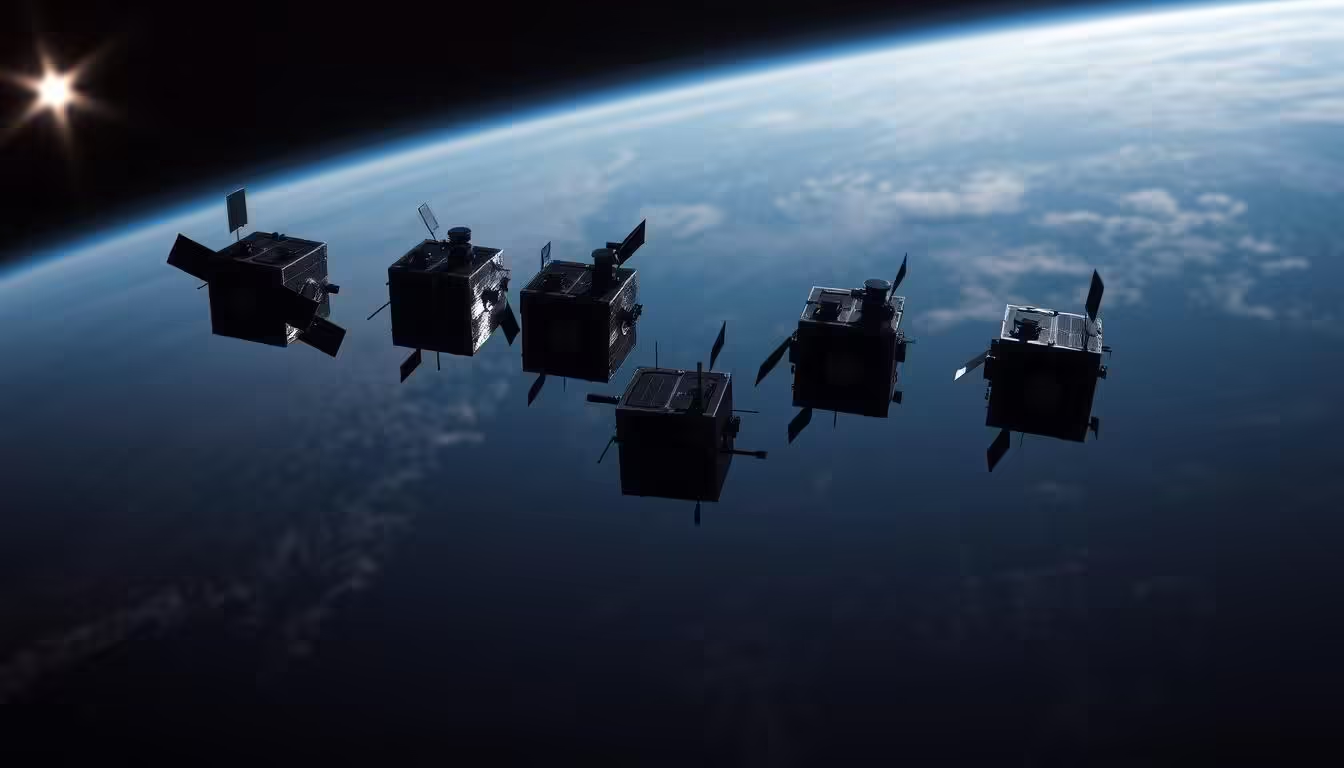
Climate Refugees and Border Pressures

The potential for climate-induced migration raises complex questions about border pressures and the status of climate refugees. International cooperation will be crucial in addressing these challenges.

Infrastructure Adaptation Needs

Existing infrastructure will need to be retrofitted or replaced to withstand the impacts of climate change. This includes not just physical structures but also the systems that support them, such as water management and transportation networks.

climate change impacts
Impact Area Projected Change Adaptation Needs
Food Security Decreased crop yields in some regions Shift to climate-resilient crops, improved agricultural practices
Population Migration Increased migration to urban areas Urban planning, infrastructure development
Infrastructure Increased damage from extreme weather events Retrofitting, resilient design, adaptive management

Best-Case vs. Worst-Case Scenarios for Our Environment

As we navigate the complexities of climate change, understanding the spectrum of potential outcomes is crucial. The future of our environment hangs in the balance, with different paths leading to vastly different environmental outcomes.

The rapid decarbonization pathway and business-as-usual trajectory represent two extreme climate scenarios that could unfold based on our actions. Understanding these scenarios is essential for making informed decisions about our sustainability pathways.

Rapid Decarbonization Pathway Outcomes

Adopting a rapid decarbonization pathway could lead to significant reductions in greenhouse gas emissions. This approach involves transitioning to renewable energy sources, increasing energy efficiency, and implementing policies to reduce carbon emissions.

Sector Decarbonization Strategies Expected Outcomes
Energy Transition to renewables, improve energy efficiency Reduced greenhouse gas emissions
Transportation Electrify vehicles, enhance public transport Lower emissions, improved air quality
Industry Implement carbon capture and storage, improve efficiency Significant reduction in industrial emissions

Business-as-Usual Trajectory Consequences

Continuing on a business-as-usual trajectory, characterized by high carbon emissions and resource exploitation, could have disastrous consequences. This path is associated with more frequent natural disasters, rising sea levels, and loss of biodiversity.

The consequences of inaction will be severe, with potential tipping points leading to irreversible changes. Understanding these climate scenarios helps us appreciate the urgency of adopting sustainability pathways that mitigate the effects of Climate Change.

The Limitations of AI Climate Prediction

Despite the progress made in AI-driven climate modeling, there are still significant limitations. AI climate models, while advanced, are only as good as the data they are trained on and the algorithms used to process this data.

Model Uncertainties and Blind Spots

One of the primary limitations is the uncertainty inherent in the models themselves. These uncertainties can arise from various sources, including the simplification of complex climate processes and the limited resolution of the models.

Additionally, AI models can have blind spots, particularly in regions or scenarios for which they have not been adequately trained.

Tipping Points and Cascading Effects

Another significant challenge is predicting tipping points and cascading effects. These are critical thresholds beyond which certain components of the climate system undergo abrupt, often irreversible changes.

Arctic Permafrost Melt Scenarios

The melting of Arctic permafrost is a tipping point that could release massive amounts of methane, a potent greenhouse gas. AI models struggle to accurately predict the timing and extent of this melt.

Ocean Circulation Disruptions

Changes in ocean circulation patterns can have significant cascading effects on global climate patterns. However, predicting these disruptions is challenging due to the complexity of ocean dynamics.

From Prediction to Policy: How AI Models Guide Climate Action

As we continue to grapple with the complexities of climate change, AI models are emerging as a crucial tool in guiding climate action. The ability of AI to process vast amounts of data and predict future climate scenarios is invaluable for policymakers and governments looking to develop effective climate strategies.

AI models can be used to inform climate policy by providing detailed risk assessments that help governments prepare for potential climate-related disasters. This is particularly important for vulnerable communities that are disproportionately affected by climate change.

Climate Risk Assessment for Governments

Governments can leverage AI-driven climate risk assessments to identify areas that are most at risk and develop targeted strategies to mitigate these risks. For instance, AI can help predict the likelihood of extreme weather events, such as hurricanes or droughts, allowing governments to prepare accordingly.

By understanding the potential impacts of climate change, governments can develop more effective emergency response plans and allocate resources more efficiently.

Economic Planning in an Uncertain Future

Economic planning is another critical area where AI models can provide valuable insights. By analyzing potential climate-related risks and opportunities, businesses and governments can make more informed decisions about investments and resource allocation.

For example, AI can help identify industries that are likely to be most affected by climate change, such as agriculture or tourism, and suggest strategies for diversification or adaptation.

By integrating AI guidance into climate policy and economic planning, we can create more resilient and sustainable communities. As AI technology continues to evolve, its role in shaping our response to climate change is likely to become even more significant.

Technology and Sustainability: AI-Driven Solutions for a Changing Climate

The intersection of technology and sustainability is where AI-driven innovations are making significant strides. As we face the challenges of climate change, it’s becoming increasingly clear that technology will play a crucial role in shaping our sustainable future.

Green Tech Innovation Pathways

Green tech innovations are being propelled forward by AI, enabling more efficient use of resources and reducing environmental impact. AI-driven innovations are crucial in optimizing renewable energy sources, predicting energy demand, and streamlining energy distribution.

Smart Infrastructure and Adaptive Systems

The development of smart infrastructure is vital for creating climate-resilient cities. AI is being used to design adaptive systems that can respond to environmental changes, minimizing the risk of damage to infrastructure and communities.

Renewable Energy Optimization

AI is optimizing renewable energy production by predicting output based on weather patterns, thereby ensuring a stable energy supply. This not only reduces reliance on fossil fuels but also helps in mitigating climate change.

Climate-Resilient Urban Design

Urban planning is being revolutionized by AI through the design of climate-resilient cities. By analyzing data on climate patterns, AI helps in creating infrastructure that can withstand extreme weather events, protecting communities and ensuring sustainable development.

By harnessing the power of AI and green tech, we can create a more sustainable future. The integration of technology and sustainability is not just a necessity; it’s an opportunity to innovate and thrive in a changing climate.

Conclusion: Navigating Our Climate Future with AI as Our Guide

As we face an increasingly uncertain climate future, AI guidance offers a beacon of hope for sustainable navigation through the challenges ahead. By harnessing the power of artificial intelligence, we can better understand and prepare for the changes that are coming.

The AI models discussed in this article demonstrate the potential for climate resilience through advanced prediction and data analysis. By leveraging these technologies, we can identify key areas of risk and develop targeted strategies for mitigation and adaptation.

As we move forward, it’s clear that AI will play a critical role in shaping our Environment and ensuring a sustainable future. By continuing to invest in AI-driven climate solutions, we can create a more resilient and adaptable world for generations to come.

FAQ

What is the role of AI in climate modeling?

AI is being increasingly used in climate modeling to improve the accuracy and detail of climate predictions, allowing for better understanding of future climate scenarios.

How do AI models simulate future climates?

AI models use complex algorithms and large datasets, including historical climate records, satellite observations, and other environmental data, to simulate future climates and predict changes.

What are the limitations of AI climate prediction?

While AI has significantly advanced climate modeling, there are still limitations, including model uncertainties, blind spots, and challenges in predicting tipping points and cascading effects.

How can AI models inform climate policy and guide climate action?

AI models can be used for climate risk assessment by governments and for economic planning in the face of climate uncertainty, helping to develop effective climate strategies.

What are some AI-driven solutions for addressing climate change?

AI-driven solutions include green tech innovations, smart infrastructure, adaptive systems, renewable energy optimization, and climate-resilient urban design, all aimed at creating a more sustainable future.

How do neural networks process climate data?

Neural networks process climate data by recognizing patterns and handling complex climate variables, allowing for more detailed and accurate climate predictions.

What are the potential environmental consequences of different climate paths?

The potential environmental consequences vary significantly between best-case and worst-case scenarios, with rapid decarbonization efforts leading to more favorable outcomes and a business-as-usual trajectory resulting in severe consequences.

How will climate change affect ecosystems and biodiversity?

Climate change is expected to lead to significant ecosystem transformations, including shifts in habitats and migration patterns, as well as increased extinction risks and changes in biodiversity hotspots.

What are the impacts of climate change on human society?

Climate change is projected to have significant impacts on food security, agricultural practices, population migration, and urban planning, with potential for climate refugees and infrastructure adaptation needs.

27. 🌎🌑️ Supercomputers model global weather, crunching terabytes of data daily to predict storms and heatwaves.

Supercomputers play a vital role in understanding and predicting weather patterns across the globe. By processing vast amounts of data daily, these powerful machines help scientists forecast severe weather events like storms and heatwaves.

Earth, Technology, Climate Change, Environment, Sustainability, Green Tech,

The use of supercomputers in climate modeling has revolutionized the field of meteorology. It enables researchers to analyze complex data sets, leading to more accurate weather predictions that are crucial for planning and safety measures.

With the help of advanced Technology, scientists can now model the behavior of the Earth’s atmosphere with greater precision. This not only aids in understanding current weather trends but also assists in predicting future changes.

Key Takeaways

  • Supercomputers process vast amounts of data to predict weather patterns.
  • Advanced climate modeling helps in forecasting severe weather events.
  • The use of powerful computing aids in understanding atmospheric behavior.
  • More accurate weather predictions enhance planning and safety measures.
  • Technological advancements are crucial for future weather forecasting.

The Evolution of Weather Forecasting: From Analog to Digital Supercomputing

The art of weather forecasting has undergone a significant transformation over the years, evolving from simple analog methods to complex digital supercomputing models. This transformation has not only improved the accuracy of weather forecasts but has also enabled meteorologists to predict weather patterns over longer periods.

Early Weather Prediction Methods

In the early days, weather forecasting relied heavily on observational data collected from weather stations, balloons, and ships. Meteorologists used this data to make predictions based on patterns and trends. However, these methods were limited by the amount of data that could be collected and processed.

The Digital Revolution in Meteorology

The advent of computers and satellite imaging marked the beginning of the digital revolution in meteorology. Computers enabled the processing of large amounts of data, while satellites provided a vast amount of information about atmospheric conditions. This revolution significantly improved the accuracy of weather forecasts.

Today’s Weather Supercomputing Landscape

Today, weather forecasting relies on powerful supercomputers that can process terabytes of data daily. These supercomputers run complex algorithms that analyze data from a variety of sources, including satellites, radar, and weather stations. The result is highly accurate and detailed weather forecasts.

weather supercomputing

Era Method Key Features
Analog Observational Reliance on weather stations, balloons, and ships
Digital Computer-based Use of computers, satellite imaging, and radar
Supercomputing High-performance computing Processing of terabytes of data, complex algorithms

Inside the World’s Most Powerful Weather Supercomputers

High-performance computing is at the heart of modern weather prediction systems. These advanced computers are capable of processing vast amounts of meteorological data to predict weather patterns with increasing accuracy.

Top Weather Prediction Systems Worldwide

The world’s top weather prediction systems are located in various countries, each with its unique architecture and capabilities. Some of the most notable systems include those operated by national meteorological agencies.

System Name Location Processing Power
Cray XC40 ECMWF 25 Petaflops
IBM Power9 NOAA 20 Petaflops
NEC SX-Aurora JMA 10 Petaflops

Hardware Architecture Designed for Meteorological Modeling

The hardware architecture of these supercomputers is specifically designed to handle complex meteorological models. This includes advanced processors and high-speed memory to manage large datasets.

High-performance computing for meteorological modeling

Processing Power: Petaflops and Beyond

The processing power of these systems is measured in petaflops, with the most powerful systems reaching speeds of over 25 petaflops. This immense power enables detailed weather forecasting and climate modeling.

As high-performance computing continues to evolve, we can expect even more accurate and detailed weather predictions, helping to save lives and protect communities from severe weather events.

The Global Data Collection Network: Feeding the Beast

A vast array of environmental monitoring technologies forms the backbone of modern weather prediction. The global weather data collection network is a complex system that gathers information from various sources, including satellites, ground-based weather stations, radar networks, ocean buoys, and atmospheric sensors.

Satellite Systems and Remote Sensing

Satellites play a crucial role in weather forecasting by providing data on cloud patterns, precipitation, and atmospheric conditions. Advanced remote sensing technologies enable the collection of detailed information about the Earth’s surface and atmosphere.

Ground-Based Weather Stations and Radar Networks

Ground-based weather stations measure temperature, humidity, wind speed, and other conditions on the Earth’s surface. Radar networks use Doppler radar technology to detect precipitation and other weather phenomena, providing critical data for short-term forecasting.

weather data collection

Ocean Buoys and Atmospheric Sensors

Ocean buoys and atmospheric sensors collect data on sea surface temperature, wave height, and atmospheric conditions over the oceans. This information is vital for predicting weather patterns, including storms and hurricanes.

Data Collection Method Description Key Data Collected
Satellite Systems Utilize remote sensing to gather data on atmospheric and surface conditions. Cloud patterns, precipitation, atmospheric temperature.
Ground-Based Weather Stations Measure surface weather conditions. Temperature, humidity, wind speed, pressure.
Ocean Buoys Collect data on oceanic and atmospheric conditions. Sea surface temperature, wave height, atmospheric pressure.

From Raw Data to Weather Models: The Computational Challenge

Transforming raw meteorological data into precise weather forecasts is a complex process that involves significant computational power. The journey begins with vast amounts of data collected from various sources, including satellites, ground-based weather stations, and radar networks.

Data Preprocessing and Quality Control

The first step in creating weather models is data preprocessing, which involves cleaning and organizing the raw data. This stage is crucial for ensuring the accuracy of the forecasts, as poor-quality data can lead to incorrect predictions. Quality control measures are implemented to identify and correct errors or inconsistencies in the data.

weather models computational process

Numerical Weather Prediction Algorithms

Once the data is preprocessed, numerical weather prediction (NWP) algorithms are applied to forecast the weather. These algorithms use complex mathematical models to simulate the behavior of the atmosphere. NWP is a critical component of modern weather forecasting, enabling meteorologists to predict weather patterns over various time scales.

“The accuracy of weather forecasting has improved significantly with advancements in NWP algorithms and computational power.” –

Dr. Jane Smith, Meteorologist

Ensemble Forecasting Techniques

To further enhance forecast accuracy, ensemble forecasting techniques are employed. This involves running multiple models with slightly different initial conditions to generate a range of possible forecasts. By analyzing these different scenarios, meteorologists can better understand the uncertainties associated with the predictions.

The computational challenge of weather forecasting is significant, but advancements in technology and modeling techniques continue to improve the accuracy and reliability of weather predictions.

Modeling Earth’s Complex Atmosphere: The Science Behind the Forecasts

Understanding the intricacies of Earth’s atmosphere is crucial for accurate weather forecasting. The atmosphere is a complex system influenced by various factors, including temperature, humidity, and wind patterns.

climate modeling

Atmospheric Physics in Computational Models

Atmospheric physics plays a vital role in computational models used for weather forecasting. These models incorporate principles of physics to simulate atmospheric behavior, including the movement of air masses and the formation of weather patterns. By accurately representing atmospheric physics, models can better predict weather phenomena.

Resolution and Scale Considerations

The resolution and scale of computational models significantly impact their accuracy. Higher resolution models can capture more detailed weather patterns, but they require more computational power. Modelers must balance resolution with computational resources to achieve optimal results.

Coupling Ocean and Atmospheric Models

Coupling ocean and atmospheric models is essential for accurate weather forecasting. The ocean and atmosphere interact closely, with ocean currents influencing atmospheric conditions and vice versa. By coupling these models, forecasters can better capture these interactions and improve forecast accuracy.

Advanced climate modeling techniques, including the incorporation of atmospheric physics, are crucial for understanding and predicting complex weather patterns. By refining these models and improving computational power, scientists can provide more accurate and reliable weather forecasts.

Predicting Extreme Weather Events: Storms, Hurricanes, and Heatwaves

With the aid of sophisticated supercomputers, meteorologists can now forecast severe weather conditions with greater precision. This advancement is crucial for public safety, as it enables more effective preparation and response to extreme weather events.

One of the critical areas where supercomputing has made a significant impact is in the tracking and prediction of hurricanes and cyclones. Advanced algorithms and high-resolution models allow for more accurate forecasting of these storms’ paths and intensities.

Hurricane and Cyclone Tracking Systems

Hurricane and cyclone tracking systems utilize complex models that take into account various atmospheric and oceanic factors. These models are run on powerful supercomputers that can process vast amounts of data quickly.

  • Advanced radar systems provide detailed information about storm structures.
  • Satellite imagery helps track the movement and development of storms.
  • Buoy data and other ground-based sensors offer critical information on sea surface temperatures and other conditions.

Severe Storm Prediction Capabilities

Severe storm prediction has also seen significant improvements. Supercomputers can now run models at higher resolutions, allowing for better prediction of storm initiation and intensification.

Key factors in severe storm prediction include:

  1. Atmospheric instability and moisture content.
  2. Wind shear and other dynamic factors.
  3. Terrain and land surface characteristics.

Heatwave Forecasting and Public Health Implications

Heatwave forecasting is another critical application of supercomputing in meteorology. Accurate predictions of heatwaves can have significant public health implications, enabling authorities to issue timely warnings and take preventive measures.

Some of the key aspects of heatwave forecasting include:

  • Temperature forecasts over extended periods.
  • Humidity and other factors that contribute to heat stress.
  • Identifying vulnerable populations and areas.

By improving the accuracy of heatwave forecasts, supercomputing helps reduce the risk of heat-related illnesses and deaths, ultimately saving lives.

The Accuracy Question: How Reliable Are Supercomputer Weather Predictions?

As we rely more heavily on supercomputers for weather predictions, understanding their accuracy is crucial. The precision of these forecasts can significantly impact various aspects of our lives, from daily planning to emergency preparedness.

Short-term vs. Long-term Forecast Accuracy

Supercomputer weather predictions tend to be more accurate in the short term (up to 3 days) than in the long term (beyond 7-10 days). This is because short-term forecasts are less affected by the complex interactions of various atmospheric factors.

The Butterfly Effect and Chaos Theory in Weather Modeling

The butterfly effect, a concept in chaos theory, suggests that small changes in initial conditions can lead to drastically different outcomes. In weather modeling, this means that even with advanced supercomputers, predicting weather patterns beyond a certain point becomes increasingly challenging.

Verification Methods and Improvement Metrics

To assess forecast accuracy, meteorologists use various verification methods, including comparing predicted weather patterns to actual observations. Key metrics for improvement include reducing the mean absolute error (MAE) and improving the Brier score.

Verification Method Description Improvement Metric
MAE (Mean Absolute Error) Average difference between predicted and observed values Lower MAE indicates better accuracy
Brier Score Measures the accuracy of probabilistic forecasts Lower Brier score indicates better accuracy

forecast accuracy

By understanding the strengths and limitations of supercomputer weather predictions, we can better utilize these forecasts to make informed decisions.

Understanding Earth Through Technology: Climate Change Research and Modeling

The intersection of technology and climate science is crucial for developing effective strategies to mitigate the impacts of climate change. Advanced computing models and data analytics are being used to better understand the complex interactions within Earth’s climate system.

Distinguishing Weather from Climate Models

Weather models focus on short-term atmospheric conditions, typically forecasting over periods of hours to days. In contrast, climate models examine long-term trends and patterns, often projecting decades or even centuries into the future. Understanding the distinction between these two types of models is essential for accurate climate change research.

Projecting Future Climate Scenarios

Climate models are used to project future climate scenarios based on various greenhouse gas emission pathways. These projections help policymakers and stakeholders develop strategies for mitigating and adapting to climate change. Key factors considered in these models include:

  • Global emissions trends
  • Land use changes
  • Population growth and urbanization

Modeling Climate Feedback Loops and Tipping Points

Climate feedback loops, such as the melting of Arctic ice and the release of methane from thawing permafrost, can significantly amplify the effects of climate change. Modeling these complex interactions is crucial for understanding potential tipping points and developing effective mitigation strategies.

By leveraging advanced technologies and modeling techniques, researchers can provide critical insights into the climate system, ultimately informing policies that promote sustainability and resilience in the face of climate change.

The Environmental Impact of Weather Supercomputing

Weather supercomputing, while crucial for accurate forecasting, poses substantial environmental challenges. The massive computational power required for weather modeling consumes vast amounts of energy, contributing to the carbon footprint of meteorological organizations.

Energy Consumption of Meteorological Computing Centers

Meteorological computing centers house powerful supercomputers that operate around the clock, consuming significant amounts of electricity. For instance, a single high-performance computing system can draw as much power as a small town.

Sustainability Initiatives in High-Performance Computing

To mitigate their environmental impact, many organizations are adopting sustainability initiatives. These include using renewable energy sources, improving cooling systems, and developing more energy-efficient hardware.

Green Technologies in Weather Prediction Infrastructure

The integration of green technologies is becoming increasingly important in weather prediction infrastructure. Innovations such as liquid cooling and renewable energy-powered data centers are helping to reduce the environmental footprint of weather supercomputing.

Real-World Applications: From Agriculture to Emergency Management

Accurate weather forecasting has far-reaching implications across various sectors, including agriculture and emergency management. The ability to predict weather patterns with high precision has transformed the way industries operate, making them more resilient to weather-related challenges. This section explores the real-world applications of advanced weather forecasting.

Economic Benefits of Accurate Weather Prediction

The economic benefits of accurate weather prediction are substantial. By knowing weather patterns in advance, industries such as agriculture can plan planting and harvesting schedules more effectively, reducing losses due to adverse weather conditions. This leads to increased productivity and cost savings.

For instance, a study on the economic benefits of weather forecasting in the agricultural sector revealed significant savings for farmers who used forecast information to make informed decisions. The use of precise weather forecasts can lead to sustainable forecasting practices, enhancing both economic and environmental outcomes.

Industry Economic Benefit Sustainable Practice
Agriculture Reduced crop loss Precision farming
Emergency Management Effective disaster response Early warning systems
Aviation Optimized flight routes Fuel efficiency

Disaster Preparedness and Response Systems

Advanced weather forecasting plays a crucial role in disaster preparedness and response. By predicting severe weather events such as hurricanes, tornadoes, and floods, emergency management officials can issue timely warnings, evacuating people from dangerous areas and minimizing the impact of disasters.

The use of sophisticated weather models and data analytics enables authorities to respond more effectively to emergencies, saving lives and reducing damage to infrastructure. This is a significant economic benefit as it reduces the financial burden associated with disaster response and recovery.

Industry-Specific Weather Forecasting Services

Various industries benefit from tailored weather forecasting services. For example, the energy sector uses weather forecasts to predict energy demand and supply, while the aviation industry relies on accurate weather information to ensure safe flight operations.

These industry-specific services demonstrate the versatility and value of advanced weather forecasting in supporting sustainable forecasting practices across different sectors.

The Future of Weather Prediction: AI, Quantum Computing, and Beyond

The future of weather prediction is on the cusp of a revolution, driven by emerging technologies like AI and quantum computing. These advancements are expected to significantly enhance the accuracy and detail of weather forecasts, enabling better decision-making across various industries.

AI is being increasingly used to improve weather forecasting by analyzing large datasets, identifying patterns, and making predictions. For instance, AI-powered models can process vast amounts of historical weather data to identify trends that may not be apparent to human analysts. This capability is particularly valuable for predicting extreme weather events, such as hurricanes and heatwaves.

Quantum computing, on the other hand, has the potential to solve complex weather modeling problems that are currently unsolvable with traditional computing architectures. By harnessing the power of quantum computing, researchers can develop more sophisticated models that capture the intricate dynamics of the atmosphere, leading to more accurate and reliable weather forecasts.

As these technologies continue to evolve, we can expect to see significant improvements in the field of weather prediction, ultimately benefiting various sectors, from agriculture to emergency management, and enhancing our understanding of the complex Earth’s atmosphere.

FAQ

How do supercomputers improve weather forecasting?

Supercomputers enhance weather forecasting by processing vast amounts of data quickly, allowing for more accurate and detailed predictions.

What is the role of satellite systems in weather forecasting?

Satellite systems play a crucial role in collecting meteorological data, including cloud patterns, temperature, and atmospheric conditions, which are essential for weather forecasting.

How do numerical weather prediction algorithms work?

Numerical weather prediction algorithms use complex mathematical models to forecast the weather by analyzing data from various sources, including weather stations, radar, and satellites.

What is the significance of ensemble forecasting techniques?

Ensemble forecasting techniques involve running multiple models with slightly different initial conditions to generate a range of forecasts, helping to quantify uncertainty and improve overall forecast accuracy.

How do weather supercomputers handle large datasets?

Weather supercomputers are designed to process large datasets efficiently, using advanced data storage solutions and high-speed processing architectures to handle the vast amounts of data generated by weather monitoring systems.

What are the challenges in predicting extreme weather events?

Predicting extreme weather events is challenging due to the complex and chaotic nature of the atmosphere, requiring advanced modeling techniques and high-resolution data to accurately forecast severe weather events.

How does climate change research relate to weather forecasting?

Climate change research informs weather forecasting by providing insights into long-term trends and patterns, helping to improve the accuracy of weather forecasts and predict potential future changes in weather patterns.

What is the environmental impact of weather supercomputing?

The environmental impact of weather supercomputing is significant due to the high energy consumption required to power these systems, highlighting the need for sustainability initiatives and green technologies in high-performance computing.

How do industry-specific weather forecasting services benefit various sectors?

Industry-specific weather forecasting services provide tailored forecasts to various sectors, such as agriculture, aviation, and emergency management, helping to improve decision-making and reduce weather-related risks.

What future advancements are expected in weather forecasting?

Future advancements in weather forecasting are expected to be driven by emerging technologies like AI, quantum computing, and advanced modeling techniques, potentially leading to more accurate and detailed weather predictions.

23. 🐳🌊 Underwater drones explore deep oceans and study marine life, going where humans can’t.

The world’s oceans are a vast and largely unexplored frontier, with much of the deep sea remaining a mystery. Underwater drones are revolutionizing our ability to study marine life and ecosystems in their natural habitats.

Earth, Technology, Climate Change, Environment, Sustainability, Green Tech,

These unmanned vehicles are capable of diving to extreme depths, collecting data, and observing species that were previously unknown or inaccessible to humans.

By exploring the deep oceans, underwater drones are expanding our knowledge of the ocean’s complexities and contributing to deep-sea research.

Key Takeaways

  • Underwater drones are revolutionizing ocean exploration.
  • They enable the study of marine life in their natural habitats.
  • Underwater drones can dive to extreme depths, collecting valuable data.
  • They are expanding our knowledge of the ocean’s complexities.
  • Underwater drones contribute significantly to deep-sea research.

The Unexplored Frontier: Our Ocean Depths

The ocean, covering over 70% of our planet, remains a vast and largely unexplored frontier. Despite its importance to our planet’s ecosystem, much of the ocean remains a mystery due to the extreme conditions found in its depths.

Why 95% of Our Oceans Remain Unexplored

The deep sea is characterized by high pressures, low temperatures, and a lack of light, making it one of the most inhospitable environments on Earth. These conditions limit human exploration, leaving much of the ocean’s depths uncharted.

The Limitations of Human Deep-Sea Exploration

Human exploration of the deep sea is hindered by the need for specialized equipment to withstand the extreme conditions. Even then, human presence is limited by factors such as pressure and the need for a reliable air supply.

The Need for Robotic Explorers

Robotic explorers, including underwater drones, have become essential tools for ocean exploration. They can withstand the harsh conditions of the deep sea, allowing us to map the ocean floor, study marine life, and gain insights into complex ecosystems.

Exploration Method Depth Limitation Data Collection Capability
Human Dive Limited to a few hundred meters Restricted by time and equipment
Robotic Explorers Can reach extreme depths Advanced sensors and sampling equipment

ocean exploration

Evolution of Underwater Drone Technology

The evolution of underwater drones has transformed ocean exploration, enabling us to study marine life and ecosystems in unprecedented detail. This technological advancement has been driven by innovations in materials science, robotics, and computer engineering.

From ROVs to Autonomous Underwater Vehicles

Early underwater vehicles were primarily Remotely Operated Vehicles (ROVs), controlled from the surface via a tether. The development of Autonomous Underwater Vehicles (AUVs) marked a significant shift, offering greater flexibility and autonomy in underwater operations. AUVs can now undertake complex missions without real-time human control.

Key Technological Breakthroughs

Several key technological breakthroughs have contributed to the sophistication of underwater drones. These include improvements in battery life, sensor technology, and navigation systems. For instance, advanced sonar and sub-bottom profiling technologies have enhanced the ability of AUVs to map the seafloor.

Technological Breakthrough Description Impact
Advanced Battery Life Longer mission durations Increased operational efficiency
Enhanced Sensor Technology Better data collection More accurate marine life studies
Improved Navigation Systems Precise underwater navigation Enhanced mapping capabilities

Current Generation Capabilities

Today’s underwater drones are capable of operating in extreme conditions, including deep-sea environments. They are equipped with high-resolution cameras and sensors, enabling detailed observations of marine ecosystems. The integration of Green Tech and sustainable practices in underwater drone technology is also promoting environmentally friendly ocean exploration.

Underwater Drone Technology

How Underwater Drones Function in Extreme Conditions

Underwater drones are revolutionizing deep-sea research by operating in extreme conditions previously inaccessible to humans. These drones are designed to withstand the harsh environment of the deep sea, including crushing pressures and near-freezing temperatures.

Pressure-Resistant Design

The pressure-resistant design of underwater drones is crucial for their operation in deep-sea environments. These drones are built with materials and structures that can resist the immense pressure found at great depths, often using syntactic foam or titanium alloys to achieve the necessary strength without excessive weight.

Power and Propulsion Systems

Underwater drones rely on advanced power and propulsion systems to navigate and maneuver in the deep sea. These systems are typically powered by rechargeable batteries and may include propulsion technologies such as thrusters or gliders, which enable the drones to move efficiently through the water.

Sensors and Data Collection Tools

Equipped with a range of sensors and data collection tools, underwater drones can gather valuable insights into the ocean environment. These may include sensors for measuring temperature, salinity, and other water properties, as well as cameras and sonar equipment for observing marine life and the seafloor.

Sensor Type Function Application
Temperature Sensor Measures water temperature Climate Change research
Salinity Sensor Measures water salinity Oceanographic studies
Sonar Equipment Maps seafloor topography Deep-sea exploration

underwater drones deep-sea research

The data collected by underwater drones is crucial for advancing our understanding of the ocean and its ecosystems. By providing insights into the deep-sea environment, these drones help scientists to better understand the impacts of Climate Change and other human activities on marine ecosystems.

Mapping the Ocean Floor: New Discoveries

The ocean floor, a vast and largely unexplored frontier, is now being mapped with unprecedented precision thanks to underwater drones. This technological advancement has opened new avenues for ocean exploration, enabling scientists to study the seafloor in detail.

3D Mapping Technologies

Underwater drones utilize advanced 3D mapping technologies, including sonar and bathymetric mapping, to create highly detailed models of the ocean floor. These technologies allow for the identification of new geographical features and a better understanding of existing ones.

3D mapping of ocean floor

Recent Geographical Discoveries

Recent geographical discoveries made possible by underwater drones include the identification of new underwater landscapes and ecosystems. These findings have significantly expanded our knowledge of the ocean’s geography.

Contributions to Oceanographic Knowledge

The detailed maps produced by underwater drones contribute substantially to oceanographic knowledge, helping scientists understand the complex interactions between the ocean’s ecosystems and the Earth’s geology. This knowledge is crucial for managing marine resources sustainably and understanding the Earth’s systems.

Studying Elusive Marine Species in Their Natural Habitat

Underwater drones have revolutionized the field of marine biology by enabling researchers to study elusive species in their natural habitat. This technological advancement allows for a deeper understanding of marine ecosystems without causing disturbance to the environment.

marine life observation

Non-Invasive Wildlife Observation

One of the significant advantages of using underwater drones is the ability to conduct non-invasive wildlife observation. By avoiding direct human interaction, researchers can observe marine life in its natural state, reducing the risk of altering their behavior.

Documenting Rare and Deep-Sea Species

Underwater drones are equipped with high-resolution cameras and sensors, making them ideal for documenting rare and deep-sea species. This capability has led to the discovery of new species and a better understanding of their habitats and behaviors.

“The use of underwater drones has opened up new possibilities for marine research, allowing us to explore and understand the ocean’s depths in ways previously unimaginable.”

Behavioral Studies Made Possible by Drones

The data collected by underwater drones enables scientists to conduct comprehensive behavioral studies of marine species. By analyzing the footage and data, researchers can gain insights into feeding patterns, migration routes, and social interactions of various marine species.

Overall, underwater drones are transforming our understanding of marine life and the Environment, providing valuable insights that can inform conservation efforts and promote a healthier ocean ecosystem.

Underwater Drones as Tools for Climate Change Research

Underwater drones are revolutionizing climate change research by providing unprecedented insights into the world’s oceans. These vehicles are equipped with advanced sensors that monitor various aspects of ocean health, contributing significantly to our understanding of climate change impacts. By exploring the ocean’s depths, scientists can gather critical data on the effects of global warming.

Monitoring Ocean Temperature and Acidification

One of the key roles of underwater drones in climate change research is monitoring ocean temperature and acidification. As the ocean absorbs more CO2 from the atmosphere, its pH levels decrease, becoming more acidic. This change in chemistry can have devastating effects on marine life, especially organisms with calcium carbonate shells, such as corals and shellfish.

Tracking Changes in Marine Ecosystems

Underwater drones are also used to track changes in marine ecosystems. By observing these ecosystems over time, researchers can identify shifts in species distribution, behavior, and abundance. This information is crucial for understanding how climate change affects biodiversity and ecosystem services.

Data Collection for Climate Models

The data collected by underwater drones is invaluable for improving climate models. By incorporating real-world data on ocean temperature, acidification, and ecosystem changes, scientists can refine their models to make more accurate predictions about future climate scenarios.

Measuring Sea Level Rise Indicators

Underwater drones contribute to measuring sea level rise indicators by monitoring changes in ocean depth and temperature. This data helps scientists understand the rate at which sea levels are rising and predict future changes. The table below summarizes some key indicators measured by underwater drones.

Indicator Description Importance
Ocean Temperature Measures the temperature at various depths Critical for understanding global warming impacts
Acidification Levels Monitors changes in ocean pH levels Essential for assessing impacts on marine life
Sea Level Rise Tracks changes in sea level Vital for predicting coastal flooding and erosion

Exploring Earth’s Marine Ecosystems with Sustainable Technology

Sustainable technology is playing a crucial role in advancing our understanding of marine ecosystems, from the depths of the ocean to the polar regions. This technological advancement is crucial for the conservation and study of diverse marine life.

marine ecosystems

Coral Reef Monitoring and Conservation

Underwater drones are being utilized for coral reef conservation, allowing for detailed monitoring of reef health and the impact of environmental changes. These drones can capture high-resolution images and collect data on water quality, temperature, and other vital parameters.

Deep-Sea Vent Exploration

The exploration of deep-sea vents has revealed unique ecosystems that thrive in harsh conditions. Underwater drones equipped with sustainable technology can explore these areas without causing significant environmental disruption.

Arctic and Antarctic Research Applications

In the Arctic and Antarctic regions, underwater drones are used to study marine ecosystems that are particularly vulnerable to climate change. These regions are critical for understanding global environmental shifts.

Sustainable Practices in Marine Research

The use of sustainable technology in marine research not only enhances our understanding of marine ecosystems but also promotes sustainability. By adopting environmentally friendly practices, researchers can minimize their ecological footprint.

Key sustainable practices include using renewable energy sources for underwater drones, minimizing waste, and ensuring that research activities do not harm marine life. These practices are essential for the long-term conservation of marine ecosystems.

Environmental Monitoring and Protection Applications

Environmental monitoring has taken a significant leap forward with the advent of underwater drones capable of tracking pollution and monitoring marine protected areas. These advanced vehicles are being increasingly utilized for a variety of environmental protection tasks, providing real-time data and insights that were previously unattainable.

Tracking Pollution and Plastic Waste

Underwater drones are equipped with advanced sensors that can detect and track pollution, including plastic waste, in our oceans. This capability is crucial for understanding the extent of pollution and devising strategies to mitigate its impact on marine life.

Oil Spill Detection and Response

One of the critical applications of underwater drones is in the detection and response to oil spills. By quickly identifying spills, these drones enable faster response times, minimizing the damage to marine ecosystems.

Monitoring Marine Protected Areas

Underwater drones play a vital role in monitoring marine protected areas, ensuring that these regions remain free from human-induced harm. They provide valuable data on the health of these ecosystems, helping conservation efforts.

Early Warning Systems for Environmental Threats

The data collected by underwater drones can be used to develop early warning systems for environmental threats. This proactive approach allows for timely interventions, potentially averting ecological disasters.

By leveraging underwater drones for environmental monitoring and protection, we can enhance our ability to safeguard the marine environment, ultimately contributing to a healthier planet.

Commercial and Industrial Applications

Commercial and industrial operations are increasingly relying on underwater drones for a range of critical tasks. These unmanned underwater vehicles (UUVs) are transforming industries by providing efficient, cost-effective solutions for complex underwater operations.

Offshore Energy Infrastructure Inspection

Underwater drones play a crucial role in inspecting offshore energy infrastructure, including oil rigs and wind farms. They enable detailed inspections without the need for human divers, enhancing safety and reducing costs.

Underwater Cable and Pipeline Monitoring

The monitoring of underwater cables and pipelines is another significant application. Underwater drones can detect damage, monitor corrosion, and inspect the overall condition of these critical infrastructure components.

Aquaculture and Fisheries Management

In aquaculture and fisheries, underwater drones are used for monitoring fish health, inspecting equipment, and managing marine environments. This technology helps in maintaining sustainable practices and improving productivity.

Maritime Archaeology and Salvage Operations

Underwater drones are also being utilized in maritime archaeology and salvage operations. They provide insights into historical sites and assist in the recovery of valuable resources, all while minimizing the risks associated with human exploration.

Industry Application Benefits
Offshore Energy Infrastructure Inspection Enhanced Safety, Cost-Effective
Aquaculture Fish Health Monitoring Improved Productivity, Sustainable Practices
Maritime Archaeology Historical Site Exploration Risk Minimization, Valuable Insights

Challenges and Limitations of Current Technology

Despite significant advancements, underwater drones still face numerous technological challenges that hinder their effectiveness in deep-sea exploration.

Battery Life and Power Constraints

One of the primary limitations is battery life. Underwater drones often have limited power reserves, restricting their operational duration and range. This constraint necessitates frequent recharging or replacement of batteries, which can be challenging, especially in remote deep-sea environments.

Communication Barriers in Deep Water

Communication is another significant challenge. Water’s density interferes with signal transmission, making it difficult to maintain reliable communication with underwater drones. This barrier complicates real-time data transmission and control.

Navigation and Autonomous Decision-Making

Accurate navigation and autonomous decision-making are crucial for effective underwater drone operation. However, the complex underwater environment poses significant challenges to these capabilities, requiring advanced sensors and sophisticated algorithms.

Harsh Environment Durability Issues

The deep-sea environment is characterized by extreme pressure, temperature fluctuations, and corrosive conditions, all of which can impact the durability of underwater drones. Ensuring the reliability and longevity of these devices in such harsh environments is a significant technological challenge.

The Future of Underwater Drone Technology

The next generation of underwater drones is set to transform our ability to explore, study, and protect marine environments. As technology advances, we can expect significant improvements in the capabilities of these underwater vehicles.

Emerging Technologies and Innovations

Emerging technologies are playing a crucial role in shaping the future of underwater drones. Miniaturization is one such innovation, allowing for the development of smaller, more agile drones that can navigate complex underwater environments with ease.

Another key area of advancement is in swarm capabilities, where multiple drones can operate in coordination, enabling more comprehensive data collection and exploration.

Miniaturization and Swarm Capabilities

The development of miniaturized drones is opening up new possibilities for underwater exploration. These smaller drones can be deployed in larger numbers, providing a more detailed understanding of marine ecosystems.

Swarm technology allows for coordinated operations, enhancing the efficiency and effectiveness of underwater missions.

Integration with AI and Machine Learning

The integration of AI and machine learning is set to revolutionize underwater drone technology. These advancements will enable drones to make autonomous decisions, improving their ability to adapt to changing underwater conditions.

Bioinspired Design and Soft Robotics

Bioinspired design and soft robotics are emerging as key areas of research. By mimicking nature, underwater drones can become more agile and capable of navigating complex environments.

This approach is expected to enhance the sustainability of underwater drone technology, allowing for more effective conservation and study of marine life.

Conclusion: Unlocking the Secrets of Our Blue Planet

Underwater drones are revolutionizing ocean exploration, providing unprecedented insights into the complex ecosystems and processes that exist beneath the waves. By studying marine life and monitoring the impacts of Climate Change, these vehicles are helping to unlock the secrets of our planet.

The continued evolution of underwater drone technology is expected to lead to new and exciting applications, from conservation and research to commercial and industrial uses. As we move forward, it’s clear that underwater drones will play a crucial role in supporting Sustainability and protecting the Earth’s oceans.

By advancing our understanding of the ocean and its ecosystems, we can better manage our impact on the planet and work towards a more sustainable future. The potential of underwater drones to transform our understanding of the ocean is vast, and their continued development is essential for the health of our planet.

FAQ

What are underwater drones used for?

Underwater drones are used for a variety of purposes, including ocean exploration, marine life research, environmental monitoring, and commercial applications such as offshore energy infrastructure inspection.

How do underwater drones withstand extreme conditions?

Underwater drones are designed with specialized materials and designs, such as pressure-resistant hulls and advanced propulsion systems, to withstand the harsh conditions of the deep sea.

What kind of data do underwater drones collect?

Underwater drones collect a range of data, including information on ocean temperature, marine life, and seafloor topography, which can be used to inform climate models, conservation efforts, and commercial operations.

Can underwater drones be used for conservation efforts?

Yes, underwater drones are being used to support conservation efforts, including monitoring marine protected areas, tracking pollution and plastic waste, and detecting oil spills.

What are some of the limitations of underwater drone technology?

Some of the limitations of underwater drone technology include battery life and power constraints, communication barriers in deep water, and the need for improved navigation and autonomous decision-making capabilities.

How are underwater drones being used in climate change research?

Underwater drones are being used to monitor ocean temperature and acidification, track changes in marine ecosystems, and collect data for climate models, providing insights into the impacts of climate change on the ocean.

What is the future of underwater drone technology?

The future of underwater drone technology is likely to be shaped by emerging innovations, including miniaturization, swarm capabilities, and integration with AI and machine learning, which will enable more efficient and effective operations.

Are underwater drones being used in commercial applications?

Yes, underwater drones are being used in a variety of commercial applications, including offshore energy infrastructure inspection, underwater cable and pipeline monitoring, and aquaculture and fisheries management.