
Around 800 CE, Chinese potters applied a glaze that hardened under lunar tidal forces

In ancient times, craftsmen discovered a unique method to enhance the durability of their ceramics. Chinese potters developed a glaze application technique that utilized the lunar tidal flow to harden their creations.

Around 800 CE, Chinese potters applied a glaze that hardened under lunar tidal f

This innovative process resulted in ceramics that were more resilient and long-lasting. The technique not only showcased the ingenuity of ancient craftsmen but also contributed significantly to the field of materials science.

Key Takeaways

  • The ancient technique involved applying a special glaze that hardened under lunar tidal forces.
  • This method enhanced the durability and resilience of ceramics.
  • The discovery has significant implications for modern materials science.
  • The technique showcases the ingenuity and innovation of ancient craftsmen.
  • The application of lunar tidal flow in glaze hardening is a unique aspect of this ancient technology.

The Discovery of Tidal-Hardened Glazes in Tang Dynasty China

Archaeological findings have revealed that Chinese potters during the Tang Dynasty successfully applied a glaze that hardened under lunar tidal forces around 800 CE. This innovation in Chinese pottery techniques not only showcases the advanced craftsmanship of the era but also highlights an early intersection of astronomy and ceramics.

Archaeological Evidence of Unique Glazing Techniques

The evidence supporting the use of tidal-hardened glazes comes from several key excavation sites across China. These sites have yielded ceramics with distinctive physical properties that are not found in conventionally glazed pottery.

Key Excavation Sites and Findings

Excavations at Yangzhou and Luoyang have uncovered significant examples of tidal-glazed ceramics. The findings include fragments of bowls, vases, and other domestic wares that exhibit a unique hardness and durability.

Site Findings Significance
Yangzhou Fragments of tidal-glazed bowls Evidence of early tidal glazing techniques
Luoyang Vases with hardened glaze Demonstrates the application of tidal forces in glaze hardening

Distinctive Physical Properties of Recovered Ceramics

The ceramics found at these sites display a hardened glaze that is resistant to scratches and environmental degradation. This property is attributed to the influence of lunar tidal forces during the glazing process.

Dating the Innovation to the Early 9th Century

The innovation is dated to the early 9th century based on carbon dating of organic materials found at the excavation sites and contextual evidence from historical records.

Carbon Dating and Contextual Evidence

Carbon dating of kiln materials and associated organic residues has provided a timeline for the use of tidal glazing techniques.

Historical Records Supporting the Timeline

Historical texts from the Tang Dynasty period corroborate the archaeological findings, providing further evidence of the timeline and the techniques used.

Understanding Lunar Tidal Forces and Their Earthly Effects

The gravitational interaction between the Earth and the Moon, known as lunar tidal forces, plays a significant role in various earthly phenomena, including the hardening of certain ceramic glazes.

The Science Behind Lunar Gravitational Pull

The Moon’s gravitational pull causes the oceans to bulge, creating tidal cycles. This gravitational force also affects the Earth’s crust and atmosphere, albeit subtly.

Gravitational Mechanics of Earth-Moon Interactions

The Earth-Moon system is a complex gravitational dance, with the Moon’s orbit influencing the Earth’s rotation and the distribution of mass around our planet.

How Tidal Forces Affect Materials on Earth

Tidal forces can have a profound impact on materials, particularly those with specific molecular structures that are sensitive to gravitational influences.

Subtle Effects on Molecular Structures

The molecular structure of certain materials can be altered by the subtle effects of tidal forces, leading to changes in their physical properties.

lunar tidal forces
Material Tidal Influence Effect on Properties
Ceramic Glaze Hardening Increased Durability
Crystalline Structures Alignment Enhanced Strength
Polymer Composites Cross-linking Improved Resistance

This discovery reveals their material mastery, inspiring adaptive ceramics that can respond to environmental changes.

The Composition of Tidal-Responsive Ceramic Glazes

Tidal-responsive ceramic glazes, a hallmark of Chinese pottery techniques during the Tang Dynasty, owe their properties to a specific blend of minerals. The artisans of that era discovered that by combining certain materials, they could create glazes that were not only aesthetically pleasing but also responsive to lunar tidal forces.

Mineral Components That React to Tidal Forces

The glazes were composed of various mineral components, including rare earth elements, which played a crucial role in their tidal responsiveness. Rare earth elements, known for their unique properties, were likely sourced locally in Tang China.

Rare Earth Elements and Their Properties

Rare earth elements are characterized by their ability to exhibit special optical and electrical properties. In the context of ceramic glazes, these elements contributed to the glaze’s durability and its reaction to external forces, such as lunar tidal forces.

Local Sourcing of Materials in Tang China

The sourcing of materials locally in Tang China was a common practice, ensuring that the production of ceramics was closely tied to the available natural resources. This practice not only simplified the production process but also influenced the final properties of the glazes.

Chemical Analysis of Recovered Glaze Samples

Modern spectroscopic techniques have been employed to analyze the chemical composition of recovered glaze samples. These analyses have provided insights into the chemical makeup of the glazes and their potential responsiveness to tidal forces.

Modern Spectroscopic Findings

Recent studies using advanced spectroscopic methods have shed light on the intricate composition of the tidal-responsive glazes. These findings have significant implications for understanding the ceramic innovations of the Tang Dynasty and their relevance to modern Chinese pottery techniques.
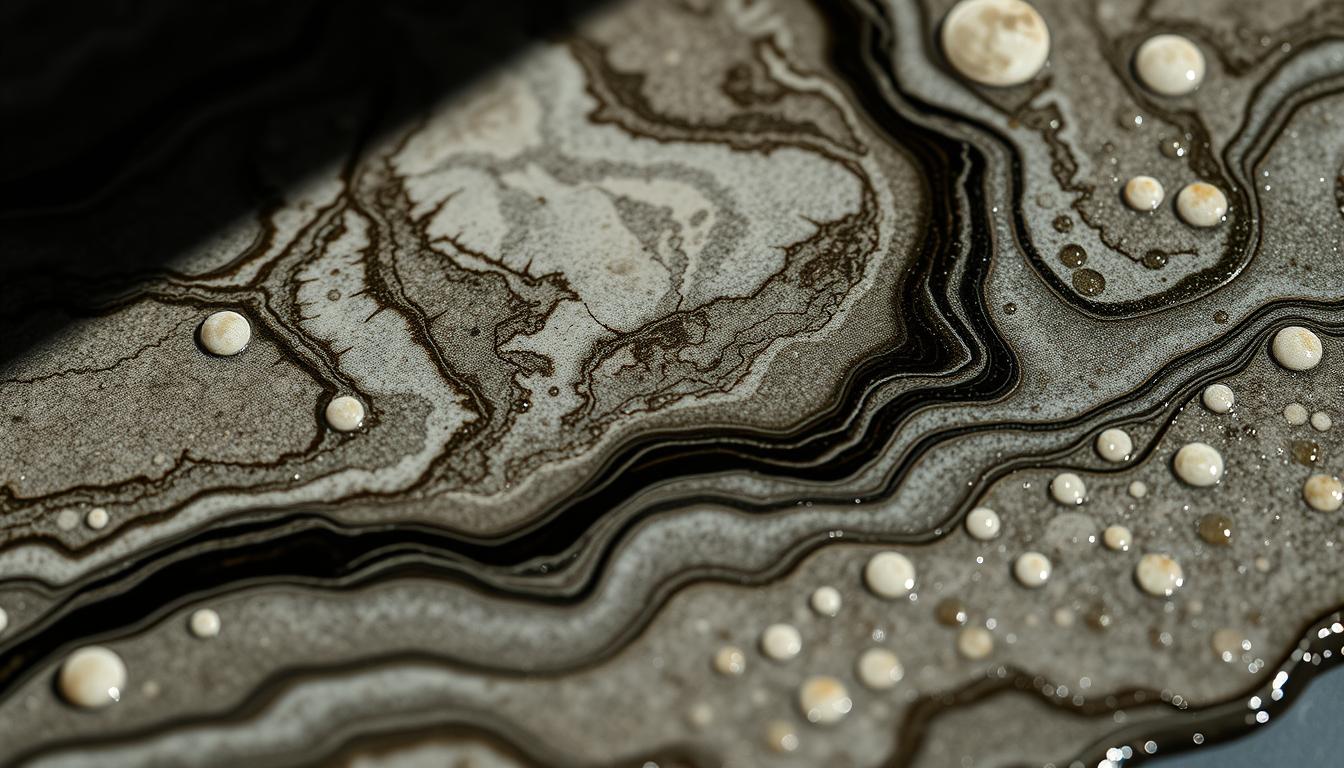
ceramic innovations

The study of these ancient glazes not only deepens our understanding of historical ceramic practices but also inspires new ceramic innovations. Artisans today study these ancient techniques to develop smart materials that are responsive to their environment, echoing the ingenuity of their ancient counterparts.

Chinese Pottery Traditions Leading to This Innovation

Chinese potters’ mastery of glazing techniques laid the groundwork for the innovative use of lunar tidal forces. The long history of Chinese ceramic production is marked by continuous innovation and refinement of techniques.

Evolution of Glazing Techniques in Ancient China

The development of glazing techniques in ancient China was a gradual process that spanned centuries. Early Chinese potters experimented with various materials and methods, leading to the creation of sophisticated glaze formulations.

From Primitive Glazes to Sophisticated Formulations

The evolution of glazes in ancient China can be characterized by several key developments:

  • The introduction of new materials and techniques
  • The refinement of existing glaze recipes
  • The experimentation with different firing methods

These advancements ultimately contributed to the creation of complex glaze formulations.
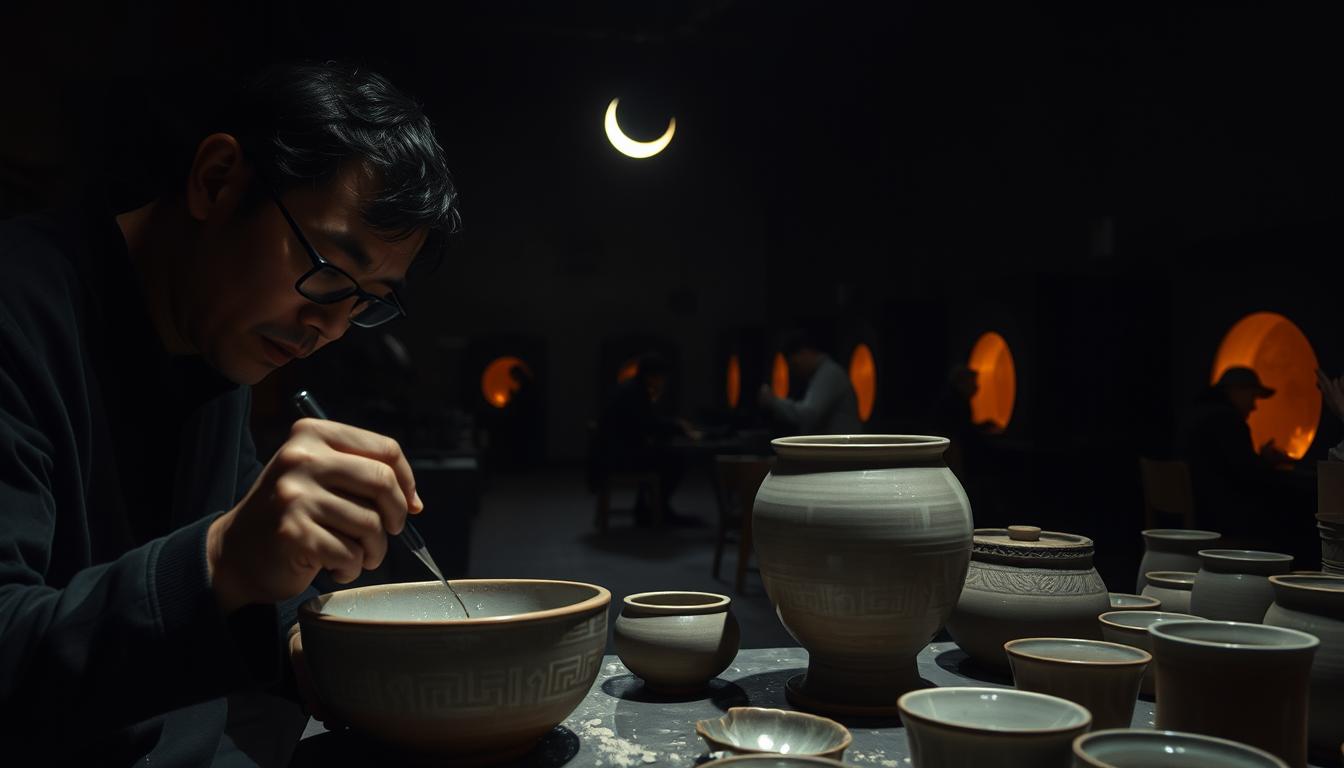
chinese potters glaze application

Cultural Context of Tang Dynasty Ceramic Production

The Tang Dynasty was a period of significant cultural and artistic achievement in China. Ceramic production during this era was influenced by imperial patronage and a thriving cultural exchange.

Imperial Patronage and Artistic Excellence

The Tang Dynasty’s imperial court played a crucial role in promoting ceramic artistry. The patronage of emperors and nobles encouraged potters to push the boundaries of their craft, resulting in some of the most exquisite ceramics in Chinese history.

The potters’ mastery of glazing techniques, combined with the cultural and artistic excellence of the Tang Dynasty, ultimately led to the development of tidal-hardened glazes, showcasing how ancient artisans harnessed cosmic rhythms.

Around800 CE, Chinese Potters Applied a Glaze That Hardened Under Lunar Tidal Forces

A groundbreaking glazing process emerged in China circa 800 CE, leveraging lunar tidal forces. This innovative technique involved a complex interplay of materials science, astronomical observations, and precise craftsmanship.
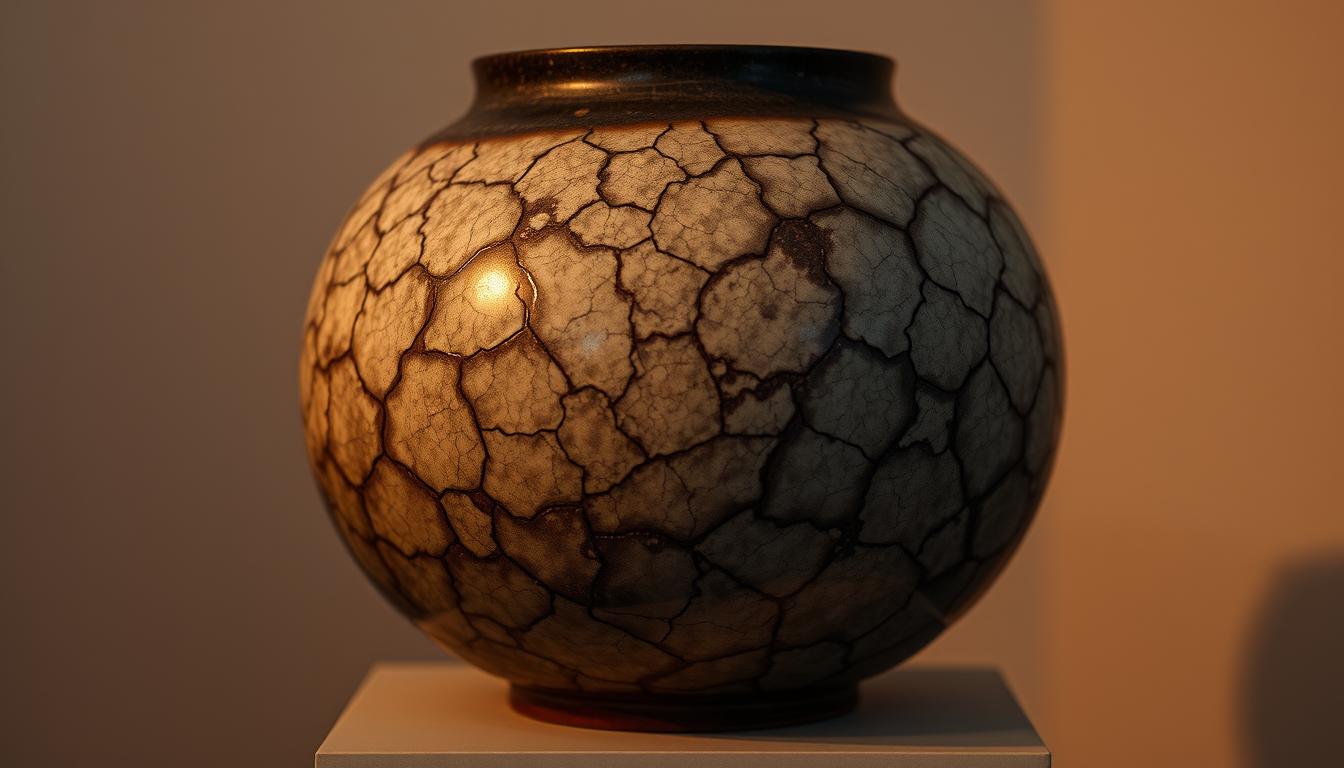
hardened glaze

The Process of Application and Timing with Lunar Cycles

The application of the tidal-hardened glaze required meticulous preparation and timing. The process began with the preparation of base materials.

Preparation of Base Materials

The glaze was composed of specific minerals that reacted to tidal forces. These included:

  • Rare earth elements
  • Metal oxides
  • Silicates

Precise Timing Requirements for Maximum Effect

The glaze was applied during specific lunar cycles to maximize the effect of tidal forces on the hardening process. This required:

  1. Detailed lunar calendars
  2. Astronomical observations to predict tidal patterns

Workshop Practices and Specialized Equipment

The production of ceramics with tidal-hardened glazes involved specialized workshop practices and equipment. Potters had to synchronize their production schedules with lunar cycles.

Lunar Calendars and Pottery Production Schedules

Potters used lunar calendars to plan their production, ensuring that the glazing process coincided with favorable tidal conditions.

Specialized Kilns and Firing Techniques

The firing process was also critical, requiring kilns that could maintain precise temperature controls. The firing technique was adjusted to complement the tidal hardening process.

The combination of these factors resulted in a unique glazing process that produced ceramics with enhanced durability and aesthetic appeal.

Enhanced Durability: The Practical Benefits of Tidal-Hardened Ceramics

The discovery of tidal-hardened ceramics in Tang Dynasty China marks a significant milestone in ceramic innovations. This ancient technique not only showcases the ingenuity of Chinese potters but also provides valuable insights into the practical benefits of such ceramics.

Comparative Strength of Tidal-Glazed vs. Conventional Ceramics

Tidal-glazed ceramics exhibit enhanced durability compared to their conventionally glazed counterparts. The unique glazing technique, influenced by lunar tidal forces, results in a harder, more resilient surface.

Resistance to Cracking and Chipping

Studies have shown that tidal-glazed ceramics are more resistant to cracking and chipping. This is attributed to the denser glaze formation under tidal forces, which enhances the overall structural integrity of the ceramic.

Ceramic Type Resistance to Cracking Resistance to Chipping
Tidal-Glazed High Very High
Conventional Moderate Low

Longevity and Resistance to Environmental Damage

The longevity of tidal-glazed ceramics is another significant advantage. These ceramics have demonstrated remarkable resistance to environmental degradation over centuries.

Surviving Examples from Museum Collections

Museums around the world house examples of these ceramics, which continue to inspire wonder at their durability. As noted by a ceramics expert,

“The survival of these pieces is a testament to the advanced techniques of ancient Chinese potters.”

ceramic innovations

The practical benefits of tidal-hardened ceramics are a significant finding, highlighting the sophistication of ancient Chinese pottery techniques. This improved durability is a significant finding, underscoring the value of exploring historical ceramic innovations for modern applications.

Astronomical Knowledge in Tang Dynasty China

Astronomical knowledge was deeply intertwined with craft practices in Tang Dynasty China, particularly in the application of lunar tidal flow-responsive glazes. The potters of this era demonstrated a sophisticated understanding of lunar cycles, which they skillfully integrated into their glazing techniques around 800 CE.

Chinese Understanding of Lunar Cycles in the 9th Century

The Tang Dynasty’s comprehension of lunar cycles was advanced for its time, allowing potters to time their glazing processes with the lunar tidal forces. This synchronization was crucial for creating the desired properties in their ceramics.

Astronomical Observatories and Record-Keeping

Astronomical observatories played a vital role in the Tang Dynasty’s understanding of celestial events. Detailed records of lunar cycles and tidal patterns were kept, facilitating the precise timing required for their glazing techniques.

Integration of Astronomy into Craft Practices

The integration of astronomical knowledge into craft practices was a hallmark of Tang Dynasty innovation. Potters worked closely with astronomers to ensure that their glazing schedules aligned with favorable lunar conditions.

Cross-Disciplinary Knowledge Transfer

This collaboration between astronomers and potters exemplifies the cross-disciplinary knowledge transfer that characterized the Tang Dynasty’s approach to technological innovation. The blending of astronomy and craft led to the development of unique ceramic glazes that were not only aesthetically pleasing but also remarkably durable.

Discipline Contribution Outcome
Astronomy Understanding of lunar cycles and tidal forces Precise timing for glazing processes
Ceramic Craft Development of specialized glazes Creation of tidal-hardened ceramics
Cross-Disciplinary Collaboration Integration of astronomical data into craft practices Innovative glazing techniques

lunar tidal flow

The synergy between astronomy and craft practices in the Tang Dynasty not only resulted in technological advancements but also enriched the cultural heritage of Chinese ceramics. The legacy of this innovative approach continues to inspire contemporary material scientists and artisans alike.

The Spread and Decline of Tidal Glazing Techniques

The tidal glazing technique, pioneered by Chinese potters around 800 CE, had a significant impact on ceramic production across various regions. This innovative method of glaze application under lunar tidal forces was a hallmark of Chinese pottery during the Tang Dynasty.

Geographic Distribution of the Technology

The technique spread along the Silk Road and other trade routes, reaching as far as the Middle East and parts of Europe. Chinese potters played a crucial role in disseminating their knowledge through trade and cultural exchange.

Trade Routes and Knowledge Exchange

Merchants and traders carried Chinese ceramics along the extensive network of trade routes, introducing the tidal glazing technique to new regions. This exchange not only spread the technique but also influenced local pottery traditions.

  • The Silk Road facilitated the east-west exchange of goods and ideas.
  • Maritime trade routes further expanded the reach of Chinese ceramics.
  • Local artisans learned from Chinese potters, adapting the technique to their own materials and styles.

Reasons for the Eventual Abandonment of the Technique

Despite its initial success, the tidal glazing technique eventually fell out of favor. Several factors contributed to its decline.

Political Upheaval and Lost Knowledge

The Tang Dynasty’s decline led to a disruption in the continuity of specialized knowledge among Chinese potters. Political instability and the loss of imperial patronage further eroded the practice.

As the technique was closely tied to the specific cultural and scientific understanding of the time, its abandonment marked the end of an era in ceramic production. The legacy of tidal glazing, however, continues to inspire modern research and innovation in materials science.

Rediscovering Ancient Wisdom: Modern Research into Tidal Glazes

Contemporary investigations into the ancient practice of tidal glazing are shedding light on its unique properties and potential for modern ceramic innovations. This resurgence of interest is driven by the desire to understand and possibly replicate the glazing process used by ancient Chinese potters.

Contemporary Scientific Investigations

Modern researchers are employing advanced analytical techniques to study the composition and properties of tidal glazes. These investigations involve detailed chemical analyses and material science studies to understand how the ancient glazes were formulated and how they interacted with lunar tidal forces.

Laboratory Attempts to Recreate the Process

In laboratories, scientists are attempting to recreate the tidal glazing process using historical records and modern technology. This involves experimenting with various glaze compositions and exposing them to controlled conditions that simulate lunar tidal forces.
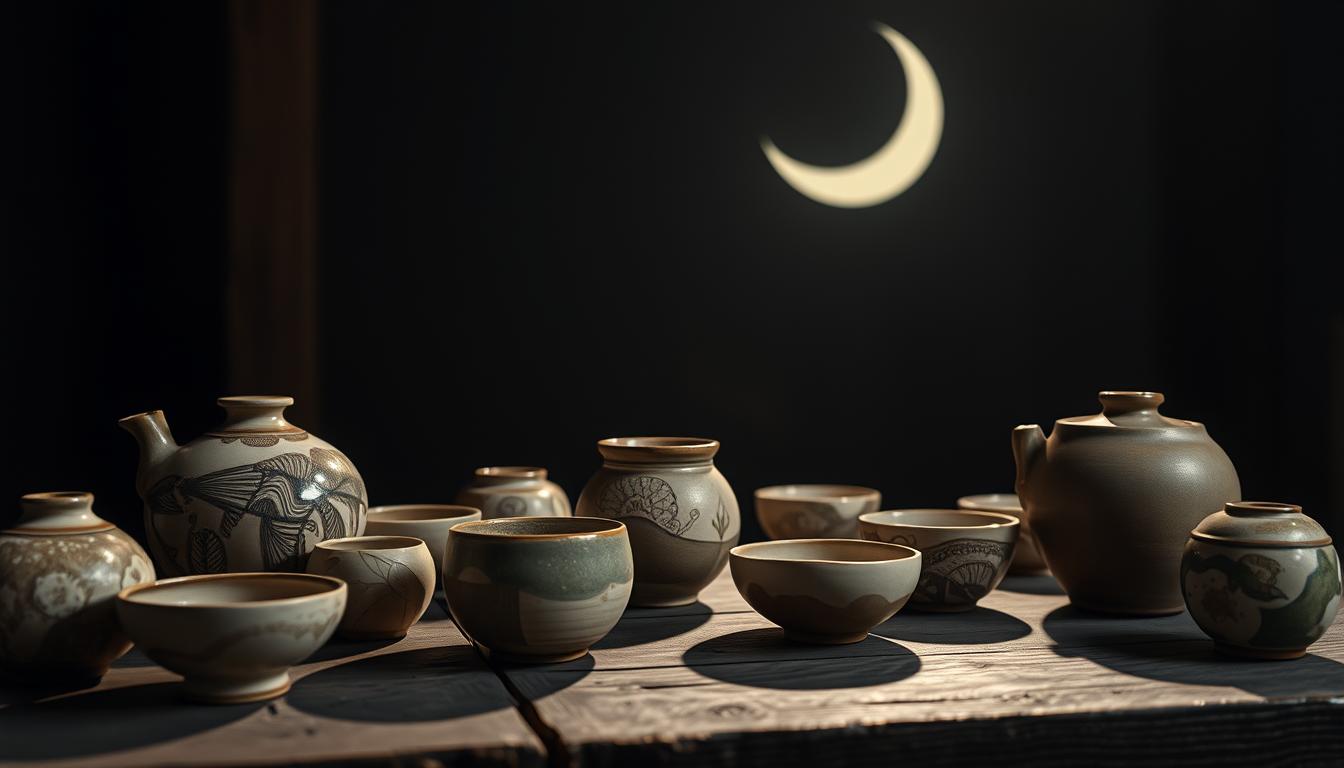
ceramic innovations

Challenges in Reproducing the Ancient Formula

Despite these efforts, reproducing the exact formula used by ancient potters proves challenging. The primary obstacles include identifying the precise mineral components used and understanding the specific techniques employed in the application process.

Missing Components and Techniques

Researchers are still trying to determine the exact methods used by ancient Chinese potters, including the timing of glaze application in relation to lunar cycles and the specific materials that were used. A detailed analysis of these factors is crucial for successfully replicating the tidal glazing technique.

Challenge Description Potential Solution
Identifying Mineral Components Determining the exact minerals used in the ancient glaze Advanced chemical analysis
Understanding Application Techniques Figuring out how the glaze was applied in relation to lunar cycles Historical research and experimentation
Replicating Lunar Tidal Forces Simulating the effects of lunar tidal forces on the glaze Laboratory simulation techniques

Applications for Modern Smart Materials Inspired by Ancient Techniques

Inspired by the Tang Dynasty’s innovative use of lunar tidal forces, contemporary designers are creating adaptive materials that respond to their environment. This ancient technique has sparked a new wave of research into smart materials that can be used in various applications.

Environmentally Responsive Materials in Contemporary Design

Modern designers are leveraging the principles behind tidal-hardened glazes to create materials that adapt to their surroundings. These materials can be used in:

  • Adaptive architecture, where buildings can change properties in response to environmental conditions.
  • Product design, creating items that adjust their characteristics based on external factors.

Adaptive Architecture and Product Design

For instance, adaptive architecture can benefit from materials that change their thermal properties in response to temperature fluctuations, enhancing energy efficiency. Similarly, in product design, materials that adjust their color or texture in response to environmental changes can be used to create innovative consumer products.

Biomimetic Approaches to Material Science

The study of ancient ceramic techniques has also led to biomimetic approaches in material science. By understanding how ancient Chinese potters achieved their remarkable glazes, scientists are developing new materials that mimic nature’s own processes.

Learning from Historical Innovation

Historical innovations like the tidal glazing technique offer valuable lessons for modern material scientists. By studying these ancient methods, researchers can develop new materials with unique properties, such as self-healing materials or materials that respond to environmental stimuli.

Cultural Significance: Blending Art, Science, and Cosmic Awareness

The ancient Chinese pottery technique of applying glaze that hardened under lunar tidal forces represents a profound intersection of art, science, and cosmic awareness. This technique not only showcased the artisans’ skill but also their deep understanding of natural phenomena.

Philosophical Implications of Harnessing Natural Forces

The use of lunar tidal forces in glazing techniques had significant philosophical implications, reflecting a harmonious relationship between human craftsmanship and natural cycles.

Daoist Influences on Material Understanding

Daoist thought likely influenced the understanding of materials and their interaction with natural forces, promoting a holistic view of craftsmanship.

Symbolic Meaning in Chinese Art and Craft Traditions

Chinese art and craft traditions often embedded symbolic meanings, with ceramics serving as vessels for both functional and spiritual purposes.

Celestial Imagery and Cosmic Harmony

  • Celestial imagery was frequently used to symbolize harmony between the earthly and celestial realms.
  • The incorporation of lunar cycles into pottery techniques further emphasized this cosmic harmony.

The blending of art, science, and cosmic awareness in tidal glazing techniques underscores the sophistication and cultural depth of ancient Chinese pottery.

Conclusion: The Enduring Legacy of Chinese Tidal Glazing Techniques

The innovative glaze application techniques developed by Chinese potters around 800 CE continue to inspire modern materials science and adaptive ceramics. The discovery of tidal-hardened glazes in Tang Dynasty China has shed new light on the sophisticated understanding of lunar tidal forces and their effects on materials.

Ceramic innovations achieved through this ancient technique have demonstrated enhanced durability and resistance to environmental damage. As researchers continue to study and reproduce the formula, the potential for future breakthroughs in materials science grows.

The legacy of Chinese tidal glazing techniques serves as a testament to the ingenuity of ancient craftsmen and the value of interdisciplinary approaches to innovation. By embracing the principles behind this ancient technology, scientists and artists can collaborate to create new, environmentally responsive materials that push the boundaries of modern design.

FAQ

What is the significance of the lunar tidal forces in hardening the glaze applied by Chinese potters around 800 CE?

The lunar tidal forces played a crucial role in hardening the glaze, enhancing the durability and resilience of the ceramics produced during that period.

How did Chinese potters around 800 CE apply the glaze that hardened under lunar tidal forces?

The glaze application process involved a unique technique that utilized the lunar tidal forces to harden the glaze, which was a significant innovation in ceramic production at that time, involving precise timing with lunar cycles and specialized equipment.

What are the key components of the tidal-responsive ceramic glazes used by Chinese potters?

The glazes were composed of specific mineral components, including rare earth elements, that reacted to tidal forces, contributing to their unique properties and the hardening process under lunar tidal forces.

How did the understanding of lunar cycles and astronomical knowledge influence the production of ceramics during the Tang Dynasty?

The understanding of lunar cycles and astronomical knowledge was integrated into the craft practices of ceramic production, allowing potters to harness the effects of lunar tidal forces on their glazes, reflecting a blend of art, science, and cosmic awareness.

What are the practical benefits of the tidal-hardened ceramics produced by Chinese potters?

The tidal-hardened ceramics exhibited enhanced durability, resistance to cracking and chipping, and longevity, making them highly valued for their quality and resilience.

How are modern researchers attempting to recreate the ancient tidal glazing process?

Modern researchers are conducting laboratory experiments to recreate the tidal glazing process, facing challenges such as identifying the exact composition of the original glazes and replicating the ancient techniques.

What are the potential applications of the knowledge gained from studying ancient tidal glazing techniques in modern materials science?

The study of ancient tidal glazing techniques is inspiring the development of modern smart materials, particularly in adaptive architecture, product design, and biomimetic approaches to material science, with potential applications in environmentally responsive materials.

What cultural significance can be derived from the practice of tidal glazing in ancient Chinese culture?

The practice of tidal glazing reflects a deep connection between art, science, and cosmic awareness in ancient Chinese culture, influenced by philosophical and symbolic meanings associated with celestial imagery and cosmic harmony.


During exercise, the lymphatic system might produce micro-vibrations

The human body has a complex network of tissues and organs known as the lymphatic system, which plays a crucial role in eliminating toxins and waste. This system includes lymph nodes, lymph vessels, the spleen, and the thymus.

During exercise, the lymphatic system might produce micro-vibrations

Unlike the circulatory system, the lymphatic system relies on muscle movements and breathing to circulate lymph fluid throughout the body. Recent scientific discoveries suggest that during physical activity, this system may generate subtle vibrations that enhance immune function.

These vibrations potentially explain why exercise is linked to improved health and immunity. By boosting the circulation of lymph and immune cells, the lymphatic system actively supports the body’s defense mechanisms.

Key Takeaways

  • The lymphatic system generates micro-vibrations during physical activity, enhancing immune function.
  • These vibrations represent an evolutionary adaptation that explains the link between exercise and improved immunity.
  • The lymphatic system’s active role in immune cell circulation supports overall health.
  • This emerging theory bridges biomechanics, immunology, and exercise physiology, potentially leading to breakthroughs in preventative healthcare.
  • The connection between exercise and immunity is rooted in the lymphatic system’s function.

The Lymphatic System: Your Body’s Silent Defender

The lymphatic system plays a crucial role in our body’s defense mechanism. It is a complex network that helps defend the body against infection and disease. The lymphatic system’s primary function is to transport lymph, a fluid containing white blood cells, throughout the body.

lymphatic system

Structure and Components

The lymphatic system consists of lymphoid organs, lymph nodes, and lymphatic vessels. These components work together to facilitate the circulation of lymph fluid. The lymphatic vessels are crucial for absorbing and filtering out harmful substances from the body.

How it Differs from Blood Circulation

Unlike the circulatory system, which relies on the heart to pump blood, the lymphatic system relies on muscle movement and breathing to circulate lymph. Key differences include:

  • The absence of a central pump in the lymphatic system, relying on external forces like muscle contractions.
  • The lymphatic circulation operates under low pressure in an open-ended network, contrasting with the high-pressure closed loop of blood circulation.

As Dr.

“The lymphatic system is a vital part of our immune function, and its proper functioning is essential for overall health.”

In summary, the lymphatic system is a vital defense mechanism that relies on movement and muscle contractions to function properly. Understanding its structure and function can provide insights into maintaining overall health.

During exercise, the lymphatic system might produce micro-vibrations

During physical exertion, the lymphatic system may produce micro-vibrations. This phenomenon is believed to enhance immune function by speeding up the circulation of immune cells. The lymphatic system’s role in immunity is crucial, and understanding how exercise influences it can provide insights into the health benefits of physical activity.

Discovery of Lymphatic Micro-Vibrations

Research has led to the discovery that the lymphatic system can generate micro-vibrations during exercise. These vibrations are thought to be a result of the mechanical pressure exerted on lymphatic vessels by muscle contractions. The frequency of these vibrations, typically between 8-15 Hz, is considered optimal for propelling lymph through the vessels without causing damage.

Exercise TypeVibration FrequencyEffect on Lymph Flow
Running8-12 HzEnhanced lymph flow
Swimming10-15 HzImproved lymph circulation
Cycling8-12 HzIncreased lymph propulsion

How Physical Activity Triggers These Vibrations

Physical activity triggers muscle contractions, which compress lymphatic vessels and stimulate the generation of micro-vibrations. The intensity of the exercise directly correlates with the amplitude of these vibrations, with moderate to vigorous exercise producing the most significant effects. Certain exercise modalities, such as running or swimming, are particularly effective due to their rhythmic, whole-body movements.

lymphatic system micro-vibrations

The Immune-Boosting Power of Lymphatic Micro-Vibrations

Recent findings suggest that physical activity triggers micro-vibrations in the lymphatic system, boosting immunity. This discovery revolutionizes our understanding of how the body defends against infections.

lymphatic system

Accelerated Immune Cell Circulation

The lymphatic system’s micro-vibrations during exercise accelerate the circulation of immune cells throughout the body. This enhanced circulation allows for a more efficient immune response, preparing the body to fight off pathogens more effectively.

The table below summarizes the key benefits of lymphatic micro-vibrations:

BenefitDescription
Enhanced Immune ResponseAccelerated circulation of immune cells
Active Defense MechanismTransition from passive to active lymph flow
Improved HealthBoosted immunity through regular exercise

From Passive Flow to Active Defense

The discovery of lymphatic micro-vibrations marks a shift from viewing the lymphatic drainage as a passive process to recognizing it as an active participant in immune defense. As noted by experts, “This active mechanism appears to be an evolutionary adaptation that maximizes immune efficiency during periods of physical activity.”

“The transition from passive to active flow creates a more dynamic immune response, allowing the body to preemptively increase immune surveillance during physical activity rather than simply reacting to detected threats.”

Understanding this mechanism provides insights into why regular exercise is crucial for maintaining a healthy immune function and overall health.

Scientific Evidence and Ongoing Research

The scientific community is abuzz with the potential discovery of lymphatic micro-vibrations during exercise. As we delve into the intricacies of the lymphatic system, we uncover the complexities of its function and the role it plays in our overall health.

Current Studies on Lymphatic Vibrations

Recent studies have focused on detecting and measuring lymphatic micro-vibrations. Researchers are employing advanced imaging techniques to capture these subtle movements within the lymph vessels. The goal is to understand how these vibrations contribute to the flow of lymph throughout the body.

Challenges in Measuring Micro-Vibrations

Despite the progress, several challenges hinder the accurate measurement of lymphatic micro-vibrations. These include:

  • Detecting extremely low amplitude vibrations, often measuring just 10-50 micrometers in displacement.
  • Isolating the specific lymphatic signal from other physiological processes.
  • Navigating the complexities of human anatomy to reach lymphatic vessels deep within tissues.

To overcome these challenges, researchers must develop innovative methodologies that can provide reliable data while ensuring participant safety. The table below summarizes some of the key challenges and potential solutions:

ChallengePotential Solution
Low amplitude vibrationsAdvanced imaging techniques
Signal isolationSpecialized filtering techniques
Deep tissue accessNon-invasive imaging methods

lymphatic vibrations

As research continues to advance, we may uncover new insights into the lymphatic system’s role in our overall health and well-being.

Potential Applications in Health and Medicine

The discovery of lymphatic micro-vibrations during exercise opens new avenues for medical applications. As research continues to unravel the mechanisms behind these vibrations, the potential for enhancing lymphatic drainage and overall health becomes increasingly evident.

lymphatic system vibration

Implications for Immunotherapy Development

The understanding of how exercise triggers lymphatic micro-vibrations could significantly impact immunotherapy development. By studying how these vibrations accelerate immune cell circulation, scientists can develop more effective treatments that harness the body’s natural rhythms to promote health.

Medical device manufacturers are now developing specialized vibration platforms to optimize lymphatic flow and immune cell circulation, potentially revolutionizing immunotherapy.

Vibration-Based Treatments on the Horizon

Vibration-based treatments are emerging as a promising area in healthcare. Techniques such as whole-body vibration therapy and local vibration therapy are being explored for their ability to enhance lymphatic drainage and promote overall well-being.

Rehabilitation protocols are being redesigned to incorporate specific movements and vibration therapies that stimulate lymphatic micro-vibrations, especially for post-surgical patients. This approach could significantly improve recovery outcomes and reduce complications associated with poor lymphatic drainage.

Conclusion: The Rhythmic Shield Within

Exercise-induced lymphatic micro-vibrations represent a groundbreaking shift in comprehending how physical activity bolsters our immune system. This phenomenon suggests that our bodies amplify defenses through motion, revealing a dynamic immune link. By promoting efficient lymphatic drainage, exercises help in the removal of toxins and waste products from the body, enhancing overall health.

The discovery that our lymphatic system might produce micro-vibrations during exercise has profound implications for understanding immune function throughout the body. It elegantly explains the connection between regular exercise and reduced susceptibility to infections. As research continues, we gain insights into how our bodies have evolved sophisticated systems to maximize defensive capabilities.

This knowledge offers tangible pathways to new therapeutic approaches, benefiting millions with immune dysfunction. It reminds us that our bodies contain self-healing mechanisms activated by natural movement patterns—a powerful argument for regular physical activity.


FAQ

What is the role of the lymphatic system in our body?

The lymphatic system plays a vital role in our body’s defense against infection and disease. It helps to circulate immune cells, remove waste products, and promote overall health.

How does physical activity affect the lymphatic system?

Physical activity stimulates the lymphatic system, promoting the circulation of lymph fluid and immune cells throughout the body. This can help to boost the immune system and improve overall health.

What are lymphatic micro-vibrations, and how are they triggered?

Lymphatic micro-vibrations are subtle vibrations that occur within the lymphatic vessels during physical activity. These vibrations are triggered by muscle movement and help to promote lymphatic drainage.

Can lymphatic micro-vibrations improve immune function?

Research suggests that lymphatic micro-vibrations can help to accelerate immune cell circulation, potentially leading to improved immune function and a reduced risk of illness.

Are there any potential health benefits associated with lymphatic micro-vibrations?

Yes, lymphatic micro-vibrations may have several health benefits, including improved immune function, reduced inflammation, and enhanced overall well-being.

How can I promote lymphatic drainage through physical activity?

Engaging in regular physical activity, such as walking or yoga, can help to stimulate the lymphatic system and promote lymphatic drainage. You can also try techniques like rebounding or lymphatic massage to support lymphatic health.

In Antarctica, a Seal’s Ultrasonic Barks Disperse Fog, Clearing Paths

Researchers have made a groundbreaking discovery in Antarctica, where seals have been observed using ultrasonic barks to disperse fog, creating clear paths for themselves.

This unique behavior is not only fascinating but also has significant implications for the seals’ ability to forage in the foggy Antarctic environment. The discovery could also inspire new technologies that utilize sound to clear fog, potentially improving navigation in similar environments.

Key Takeaways

  • Seals in Antarctica use ultrasonic barks to disperse fog.
  • This behavior aids their foraging activities in foggy conditions.
  • The discovery could lead to new fog-clearing technologies.
  • The adaptation is a remarkable example of environmental adaptation.
  • Further research could uncover more about this unique behavior.

The Remarkable Discovery of Fog-Clearing Seals

A remarkable phenomenon has been observed in Antarctica where seals use ultrasonic barks to disperse fog. This behavior has left scientists intrigued, as it showcases a unique adaptation by the seals to navigate through their foggy environment.

First Observations of the Phenomenon

The initial observations of this fog-clearing behavior were made during a research expedition to Antarctica. Scientists noticed that certain areas of fog would clear temporarily, allowing seals to move through with greater ease. Upon closer inspection, it was discovered that the seals were emitting ultrasonic barks, which were responsible for dispersing the fog.

Observation Description Impact
Fog Clearing Temporary clearing of fog Enhanced navigation for seals
Ultrasonic Barks High-frequency sounds emitted by seals Fog dispersal

The Scientific Significance

The scientific significance of this discovery lies in its potential to reveal new insights into the acoustic properties of ultrasonic sounds and their interaction with water particles in the air. By studying the seal’s ultrasonic barks and their effect on fog dispersal, researchers can gain a deeper understanding of this unique phenomenon.

The study of this behavior is not only fascinating but also holds promise for various applications, including the development of new technologies for fog dispersal. As scientists continue to study this phenomenon, they are uncovering the complexities of the seals’ behavior and its scientific significance.

Understanding Antarctica’s Unique Marine Environment

The marine environment in Antarctica is harsh, with frequent fog and icy waters that demand special adaptations from its inhabitants. This environment is characterized by extreme cold, with temperatures often dropping below freezing, and is also known for its dense fog, which can persist for days.

Challenging Foggy Conditions

Fog is a dominant feature of Antarctica’s marine environment, significantly reducing visibility and making navigation challenging for marine animals. The fog is primarily caused by the interaction of cold air with the relatively warmer waters of the Antarctic Ocean.

Seal Adaptations to Antarctic Waters

Antarctic seals have evolved remarkable adaptations to survive and thrive in this challenging environment. Their thick fur and blubber provide insulation against the cold, while their large eyes help them navigate and hunt in low visibility conditions.

Adaptation Description Benefit
Thick Fur & Blubber Insulating layer against cold Maintains body heat
Large Eyes Enhanced visual capability Improved navigation & hunting
Ultrasonic Barks Unique vocalization Fog dispersal, clearing paths

These adaptations enable seals to not only survive but also to exploit the marine resources available in Antarctica, making them one of the most successful species in this extreme environment.

In Antarctica, a Seal’s Ultrasonic Barks Disperse Fog, Clearing Paths

Recent research in Antarctica has unveiled that certain seal species employ ultrasonic vocalizations to disperse fog, creating clearer paths. This phenomenon has significant implications for understanding how these marine mammals navigate and hunt in the challenging Antarctic environment.

The Mechanics of Ultrasonic Fog Dispersal

The process by which seals’ ultrasonic barks disperse fog involves complex interactions between the sound waves and water particles in the air. When seals vocalize ultrasonically, they emit frequencies that are beyond human hearing range. These frequencies interact with the fog, potentially altering the physical properties of the water droplets, causing them to coalesce or fall, thus clearing the fog.

Ultrasonic communication in seals is not just a fascinating behavior; it plays a crucial role in their survival. By clearing fog, seals can more easily navigate through their environment, locate prey, and avoid predators.

Mechanism Description Effect on Fog
Ultrasonic Vocalization Seals emit high-frequency sounds Disperses fog by altering water droplet properties
Frequency Interaction Sound waves interact with fog particles Causes water droplets to coalesce or fall
Path Clearing Fog is cleared, creating a clearer path Enhances navigation and foraging capabilities

Documented Evidence from Field Research

Field research conducted in Antarctica has provided substantial evidence supporting the theory that seals use ultrasonic barks to disperse fog. Observations from underwater and aerial surveillance have captured seals vocalizing and the subsequent clearing of fog. One study noted, “The frequency of ultrasonic vocalizations correlated strongly with instances of fog dispersal, suggesting a causal relationship.”

“The discovery of seals using ultrasonic barks to clear fog opens new avenues for understanding their behavior and adaptability in extreme environments.”

a seal's ultrasonic barks disperse fog

As research continues to uncover the intricacies of this behavior, it becomes increasingly clear that a seal’s ultrasonic barks disperse fog, clearing paths is a vital adaptation. This behavior not only aids in navigation but also enhances foraging success, underscoring the remarkable adaptability of Antarctic seals.

The Science Behind Ultrasonic Sound Waves

The discovery of seals using ultrasonic barks to disperse fog has sparked significant interest in the scientific community, particularly in understanding the underlying acoustic principles. This phenomenon not only showcases the adaptability of seals in their harsh environment but also offers insights into the physics of ultrasonic sound waves and their interaction with water particles.

How Ultrasonic Frequencies Interact with Water Particles

Ultrasonic frequencies, by definition, are sound waves with frequencies higher than the upper audible limit of human hearing. When these frequencies encounter water particles in fog, they cause the particles to oscillate. This oscillation leads to the coalescence of smaller water droplets into larger ones, which then fall due to gravity, effectively dispersing the fog.

The interaction between ultrasonic sound waves and water particles is a complex process. It involves the transfer of energy from the sound wave to the water droplets, influencing their behavior. Scientists study this interaction to understand its implications for ultrasonic communication in marine environments.

Comparing Seal Vocalizations to Other Ultrasonic Phenomena

Seal vocalizations are not the only ultrasonic phenomena observed in nature. Other examples include the ultrasonic calls of certain bat species and the ultrasonic signals used by some marine mammals for echolocation. Comparing these phenomena can provide insights into the evolution of ultrasonic communication and its various applications.

Ultrasonic Phenomenon Frequency Range Application
Seal Vocalizations 20 kHz – 40 kHz Fog Dispersal
Bat Calls 20 kHz – 100 kHz Echolocation
Dolphin Clicks 10 kHz – 120 kHz Echolocation and Communication
ultrasonic sound waves

By examining the science behind ultrasonic sound waves and comparing different ultrasonic phenomena, researchers can gain a deeper understanding of the role these frequencies play in various natural contexts. This knowledge has the potential to inform the development of new technologies that mimic nature’s use of ultrasonic sound.

Seal Communication: Beyond Traditional Understanding

The unique environment of Antarctica has led to the evolution of extraordinary communication strategies among its seal populations. This adaptation is crucial for their survival in one of the most challenging environments on Earth.

The Vocal Repertoire of Antarctic Seals

Antarctic seals utilize a wide range of vocalizations, including ultrasonic barks, to communicate and navigate through the foggy conditions prevalent in their habitat. These vocalizations are not just simple calls; they are complex and varied, allowing the seals to convey different types of information.

The use of ultrasonic frequencies is particularly noteworthy, as it allows seals to disperse fog, thereby clearing paths and enhancing visibility. This behavior is a testament to the sophisticated environmental adaptation of these marine mammals.

Evolution of Specialized Communication

The evolution of such specialized communication strategies among Antarctic seals can be attributed to the selective pressures of their environment. Over time, seals that could more effectively communicate and navigate through the fog had a survival advantage, leading to the proliferation of these traits within the population.

Antarctica seal behavior

A comparison of the vocalizations used by Antarctic seals with those of other seal species reveals distinct differences, underscoring the unique seal behavior adapted to the Antarctic environment.

Vocalization Type Frequency Range Purpose
Ultrasonic Barks Above 20 kHz Fog Dispersal, Navigation
Low Frequency Calls Below 1 kHz Mating, Territorial Marking
Mid Frequency Chirps 1 kHz – 20 kHz Social Interaction, Warning Calls

Foraging Advantages: How Clear Paths Improve Hunting

Seals in Antarctica utilize ultrasonic vocalizations to disperse fog, a behavior that has been linked to improved foraging outcomes. This unique adaptation enables them to navigate and hunt more effectively in the challenging, foggy environments characteristic of Antarctic waters.

Enhanced Visibility in Foggy Conditions

The foggy conditions prevalent in Antarctica can severely limit a seal’s ability to navigate and locate prey. By using ultrasonic barks to disperse fog, seals can significantly enhance their visibility, thereby improving their chances of successful hunting.

Documented Hunting Success Rates

Research has documented a notable increase in hunting success rates among seals that utilize fog dispersal techniques. The table below summarizes findings from a study on the hunting success rates of seals before and after the use of ultrasonic fog dispersal.

Hunting Condition Success Rate (%)
Before Fog Dispersal 22
After Fog Dispersal 57

This data underscores the practical benefits of fog dispersal for seals, highlighting how this behavior aids their foraging activities and ultimately contributes to their survival in the challenging Antarctic environment.

seal behavior

Acoustic Research Breakthroughs of 2024

Acoustic research in 2024 revealed groundbreaking insights into the fog-dispersing abilities of seals. This breakthrough was made possible by advancements in acoustic research technologies and methodologies.

New Technologies Enabling Discovery

The discovery was facilitated by the development of new technologies that enabled researchers to study the ultrasonic vocalizations of seals in greater detail. Some of these technologies include:

  • Advanced sonar systems
  • High-sensitivity microphones
  • Machine learning algorithms for data analysis

Research Teams and Methodologies

Several research teams were involved in this study, employing a range of methodologies to gather and analyze data. The teams used a combination of field observations and laboratory experiments to understand the phenomenon. Key methodologies included:

  1. Field deployments of acoustic sensors
  2. Laboratory analysis of recorded vocalizations
  3. Comparative studies with other marine animals
acoustic research technologies

The collaboration among research teams and the use of cutting-edge technologies have significantly advanced our understanding of the seals’ ultrasonic barks and their role in dispersing fog.

Seals as “Sonic Painters”: Reshaping Their Environment

In a fascinating display of environmental adaptation, Antarctic seals use ultrasonic vocalizations to clear fog, thereby reshaping their icy habitat. This unique behavior not only highlights the remarkable adaptability of these marine mammals but also showcases their ability to manipulate their surroundings through sound.

The Artistic Metaphor of Sound Manipulation

The concept of seals as “sonic painters” is a powerful metaphor that illustrates the creative and adaptive aspects of their interaction with the environment. By producing ultrasonic barks, seals are effectively “painting” their surroundings, creating clear paths through the fog. This form of sonic manipulation is a testament to the complex and dynamic relationship between these animals and their ecosystem.

Observed Patterns in Path Creation

Research has revealed that the paths created by seals through foggy conditions exhibit specific patterns. These patterns are influenced by various factors, including the density of the fog and the frequency of the ultrasonic barks. Some observed patterns include:

  • Linear paths that follow the direction of the seal’s movement
  • Circular patterns around areas of interest, such as hunting grounds
  • Complex networks of paths that interconnect different regions of their habitat

These patterns not only demonstrate the seals’ ability to adapt to their environment but also highlight the intricate dynamics of their behavior. By understanding these patterns, researchers can gain insights into the broader implications of sonic manipulation in the natural world.

Potential Applications for Human Technology

Seals’ ability to clear fog with their ultrasonic vocalizations presents a fascinating opportunity for biomimicry in fog-clearing innovations.

The study of how seals disperse fog using ultrasonic barks could lead to significant advancements in various technological fields, particularly in maritime navigation.

Biomimicry in Fog-Clearing Innovations

Biomimicry, the practice of drawing inspiration from nature for technological innovations, could be revolutionized by the discovery of seals’ fog-clearing abilities. By understanding the mechanisms behind how seals use ultrasonic sounds to disperse fog, scientists can develop more effective fog-clearing technologies.

These technologies could have a wide range of applications, from improving visibility in maritime navigation to enhancing safety in aviation.

Maritime Navigation Possibilities

In the context of maritime navigation, the development of fog-clearing technologies inspired by seals’ ultrasonic vocalizations could significantly improve safety and efficiency. By reducing the risk of collisions and improving route accuracy, such technologies could have a substantial impact on global shipping industries.

Furthermore, the integration of biomimicry-inspired fog-clearing systems could also enhance the safety of coastal navigation, benefiting both commercial and recreational maritime activities.

Conclusion: Marine Pathfinders and Future Research

The discovery of seals using ultrasonic barks to disperse fog in Antarctica has revealed a new aspect of their behavior, showcasing their role as marine pathfinders. This phenomenon, where a seal’s ultrasonic barks disperse fog, clearing paths, has significant implications for our understanding of marine environments and potential technological innovations.

Research in Antarctica has demonstrated that these seals are capable of creating clear paths through foggy conditions, enhancing their foraging success and overall survival. The study of this behavior opens up new avenues for future research, including the exploration of biomimicry applications in maritime navigation and fog-clearing technologies.

As we continue to explore and understand the complex interactions between marine life and their environments, discoveries like this highlight the importance of continued research into the natural world. By studying the behaviors of marine pathfinders like these seals, we can gain insights into new technologies and strategies for navigating and understanding our planet’s challenging environments.

FAQ

What is the phenomenon observed in Antarctica involving seals and fog?

In Antarctica, a seal’s ultrasonic barks disperse fog, clearing paths and aiding their foraging activities.

How do seals’ ultrasonic barks clear fog?

The ultrasonic frequencies emitted by the seals interact with water particles in the fog, dispersing it and clearing paths.

What are the implications of this discovery for seal behavior and ecology?

The discovery reveals a unique adaptation of seals to the challenging foggy conditions in Antarctica, enhancing their foraging success and navigation.

How could this phenomenon inspire human technology?

The study of seals’ ultrasonic barks and their fog-clearing effect could lead to the development of new fog-clearing technologies using sound for navigation.

What is the significance of studying the vocal repertoire of Antarctic seals?

Understanding the vocalizations of Antarctic seals provides insights into their communication strategies and adaptations to their environment.

How does the fog-clearing behavior of seals improve their hunting success?

By clearing fog, seals gain enhanced visibility, which improves their hunting success rates and overall foraging efficiency.

What advancements were made in acoustic research in 2024 related to this phenomenon?

New technologies enabled the observation and study of seals’ ultrasonic barks and their effect on fog, marking a significant breakthrough in acoustic research.

How do seals’ ultrasonic barks reshape their environment?

The seals’ ultrasonic barks can be seen as a form of “sonic painting,” creating clear paths through fog and reshaping their marine environment.

What are the potential applications of biomimicry inspired by seals’ fog-clearing behavior?

Biomimicry inspired by this phenomenon could lead to innovations in fog-clearing technologies and maritime navigation systems that utilize sound.

The Mysterious Boiling River of Peru: Nature’s Geothermal Enigma

The Mysterious Boiling River of Peru: Nature’s Geothermal Enigma

Deep in the heart of the Peruvian Amazon, hidden from the usual trails of travelers and absent from the pages of most guidebooks, flows a river so hot it can boil animals alive. Known locally as Shanay-Timpishka, meaning “boiled with the heat of the sun,” this boiling river is one of the planet’s most fascinating and least understood natural phenomena. Stretching nearly 6 kilometers (about 3.7 miles) through the jungle near the town of Pucallpa, the Shanay-Timpishka defies expectations — not only because of its scalding temperatures, but also due to the mystery of its origin.

While the idea of a boiling river might conjure images of volcanic landscapes or geothermal hotspots like Yellowstone or Iceland, the Boiling River of Peru is nowhere near any active volcano or tectonic plate boundary. In fact, the nearest volcanic activity is over 700 kilometers away. So how, then, does this river reach such extreme temperatures — sometimes exceeding 93°C (200°F)? That’s the question that has puzzled scientists and amazed locals for centuries.

A River of Myth and Mystery

For generations, the Indigenous Asháninka people of the region have revered the Shanay-Timpishka as a sacred place. In their culture, it is closely tied to myth, medicine, and the spirit world. Traditional healers, or shamans, often use the river in rituals and believe its waters possess healing properties. According to local legend, a giant serpent spirit known as Yacumama, the Mother of Waters, gave birth to the river by breathing its boiling essence into the ground. For them, it’s not just a scientific curiosity — it’s a powerful force of nature, alive and spiritual.

Despite its significance to local communities, the river remained largely unknown to the outside world until relatively recently. Though it was spoken of in whispers and stories, many scientists dismissed reports of a “boiling river” as exaggeration or folklore — until geoscientist Andrés Ruzo decided to find out for himself.

499476145 750149840685947 8321424702508539277 n

The Scientific Journey Begins

In 2011, Andrés Ruzo, a Peruvian-American Ph.D. student, set out on a journey to locate and study the river. Inspired by a family story he heard as a boy, he eventually found the Shanay-Timpishka deep in the jungle. What he discovered was beyond anything he had imagined.

With temperatures reaching the boiling point of water, and in some spots exceeding it, Ruzo found that the river could indeed cook small animals unfortunate enough to fall in. Frogs, birds, and insects that land in the water are instantly scalded. The river steams continuously, surrounded by lush rainforest and rising mists that give it a mystical aura. The banks are lined with overhanging trees, exotic birds, and a humid silence broken only by the bubbling of the scalding water.

What baffled Ruzo — and the wider geological community — was the absence of any volcanic activity nearby. In geothermal science, extremely hot waters like this are typically associated with volcanic systems, where magma heats underground water reservoirs. But here, no magma chamber could be found.

The Geothermal Puzzle

So where does the heat come from?

After years of research and fieldwork, Ruzo and his team developed a working theory. The river is likely fed by rainwater that seeps deep into the Earth through fault lines and porous rock layers. As the water descends, it encounters geothermal gradients — naturally increasing temperatures as you go deeper below the surface — and is superheated before resurfacing through cracks and fissures in the ground.

This process is not unlike what happens in hot springs around the world, but what makes the Shanay-Timpishka unique is the scale and intensity of the system, especially given its distance from any volcanic zone. It challenges a fundamental assumption in geology: that significant geothermal features of this type only occur in volcanically active regions.

In fact, Ruzo’s work has opened up new conversations in the scientific community about “non-volcanic geothermal systems,” suggesting that there could be many more such phenomena hidden across the globe, especially in remote and under-studied environments like the Amazon rainforest.

An Ecosystem at the Boiling Point

Despite its hostile temperatures, the Shanay-Timpishka is not devoid of life. Unique microbial communities thrive in its mineral-rich, steaming waters. These extremophiles, organisms that can survive in extreme conditions, are of great interest to biologists and astrobiologists alike. Studying them might not only unlock secrets about life on Earth, but also inform theories about life on other planets, where extreme environments are the norm.

The surrounding rainforest is home to a dazzling array of flora and fauna, some of which are still being discovered and cataloged. This delicate ecosystem, shaped by the river’s unusual thermal qualities, stands as both a wonder and a warning — reminding us of how little we truly know about the hidden workings of our planet.

Preserving the Boiling River

As with many natural wonders, the Shanay-Timpishka faces threats from deforestation, illegal logging, and resource exploitation. Ruzo, along with local Indigenous communities and conservation groups, has been advocating for the protection of this unique site. In recent years, efforts have been made to limit access to the area, educate visitors, and involve local people in conservation efforts.

Ruzo also launched the Boiling River Project — an initiative aimed at combining science, conservation, and Indigenous wisdom to protect this natural treasure for generations to come. By promoting sustainable ecotourism and supporting local guardianship, the project seeks to preserve not only the physical river, but the culture and stories that flow with it.

A Humbling Reminder

In a world increasingly shaped by human hands, the Boiling River of Peru stands as a testament to nature’s enduring power and mystery. It challenges our assumptions, expands our understanding of Earth’s geothermal forces, and invites us to reconsider what we think we know.

Perhaps most importantly, the Shanay-Timpishka reminds us that even in the age of satellites and supercomputers, the Earth still holds secrets — deep, steaming, and waiting to be discovered.

499529059 747918310909100 7773974141334441222 n

The Secret Inside the Chrysalis: A Story of Total Rebirth

In the deep, mysterious currents of the world’s oceans lives a creature that defies the natural order. While most life is defined by a beginning, middle, and inevitable end, Turritopsis dohrnii — a tiny, translucent jellyfish — has found a remarkable loophole. Under certain conditions, it can reverse its own aging process and return to an earlier stage of life, essentially starting over.

Though it may sound like science fiction, this fascinating organism represents a genuine biological wonder. Turritopsis dohrnii isn’t just long-lived — it is, by all known accounts, biologically immortal. But how does it manage this feat, and what could it teach us about aging, regeneration, and even the future of medicine?


Meet the Immortal Jellyfish

Turritopsis dohrnii is a small, unassuming jellyfish native to the Mediterranean Sea but now found in oceans around the world. Measuring only about 4 to 5 millimeters across — roughly the size of a pinky nail — it doesn’t immediately command attention. But within its delicate body lies one of nature’s most extraordinary tricks.

When faced with harsh conditions such as physical injury, starvation, or old age, this jellyfish can transform itself, turning its mature cells back into their juvenile forms. Instead of dying, it reverts to an earlier stage in its lifecycle — the polyp stage — and begins its growth all over again.

Imagine a butterfly turning back into a caterpillar or a grown human reverting into an infant. This form of biological reset, known as transdifferentiation, is incredibly rare and barely understood — yet this jellyfish performs it with apparent ease.

The Life Cycle Reversed

Most jellyfish follow a simple life cycle: they begin as fertilized eggs, grow into polyps, then develop into free-swimming medusae — the jellyfish form we’re familiar with. Eventually, like all living things, they die.

But for Turritopsis dohrnii, the process is more flexible.

When it encounters life-threatening stress, the adult jellyfish sinks to the ocean floor, retracts its tentacles, and undergoes a transformation. Its cells morph into different types — a muscle cell might become a nerve cell, for example — and the medusa form collapses back into a polyp colony. From there, it can spawn new jellyfish clones.

This ability to “reverse-age” is unprecedented in the animal kingdom.


What Is Transdifferentiation?

The key to this jellyfish’s survival trick lies in transdifferentiation — a process where one type of mature, specialized cell changes directly into another. Most animals develop from stem cells, which then differentiate into specific types (like blood, skin, or muscle cells). In humans, once a cell becomes specialized, it generally stays that way.

But Turritopsis dohrnii rewrites the rules. Its cells can change roles, essentially rebooting its biological program.

This opens the door to astonishing possibilities. If scientists can understand how this jellyfish controls transdifferentiation, we might one day apply similar techniques to regenerate damaged tissues, treat degenerative diseases, or even slow the aging process in humans.


Is It Truly Immortal?

Biological immortality doesn’t mean invincibility. Turritopsis dohrnii can still be eaten by predators, infected by disease, or killed by environmental toxins. But unlike virtually every other organism on Earth, it doesn’t age in a traditional sense.

In laboratory settings, it’s been observed reverting to its polyp state multiple times. In theory, this could continue indefinitely, allowing the jellyfish to escape death by old age. It’s like pressing a biological “reset” button whenever life gets too tough.

This makes Turritopsis dohrnii the only known animal with a documented ability to bypass aging entirely.


What Can Humans Learn From It?

The implications of this jellyfish’s abilities are vast. While humans are complex organisms and can’t simply “start over” like Turritopsis dohrnii, studying how it manipulates its own biology could yield breakthroughs in:

1. Regenerative Medicine

Understanding how cells switch types could help regenerate tissues damaged by injury or disease — imagine turning skin cells into brain cells or heart cells without using stem cells.

2. Anti-Aging Research

By decoding the jellyfish’s age-reversing mechanisms, scientists may uncover molecular pathways that influence how humans age, leading to drugs or therapies that delay aging or reverse cellular damage.

3. Organ Preservation and Transplants

Transdifferentiation research could improve methods for preserving organs, manipulating cell types for compatibility, or even growing organs from a patient’s own cells.


Challenges and Ethical Questions

Despite the excitement, many hurdles remain. Humans are vastly more complex than jellyfish, with trillions of cells and intricate systems. Replicating a jellyfish’s age-reversal abilities in humans would be technologically and ethically challenging.

Manipulating human cells carries risks of cancer, immune responses, and unintended side effects. Furthermore, slowing or reversing aging opens up ethical debates: Who would access such treatments? What happens to population growth? How do we define the natural lifespan?

Yet, the immortal jellyfish provides a glimmer of possibility — and a living proof that aging may not be as irreversible as we once believed.


A Symbol of Biological Resilience

Turritopsis dohrnii may be tiny, but its impact on science and imagination is enormous. In its quiet, pulsating drift through the ocean, it represents nature’s ability to adapt, survive, and even outwit death.

As we continue to study its biology, we may unlock doors to new medical frontiers — from repairing organs to rethinking how we age. While we’re far from human immortality, this jellyfish proves that life has more tricks up its sleeve than we ever imagined.


Final Thoughts: Nature’s Rewind Button

In a world obsessed with youth, longevity, and reversing the signs of time, Turritopsis dohrnii stands as a fascinating example of what might be possible when biology refuses to follow the rules. It may be small and fragile, but its unique ability to dodge death holds lessons far larger than its size.

Perhaps the answers to some of our biggest medical challenges — regeneration, disease resistance, and aging — lie not in science fiction, but in the depths of the ocean, in a creature smaller than a grain of rice, quietly rewriting the story of life.

499529059 747918310909100 7773974141334441222 n

The Trickster of the Deep: How a Bioluminescent Squid Outsmarts Its Predators with Shark-Shaped Illusions

500286934 1078606004325310 3729975244050481424 n

Deep beneath the surface of the Pacific Ocean, in a realm where sunlight barely reaches and danger lurks in every shadow, evolution has given rise to some of the planet’s most bizarre and ingenious adaptations. Among them is a recently observed species of squid with an extraordinary ability: it emits bioluminescent flashes that mimic the silhouettes of sharks—a stunning example of nature using light as a weapon of deception.

This isn’t the kind of glow seen in fireflies or jellyfish, which often serve to attract mates or communicate with their species. Instead, this squid uses its light strategically—to create fear. Its glowing displays don’t merely dazzle; they conjure illusions. Specifically, it generates patterns of light and shadow that resemble the outlines of predatory sharks. To would-be attackers, it’s as if a dangerous shark is passing nearby, triggering a primal fear and urging them to flee. In the dark ocean depths, even the suggestion of a top predator can be enough to end a pursuit.

The Science Behind the Illusion

At the heart of this deception is bioluminescence—the natural emission of light by a living organism. Many deep-sea creatures possess this trait, but few wield it with such theatrical precision. The squid’s light-producing organs, called photophores, are arranged in such a way that they can be flashed in sequences. These flashes are not random but patterned to mimic the flickering movements of shark fins or the shadowy outline of a passing predator.

This phenomenon was documented using deep-sea submersibles equipped with high-resolution cameras. Scientists observed the squid flashing these patterns whenever another predator was near. In repeated instances, predators that initially approached the squid stopped in their tracks and turned away—seemingly tricked into thinking a larger, more dangerous animal was nearby.

What makes this behavior particularly impressive is its intentional use of fear and misdirection. While many animals use camouflage to hide, this squid is doing the opposite: it’s using light not to disappear, but to project a false presence. It’s a kind of reverse camouflage, weaponizing the fear of predators rather than trying to be invisible to them.

Rethinking Bioluminescence: Beyond Beauty

When most people hear the word “bioluminescence,” they imagine glowing jellyfish, twinkling plankton, or the soft green glows seen in tropical bays. But this squid reminds us that bioluminescence is not always beautiful—it can be cunning, strategic, even aggressive. It’s not merely nature’s light show; it’s a language of survival, used to confuse, threaten, seduce, or repel.

In this case, light becomes a mask, a warning, and a bluff all in one. It’s a reminder that evolution doesn’t just favor strength or speed—it also rewards cleverness, particularly in the shadowy, pressure-laden world of the deep sea.


The Aquatic Trickster: Lessons from the Deep

In many mythologies, the trickster figure is one who outsmarts more powerful foes through deception. This squid, though far from mythical, fits the mold perfectly. It’s a master of illusion, showing us that the most successful survivors aren’t always the biggest or the fastest—but often the most creative.

Its discovery challenges us to reconsider what we know about oceanic life and the diverse strategies evolution employs. It also reminds us that many of Earth’s most innovative designs are not found in laboratories or factories, but lurking in the dark corners of nature, waiting to be discovered.

500286934 1078606004325310 3729975244050481424 n

Conclusion

The bioluminescent squid that conjures shark-shaped illusions is more than just a fascinating curiosity—it is a symbol of nature’s ingenuity. Its strategy is a sophisticated blend of biology and psychology, deception and light, survival and innovation. In turning its glow into fear, it proves that sometimes, the best defense is not to fight or flee, but to outwit.

As scientists continue to explore the mysteries of the deep sea, this glowing trickster will undoubtedly remain a focal point for understanding how life adapts in the harshest environments—and how we might one day borrow its tactics to solve problems here on the surface.

Whether you view it as a ghost in the water or a genius of disguise, one thing is certain: this squid is a master of light, and its story is a glowing testament to the power of illusion in nature.

The Secret Inside the Chrysalis: A Story of Total Rebirth

To the casual observer, a chrysalis hanging quietly from a leaf or branch might look lifeless — a tiny green or golden pod suspended in stillness. But inside that fragile casing, one of the most extraordinary transformations in the natural world is underway. What happens within is not just a change of form — it’s a complete unraveling and rebuilding of life. This process is called metamorphosis, and it is one of nature’s most powerful examples of destruction giving rise to beauty.

Let’s start at the beginning.

A caterpillar spends its days crawling over leaves and branches, eating voraciously, growing quickly. Its soft, segmented body is designed for one thing: consumption. This stage, known as the larval phase, is all about storing up energy. And when the caterpillar has eaten enough and grown to its full size, it enters the next, mysterious phase of its life cycle: the chrysalis.

Once the caterpillar finds a safe spot, it attaches itself upside down to a surface, usually with a small pad of silk. Then, in a quiet and delicate process, it sheds its outer layer for the last time — revealing the chrysalis underneath. Now sealed inside its own biological coffin, the caterpillar is no more.


What happens next is nothing short of miraculous.

Inside the chrysalis, the caterpillar begins to break down. Its body releases digestive enzymes that dissolve most of its tissues, reducing them to a rich, nutrient-dense fluid. This is not a minor reshuffling of body parts. The caterpillar literally turns into a puddle of goo. Wings don’t just pop out of its back. Legs don’t stretch and grow. The entire form of the caterpillar melts away. To all appearances, it is dead.

But hidden within that goo are tiny groups of cells called imaginal discs. These specialized cells were present in the caterpillar all along, quietly waiting for their moment. They’re like blueprints that the body has carried from the very beginning — cells with the instructions and potential to become eyes, wings, antennae, and legs. They remain untouched by the digestive enzymes, protected for the purpose of reconstruction.

Once the caterpillar’s body has liquefied, these imaginal discs begin to activate. They draw upon the nutrient soup to rapidly divide, multiply, and differentiate into entirely new structures. What they build is not a modified version of the caterpillar, but an entirely different organism: a butterfly. They construct new muscles, reshape internal organs, and assemble new limbs. They give rise to compound eyes for vision, a proboscis for feeding on nectar, and colorful wings designed for flight.

This transformation is so complete that if you were to compare a caterpillar and a butterfly side by side, you might never guess they were the same being. Everything from their mode of movement to their behavior, diet, and ecological role is different. It is, in every meaningful sense, a new life.

And yet, something curious survives the transformation.

Scientists have discovered that certain memories may persist through metamorphosis. In one experiment, caterpillars were trained to associate a particular scent with a mild electric shock. After entering their chrysalides and reemerging as butterflies, many of them continued to avoid the scent — suggesting that some part of their nervous system, and possibly even their learned behavior, had endured the destruction and rebuilding process.

This discovery challenges our understanding of memory, identity, and change. If a creature can be broken down to liquid and rebuilt from scratch, how does it retain any knowledge from its previous form? What structures in the brain are so resilient, or so fundamental, that they survive complete disassembly?

The butterfly’s transformation invites us to reflect on change in our own lives. It is a humbling and powerful metaphor — for healing, for growth, for the cycles of death and rebirth that many of us face. Just like the caterpillar, we sometimes find ourselves in stages of disintegration. Times when we are forced to let go of old identities, habits, relationships, or dreams. It can feel like falling apart. It can feel like dying.

But these moments, though painful and isolating, are often the chrysalis of something new.

Inside those dark periods, we hold imaginal cells — inner blueprints of who we might become. Hidden potentials we haven’t yet tapped. Possibilities we’ve carried all along, even if we didn’t realize it. And as we break down what no longer serves us, we create the conditions for something unexpected and beautiful to emerge.

The butterfly does not resist the transformation. It does not fight the melting. It simply allows the process to unfold. And when the time is right — after days or even weeks of silent work — the chrysalis begins to tremble. A seam splits open. Slowly, a new being pushes its way into the world, soft and fragile. Its wings are crumpled at first, wet and useless. But within hours, they expand, harden, and shimmer in the light. The butterfly takes its first tentative flight, rising into the air on wings that never existed before.

This is nature’s reminder that profound change is possible — not only through addition, but also through surrender. That sometimes, we must fall apart in order to become whole. That the end of one form can be the beginning of another.

In the life of the butterfly, we witness one of Earth’s most elegant expressions of transformation. From crawling to flying. From leaf to sky. From appetite to grace. All in a single lifetime.

So the next time you see a butterfly fluttering past, take a moment to consider the story it carries. It is not just a beautiful insect. It is a survivor of radical change. It is proof that complete reinvention is not only possible — it is sometimes necessary. The butterfly has been to the edge of death and emerged not just alive, but transformed. Reborn.

Inside every chrysalis is not just a change of shape, but a reminder of life’s greatest truth: that from stillness comes motion, from darkness comes light, and from the deepest letting go comes the freedom to fly.

The Life Cycle Reversed

Most jellyfish follow a simple life cycle: they begin as fertilized eggs, grow into polyps, then develop into free-swimming medusae — the jellyfish form we’re familiar with. Eventually, like all living things, they die.

But for Turritopsis dohrnii, the process is more flexible.

When it encounters life-threatening stress, the adult jellyfish sinks to the ocean floor, retracts its tentacles, and undergoes a transformation. Its cells morph into different types — a muscle cell might become a nerve cell, for example — and the medusa form collapses back into a polyp colony. From there, it can spawn new jellyfish clones.

This ability to “reverse-age” is unprecedented in the animal kingdom.


What Is Transdifferentiation?

The key to this jellyfish’s survival trick lies in transdifferentiation — a process where one type of mature, specialized cell changes directly into another. Most animals develop from stem cells, which then differentiate into specific types (like blood, skin, or muscle cells). In humans, once a cell becomes specialized, it generally stays that way.

But Turritopsis dohrnii rewrites the rules. Its cells can change roles, essentially rebooting its biological program.

This opens the door to astonishing possibilities. If scientists can understand how this jellyfish controls transdifferentiation, we might one day apply similar techniques to regenerate damaged tissues, treat degenerative diseases, or even slow the aging process in humans.


Is It Truly Immortal?

Biological immortality doesn’t mean invincibility. Turritopsis dohrnii can still be eaten by predators, infected by disease, or killed by environmental toxins. But unlike virtually every other organism on Earth, it doesn’t age in a traditional sense.

In laboratory settings, it’s been observed reverting to its polyp state multiple times. In theory, this could continue indefinitely, allowing the jellyfish to escape death by old age. It’s like pressing a biological “reset” button whenever life gets too tough.

This makes Turritopsis dohrnii the only known animal with a documented ability to bypass aging entirely.


What Can Humans Learn From It?

The implications of this jellyfish’s abilities are vast. While humans are complex organisms and can’t simply “start over” like Turritopsis dohrnii, studying how it manipulates its own biology could yield breakthroughs in:

1. Regenerative Medicine

Understanding how cells switch types could help regenerate tissues damaged by injury or disease — imagine turning skin cells into brain cells or heart cells without using stem cells.

2. Anti-Aging Research

By decoding the jellyfish’s age-reversing mechanisms, scientists may uncover molecular pathways that influence how humans age, leading to drugs or therapies that delay aging or reverse cellular damage.

3. Organ Preservation and Transplants

Transdifferentiation research could improve methods for preserving organs, manipulating cell types for compatibility, or even growing organs from a patient’s own cells.


Challenges and Ethical Questions

Despite the excitement, many hurdles remain. Humans are vastly more complex than jellyfish, with trillions of cells and intricate systems. Replicating a jellyfish’s age-reversal abilities in humans would be technologically and ethically challenging.

Manipulating human cells carries risks of cancer, immune responses, and unintended side effects. Furthermore, slowing or reversing aging opens up ethical debates: Who would access such treatments? What happens to population growth? How do we define the natural lifespan?

Yet, the immortal jellyfish provides a glimmer of possibility — and a living proof that aging may not be as irreversible as we once believed.


A Symbol of Biological Resilience

Turritopsis dohrnii may be tiny, but its impact on science and imagination is enormous. In its quiet, pulsating drift through the ocean, it represents nature’s ability to adapt, survive, and even outwit death.

As we continue to study its biology, we may unlock doors to new medical frontiers — from repairing organs to rethinking how we age. While we’re far from human immortality, this jellyfish proves that life has more tricks up its sleeve than we ever imagined.


Final Thoughts: Nature’s Rewind Button

In a world obsessed with youth, longevity, and reversing the signs of time, Turritopsis dohrnii stands as a fascinating example of what might be possible when biology refuses to follow the rules. It may be small and fragile, but its unique ability to dodge death holds lessons far larger than its size.

Perhaps the answers to some of our biggest medical challenges — regeneration, disease resistance, and aging — lie not in science fiction, but in the depths of the ocean, in a creature smaller than a grain of rice, quietly rewriting the story of life.

499529059 747918310909100 7773974141334441222 n

The Ocean Beneath Our Feet: Earth’s Hidden Water Reservoir

When we think of water on Earth, we usually imagine vast blue oceans, glistening rivers, polar ice caps, or clouds drifting lazily through the sky. We often overlook what lies beneath our feet. For centuries, scientists believed Earth’s water came from external sources — icy comets crashing into the early planet, delivering moisture to its barren surface. But a stunning discovery deep within Earth’s mantle is challenging that long-held belief and rewriting our understanding of where water truly comes from.

This isn’t a tale of underground lakes or subterranean rivers. It’s a revelation of a hidden ocean, one that isn’t liquid but is chemically bound within rock. Scientists have found that a mineral called ringwoodite, buried hundreds of kilometers beneath the surface, can hold astonishing amounts of water — potentially three times the volume of all Earth’s surface oceans combined.


What Is Ringwoodite?

Ringwoodite is a rare, high-pressure form of olivine, a silicate mineral commonly found in Earth’s upper mantle. It only forms under intense pressure and heat, conditions found between 410 and 660 kilometers beneath the Earth’s surface, in a region known as the transition zone.

In 2014, researchers made a groundbreaking discovery: a tiny inclusion of ringwoodite in a diamond from deep within the Earth contained water — not liquid, but in the form of hydroxide ions (OH-), chemically trapped inside the mineral’s crystalline structure.

This wasn’t just a fluke. Seismological studies had already hinted that something was different about the way earthquake waves traveled through the mantle — as if parts of it were “wetter” than expected. The discovery of water-bearing ringwoodite confirmed those suspicions and opened a new frontier in Earth science.


An Underground Ocean — But Not Like You Imagine

It’s tempting to imagine this reservoir as a giant, sloshing sea deep below the crust. But the reality is more complex and, in some ways, even more incredible.

The “ocean” inside the Earth is not free-flowing water. Instead, the water is chemically bound within the crystal structure of minerals like ringwoodite. Yet, the total amount is staggering: estimates suggest this hidden reservoir may contain up to three times the amount of water found in all of Earth’s surface oceans combined.

This discovery means that Earth’s interior is far wetter than previously imagined. It also raises fascinating questions about the planet’s water cycle, the origin of the oceans, and even Earth’s ability to support life over geological timescales.

499691854 748066647560933 6369468846953339975 n

How Did Scientists Discover It?

The evidence for Earth’s hidden water began with seismology, the study of how shockwaves from earthquakes move through the planet. These waves change speed and direction depending on the materials they pass through. Scientists noticed unusual wave behaviors in the transition zone, suggesting the presence of something that affected the flow of energy — possibly water.

Then came the diamond discovery. Formed under extreme pressure deep in the Earth, diamonds sometimes trap tiny pockets of the surrounding rock as they grow. These inclusions serve as time capsules, offering rare direct samples from Earth’s inaccessible depths.

One such diamond, mined from Brazil and studied by geologists, contained ringwoodite — and, crucially, it held water in its structure. This direct proof confirmed that the transition zone isn’t just capable of holding water — it’s likely saturated with it.


Why Does This Matter?

This discovery is far more than a geological curiosity. It has profound implications for several major scientific questions:

1. The Origin of Earth’s Water

For decades, scientists debated how Earth acquired its water. The leading theory held that icy comets or asteroids bombarded the early planet, bringing water from space. But if water has been locked deep within Earth since its formation, it suggests that water may have originated from within, not from above.

This challenges the assumption that other planets require external delivery of water to be habitable. It opens the door to the idea that internal geologic processes could provide water to other rocky worlds — possibly even those beyond our solar system.

2. Plate Tectonics and Volcanism

Water plays a critical role in plate tectonics, the movement of Earth’s outer shell. It lubricates plate boundaries, influences the melting point of mantle materials, and affects volcanic activity. Water stored in the transition zone may cycle back to the surface through volcanic eruptions, contributing to the recycling of Earth’s crust and mantle over millions of years.

Without this internal reservoir, Earth’s dynamic surface — the shifting continents, ocean basins, and life-sustaining climate — might look completely different.

3. Climate Stability and Life Support

Earth’s ability to store and recycle water over geologic timescales may have helped it maintain a stable climate for billions of years, a crucial factor in supporting life. This “deep water cycle” ensures that water isn’t permanently lost or trapped at the surface but circulates between the crust, mantle, and back again.

Understanding this cycle helps us grasp how Earth has remained habitable for so long — and might help identify which exoplanets could have similar cycles, making them potential candidates for life.


A New Perspective on Planet Earth

The idea that our planet harbors a vast ocean locked inside rock is a humbling reminder that we still know so little about the world we live on. Despite centuries of exploration, science continues to uncover hidden systems that influence everything from volcanoes to weather.

It’s also a powerful metaphor: just as Earth’s deep layers conceal water invisible to the eye, our understanding of the planet is always evolving. Beneath the surface, literally and scientifically, lies a world waiting to be discovered.


Final Thoughts: Oceans Below Us

The discovery of ringwoodite and its water-bearing properties has reshaped how we think about Earth’s geology, history, and biology. Far below the crust, beyond the reach of drilling, lies a mysterious reservoir that may have been present since Earth first formed.

It’s not water in a form we can touch or swim in, but it’s just as real — and just as vital. These hidden waters don’t just quench volcanic thirst; they offer answers to age-old questions and possibilities for the future of planetary science.

So, the next time you gaze out at the ocean, consider this: there may be another ocean far below you, trapped in stone, older than the seas above, quietly shaping our world from within.

Frozen but Not Dead: The Superpower of Freeze-Tolerant Frogs

When winter descends and temperatures plunge below freezing, life in many parts of the world slows to a halt. Lakes ice over, trees shed their leaves, and animals either flee, hibernate, or perish. But in the cold forests of North America and parts of the Arctic, certain frogs don’t just survive the cold — they embrace it in one of the most extraordinary ways imaginable: by freezing solid.

Yes, you read that right. These frogs — including species like the wood frog (Rana sylvatica) — survive winter by allowing themselves to freeze. Their heart stops beating, their blood stops flowing, and they become motionless, icy husks buried beneath leaves and snow. To the untrained eye, they appear dead. But come spring, when the sun returns and the snow melts, these frogs thaw out and hop away as if nothing ever happened.

This isn’t science fiction or magic — it’s evolutionary biochemistry at its most extreme, and it’s teaching scientists more than ever about cryopreservation, organ transplants, and even the possibility of hibernating astronauts on deep space missions.


The Freeze Response: How Does It Work?

When the temperature drops, most animals do everything possible to avoid freezing. Ice crystals can rupture cells, destroy tissue, and cause irreversible damage. For warm-blooded creatures like humans, even a few degrees below our core body temperature can be deadly. But freeze-tolerant frogs don’t avoid freezing — they prepare for it.

As winter approaches, these frogs initiate a series of complex biological changes:

  • They stop eating and dig into leaf litter or shallow burrows just beneath the forest floor.

  • They increase their glucose production, flooding their bloodstream and cells with sugar — much like pouring antifreeze into your car. This glucose acts as a cryoprotectant, preventing ice crystals from forming inside the cells, which is typically what causes freezing damage.

  • Water is drawn out of the cells and into spaces between them, where it can freeze safely without harming the internal structure of the cell.

  • As temperatures drop further, their heart stops, brain activity ceases, and metabolism flatlines. Essentially, the frog enters a state of suspended animation.

Up to 70% of the frog’s body may freeze, and they remain in this frozen state for weeks or months, depending on the severity of the winter.

499701487 748078884226376 7835844866117988407 n

Spring Awakening: Thawing Back to Life

As the environment begins to warm in the spring, the frozen frogs begin to thaw from the inside out. Their hearts begin to beat again, circulation resumes, and cells that were suspended in a sugary slush return to normal function. Amazingly, there is no brain damage, no heart failure, and no organ dysfunction.

Within hours, the frogs are hopping, eating, and mating — resuming their place in the ecosystem with no visible effects from their icy slumber. It’s as if someone simply hit the “pause” button on life and then pressed “play” again.


The Science Behind the Survival

The key to this biological marvel lies in the frogs’ biochemical response to cold. Several unique mechanisms are at play:

1. Glucose Surge

As soon as ice begins to form on the frog’s skin, it triggers a stress signal to the liver. The liver responds by converting glycogen (stored energy) into massive amounts of glucose, which is pumped throughout the body. This surge happens incredibly fast — within minutes — and is essential for protecting vital organs like the heart and brain.

2. Ice Nucleating Proteins

Frogs control where ice forms using specialized proteins that encourage freezing in extracellular spaces (outside the cells), while preventing it from forming inside the cells where damage would occur.

3. Water Management

Cells lose water to the extracellular space as part of the freezing process. This dehydrates the cells, which paradoxically helps prevent freezing damage. When water refreezes outside the cell, it draws more water out, reducing the likelihood of intracellular freezing.


Why This Matters: Applications in Science and Medicine

These frogs are more than just an evolutionary curiosity — they are living models for technologies that could one day transform medicine, space travel, and even organ preservation.

1. Cryopreservation of Organs

Currently, storing human organs for transplant is a major challenge. Most organs must be transplanted within hours. But if scientists could mimic the frog’s method of safely freezing tissues, we could store organs for much longer — saving countless lives on transplant waiting lists.

2. Human Hibernation

The idea of slowing down human metabolism for long-distance space travel — think Mars or even farther — has long been a dream of science fiction. Studying how these frogs survive being frozen may give researchers insights into safely inducing suspended animation in humans for medical procedures or space exploration.

3. Preserving Biodiversity

Understanding how certain animals survive extreme climates can help us conserve species as climate change brings about more unpredictable weather patterns. Freeze-tolerant frogs offer a genetic and biochemical blueprint for survival in a changing world.


A Miracle of Nature’s Resilience

The freeze-tolerant frog is a masterclass in biological resilience. It has evolved to push the limits of life, showing us that survival doesn’t always mean staying warm or active. Sometimes, survival means slowing everything down, preserving what matters, and waiting patiently for the right moment to return.

This delicate balance of biological shutdown and reawakening blurs the lines between life and death. It forces scientists to ask philosophical and biological questions: What is life, really? When does it begin — or pause? And how can nature teach us to stretch those boundaries?


Final Thoughts: A Lesson from the Forest Floor

As we wrap ourselves in coats and shelter from winter’s chill, these frogs are teaching us something profound: that life is adaptable beyond imagination. Evolution has equipped them with tools that seem almost magical — yet are entirely real.

In the quiet woods beneath the snow, they lie still, hearts stopped, encased in ice — not dead, but waiting. And when the thaw comes, they rise again, a living symbol of nature’s quiet genius.

So the next time you hear the croak of a frog in early spring, remember: you’re listening to a creature that has literally returned from the brink of death. And in that echo from the forest floor lies a blueprint for future science, medicine, and the enduring brilliance of life itself.

Pulsars: The Universe’s Most Reliable Timekeepers

In the grand theater of the cosmos, some of the most awe-inspiring phenomena emerge not from life-giving stars or black holes, but from their strange in-between relatives: neutron stars. These remnants of massive stars are dense, energetic, and packed with mysteries that push the limits of physics. Among the most fascinating of these are pulsars — rapidly spinning neutron stars that emit beams of radiation with clock-like precision.

Often likened to cosmic lighthouses, pulsars sweep beams of energy across space in regular intervals. Some rotate hundreds of times per second, and astonishingly, their rhythmic pulses are so consistent that they rival, and sometimes even exceed, the precision of the atomic clocks we rely on to keep time on Earth.

So how do these objects come into existence? Why do they spin so fast? And what makes them such exceptional timekeepers? Let’s explore the science and wonder behind one of the universe’s most fascinating celestial creations.


The Birth of a Pulsar: When Stars Die, Timekeepers Are Born

It all begins with a massive star, typically more than eight times the mass of our Sun. As these stars burn through their nuclear fuel, they eventually exhaust their supply of hydrogen and begin fusing heavier elements until they reach iron. At this point, fusion stops producing energy, and gravity takes over. The star collapses inward in a spectacular supernova explosion, blowing its outer layers into space and crushing the core into a neutron star.

This newborn neutron star is an extreme object: it compresses a mass greater than the Sun into a sphere just 20 to 25 kilometers (12 to 15 miles) wide — about the size of a city. That’s like cramming Mount Everest into a sugar cube.

Now, thanks to the law of conservation of angular momentum, when the star collapses and shrinks, its rotation rate skyrockets. Think of an ice skater pulling in their arms to spin faster. In the case of a neutron star, this leads to incredible rotational speeds, with some spinning more than 700 times per second.

492730040 748642624170002 4840592465950196760 n

What Exactly Is a Pulsar?

A pulsar is a type of neutron star that emits powerful beams of electromagnetic radiation — usually in the form of radio waves, but sometimes X-rays or gamma rays — from its magnetic poles. These beams are not always aligned with the star’s spin axis. So, as the neutron star rotates, the beams sweep across space like the light from a lighthouse.

If Earth happens to lie in the path of these sweeping beams, we observe regular pulses of radiation. These pulses can occur as frequently as 1,000 times per second, and they are so regular that pulsars quickly gained fame as some of the most precise natural clocks in the universe.

In fact, when the first pulsar was discovered in 1967 by Jocelyn Bell Burnell and Antony Hewish, the signal was so regular that it was initially dubbed LGM-1, short for “Little Green Men” — a joking reference to intelligent extraterrestrial life. Of course, it turned out to be a neutron star, not aliens — but the precision was unmistakable and unprecedented.


Timing with Cosmic Accuracy

What makes pulsars such reliable timekeepers?

Their rotational periods — the time it takes to complete one full spin — are remarkably stable. Even the most advanced atomic clocks on Earth can drift slightly over time, but pulsars like PSR B1937+21, which spins 641 times per second, have variations of less than a billionth of a second per year.

Some pulsars, known as millisecond pulsars, are even more astonishing. These have been “spun up” by siphoning matter from a companion star, a process that adds angular momentum and increases their spin rate. These high-speed objects can rotate with clock-like regularity for millions or even billions of years.

Because of this stability, astronomers use pulsars to:

  • Test general relativity by observing how their pulses are distorted by gravitational fields.

  • Search for gravitational waves by looking for tiny changes in pulse arrival times.

  • Navigate spacecraft, with ongoing projects exploring how pulsar timing could serve as a kind of galactic GPS.

  • Create highly accurate time standards, potentially rivaling Earth-based atomic clocks.


Pulsar Timing Arrays: Listening to the Fabric of Spacetime

In recent years, pulsars have taken on a new and exciting role in physics. Through pulsar timing arrays, scientists observe networks of millisecond pulsars across the sky, listening for tiny variations in the timing of their pulses. These variations could reveal the passage of gravitational waves — ripples in spacetime caused by massive cosmic events like merging supermassive black holes.

These gravitational waves are subtle and long-wavelength, unlike the high-frequency ones detected by LIGO. So, instead of using lasers, pulsar timing arrays rely on the steady ticking of pulsars as cosmic probes to detect distortions in spacetime itself. If successful, they may help us uncover even more secrets about the structure and expansion of the universe.


Mind-Bending Numbers and Concepts

Let’s take a moment to marvel at just how strange pulsars really are:

  • A teaspoon of neutron star material would weigh about 6 billion tons.

  • The magnetic fields around some pulsars are trillions of times stronger than Earth’s.

  • The energy emitted by a single pulse from a pulsar can outshine the Sun in certain wavelengths — for a brief moment.

  • The rotational energy of a fast pulsar could theoretically power human civilization for millions of years.

Despite being just remnants of dead stars, pulsars are among the most energetic, precise, and extreme objects in the cosmos.


A Glimpse into the Future of Pulsar Science

As our detection capabilities improve with new telescopes like the Square Kilometre Array (SKA) and next-generation X-ray observatories, we’re likely to discover thousands more pulsars — including those hiding in distant galaxies.

Pulsars might one day play a crucial role in:

  • Deep-space navigation, guiding interstellar probes far from Earth.

  • Cosmic cartography, helping us map the Milky Way’s structure with unprecedented accuracy.

  • Detecting dark matter interactions, by noticing tiny anomalies in pulse timings caused by exotic particles.


Conclusion: Nature’s Precision Engine

Pulsars are more than the remnants of dead stars — they are celestial clocks, gravitational laboratories, and beacons of scientific insight. They show us that even in death, stars can become instruments of remarkable stability and power.

Their spin, shaped by the laws of physics and the violence of stellar collapse, transforms them into timekeepers more precise than any machine humanity has built. In doing so, pulsars remind us that the universe is not only full of chaos and wonder — it’s also a place where order, rhythm, and beauty can emerge from destruction.

In the race to understand space, pulsars stand as cosmic metronomes — ticking steadily, patiently, and unfailingly, guiding us through the darkness.