Neutron Stars: The Densest Objects in the Universe

In the vast and violent universe, some of the most extreme and mysterious objects are not black holes, but something nearly as mind-bending: neutron stars. Born in the catastrophic aftermath of a supernova explosion, neutron stars are the collapsed cores of massive stars, compacted into spheres no larger than a city — yet containing more mass than the entire Sun.

To say neutron stars are dense would be a wild understatement. Their matter is packed so tightly that ordinary atomic structure is obliterated. Atoms collapse, electrons are crushed into protons, and the resulting mass becomes a solid sea of neutrons. In just a single cubic centimeter — about the size of a sugar cube — a neutron star contains roughly 400 million tons of matter.

Yes, you read that right.


The Birth of a Neutron Star: Death That Creates

To understand what a neutron star is, we must first understand how it forms.

When a star many times the mass of our Sun exhausts its nuclear fuel, it can no longer support itself against gravity. The core collapses under its own weight, and the outer layers explode outward in a supernova — one of the most powerful events in the cosmos.

What remains at the heart is a core so compact that the very fabric of matter is transformed. The atoms that once composed the star are squashed, their nuclei squeezed together in a gravitational grip so powerful that electrons and protons merge into neutrons. The result? A ball of pure neutron matter, no more than 20 kilometers (12 miles) wide, but with a mass that can exceed that of the Sun.

This is a neutron star.

499918954 749672294067035 2776552709161191635 n

Gravity That Bends the Rules of Physics

The gravity on a neutron star is unimaginably intense. If you dropped an object from just one meter above its surface, it would smash into the star at roughly one-third the speed of light — around 100,000 kilometers per second. The impact would release so much energy that it would vaporize the object instantly.

To put it into context, if you weighed 150 pounds on Earth, you’d weigh about 21 billion pounds on a neutron star. That’s because the escape velocity — the speed you need to leave its gravity — is close to 100,000 km/s. Even light bends significantly when passing by a neutron star, creating strange lensing effects.

This immense gravity doesn’t just crush matter — it also warps space-time itself, making neutron stars natural laboratories for exploring Einstein’s theory of general relativity and pushing the limits of our understanding of how gravity works under extreme conditions.


Matter Beyond Matter: The Densest Form in the Universe (That We Know Of)

What makes neutron stars even more fascinating is how completely alien their interior structure is. The matter inside isn’t made of atoms as we know them. Instead, it’s composed almost entirely of neutrons — subatomic particles usually found in the nucleus of atoms, but here existing in isolation, densely packed like marbles in a cosmic blender.

This state of matter — often referred to as neutron-degenerate matter — is unlike anything on Earth. In fact, we can’t replicate these conditions in any laboratory. Scientists use models and indirect observations to try and understand it, but much about neutron stars remains theoretical.

There are even hypotheses suggesting that in the very core of some neutron stars, matter might exist in even more exotic forms — such as quark matter or strange matter, where neutrons themselves break down into their fundamental components.

If true, it would mean that neutron stars aren’t just stars — they’re portals into a new phase of matter, one we have yet to fully comprehend.


Pulsars: The Beacons of the Galaxy

Some neutron stars spin incredibly fast — up to 700 times per second. When they emit beams of radiation from their magnetic poles, they become known as pulsars. As these beams sweep across Earth, they appear as regular pulses of light, like a cosmic lighthouse.

Pulsars are among the most precise natural clocks in the universe. Their timing is so regular that scientists use them to detect gravitational waves and even measure the movements of objects in space with extreme accuracy.


Magnetars: Neutron Stars on Steroids

Some neutron stars are born with magnetic fields a trillion times stronger than Earth’s. These are known as magnetars — the most magnetic objects in the known universe.

A magnetar’s magnetic field is so strong that it can distort the electron clouds in atoms and even trigger starquakes on its crust. These events release massive bursts of X-rays and gamma rays, which can be detected across galaxies. In fact, one such burst in 2004 from a magnetar located 50,000 light-years away briefly disrupted Earth’s atmosphere.


Neutron Stars and the Edge of Physics

Why are neutron stars so important to science?

Because they let us observe physics at its most extreme. They test the limits of what we know about quantum mechanics, general relativity, and the strong nuclear force — the force that binds protons and neutrons together in atomic nuclei.

Understanding neutron stars helps us investigate questions like:

  • How does matter behave under pressure billions of times greater than at Earth’s core?

  • What is the true nature of the strong force, one of the four fundamental forces of nature?

  • Are there even stranger states of matter beyond neutrons and quarks?

  • Can neutron star collisions teach us about the origin of heavy elements like gold and platinum?


Neutron Star Collisions: Cosmic Alchemy

In 2017, scientists observed a neutron star merger for the first time through both light and gravitational waves. This event, known as GW170817, revealed that such collisions are responsible for creating many of the heaviest elements in the universe — including gold, platinum, and uranium.

This means that the gold in your jewelry likely came from the collision of two neutron stars billions of years ago. It’s a humbling and awe-inspiring realization that we carry stellar debris forged in some of the most violent events in the universe.


Conclusion: The Universe’s Dense Enigma

Neutron stars are far more than just dead stars. They’re cosmic enigmas, objects so extreme they blur the line between matter and energy, gravity and collapse, known and unknown.

Though only about 2,000 have been detected in our galaxy, scientists estimate there may be hundreds of millions scattered across the Milky Way. Each one is a window into the fundamental workings of the universe, a dense relic of a star that once burned bright, now transformed into a quantum-packed core of mystery.

As our instruments improve and space telescopes become more sensitive, we may one day unravel the full story of neutron stars. Until then, they remain beacons of curiosity, lighting the path to understanding the deepest laws of nature.

Inside the Chemical War Zone: How Your Stomach Handles Hydrochloric Acid Without Self-Destructing

When you think of digestion, you might picture your stomach quietly churning away after a meal. But under that calm exterior lies one of the most extreme environments in the human body — a chemical war zone dominated by one of the most corrosive substances in nature: hydrochloric acid (HCl).

This powerful acid is strong enough to dissolve meat, bone, and even some metals under laboratory conditions. Yet, astonishingly, your stomach doesn’t dissolve itself. How is that possible? The answer lies in a remarkable dance of destruction and renewal, one that highlights the extraordinary balance the human body maintains to protect itself from its own internal forces.


Hydrochloric Acid: A Powerful Digestive Weapon

Hydrochloric acid is secreted by parietal cells in the lining of the stomach. With a pH of around 1.5 to 3.5, it’s about as acidic as battery acid. Its role is crucial in digestion: it breaks down food, activates digestive enzymes like pepsin, and helps kill harmful microbes that might have been swallowed along with your food.

In controlled environments like laboratories, HCl is used to etch metals, clean surfaces, and break down complex substances. In your stomach, it’s doing something similar — dismantling the food you eat molecule by molecule.

But what happens when this same acid comes into contact with living tissue — like the stomach itself?


The Self-Destruction Problem — and the Solution

Logically, something as caustic as hydrochloric acid should burn through the soft tissue of the stomach wall. And it would — if not for an incredible biological defense system.

Your stomach is protected by a three-part defense mechanism:

  1. A Mucus Barrier: Specialized cells produce a thick layer of alkaline mucus that lines the inner surface of the stomach. This mucus acts like a shield, keeping acid from directly touching the stomach’s epithelial cells.

  2. Bicarbonate Buffering: The mucus contains bicarbonate ions, which neutralize any acid that tries to seep through. This creates a neutral zone right at the surface of the stomach lining, protecting the tissue underneath.

  3. Rapid Cell Renewal: Perhaps the most remarkable defense of all is the stomach’s ability to completely regenerate its lining every few days. Stem cells embedded in the stomach lining divide rapidly to replace cells that are damaged or worn out by acid exposure.

This continuous cycle of damage and repair is what allows the stomach to function like a high-powered chemical chamber without destroying itself.

492886883 749366287430969 2119925809187283010 n

Stem Cells: The Unsung Heroes of Stomach Health

Stem cells in the stomach are highly specialized. Located in the gastric glands, they constantly produce new epithelial cells to replace the old ones that slough off due to acid damage.

Without these stem cells, the mucus and bicarbonate defenses would eventually wear down, and the stomach lining would begin to erode — leading to ulcers, bleeding, or worse.

In fact, when this renewal process fails — due to stress, infection (like H. pylori bacteria), NSAID overuse, or other factors — the stomach lining can no longer keep up with the acid’s onslaught, and peptic ulcers may form. These are literal holes in the stomach or intestinal lining, sometimes leading to severe pain, bleeding, or life-threatening complications.


Why Is the Stomach So Acidic in the First Place?

You might wonder — why would the body use something so dangerous as part of digestion?

Hydrochloric acid offers several vital benefits:

  • Activates Enzymes: The enzyme pepsin, which breaks down proteins, is only activated in an acidic environment.

  • Kills Pathogens: HCl destroys most bacteria and viruses that enter with food or drink.

  • Aids in Nutrient Absorption: Acid helps release nutrients like iron, calcium, and vitamin B12, making them easier to absorb later in the digestive tract.

So despite its dangers, hydrochloric acid is essential — and evolution has fine-tuned a system that uses this powerful acid without letting it turn against us.


Digestion: A High-Stakes Balancing Act

What’s remarkable is that this entire system runs without conscious control. With each meal, your brain signals your stomach to ramp up acid production. As food enters, acid and enzymes go to work. Meanwhile, the mucus barrier thickens, stem cells activate, and the surface lining is renewed — all while you’re blissfully unaware.

This automatic balancing act reflects a larger theme in biology: powerful systems must be tightly regulated. Just like the immune system must fight invaders without attacking the body, or like muscles must contract without tearing tendons, the digestive system walks a tightrope between destruction and protection.


Stomach Acid and Modern Medicine

Understanding hydrochloric acid’s role in digestion has led to major medical advances. Antacids, proton pump inhibitors (PPIs), and H2 blockers are now common treatments for acid-related disorders, including acid reflux, GERD, and ulcers.

These medications reduce stomach acid production or neutralize it, offering relief to millions. However, they must be used carefully — because too little acid can also cause problems. Without enough acid, nutrient absorption drops, and harmful bacteria can thrive in the stomach and upper intestines.

It’s another reminder of just how carefully balanced the stomach environment needs to be.


The Human Body’s Precision Engineering

The fact that our stomach can handle a substance as destructive as hydrochloric acid — every hour, every day, for a lifetime — is a testament to the precision engineering of the human body.

We tend to take digestion for granted. We eat a sandwich, feel a rumble, and assume everything is happening as it should. But inside, a miniature laboratory is at work: acids, enzymes, and secretions interacting with tissues that must survive despite constant exposure to biochemical fire.

It’s both humbling and inspiring to realize that every time you digest a meal, you’re witnessing one of the most dangerous and elegant balancing acts in biology.


Conclusion: Nature’s Controlled Destruction

The stomach isn’t just a pouch for holding food — it’s a chemical reactor, complete with acid baths, protective linings, and cellular regeneration on a near-continuous loop. It reminds us that in biology, destruction and renewal often go hand in hand, and that even the most dangerous forces can be wielded safely when the body’s systems are in harmony.

So the next time your stomach growls, take a moment to appreciate what’s happening inside — a controlled, corrosive marvel of nature that’s been refined over millions of years. In the war zone of digestion, your body is both the battlefield and the brilliant architect of its own protection.

The Underground Ocean: Earth’s Hidden Water Beneath Our Feet

We often think of Earth’s water as residing on the surface — in oceans, lakes, rivers, and ice caps. But deep below our feet, far beyond the reach of sunlight and life as we know it, scientists have uncovered evidence of a massive hidden reservoir of water — not in liquid form, but bound within the crystal structure of a mineral known as ringwoodite.

Located about 700 kilometers (430 miles) beneath Earth’s surface, in a region known as the transition zone of the mantle, this underground “ocean” doesn’t slosh or flow. Instead, it’s locked within rock, held in a mineral lattice like moisture trapped in a sponge. Though invisible to us and inaccessible by drilling, this discovery has dramatically shifted our understanding of Earth’s inner workings, the global water cycle, and even the origins of water itself.

A Deep Earth Mystery Unveiled

The existence of this subterranean water cache was uncovered not by digging or drilling, but through the remarkable science of seismology — the study of how shockwaves move through Earth’s interior during earthquakes.

When an earthquake occurs, it sends seismic waves rippling through the planet. These waves change speed and direction depending on the material they pass through. By analyzing these changes, scientists can infer the composition of the deep Earth, even without direct samples.

It was through such studies that researchers noticed something unusual: a layer within the mantle that seemed to slow down seismic waves in a way that suggested the presence of water. But not water as we know it — rather, hydrogen and oxygen atoms chemically bound to minerals under immense heat and pressure.

Eventually, scientists identified the culprit: ringwoodite, a high-pressure form of olivine that forms in the mantle’s transition zone. Remarkably, laboratory tests confirmed that ringwoodite can hold up to 1.5% water by weight within its crystal structure. Given the sheer volume of rock in this region, that equates to an amount of water comparable to, or even exceeding, the volume of all Earth’s oceans combined.

494640031 749367360764195 7637725966007620455 n

What Is Ringwoodite?

Ringwoodite is a blue-tinged mineral named after Australian geophysicist Ted Ringwood, who theorized its existence decades before it was ever found. It forms under intense pressure and high temperature — conditions found in the mantle, but not at the surface.

This mineral remained hypothetical until 2008, when scientists studying a diamond from deep within the Earth found a microscopic inclusion of ringwoodite. That tiny speck of mineral confirmed not only the mineral’s existence but also its ability to trap water deep underground.

The discovery of ringwoodite — and the water it contains — has profound implications for our understanding of geology, hydrology, and the very evolution of Earth.

Water From Below, Not From Above?

For centuries, scientists debated where Earth’s water came from. The prevailing theory was that comets and icy asteroids, rich in water, bombarded the early Earth, delivering moisture to the planet’s surface.

However, the discovery of water deep within the mantle suggests another possibility: that Earth may have produced water internally as a byproduct of its formation, and that it has been cycling between the surface and the interior ever since.

If that’s true, then water isn’t just a surface-level feature — it’s a planetary constant, deeply embedded in Earth’s geochemical systems from the beginning. It changes how we think about our planet and its habitability — and raises questions about the interiors of other rocky planets.

Could Mars, or even Venus, once have harbored deep water reservoirs? Might similar processes be hiding water on exoplanets light-years away?

The Role of the Underground Ocean in Earth’s Water Cycle

This underground reservoir is not static. Water doesn’t just stay trapped in the mantle forever — it cycles.

When tectonic plates shift, some are subducted — forced downward into the mantle at convergent boundaries. These slabs carry oceanic crust and sediment, which contain water. Under intense pressure and heat, water is released from the subducting slab and absorbed into mantle minerals like ringwoodite.

Later, this water may return to the surface via volcanic eruptions, especially at subduction zone volcanoes like those around the Pacific Ring of Fire. In this way, Earth maintains a deep water cycle — a hidden loop that complements the more familiar surface water cycle of evaporation, condensation, and precipitation.

Understanding this deep water movement is crucial, as it influences volcanic activity, earthquake patterns, and even the movement of tectonic plates themselves. Water acts as a lubricant within Earth’s crust and mantle, making it easier for plates to slide, and contributing to the formation of magma.

Implications for Earth Sciences and Beyond

The existence of this vast underground reservoir forces scientists to re-evaluate some long-standing assumptions:

  • Volcanism: Deep water may help fuel explosive volcanic eruptions by contributing to magma formation.

  • Plate tectonics: The lubricating effect of water in subduction zones may play a vital role in tectonic motion.

  • Seismic activity: Changes in the amount of water within the mantle can influence how stress builds and releases along fault lines.

  • Climate models: Understanding how much water is stored within the Earth can help refine models of Earth’s long-term climate stability.

  • Astrobiology: If water can form and be stored deep within a rocky planet, life-supporting conditions might be more common in the universe than previously thought.

Earth’s Hidden Depths Still Hold Mysteries

Despite our technological advancements, more than 99% of Earth remains unexplored by direct observation. The deepest humans have ever drilled is just over 12 kilometers — a tiny scratch on the surface. Yet through seismic readings, mineral studies, and clever modeling, we’re uncovering profound truths about our planet’s internal landscape.

The discovery of the hidden “underground ocean” in ringwoodite is a humbling reminder that Earth is still revealing its secrets. Beneath the crust lies a dynamic, hydrated, and interconnected system that has silently supported surface life for billions of years.

It also reminds us how little we know about the materials and processes shaping our planet from within. What else might be waiting to be discovered — not in distant galaxies, but right beneath our feet?


Conclusion

The notion of an underground ocean, not in liquid form but embedded within rock, challenges our perceptions of Earth’s geology and hydrology. It underscores the deep connections between Earth’s surface and its interior, and suggests that the origins of water — and possibly life — are more complex and fascinating than we ever imagined.

As science continues to probe the planet’s hidden depths, one truth becomes increasingly clear: the story of water on Earth is still being written — not just across the oceans and skies, but within the very bones of the Earth itself.

The Glowing Veil: How a Pacific Seahorse Masters the Art of Luminous Disguise

500212695 1078599574325953 1039273173181932875 n

Deep beneath the shimmering waves of the Pacific Ocean, where sunlight barely filters through and the night reigns supreme, an extraordinary creature dances among the corals. It is no larger than your hand, delicate in structure, and almost mythical in behavior. Unlike other marine species that vanish into the background with muted colors and static shapes, this seahorse employs a far more enigmatic strategy: it glows.

But this isn’t just any glow. This Pacific seahorse secretes a specialized bioluminescent film across its body that mimics the radiant shimmer of coral at night. Coral polyps, especially in tropical reefs, often emit a faint glow due to natural fluorescence or the presence of symbiotic organisms. By imitating this, the seahorse blends seamlessly into its environment—not by fading into darkness, but by embracing light.

This phenomenon—recently documented by marine biologists—challenges the conventional understanding of camouflage. For decades, camouflage has been associated with mimicry through color, texture, or movement to match background elements. Yet this seahorse flips the script. It doesn’t hide by dimming down but by shining out, mimicking its surroundings through deceptive illumination.

A New Chapter in Marine Camouflage

The discovery of this bioluminescent camouflage opens up a fascinating new chapter in marine biology. Traditionally, animals have used bioluminescence for communication, mating, or predation. Anglerfish, for example, use glowing lures to attract prey. Squids emit sudden flashes to confuse predators. But the seahorse’s use of a glowing film as a defensive mechanism for concealment is revolutionary.

What makes this even more remarkable is the way the seahorse adapts its glow. Researchers observed that the intensity, hue, and distribution of its luminous secretion vary depending on the surrounding coral species and ambient light levels. In areas with more vibrant coral fluorescence, the seahorse’s film shines brighter, while in dimmer coral zones, the light it emits is softer and subtler. This dynamic adaptation suggests a highly tuned sensory and biochemical feedback mechanism, capable of interpreting environmental cues and responding in real-time.

500212695 1078599574325953 1039273173181932875 n

Water From Below, Not From Above?

For centuries, scientists debated where Earth’s water came from. The prevailing theory was that comets and icy asteroids, rich in water, bombarded the early Earth, delivering moisture to the planet’s surface.

However, the discovery of water deep within the mantle suggests another possibility: that Earth may have produced water internally as a byproduct of its formation, and that it has been cycling between the surface and the interior ever since.

If that’s true, then water isn’t just a surface-level feature — it’s a planetary constant, deeply embedded in Earth’s geochemical systems from the beginning. It changes how we think about our planet and its habitability — and raises questions about the interiors of other rocky planets.

Could Mars, or even Venus, once have harbored deep water reservoirs? Might similar processes be hiding water on exoplanets light-years away?

The Role of the Underground Ocean in Earth’s Water Cycle

This underground reservoir is not static. Water doesn’t just stay trapped in the mantle forever — it cycles.

When tectonic plates shift, some are subducted — forced downward into the mantle at convergent boundaries. These slabs carry oceanic crust and sediment, which contain water. Under intense pressure and heat, water is released from the subducting slab and absorbed into mantle minerals like ringwoodite.

Later, this water may return to the surface via volcanic eruptions, especially at subduction zone volcanoes like those around the Pacific Ring of Fire. In this way, Earth maintains a deep water cycle — a hidden loop that complements the more familiar surface water cycle of evaporation, condensation, and precipitation.

Understanding this deep water movement is crucial, as it influences volcanic activity, earthquake patterns, and even the movement of tectonic plates themselves. Water acts as a lubricant within Earth’s crust and mantle, making it easier for plates to slide, and contributing to the formation of magma.

Implications for Earth Sciences and Beyond

The existence of this vast underground reservoir forces scientists to re-evaluate some long-standing assumptions:

  • Volcanism: Deep water may help fuel explosive volcanic eruptions by contributing to magma formation.

  • Plate tectonics: The lubricating effect of water in subduction zones may play a vital role in tectonic motion.

  • Seismic activity: Changes in the amount of water within the mantle can influence how stress builds and releases along fault lines.

  • Climate models: Understanding how much water is stored within the Earth can help refine models of Earth’s long-term climate stability.

  • Astrobiology: If water can form and be stored deep within a rocky planet, life-supporting conditions might be more common in the universe than previously thought.

Earth’s Hidden Depths Still Hold Mysteries

Despite our technological advancements, more than 99% of Earth remains unexplored by direct observation. The deepest humans have ever drilled is just over 12 kilometers — a tiny scratch on the surface. Yet through seismic readings, mineral studies, and clever modeling, we’re uncovering profound truths about our planet’s internal landscape.

The discovery of the hidden “underground ocean” in ringwoodite is a humbling reminder that Earth is still revealing its secrets. Beneath the crust lies a dynamic, hydrated, and interconnected system that has silently supported surface life for billions of years.

It also reminds us how little we know about the materials and processes shaping our planet from within. What else might be waiting to be discovered — not in distant galaxies, but right beneath our feet?


Conclusion

The notion of an underground ocean, not in liquid form but embedded within rock, challenges our perceptions of Earth’s geology and hydrology. It underscores the deep connections between Earth’s surface and its interior, and suggests that the origins of water — and possibly life — are more complex and fascinating than we ever imagined.

As science continues to probe the planet’s hidden depths, one truth becomes increasingly clear: the story of water on Earth is still being written — not just across the oceans and skies, but within the very bones of the Earth itself.

494640031 749367360764195 7637725966007620455 n

The Silent Memory of Trees: How Cosmic Storms Are Recorded in Their Rings

498335198 742497561451175 4404776229263138930 n

The Silent Memory of Trees: How Cosmic Storms Are Recorded in Their Rings

In the quiet groves of ancient forests, nature has been recording history in ways we’re only beginning to understand. Every tree ring holds more than just a record of a growing season—it carries the story of our planet’s interaction with the cosmos. One of the most remarkable scientific discoveries in recent decades is the ability to trace ancient solar storms by studying tree rings. These rings, silent and patient, preserve a hidden archive of cosmic activity that occurred long before humans even understood the concept of “space weather.”

This is not science fiction—it’s a breathtaking intersection of astrophysics, biology, and environmental science that gives us insight into both our past and our future.


Solar Storms: Cosmic Tempests from the Sun

The Sun, while life-giving, is also a volatile star capable of releasing massive bursts of charged particles through solar flares and coronal mass ejections (CMEs). When these high-energy particles travel toward Earth, they interact with our planet’s magnetic field and atmosphere, causing what is commonly known as a solar storm.

While solar storms often create the beautiful auroras we admire near the poles, they can also disrupt satellites, damage electrical grids, and pose radiation hazards to astronauts. But their impact goes beyond technology—they also leave subtle, lasting traces in the very trees that surround us.


How Trees Record Solar Storms

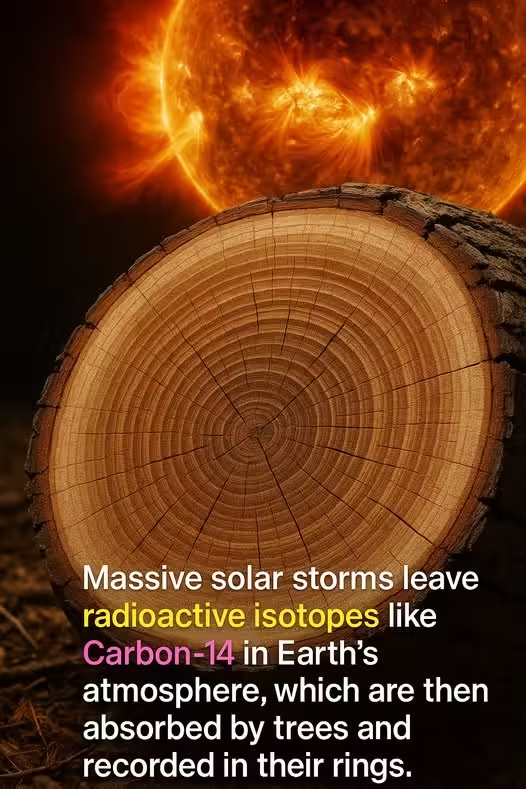
Here’s where it gets truly fascinating: when a solar storm is strong enough, the high-energy particles it releases collide with atoms in Earth’s upper atmosphere. These collisions produce isotopes like Carbon-14, a radioactive form of carbon. This isotope then becomes part of the carbon dioxide that plants absorb during photosynthesis.

As trees grow, they incorporate this Carbon-14 into their annual growth rings. Each ring corresponds to a specific year, giving scientists a way to date these solar events with remarkable precision. By analyzing Carbon-14 levels in tree rings, researchers can identify sudden spikes—evidence of solar storms that occurred hundreds or even thousands of years ago.


Miyake Events: Ancient Solar Storms

In 2012, Japanese physicist Fusa Miyake and his team discovered a massive Carbon-14 spike in tree rings dating to the year 775 CE, indicating a solar storm of extraordinary intensity. A similar event was found in 994 CE. These are now known as “Miyake events”, and they reveal solar storms that were 10–100 times stronger than any recorded in modern history.

These events were so powerful that if they occurred today, they could cripple modern infrastructure—damaging satellites, disrupting GPS systems, and even causing widespread power outages across entire nations.


A Cosmic Archive Hidden in Forests

The idea that trees quietly hold a cosmic archive is both poetic and scientifically profound. For millennia, trees have stood as silent witnesses—not just to human history, but to cosmic phenomena that would otherwise leave no trace. They have recorded volcanoes, droughts, and now, solar storms—etched in the alternating light and dark bands of wood beneath their bark.

This natural archive offers invaluable data to scientists studying climate change, solar cycles, and geomagnetic activity. It helps us understand not only what happened in the past but also what might happen in the future.


Why This Matters Today

With our world increasingly dependent on technology, the threat posed by solar storms is growing. Satellites, power grids, communications systems, and navigation tools are all vulnerable to geomagnetic disturbances. By understanding past solar activity through tree-ring data, scientists can model potential future events and prepare mitigation strategies.

If a Miyake-level event were to hit Earth in the 21st century, the economic and social impact could be catastrophic. This makes the study of ancient tree rings more than an academic curiosity—it’s a vital tool for planetary resilience.


A Spiritual Interpretation: Energy, Harmony, and Collective Vibration

In the comment thread that inspired this article, a user named Theodore Kyllonen made a compelling observation: that the emotional and energetic states of humanity—love, hope, peace vs. fear, anger, hate—emit measurable energy frequencies. He suggested that the collective vibration of humanity could shape the fate of our world.

While this idea may seem disconnected from solar physics, it reflects an increasingly accepted view that everything is energy. From the particles released by the Sun to the electromagnetic field of the human heart, we exist within an interconnected energetic ecosystem. Just as solar storms can ripple through Earth’s magnetic field, human consciousness may influence the subtle energies of our planet.

It’s no wonder that others in the thread responded with affirmation, noting that civilization would be more advanced if it were built on love, hope, and peace. This spiritual perspective aligns with the scientific in a powerful way: just as trees absorb the fallout of solar storms, perhaps our inner state helps shield or amplify the energy we experience on Earth.


Predicted Cosmic Events and Prophecies

A more mystical angle was added by another user referencing the Galactic Federation and predicted planetary events involving volcanic eruptions, earthquakes, and solar storms on specific dates such as April 21–23, May 8–10, and May 23–25. While these claims fall outside the realm of conventional science, they reflect a broader, deeply human urge to understand and predict cosmic influences.

Whether we interpret these dates as spiritual warnings or metaphors, the underlying message remains the same: Earth is alive, in motion, and deeply connected to forces far beyond what we can see. And just like tree rings record solar storms, our daily actions, emotions, and collective choices may be writing a larger story—one that determines the health and harmony of the world we live in.


The Wisdom of the Trees

In the end, trees may be the perfect symbol for this union of science and spirit. They are rooted in Earth, reaching toward the sky. They transform sunlight into life, carbon into oxygen, and now, we know, cosmic energy into memory.

Every time you walk through a forest or touch the bark of an old tree, remember this: within that wood lies a silent, sacred record of the Sun’s breath, of ancient storms, and perhaps even of humanity’s awakening.

The more we understand these natural marvels, the more we come to see that everything is connected. The stars shape the Earth. The Earth shapes life. And life, when lived in love, hope, and peace, shapes a future worth growing toward—one ring at a time.

Fulgurites: Earth’s Lightning-Forged Glass Sculptures

499608852 743629091338022 2571813819010034229 n (1)

Fulgurites: Earth’s Lightning-Forged Glass Sculptures

When lightning strikes the Earth, it leaves behind more than a flash and a thunderclap—it can also leave a hidden, glassy fingerprint. Deep in the soil or buried within sandy dunes, nature sometimes forges an extraordinary artifact known as a fulgurite—a delicate, lightning-formed glass that captures the path of one of nature’s most powerful forces.

While they may resemble fragile tubes of stone or petrified roots, fulgurites are physical evidence of a moment when the sky met the ground in a surge of unimaginable energy. These rare and beautiful formations offer scientists, collectors, and nature lovers alike a stunning glimpse into the explosive union between atmosphere and earth.


What Is a Fulgurite?

A fulgurite is a naturally occurring glass structure formed when lightning strikes loose, silica-rich ground—typically sand, soil, or rock. The immense energy and heat of a lightning bolt can instantly melt the material it strikes, fusing grains of sand together into an irregular, tubular formation of glass.

The word fulgurite comes from the Latin fulgur, meaning “lightning.” These formations are sometimes nicknamed “petrified lightning” because they represent a frozen trace of lightning’s path into the Earth.

Each fulgurite is unique, shaped by the bolt’s direction, strength, and the composition of the ground it hits. Some are thin, hollow tubes resembling branching roots; others are solid and dense, forming glassy nodules or columns.


How Fulgurites Form

When lightning strikes the ground, it releases an extraordinary amount of energy in an instant. A typical bolt carries over 1 billion volts of electricity and reaches temperatures of more than 30,000°C (54,000°F)hotter than the surface of the Sun.

This extreme heat vaporizes water and fuses minerals within the sand or soil into a molten state. Almost as quickly as they melt, the materials cool and solidify into a glassy tube, often tracing the shape of the lightning’s path as it burrows downward. These glass formations are usually hollow in the center, marking where the channel of ionized air—the lightning’s core—passed through.

The entire process, from strike to formation, happens in a fraction of a second.


Types and Characteristics of Fulgurites

Fulgurites can be classified into five basic types based on the material in which they form:

  1. Type I – Formed in sand (most common).

  2. Type II – Formed in soil.

  3. Type III – Formed in caliche (calcium carbonate-rich soil).

  4. Type IV – Formed in rock.

  5. Type V – Droplet or splash fulgurites from surface materials.

Most fulgurites are brittle, branching tubes that can range from a few centimeters to several meters in length. They typically have a rough, sandy exterior and a smooth, glassy interior. Their colors vary depending on the mineral composition of the soil—commonly grey, tan, greenish, or black.

Some fulgurites can be as small as a pencil or as large as a tree root. The largest fulgurite ever discovered was reportedly over 5 meters (16 feet) long.


Why Fulgurites Fascinate Scientists

Fulgurites are not only beautiful—they are also scientifically valuable. These natural glass structures provide a physical record of a lightning strike, something rarely preserved in the geological record.

Researchers study fulgurites to:

  • Understand the behavior of lightning: Their shape and composition reveal the movement, branching, and intensity of lightning strikes.

  • Study ancient weather patterns: Some fulgurites date back thousands or even millions of years, helping scientists reconstruct prehistoric lightning activity and atmospheric conditions.

  • Investigate shock chemistry: Fulgurites show how extreme heat and pressure affect minerals, simulating conditions similar to meteorite impacts or even early planetary environments.

Some scientists believe fulgurites could even offer clues about the origins of life, as high-energy lightning may have helped spark chemical reactions in Earth’s primordial soup.


A Collector’s Dream

Because of their beauty, rarity, and uniqueness, fulgurites are highly prized by collectors and hobbyists. No two are the same, and their fragile, otherworldly shapes make them stand out among natural curiosities.

Fulgurites are commonly found in sandy deserts, beaches, and arid regions where lightning frequently strikes open, silica-rich ground. They’ve been unearthed in places like the Sahara Desert, Florida, the American Southwest, and even the Gobi Desert.

Finding a fulgurite requires patience and a bit of luck. Since they often form underground, they’re not always visible at the surface. Some are discovered accidentally during excavation or after a particularly powerful storm.

Because of their fragility, care must be taken when excavating fulgurites. Attempting to dig them out with tools can easily shatter the structure.


Fulgurites and Folklore

Long before they were understood scientifically, fulgurites were objects of wonder and legend. In various cultures, they were thought to be:

  • Sacred artifacts left by gods or spirits.

  • Good luck charms believed to protect from future lightning strikes.

  • Magical conduits carrying energy from the heavens to Earth.

Their ghostly shapes and mysterious origins made them objects of fascination in ancient societies—and they continue to inspire awe today.


Modern Uses and Artistic Appeal

While fulgurites aren’t used in technology or manufacturing, they’ve inspired artists, jewelers, and educators. Some use fulgurite fragments to craft unique jewelry or display pieces. Others showcase them in museums to teach about lightning, geology, and natural glass.

Fulgurites are also used in classrooms and laboratories to explain natural glass formation, thermal shock, and energy transfer—concepts that apply to everything from volcanic eruptions to planetary geology.


A Reminder of Nature’s Power

What makes fulgurites so captivating is that they embody an instant of pure natural force—one that’s otherwise invisible and fleeting. Lightning lasts mere milliseconds, but a fulgurite preserves its path, frozen in glass.

They remind us that even the most ephemeral natural phenomena can leave behind lasting, tangible traces. Each fulgurite tells a story: of a stormy sky, a split-second strike, and the raw energy that transformed loose grains of sand into a shimmering sculpture.


Conclusion: Lightning’s Hidden Legacy

In a world filled with high-tech wonders, it’s easy to overlook the silent, natural marvels that lie beneath our feet. Fulgurites are among these hidden treasures—formed not by machines or design, but by the unpredictable fury of the sky.

Whether studied by scientists, treasured by collectors, or admired for their sheer beauty, fulgurites serve as crystalline reminders of Earth’s power, history, and mystery. Formed in a flash, shaped by chaos, and preserved in glass, they are nature’s lightning-written signature on the ground below.

Viking Sunstones: Ancient Crystal Compasses of the North

492513516 747138264320438 7743678287421975871 n

Viking Sunstones: Ancient Crystal Compasses of the North

Centuries before compasses ever graced the decks of European ships, the Vikings were already voyaging across the North Atlantic in open wooden boats, guided not by modern instruments but by the forces of nature. From the rocky shores of Norway to the windswept coasts of Greenland and Iceland—and even as far as North America—these fearless Norse seafarers navigated vast oceans with astonishing accuracy.

One of their most fascinating and mysterious tools? A crystal. More specifically, a “sunstones”—a transparent mineral said to reveal the position of the Sun even on cloudy or foggy days. Once considered the stuff of legend, Viking sunstones are now believed by many scientists and historians to have been real tools of navigation, combining myth, geology, and early optics into one glittering shard of ingenuity.


The Challenges of Viking Navigation

To understand the brilliance of the sunstone, we must first understand the challenge. The Viking Age, roughly from 793 to 1066 CE, was a time of maritime expansion and exploration. Norse sailors journeyed across treacherous waters in longships—beautiful but exposed wooden vessels powered by wind and muscle. These voyages were often conducted in the high latitudes of the North Atlantic, where the weather could be brutal and the skies overcast for days.

In these northern latitudes, traditional cues like the position of the Sun or stars were often obscured. Fog, snow, and near-constant twilight during parts of the year made celestial navigation especially difficult. Compasses, introduced to Europe much later via Chinese and Islamic trade routes, were not yet available to the Vikings.

Yet somehow, they reached distant shores, founded colonies, and returned home—often without getting lost at sea.


What Is a Viking Sunstone?

Sunstones are mentioned in several Norse sagas, particularly in tales that describe seafaring and long voyages. In these stories, the sunstone is described as a crystal that could locate the Sun in a cloudy sky.

For centuries, scholars dismissed the sunstone stories as poetic metaphor or myth. However, more recent archaeological and scientific findings suggest there may be truth to these tales. The type of crystal most commonly associated with the sunstone is Iceland spar, a clear, naturally occurring form of calcite.

Iceland spar has a special optical property called birefringence, or double refraction. When light passes through it, the crystal splits it into two rays, which creates a visible double image. By rotating the crystal and observing changes in the intensity of the two images, a skilled navigator could use this effect to find the direction of polarized light — and thus the position of the Sun.


How the Sunstone Works

The principle behind the sunstone is polarization. As sunlight passes through Earth’s atmosphere, it becomes partially polarized—especially in the blue sky regions farthest from the Sun. This means that the light waves align in specific directions depending on where the Sun is, even if the Sun itself is hidden.

A navigator holding a sunstone could rotate it against the sky until the two images seen through the crystal match in brightness. That point of balance marks the angle of polarization, from which the direction of the hidden Sun can be inferred.

This method works surprisingly well in overcast conditions, during twilight, or even when the Sun has just dipped below the horizon—an ideal tool for the cloudy North Atlantic.


Modern Experiments Confirm the Myth

Though historians long doubted the practicality of the sunstone, modern science has stepped in to test the idea. In recent years, researchers have recreated the navigation technique using Iceland spar and other birefringent crystals like tourmaline or cordierite. Their findings? It really works.

In one experiment conducted by scientists in Hungary, participants using sunstone-like crystals were able to determine the position of the Sun with an accuracy of about one degree—even under cloudy skies or near-sunset lighting. This level of precision is more than enough for open-sea navigation.

Moreover, in 2002, a fragment of calcite crystal was discovered aboard a 16th-century English shipwreck—the Alderney—near the Channel Islands. Though much later than the Viking Age, its presence suggests that such crystals may have been used for navigation long after the invention of the magnetic compass, possibly as a backup or supplemental tool.


An Elegant Blend of Nature and Skill

What makes the Viking sunstone so remarkable isn’t just the science—it’s the human ingenuity behind its use. The tool itself is a raw mineral, something that could be found, not forged. Its power lies in careful observation and practice, not machinery. This is navigation rooted in a deep relationship with the natural world.

It reminds us that ancient peoples were not primitive or ignorant. They were scientists, engineers, and explorers in their own right. They developed working knowledge of the sky, sea, wind, and even the optics of natural crystals to survive and thrive in some of Earth’s most challenging environments.


Sunstones in Culture and Legend

In Norse mythology and folklore, the Sun held deep spiritual meaning. The goddess Sól drove the chariot of the Sun across the sky, pursued by a wolf. Light was seen as sacred, a beacon of life and guidance in the cold darkness of the North.

It’s fitting, then, that the sunstone—an object that reveals hidden light—became part of this cultural tapestry. Whether used as a literal tool or infused with symbolic meaning, it represented insight, direction, and survival.

Some even suggest that the term “sunstone” may refer not to a single mineral but to a class of light-reactive stones, potentially including different types depending on local geology.


A Crystal Compass for the Ages

Today, the idea of steering a ship across open ocean with a chunk of crystal might sound far-fetched—but that’s exactly what Viking navigators may have done. The sunstone, once dismissed as myth, is now being appreciated as a brilliant example of early scientific thinking and natural problem-solving.

While we rely on GPS satellites and sophisticated instruments to guide us, the Vikings relied on their senses, their skills, and the subtle cues of nature. And in the heart of that knowledge was a crystal—transparent, glittering, and full of secrets.


Conclusion

The Viking sunstone stands as a symbol of what human curiosity and creativity can achieve. More than just a rock, it was a key to the hidden Sun, a bridge between earth and sky, and a testament to the ingenuity of ancient sailors.

So the next time you see a cloudy sky or watch the ocean roll in, think of the Norse explorers, holding a simple crystal up to the heavens, searching not just for light—but for direction in the unknown.

The Moon’s Silent Pull: How Earth’s Celestial Companion Shapes Our Destiny

496939398 744967101204221 1851727687029874168 n

The Moon’s Silent Pull: How Earth’s Celestial Companion Shapes Our Destiny

Look up at the night sky and you’ll see Earth’s constant companion — the Moon, glowing softly and faithfully orbiting our planet. It has inspired poets, guided sailors, and marked the passage of time for millennia. But beyond its romantic and cultural significance, the Moon plays a vital role in the stability and future of our planet. It’s a cosmic partner in a slow but profound dance that subtly affects everything from ocean tides to climate stability and even the length of our days.

What many don’t realize is that this relationship is slowly changing. Thanks to precise measurements, scientists have discovered that the Moon is gradually moving away from Earth. This seemingly small movement has sweeping implications, not just for our planet’s present, but for its far future.


The Moon Is Drifting Away

The evidence of the Moon’s recession comes from an extraordinary scientific instrument left behind during the Apollo missions: laser reflectors. When astronauts placed these reflectors on the lunar surface in the 1960s and 1970s, they enabled scientists on Earth to bounce laser beams off them and measure the round-trip travel time with astonishing accuracy.

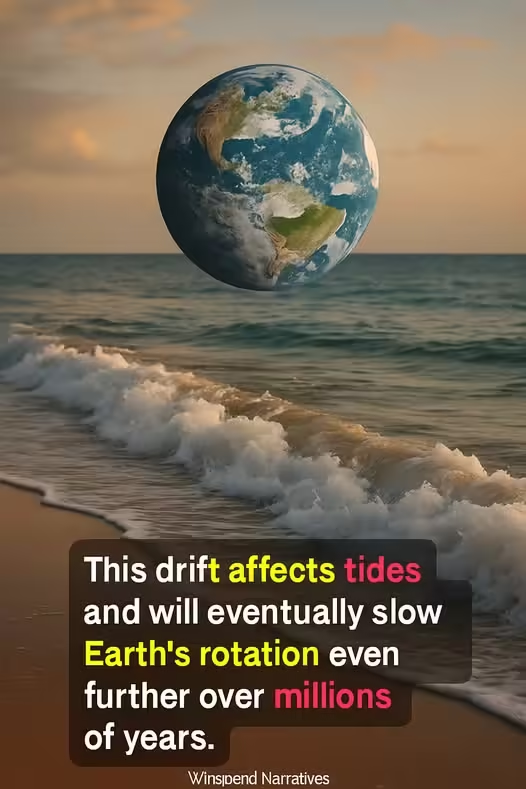
What these experiments revealed was surprising: the Moon is receding from Earth at a rate of about 3.8 centimeters per year (roughly 1.5 inches). That may not sound like much, but over millions or billions of years, this slow drift leads to significant changes in the gravitational relationship between Earth and the Moon.


Tidal Forces: A Gravitational Tug-of-War

Why is the Moon moving away? It all comes down to tidal forces — the gravitational pull between the Earth and Moon that causes the rise and fall of ocean tides.

As the Moon’s gravity pulls on Earth’s oceans, it creates tidal bulges on our planet. Because Earth rotates faster than the Moon orbits, these bulges are slightly ahead of the Moon. This leads to a transfer of rotational energy from Earth to the Moon. As a result, Earth’s rotation gradually slows down, and the Moon is pushed farther away in its orbit.

This energy exchange is incredibly slow, but it’s persistent. Over hundreds of millions of years, it adds up, and both the length of Earth’s day and the distance to the Moon have changed significantly. In fact, around 620 million years ago, a day on Earth was only about 21 hours long.


A Slower Earth: Lengthening of Days

As the Moon continues to drift away, Earth’s rotation continues to slow. That means the length of a day is increasing — albeit very slowly. Today, a day is 24 hours long, but in a few billion years, that could stretch out significantly. Some scientists estimate that if the trend continues, Earth’s days could eventually last 40 hours or more.

While this process won’t affect our daily lives anytime soon, it’s a powerful reminder that even something as seemingly constant as the 24-hour day is subject to cosmic change. The slowing rotation of our planet is a direct result of our relationship with the Moon.


The Moon’s Role in Climate Stability

But the Moon’s influence isn’t limited to tides and timekeeping. One of its most critical functions is in stabilizing Earth’s axial tilt — the angle between Earth’s rotational axis and its orbital plane.

Currently, Earth’s axis is tilted about 23.5 degrees, which is responsible for our seasons. This tilt doesn’t remain perfectly fixed, but thanks to the Moon’s gravitational influence, it wobbles only slightly — within a narrow range. Without the Moon, Earth’s tilt could vary wildly over time, potentially swinging between 0 to 85 degrees.

Such extreme variations would have devastating impacts on the planet’s climate. A greater tilt might lead to intense seasons, where summers are scorchingly hot and winters are brutally cold. A smaller tilt might eliminate seasons altogether. In both cases, such changes would make Earth far less hospitable for life.

So, while it silently orbits our world, the Moon helps maintain the conditions that allow life to thrive. It acts as a cosmic stabilizer, moderating the forces that would otherwise cause Earth’s climate to spiral into chaos.


A Future Without the Moon?

What happens in the distant future, as the Moon continues to drift away? If we fast forward billions of years, the Earth and Moon could eventually reach a state of tidal locking, where Earth’s rotation matches the Moon’s orbit, just as the Moon is already tidally locked to Earth — always showing the same face.

But long before that point, Earth’s days will have lengthened considerably, and the Moon’s influence will have diminished. Tidal effects will weaken, potentially disrupting ocean currents and ecosystems that rely on regular tidal rhythms. The axial stability the Moon provides could fade, allowing Earth’s tilt to wobble more freely, triggering climatic upheavals over geological timescales.

If life still exists on Earth in that far-off future, it might experience a planet very different from the one we know today — with longer days, altered tides, and a more volatile climate. The Moon’s eventual distancing is not just a loss of a companion in the sky, but a transformation of the delicate balance that makes Earth livable.


The Moon’s Legacy

It’s easy to take the Moon for granted. It rises and sets each night, silently glowing, changing phases in a rhythm older than humanity. But behind that tranquil beauty is a profound dynamic at work — one that has shaped the evolution of life, the rhythm of time, and the climate systems we depend on.

The Moon is more than just a satellite. It is a silent architect of Earth’s stability. Its presence makes our world what it is. And while it slowly retreats into the cosmic distance, its legacy will continue for eons.


In Conclusion

The Moon may seem distant, cold, and unchanging. But it’s a dynamic participant in Earth’s journey through space and time. Thanks to the Apollo-era laser reflectors and continued observations, we know that it’s slowly slipping away, and with it, the gravitational handshake that binds it to Earth is weakening.

This slow-motion dance is shaping the destiny of our planet. From the lengthening of our days to the stability of our climate, the Moon’s impact is immense. And as it recedes, it leaves behind a changing world — one where the forces it once balanced may fall out of harmony.

So the next time you gaze up at the Moon, remember: you’re looking at one of the most important influences on life as we know it — a silent guardian of Earth’s cosmic balance.

A Waterfall of Light in the Void

497856318 742493931451538 4756425926917147432 n

Waterfalls of Light: How Black Holes Bend the Universe Into Art

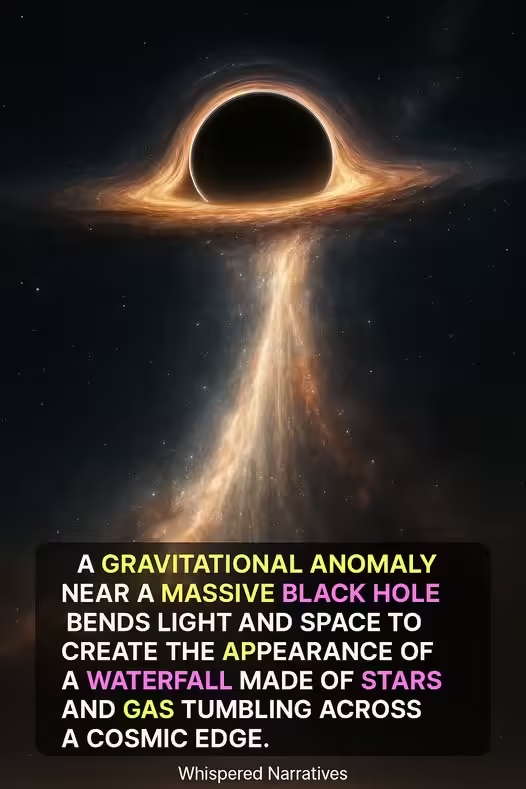
Imagine gazing into the night sky and seeing what looks like an entire galaxy tumbling over a cosmic cliff, like a celestial waterfall pouring into a black void. It’s not science fiction. This breathtaking illusion is caused by one of the most fascinating and extreme effects predicted by Albert Einstein’s theory of general relativitygravitational lensing.

This spectacular phenomenon doesn’t just distort light. It challenges our most fundamental perceptions of space, time, and reality.


What Is Gravitational Lensing?

Gravitational lensing is what happens when light from a distant object—such as a star, quasar, or entire galaxy—is bent around a massive foreground object, like a black hole or galaxy cluster. The reason? Gravity doesn’t just affect planets or falling apples—it bends the very fabric of spacetime itself.

According to Einstein’s general theory of relativity, massive objects curve spacetime, and light follows those curves. Think of a bowling ball on a trampoline: it creates a dent. Now roll a marble near that dent. The marble curves inward—not because it’s pulled by an invisible string, but because the space it travels through is bent.

In the universe, black holes are like the ultimate bowling balls. Their gravitational pull is so intense, they bend light from background objects around them in ways that can create bizarre, almost magical optical effects.


The Illusion of a Cosmic Waterfall

In certain images captured by space telescopes like Hubble, astronomers have observed something that looks like rivers or waterfalls of light plunging into a central dark region. Of course, stars and galaxies don’t actually flow like water—but this is where the illusion begins.

The “waterfall effect” comes from an extreme form of gravitational lensing. Here’s how it works:

  • Distant galaxies lie behind a massive black hole or galaxy cluster from our perspective on Earth.

  • As their light travels toward us, the intense gravity of the foreground mass bends that light around itself, almost like how glass lenses bend light in a telescope or a magnifying glass.

  • This curved path causes light from objects that are far behind the black hole to arrive at Earth as though they’re wrapping around it, sometimes multiple times.

  • The resulting image creates arcs, rings, and even mirror duplicates of galaxies—surreal distortions that seem to pour into the black hole, like light falling into an abyss.

One of the most famous examples of this is called an “Einstein Ring,” where the background galaxy is stretched into a complete circle of light around the black hole. In the “waterfall” version of this effect, the light is skewed and arced in ways that resemble a cascade of glowing material, seemingly falling into the void.


Why This Happens: The Science Behind the Illusion

Let’s break it down further.

When light from a background galaxy encounters the warped spacetime near a black hole, it doesn’t travel in a straight line anymore. It follows the curved path created by the gravitational field, like water flowing down into a canyon. To an observer here on Earth, this warped light appears as a streak, an arc, or even a stream of stars flowing into darkness.

However, no matter is actually falling. This is purely a visual distortion caused by the black hole’s immense gravity acting as a natural lens. It’s a mind-bending visual cue, a cosmic trick of perspective, enabled by the warping of spacetime.

And here’s the twist: sometimes, we see multiple images of the same galaxy in the same photo, bent and duplicated by the lensing effect. This isn’t an error or artifact—it’s the universe turning itself into an optical kaleidoscope, with gravity as the lensmaker.


Einstein’s Legacy in the Night Sky

Einstein predicted this phenomenon over a century ago, but he doubted it could ever be observed. The technology of his time couldn’t detect such subtle distortions. Fast forward to the 21st century, and we now have telescopes powerful enough to catch these cosmic illusions in the act.

The Hubble Space Telescope, the James Webb Space Telescope, and ground-based observatories have captured dozens of these lensing events, many of which resemble surreal paintings drawn by light and gravity. Some are faint arcs wrapping around clusters. Others are dramatic, twisting flows of stars and galaxies that look like nature’s version of abstract expressionism.

In a way, the universe has become a living demonstration of general relativity, bending light into graceful, fluid forms across billions of light-years.


Why This Matters: Beyond the Beauty

Gravitational lensing is more than just a beautiful illusion—it’s a scientific tool.

• Mapping Dark Matter

These lensing patterns help scientists map the invisible mass in the universe, especially dark matter, which doesn’t emit or reflect light but does exert gravitational force. By observing how light is distorted, researchers can infer where dark matter lies—even though we can’t see it directly.

• Probing the Early Universe

Because gravitational lensing magnifies distant objects, it allows telescopes to observe faint galaxies from the early universe—those that would normally be too dim to see. It’s like having a natural zoom lens built into the cosmos.

• Studying Black Holes and Galaxy Clusters

By analyzing how much light is bent and how it’s shaped, scientists can calculate the mass and structure of black holes and galaxy clusters, offering clues into how these massive structures evolve.


Seeing the Universe Differently

What’s perhaps most profound about gravitational lensing is how it alters our basic assumptions. We’re used to light traveling in straight lines, stars staying still in the night sky, and distance meaning separation. But in the realm of massive gravity, these assumptions no longer hold.

In these lightfall illusions, we are forced to accept that space can curve, time can stretch, and light itself can be fooled. It reminds us that what we see isn’t always what’s happening, especially on cosmic scales.

We are looking at stars that might not be where they appear to be. We are seeing ancient galaxies duplicated and smeared across the sky, made to dance by gravity alone. It is, in every sense, a poetic distortion of the cosmos.


Final Thoughts: The Beauty of the Impossible

To witness a “waterfall of light” near a black hole is to experience a moment where science becomes indistinguishable from art. It’s a visual echo of equations written a century ago, now glowing in the sky as rivers of stars.

Gravitational lensing shows us that the universe is not static or silent—it’s dynamic, malleable, and alive with invisible forces. These illusions aren’t just curiosities. They’re windows into the structure of reality itself, and each one captured in our telescopes brings us closer to understanding how the universe bends, twists, and reflects the story of light across time.

So the next time you see an image of stars seemingly plunging into a black hole, remember: it’s not a fall—it’s a bend, a cosmic ballet choreographed by gravity, and you’re witnessing Einstein’s universe performing its most elegant dance.

The Lichen That Listens: Vietnam’s Glowing Botanical Mystery

500264889 555519367609806 1459422930273554151 n (1)

The Lichen That Listens: Vietnam’s Glowing Botanical Mystery

In the misty forests of northern Vietnam, where tangled roots grip ancient stone and whispers of wildlife echo through the trees, a remarkable discovery has startled the scientific community. Botanists, while surveying mossy undergrowth for endemic plant species, stumbled upon something truly extraordinary—a new species of lichen that glows in the dark. But this isn’t your ordinary bioluminescence. This lichen only emits a faint, ethereal green glow when exposed to a very specific sound frequency produced by local crickets.

Yes, you read that correctly. A plant-like organism that listens.

This newly discovered lichen, not yet officially named, responds to the mating chirps of a particular cricket species found only in that forest zone. When exposed to these precise sound waves—neither higher nor lower in frequency—it begins to shimmer with a ghostly, greenish glow. Scientists are calling it a “sound-triggered bioluminescent response”, and it may represent a completely new category of auditory-plant interaction.


A Luminous Enigma in the Forest Floor

The discovery happened almost by accident. Researchers were collecting samples from moss-covered rocks in a shaded grove when they noticed tiny flickers of green light. At first, they assumed it was some sort of glowworm or perhaps light bouncing off dewdrops. But upon closer inspection, they realized the glow came from a patchy lichen colony—and, curiously, it only lit up when the chirping of nearby crickets intensified.

Intrigued, the team set up a series of controlled acoustic experiments. They recorded the cricket calls and played them back in isolation, varying pitch and rhythm. The results were stunning. Only one very specific frequency band—roughly 3.4 to 3.7 kHz—caused the lichen to bioluminesce. Any deviation outside this range rendered the lichen completely inert.


Why Would a Lichen Respond to Sound?

Lichens are fascinating organisms, composed of a symbiotic relationship between fungi and photosynthetic partners like algae or cyanobacteria. They are known to survive in extreme environments, from Arctic tundra to urban concrete. But reacting to sound—especially in such a precise and deliberate way—is a behavior almost unheard of in the plant or fungal kingdom.

So why would this lichen glow only in response to cricket chirps?

Two leading theories have emerged:

1. Symbiotic Communication

It’s possible that the lichen and the cricket are engaged in a mutualistic relationship. The bioluminescence might attract other small insects—perhaps prey for the cricket—or create a micro-ecosystem where both organisms benefit. The sound acts like a switch, signaling the lichen to illuminate only when the cricket is nearby and active.

2. Defense Mechanism

Another possibility is that the glow is a defense mechanism. The cricket’s chirp might signal the presence of predators or environmental changes, prompting the lichen to activate a glowing deterrent. Some researchers suggest the light could confuse or repel nocturnal herbivores or fungus-eating insects, helping the lichen survive in a competitive forest floor biome.


Expanding the Definition of Sensory Plants

While plants are often thought of as static and passive, they are surprisingly attuned to their environment. Previous studies have shown that plants can detect touch, light, and even respond to sound waves, albeit in more subtle ways. Certain plants grow faster when exposed to classical music, and roots have been shown to curve toward low-frequency vibrations, presumably “listening” for water.

But this lichen is something else entirely.

It doesn’t just react chemically or hormonally—it produces visible light triggered by a specific auditory stimulus. That makes it one of the first documented examples of direct, observable sound-controlled behavior in a lichen or plant-fungal hybrid.


Implications for Science and Technology

The implications of this discovery are enormous.

Bioacoustic Research

This expands the field of bioacoustics, which typically focuses on animal communication, into a new frontier where plants and fungi are active participants. It raises questions about what other species may be listening to their environments in ways we haven’t detected.

Bioluminescent Engineering

Understanding how sound triggers light emission at a cellular level could lead to bioengineered materials that glow in response to environmental noise. Imagine forest paths that light up when you walk, or living indicators that react to changes in their acoustic surroundings.

New Models of Symbiosis

If the cricket and lichen truly interact symbiotically, it could rewrite parts of our understanding of cross-species communication and co-evolution in ecosystems. It’s a rare case where a plant-fungus hybrid may have evolved specifically to respond to an animal’s mating call.


Challenges in Studying the Lichen

There are, however, hurdles to studying this phenomenon in depth. The bioluminescent effect is extremely faint, barely visible under bright conditions. It requires complete darkness and sensitive equipment to detect. Also, since the cricket species is endemic to a narrow geographic area, and the lichen appears to grow only in certain microclimates, both organisms are difficult to study in the lab.

Furthermore, reproducing the conditions for the glow in laboratory cultures has proven elusive. Attempts to isolate the lichen and grow it in petri dishes have so far failed to trigger the glow artificially—suggesting that the sound must also be paired with temperature, humidity, or soil-specific cues.


An Evolutionary Mystery Still Unfolding

Nature is filled with stories that stretch our imagination, and this lichen is one of them. A glowing organism that responds not to sunlight, not to touch, but to sound, and not just any sound—one specific natural song sung in the dark by a tiny cricket.

Whether this is a case of communication, adaptation, or something stranger entirely, it proves once again that our planet still holds secrets deep within its ancient forests.

Botanists and biologists now face a new challenge: to unravel how and why this glow happens, and to explore whether sound-responsive organisms are more common than we think—just waiting for someone to listen in the right frequency.


Closing Thought

In an era where we often think we’ve discovered everything there is to know, this bioluminescent lichen reminds us of a powerful truth: the natural world is still full of surprises, especially when we’re quiet enough to hear them.