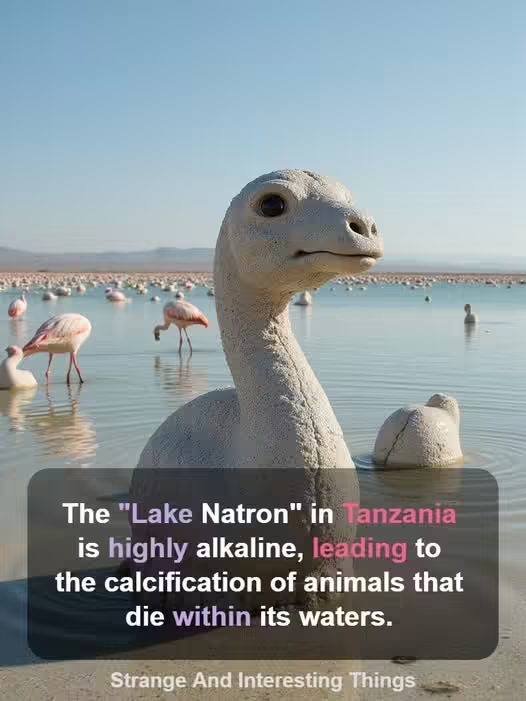
Lake Natron: The Petrifying Waters That Turn Life to Stone

499786272 1077035417815702 5217619530864334097 n

Lake Natron: The Petrifying Waters That Turn Life to Stone

In northern Tanzania, nestled near the border with Kenya, lies one of Earth’s most hauntingly beautiful and biologically bizarre landscapes—Lake Natron. This otherworldly body of water isn’t known for its serenity or recreation. Instead, it’s infamous for something far more macabre: it has the uncanny ability to preserve the dead, turning birds and other creatures into ghostly statues.

What makes Lake Natron so unique, and why does it seem to “petrify” life?

The Chemistry of Death: What’s in the Water?

Lake Natron’s name is derived from a naturally occurring compound—natron, a blend primarily composed of sodium carbonate decahydrate, along with baking soda (sodium bicarbonate). This mineral mix, abundant in volcanic regions, was once used by ancient Egyptians during the mummification process. And in Lake Natron, nature performs a similar ritual entirely on its own.

With a pH level that can reach as high as 10.5, the lake’s water is extremely alkaline, making it inhospitable to most living organisms. The temperature can soar above 60°C (140°F) during the hottest parts of the day, and the saline content can be so dense that it borders on caustic. In essence, Lake Natron is not just salty—it’s chemically aggressive.

Any animal that falls into the lake—whether from misjudgment, exhaustion, or misadventure—is likely to meet a chilling fate. The alkaline water rapidly calcifies their body, coating it in a rigid shell of salts and minerals. In some cases, it preserves their features so well that their final expressions appear frozen in time.

The Myth of Instant Mummification

Though often described as turning animals to stone “instantly,” the process isn’t immediate. When a bird or bat dies and ends up in the lake, the intense alkalinity gradually desiccates the tissues and hardens the corpse over time. The resulting figures are unsettling in their detail—eyes wide open, feathers intact, limbs stiff, all encased in a salty shell that mimics the texture of stone.

Famed wildlife photographer Nick Brandt documented many of these remains in a now-viral photo series. His stark images captured calcified birds perched upright or clinging to dead branches, as though they were still alive. The imagery sparked both fascination and horror, giving rise to the myth that Lake Natron “freezes” its victims like some mythical Medusa’s gaze.

Not All Is Death: The Flamingo Paradox

Despite its hostile nature, Lake Natron is paradoxically a cradle of life—at least for a few very special species. It’s the primary breeding ground for the lesser flamingo, a species found only in parts of Africa and India. Flamingos thrive in places others can’t tolerate, and Lake Natron is the perfect example.

How do they survive in such an inhospitable place?

Their diet is part of the secret. The lake supports a dense population of cyanobacteria and salt-loving algae, which bloom in vivid reds and oranges during the dry season. These microorganisms not only color the lake’s waters but also serve as the flamingos’ primary food source. In turn, the flamingos’ bright pink coloration stems from the pigments in the algae—an adaptation rooted in evolutionary chemistry.

Flamingos also benefit from Lake Natron’s isolation. The lake’s harsh environment deters most predators, providing a relatively safe breeding haven for the birds. During nesting season, tens of thousands of flamingos gather here, painting the shoreline in a surreal blur of pink against the lake’s metallic sheen.

A Volcanic Legacy

Lake Natron’s chemistry is largely influenced by its geographical surroundings. It sits in the East African Rift, a region shaped by tectonic activity. Nearby is Ol Doinyo Lengai, an active volcano revered by the Maasai as the “Mountain of God.” This volcano is unique in its own right—it erupts carbonatite lava, which is cooler and more alkaline than the typical silicate lava found elsewhere.

Over centuries, eruptions and mineral runoff from Ol Doinyo Lengai have fed Lake Natron’s chemical cauldron, contributing to its extreme pH and salinity. Rainfall is scarce, and high evaporation rates mean that minerals are continually concentrated in the lake basin. Essentially, Lake Natron is a giant, open-air chemical experiment—constantly shifting, always hostile, and utterly mesmerizing.

Conservation Challenges

Ironically, this desolate and dangerous environment is now under threat—from human activity. Plans have been proposed in the past to build hydroelectric dams or soda ash extraction plants near the lake, potentially altering the delicate balance that supports the flamingo breeding grounds.

Environmentalists have voiced concern that such developments could disrupt the ecosystem, affecting both the chemistry of the lake and the fragile populations that rely on it. The lesser flamingo, for instance, breeds almost exclusively at Lake Natron. A collapse of this habitat could push the species dangerously close to extinction.

For this reason, Lake Natron is not just a curiosity—it’s a conservation priority.

The Allure of the Unnatural

Why are we so captivated by places like Lake Natron?

Perhaps it’s the contradiction: a landscape so lifeless, yet teeming with specialized life. Or maybe it’s the lake’s ability to preserve, to create eerie sculptures out of once-living creatures. In a way, it’s a modern natural myth—where science, death, and visual poetry meet.

In a world of lush forests, vibrant coral reefs, and majestic mountains, Lake Natron reminds us that beauty can also lie in harshness. It forces us to confront our ideas about life and death, about decay and preservation. The lake doesn’t just kill—it transforms. And in that transformation, it leaves behind a legacy as haunting as it is unforgettable.

Final Thoughts

Lake Natron is a scientific marvel and an ecological paradox. While its waters calcify and preserve, they also sustain life in one of the most extreme niches on Earth. It’s a place where fire (volcanoes), salt (alkaline waters), and life (flamingos, algae) coexist in delicate balance.

Visiting Lake Natron isn’t for the faint of heart, nor is it your average eco-tourism destination. But for those who venture there, it offers a view into a world where nature writes its own strange and silent story—one statue at a time.
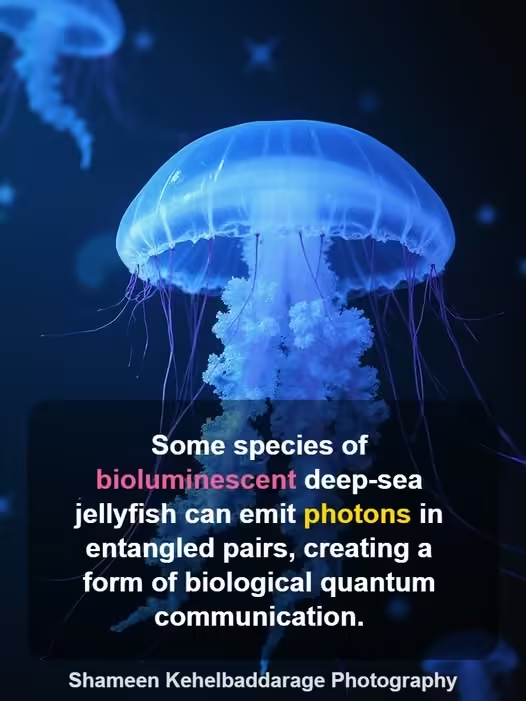
Quantum Lights of the Deep: The Astonishing Bioluminescence of Deep-Sea Jellyfish

497915213 1073550308164213 6832424337450201162 n

Quantum Lights of the Deep: The Astonishing Bioluminescence of Deep-Sea Jellyfish

Beneath the crushing weight of Earth’s oceans lies a realm so dark and alien it may as well be another planet. Down in the hadal zones—depths beyond 6,000 meters—life adapts in extraordinary ways. Here, where sunlight never reaches and pressure is immense, some species of jellyfish illuminate the darkness with radiant, pulsing lights. This bioluminescence, long thought to serve purposes such as predator deterrence or prey attraction, is now suspected of harboring a far more profound function—primitive quantum communication.

Yes, you read that correctly. A small group of researchers theorize that certain deep-sea jellyfish may be utilizing quantum entanglement, a phenomenon once thought exclusive to physics laboratories and theoretical constructs, as part of their biological processes. If true, this discovery could revolutionize not only our understanding of jellyfish and marine biology but challenge the very foundation of how information and communication operate in the living world.


Beyond Bioluminescence: A Deeper Light

Bioluminescence in jellyfish is not a new discovery. It’s a well-documented phenomenon wherein specialized cells known as photocytes or luciferin-based molecules produce light through biochemical reactions. These glowing displays serve many functions—startling predators, luring prey, attracting mates, or even camouflaging the jellyfish by blending with the faint light above.

But a recent anomaly caught the attention of physicists and biologists working together in a joint deep-sea exploration effort. During high-resolution optical imaging and photon behavior analysis, a group of deep-dwelling jellyfish began emitting pairs of photons with entangled quantum properties—meaning the state of one photon directly influenced the other, regardless of the distance separating them.

These photons didn’t behave like ordinary light particles. Instead, they maintained a correlated behavior pattern that suggested something more was going on than just glow-in-the-dark survival tactics.


What Is Quantum Entanglement?

To grasp the weight of this potential discovery, we must briefly delve into the concept of quantum entanglement. In quantum physics, when two particles become entangled, their states are linked in such a way that changing the state of one instantly changes the state of the other—no matter how far apart they are.

This instantaneous link puzzled Einstein, who famously referred to it as “spooky action at a distance.” Entanglement has been observed under tightly controlled laboratory conditions and forms the backbone of emerging quantum computing and communication systems.

But in nature? That’s a different story.


Living Systems and Quantum Mechanics

For decades, biology and quantum physics existed in separate scientific silos. But in recent years, researchers have found increasing evidence that quantum effects may influence biological systems. Birds, for example, may use quantum entanglement in their navigation systems. Plants might use quantum coherence to transfer energy efficiently during photosynthesis.

The idea that life could tap into quantum phenomena is no longer science fiction—it’s emerging science. Now, if jellyfish truly exploit quantum entanglement in their light-emitting organs, they could represent one of the most sophisticated natural examples of quantum biology in action.


Observations from the Deep

During the study, scientists used ultra-sensitive photodetectors capable of analyzing individual photons. When examining the light pulses from several species of jellyfish found near hydrothermal vents in the Mariana Trench, they noticed repeated instances where photon pairs shared polarization states in statistically significant ways. These weren’t just random emissions—these were entangled photons, behaving in a way that suggested coordination or purpose.

Furthermore, the entangled photons seemed to propagate only a limited distance—just enough to be detected by another jellyfish nearby. This raises the provocative question: Could jellyfish be using these emissions to communicate in an advanced, light-based form?


Communication Without Words—or Wires

If jellyfish are indeed using entangled photons for communication, it wouldn’t resemble language as we know it. There would be no Morse code, no sonar pulses, no acoustic frequencies. Instead, information could be encoded in quantum states, such as spin, phase, or polarization—transferred instantly between creatures sharing the same entangled field.

Even though the distances involved would be small—probably just a few meters—it could be enough for schooling behavior, coordinated escape responses, or reproductive signaling in total darkness. This form of communication would be instantaneous, silent, undetectable to predators, and potentially unjammable by environmental noise.


A New Field Emerges: Quantum Marine Ecology?

Though still in the realm of emerging theory, this idea is gaining interest among interdisciplinary teams. If confirmed, it could give rise to an entirely new branch of science—quantum marine ecology. This field would explore how marine organisms interact not just through chemistry or mechanics, but through quantum phenomena once reserved for subatomic particles.

From a technological perspective, the implications are equally staggering. Understanding how a simple organism like a jellyfish can stabilize and utilize entangled photons in open seawater could lead to breakthroughs in underwater quantum communication—a notoriously difficult challenge for engineers trying to build secure, efficient submarine communication systems.


Skepticism and the Scientific Road Ahead

Naturally, this theory faces intense scrutiny. Detecting entanglement is no easy task, especially in the murky, turbulent waters of the deep sea. There’s always the risk that the observed photon behavior could be due to instrumental artifacts, thermal noise, or biological randomness.

Further, even if entanglement exists in the jellyfish’s light output, proving that it serves a purpose—especially one as advanced as communication—requires much more data. Experiments are underway to replicate these emissions in lab-controlled jellyfish tissue, and compare them with manmade entangled photon systems.

Still, even the possibility that such a mechanism could exist in nature is enough to excite the global scientific community.


The Future of Bioluminescent Intelligence

If this theory bears out, it may dramatically shift how we perceive intelligence in the natural world. Intelligence doesn’t always require a brain, neurons, or cognition. It may emerge from patterned behavior, evolutionary design, or even quantum feedback systems.

These jellyfish—often seen as simple, brainless drifters—might hold secrets about the intersections of light, life, and quantum mechanics. In doing so, they challenge our understanding of what it means to “communicate,” and who, or what, gets to be considered intelligent.


Final Thoughts: Strange Light in Stranger Waters

The deep ocean has always hidden mysteries, but if jellyfish truly use quantum light to “speak” across the abyss, we may be witnessing one of the most mind-bending discoveries in biology. This strange light is more than a glow—it may be a message, flickering in quantum whispers from one of Earth’s most alien realms.

As we shine brighter lights into these depths, it’s not just darkness we’re dispelling—it’s ignorance. And in its place, we may discover a form of communication older, quieter, and more profound than anything we’ve ever imagined.

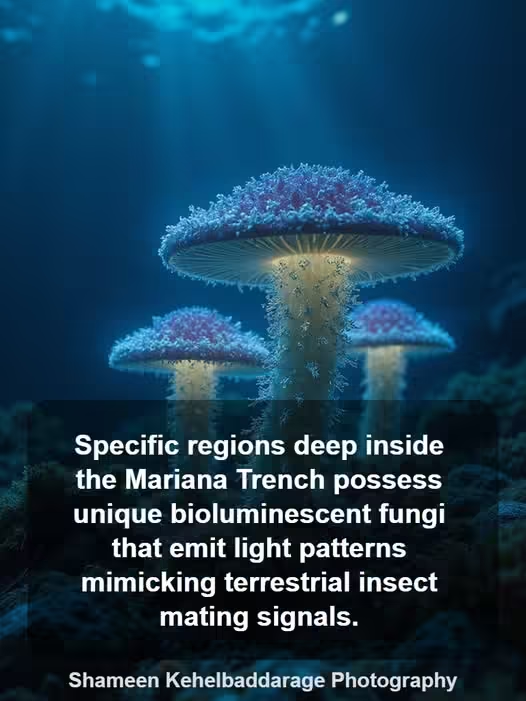
Bioluminescent Mimics of the Deep: The Strange Fungi Lurking in the Mariana Trench

498010042 1073544861498091 9102448495749550358 n

Bioluminescent Mimics of the Deep: The Strange Fungi Lurking in the Mariana Trench

Far beneath the reach of sunlight, in the darkest and most pressurized corners of our planet, life has found astonishing ways to adapt. The Mariana Trench, the deepest known part of the Earth’s oceans, remains one of the most enigmatic places on the planet. With crushing pressures over 1,000 times greater than at sea level and temperatures barely above freezing, it’s a realm few would expect to host complex, visually communicative life. But a stunning new discovery has changed that perception—a strange species of deep-sea fungi that glows with an eerie, intelligent light.

These fungi, newly identified by a team of marine biologists and microbiologists, possess a highly unusual form of bioluminescence—not simply as a glow to ward off predators or attract mates like other deep-sea life, but as a complex, patterned signal system. What’s truly baffling is that these glowing patterns mimic the mating flashes of terrestrial insects—most notably fireflies. This bizarre mimicry, thousands of meters below the ocean surface and utterly disconnected from the forested ecosystems where fireflies evolved, has opened up entirely new questions about convergent evolution, biological signaling, and cross-environmental mimicry.


Evolution in the Abyss

Fungi are among the most ancient and resilient life forms on Earth. We’ve found them thriving in frozen tundras, arid deserts, and nuclear reactors. But the Mariana Trench represents one of the most extreme habitats known—an environment of perpetual darkness, crushing pressure, and isolation. The fungi discovered here were first detected by autonomous deep-sea rovers equipped with low-light imaging systems, designed to track signs of bioluminescence for ecological mapping.

At first, researchers assumed they had encountered standard glowing bacteria or planktonic colonies. But as the patterns of light repeated and pulsed in symmetrical, pulse-coded bursts, it became evident this wasn’t simple phosphorescence—it was communication.

When samples were eventually retrieved and studied in high-pressure labs, the behavior of the fungi only deepened the mystery. Their glowing emissions weren’t constant or random; they fired in a sequence startlingly similar to the mating flashes used by fireflies on land. Insects use these blinking light signals to identify compatible mates of the same species, often with highly specific timing. The fungi’s pulses matched several of these timings almost perfectly—yet they exist in an ecosystem where no fireflies have ever existed.


Why Mimic Something You’ve Never Seen?

That question has fascinated evolutionary scientists. How could organisms in such a remote, alien environment evolve to mirror something so specific, and seemingly irrelevant?

One prevailing theory is that this is a case of evolutionary mimicry driven by utility rather than direct exposure. In other words, the fungi didn’t “copy” fireflies—they independently evolved a similar strategy that coincidentally mimics terrestrial light signaling. This would be a remarkable case of convergent evolution, where two entirely unrelated species in different environments arrive at nearly identical solutions to similar problems—in this case, attracting mobile organisms using coded bioluminescence.

But for what purpose? That’s where things get even more fascinating.


Symbiosis, Predation, or Propulsion?

The Mariana fungi likely don’t glow for beauty or mating—fungi reproduce through spores, not sexual displays. Researchers hypothesize their bioluminescent mimicry serves three possible purposes:

  1. Luring Prey: Some bioluminescent animals attract smaller creatures, which mistake the light for food or other animals. The fungi might use this mimicry to draw in deep-sea plankton or filter feeders, possibly to trap them in sticky filaments or benefit from nutrients released during decay.

  2. Symbiotic Hitchhiking: By mimicking attractive light patterns, the fungi may cause certain deep-sea creatures—like shrimp or small fish—to approach and unknowingly carry fungal spores on their skin or in their gills, transporting them through the water column. In such an isolated environment, dispersal is everything, and these “vehicles” might be critical to spreading the fungi to new surfaces or ecosystems.

  3. Defensive Decoy: Alternatively, the fungi may use the flashes as a false signal, mimicking more dangerous or unpalatable organisms to avoid being consumed. In deep-sea ecosystems, deception is often the best survival strategy.

Whichever theory proves true, it highlights a complex, strategic level of adaptation rarely associated with fungi.


A Living Signal in the Darkness

What makes this discovery so profound isn’t just that it challenges our understanding of how fungi behave—it also blurs the line between simple life and intelligent adaptation. These fungi aren’t mindless organisms growing in the dark; they are actively signaling, using visually sophisticated patterns that serve deliberate biological functions.

And they do so in the deepest dark on Earth, where no sunlight ever reaches.

The implications for astrobiology are especially exciting. If such advanced signaling can evolve in the pitch-black trenches of Earth’s oceans, could similar processes emerge in the subsurface oceans of Europa or the methane lakes of Titan? The Mariana fungi prove that light doesn’t need the sun—and intelligence doesn’t need a brain.


Bioluminescent Codes: A Universal Language?

There’s also the curious notion that light patterns might represent a kind of universal biological language. Just as animals evolved to interpret color and sound in specific ways, perhaps organisms in extreme environments use rhythmic light signals as a form of interspecies communication or warning.

Imagine entire ecosystems “speaking” in flashes and pulses, with different life forms evolving ways to read and interpret these light patterns—an underwater Morse code of survival. The Mariana fungi may be just the first of many organisms to unlock this possibility.


The Deep Sea Still Holds Secrets

This discovery serves as a powerful reminder that Earth is still an unexplored planet in many ways. Despite satellite imagery, deep-sea drilling, and robotic exploration, over 80% of the ocean remains unmapped and unobserved. The deep-sea fungi of the Mariana Trench offer a glimpse of how much we still have to learn—not just about the oceans, but about life itself.

These glowing fungal organisms are not only bizarre and beautiful—they are living clues to the fundamental mechanics of evolution, adaptation, and ecological intelligence.


Final Thoughts: The Glow of Curiosity

In a world saturated with digital distractions and terrestrial familiarity, it’s comforting to know that there are still mysteries buried beneath us—silent, glowing enigmas waiting in the dark. The Mariana fungi are more than a scientific curiosity; they’re a biological metaphor for hope and hidden knowledge. Even in the harshest, most unlikely corners of Earth, life finds a way—not just to survive, but to communicate, to adapt, and to astonish us.

As research continues and new samples are analyzed, we may uncover even more intricate behaviors among these deep-sea mimics. For now, their flashing signals remain an unanswered riddle, blinking quietly in the black.

And maybe, just maybe, they’re not only trying to communicate with the ocean around them—but with us.

Life in the Dark: The Astonishing Microbial Ecosystems Beneath Antarctica’s Ice

498541293 1073551564830754 2934787883089189058 n

Life in the Dark: The Astonishing Microbial Ecosystems Beneath Antarctica’s Ice

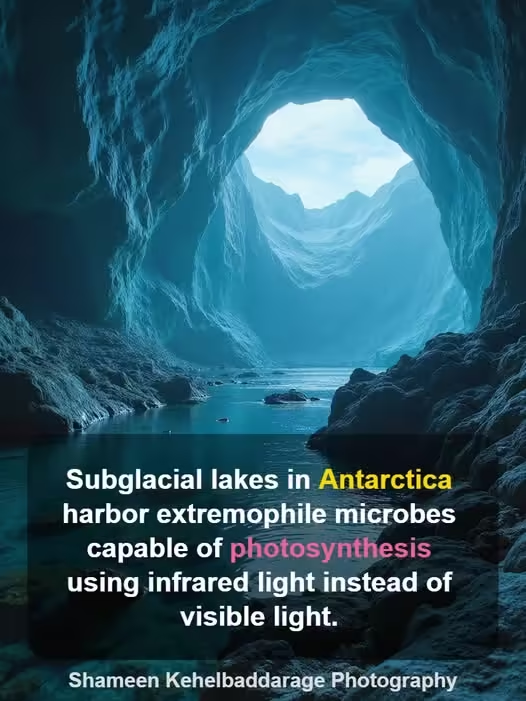
Hidden beneath miles of Antarctic ice, in a realm devoid of sunlight and subjected to crushing pressure and frigid temperatures, life not only exists—it thrives. In recent years, scientists have uncovered astonishing microbial ecosystems in subglacial lakes sealed off from the surface world for millions of years. These discoveries are rewriting the rules of biology and raising profound questions about life’s potential beyond Earth.

A World Beneath the Ice

Antarctica is home to more than 400 known subglacial lakes, the largest of which—Lake Vostok—is buried beneath nearly 4 kilometers (2.5 miles) of solid ice. Isolated from the surface and sunlight for millions of years, these lakes were once thought to be barren. But when scientists drilled into several of these lakes, including Lake Whillans and Lake Mercer, what they found was nothing short of extraordinary: entire microbial ecosystems flourishing in complete darkness.

These extremophiles—organisms adapted to extreme environments—have found a way to endure the freezing temperatures and high pressure by tapping into a surprising energy source: the Earth itself.

Infrared Photosynthesis in Total Darkness

One of the most groundbreaking revelations was that some of these microbes appear to perform a form of photosynthesis without sunlight. Instead of relying on visible light, they utilize infrared radiation—a longer wavelength of light—generated by geothermal heat rising from Earth’s interior. This geothermal energy provides just enough warmth and radiation to power life processes in an environment that was once thought inhospitable.

This process, sometimes called “infrared photosynthesis,” defies the conventional understanding of photosynthesis as something dependent on sunlight. It suggests that where there’s energy, even in unexpected forms, there’s potential for life.

What It Means for the Search for Extraterrestrial Life

These findings don’t just deepen our understanding of Earth’s biosphere—they expand our horizons in the search for life elsewhere in the solar system. Icy moons like Europa (orbiting Jupiter) and Enceladus (orbiting Saturn) harbor oceans beneath their frozen crusts. If microbial life can survive in the hidden lakes of Antarctica using geothermal energy, then similar forms of life could potentially exist beneath the ice of these distant worlds.

NASA and other space agencies are already planning missions to explore these moons, and Earth’s subglacial lakes serve as a crucial testing ground for the instruments and techniques that will be used.

The Frontier Beneath Our Feet

The Antarctic discoveries serve as a powerful reminder: we still know surprisingly little about our own planet. Beneath its icy crust, Earth harbors hidden worlds that challenge our assumptions about where life can exist and how it can survive.

As scientists continue to explore these subglacial environments, they not only uncover new forms of life but also redefine the boundaries of biology, geology, and even astrobiology.

In the cold, dark depths beneath Antarctica, life persists—not with the help of sunlight, but through the enduring heat of our planet’s core. And in doing so, it shines a new light on the age-old question: Are we alone?

Jellyfish and Quantum Physics: Nature’s Mysterious Navigators

499523499 1073547971497780 8229754085962983131 n

Jellyfish and Quantum Physics: Nature’s Mysterious Navigators

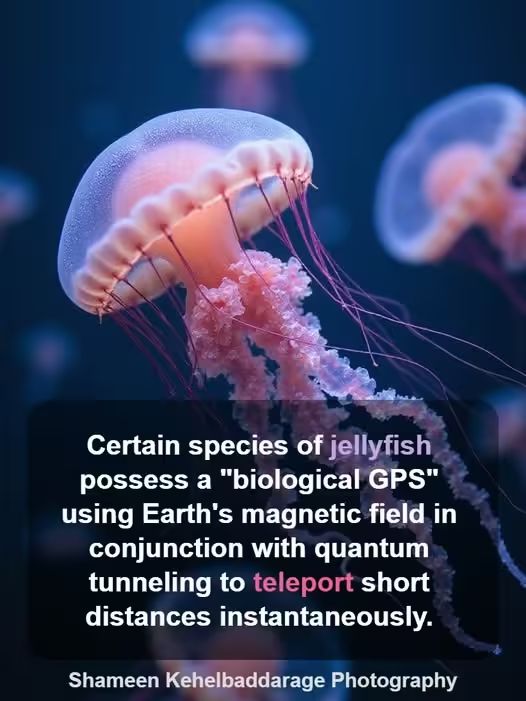
Jellyfish have been drifting through Earth’s oceans for over 500 million years, long before dinosaurs roamed the land. With their ghostly grace and silent elegance, they’ve always been mysterious creatures—but now, scientists are discovering that jellyfish may be far more extraordinary than we ever imagined. Recent research suggests that certain jellyfish species might not just float—they could be using principles of quantum physics to move in ways we never thought possible.

A Leap Through Physics: Quantum Tunneling in Nature?

Quantum tunneling is a phenomenon from the strange world of quantum mechanics where particles pass through barriers that should be impenetrable, according to classical physics. It’s a process that underlies everything from nuclear fusion in stars to modern electronics.

But what if jellyfish—simple, brainless animals—have somehow tapped into this bizarre principle of physics?

Some researchers now believe that select species of jellyfish may exploit quantum tunneling in their movement. Observations suggest that these creatures don’t just passively drift with ocean currents; instead, they exhibit motion patterns that defy traditional biological and physical explanations. Could it be that they’re “teleporting” short distances by bypassing the conventional limits of space and time?

Guided by Earth’s Magnetic Field

Jellyfish are known to respond to the Earth’s magnetic field, but the idea that they might use it to facilitate quantum tunneling is a thrilling possibility. In theory, their gelatinous bodies—which are rich in unique proteins, salts, and conductive fluids—could interact with magnetic fields in such a way that it sets up the perfect conditions for quantum behaviors.

By entering a state of quantum superposition, where they exist in multiple positions or paths simultaneously, they may momentarily “choose” the most efficient location and materialize there—essentially skipping over the space in between.

Biology Meets Quantum Mechanics

If proven, this would place jellyfish in a very rare category of organisms that exploit quantum mechanics for survival. Other examples include migratory birds, which may use quantum entanglement in their eyes to navigate, and certain bacteria that perform quantum-level energy transfers.

What makes jellyfish especially compelling is that their behavior challenges our assumptions about intelligence and complexity. Without brains or a central nervous system, they might be using raw physics—not cognition—to master the vast oceans.

The Bigger Picture

The idea of jellyfish using quantum tunneling remains speculative, but it opens up fascinating new avenues for research. If confirmed, it could revolutionize our understanding of both marine biology and quantum biology—a relatively young field exploring how living organisms might leverage the weirdness of quantum physics.

It also challenges us to think differently about life itself. What if many creatures we consider “primitive” are actually in tune with natural forces in ways we don’t yet understand?

Conclusion: Drifters or Quantum Pioneers?

Far from being passive ocean drifters, jellyfish may be pioneers of a hidden frontier—a place where biology and quantum physics intersect. While more research is needed to fully understand these processes, one thing is clear: the ocean still holds secrets that could rewrite the rules of science.

In the end, jellyfish remind us that the natural world is not just beautiful and mysterious—it may also be far more intelligent in its design than we ever imagined.

The Smell of Space: A Burnt Hint of the Cosmos

499531469 745719791128952 3584392848453957139 n

The Smell of Space: A Burnt Hint of the Cosmos

Space is often described as a vast, silent void—a place of stars, silence, and science. But few people realize that space also has a smell. It’s not something you can sniff while floating in a spacesuit, of course. But when astronauts return from a spacewalk and reenter their spacecraft, the lingering scent on their suits tells a strange and fascinating story.

A Scent Like No Other

Astronauts have consistently described the smell of space as something between burnt steak, hot metal, and welding fumes. It’s sharp, metallic, and distinctly charred. NASA astronaut Don Pettit once wrote, “It smells like something I’ve never smelled before, but… it reminds me of a welding torch, right after you’ve struck it.”

So, what causes this otherworldly odor?

Star Dust and Dying Suns

The source of this cosmic aroma lies in chemistry—and more specifically, in high-energy particles interacting with the surface of astronauts’ suits and equipment. When exposed to space, materials are bombarded by atomic oxygen and high-energy ultraviolet radiation. This bombardment can cause the formation of polycyclic aromatic hydrocarbons (PAHs)—complex molecules made up of fused carbon rings.

Interestingly, PAHs are also byproducts of dying stars. They’re scattered across interstellar space and even found in meteorites. These hydrocarbons are thought to play a role in the chemistry of early life, making them even more fascinating. In space, their smell becomes a signature of the universe’s most energetic and ancient processes.

From Training Labs to Earthly Noses

NASA found the space smell so consistently reported that scientists began recreating it. Chemists synthesized the odor for use in astronaut training to prepare them for the unique sensory experience of space. Today, this recreated scent is even used in science outreach—bringing the experience of space just a little closer to Earthbound audiences.

The synthetic version includes compounds like ozone, hot metal, and PAHs—designed to trigger the same burning, metallic aroma astronauts report.

A Cosmic Reminder

The smell of space is more than just a curious detail—it’s a reminder that the universe communicates in more than just light and sound. Our senses can pick up on cosmic clues in surprising ways. This scent, forged in the heat of dying stars and delivered through the cold vacuum of space, offers a uniquely human connection to the cosmos.

It’s one of many subtle ways the universe speaks to us—not just through telescopes or radio waves, but through the scorched scent clinging to a space suit after a walk among the stars.

The Hidden Giant Beneath the Amazon: Discovering the Hamza River

Chatgpt image may 25, 2025, 11 12 22 am

The Hidden Giant Beneath the Amazon: Discovering the Hamza River

When we think of mighty rivers shaping the landscape and nurturing ecosystems, the Amazon River usually takes center stage. But in 2011, scientists made a stunning discovery—beneath this iconic waterway lies another colossal river, one that doesn’t roar across the surface but instead flows silently, deep underground. Meet the Hamza River, one of Earth’s best-kept secrets.

A River Without Ripples

Unlike surface rivers, the Hamza doesn’t cut through valleys or gather rainwater into visible channels. Instead, it moves slowly—about a few millimeters to centimeters per hour—through porous rock and sediment nearly 4 kilometers (over 13,000 feet) beneath the surface of the Amazon Basin. Though sluggish, this underground river stretches over 6,000 kilometers (roughly the same length as the Amazon River above it), making it one of the longest subterranean watercourses on Earth.

Discovered by a team of Brazilian scientists led by Valiya Hamza (for whom the river is named), the Hamza River was identified through deep borehole data collected by the Brazilian oil company Petrobras. Temperature and pressure variations in these boreholes hinted at a vast, flowing body of water hidden far below the Amazon jungle.

A Vital Part of the Amazon Ecosystem

Though hidden from sight, the Hamza River may play a crucial role in regulating the Amazon’s vast and complex ecosystem. By helping to maintain groundwater levels and supporting the hydrological balance of the region, the Hamza potentially influences the flow and health of the Amazon River itself.

There’s also growing speculation among scientists that this subterranean giant may impact weather patterns across South America. By slowly releasing water into the soil and interacting with other underground reservoirs, the Hamza could contribute to regional humidity levels and even affect rainfall patterns thousands of miles away.

A Frontier of Life and Discovery

One of the most exciting possibilities about the Hamza River lies in what we haven’t yet seen. As a largely unexplored underground world, it may host unique subterranean ecosystems—microbes and extremophiles adapted to total darkness, high pressure, and mineral-rich waters. These lifeforms, if found, could help us better understand Earth’s biodiversity and perhaps offer insights into how life might exist on other planets.

Still So Much to Learn

The discovery of the Hamza River reminds us that even in the age of satellites and deep-space exploration, our planet still holds secrets buried beneath our feet. From vast underground rivers to hidden caves and unexplored oceans, Earth is full of unseen marvels waiting to be uncovered.

As scientists continue to investigate the Hamza and its potential effects on climate, ecology, and biology, one thing becomes clear: the Amazon isn’t just a wonder of the surface world—its mysteries run deep.

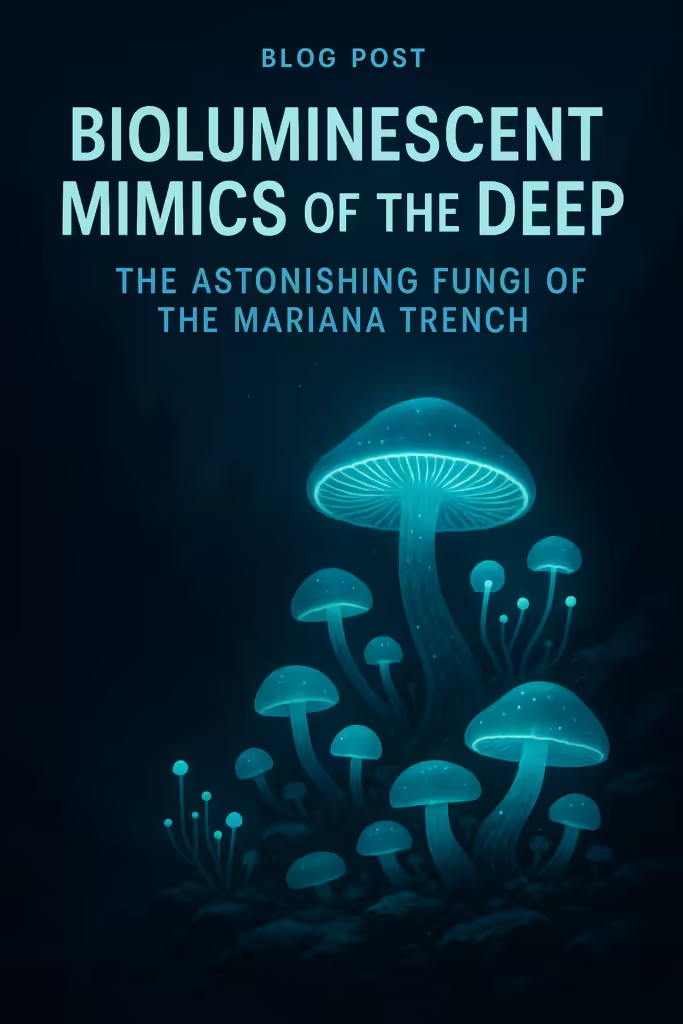
Bioluminescent Mimics of the Deep: The Astonishing Fungi of the Mariana Trench

Chatgpt image may 24, 2025, 11 54 21 am

Bioluminescent Mimics of the Deep: The Astonishing Fungi of the Mariana Trench

In the crushing darkness of the world’s deepest ocean trench, where sunlight has never touched and pressures exceed 1,000 times what we experience at sea level, life finds a way—not just to survive, but to dazzle. Recent discoveries have turned scientific attention toward an unassuming, yet astonishingly complex life form: deep-sea fungi that glow with an eerie, calculated precision.

But this isn’t just a random flicker of light. These bioluminescent fungi, found flourishing in the Mariana Trench—the deepest known part of Earth’s oceans—appear to mimic one of nature’s most elegant codes: the flashing patterns used by fireflies and other terrestrial insects to signal and attract mates. In doing so, they raise profound questions about evolutionary convergence, cross-environment mimicry, and the intelligent strategies life employs in even the most alien environments on our own planet.


The Twilight Zone of the Earth: A Harsh but Fertile Habitat

The Mariana Trench, located in the western Pacific Ocean, reaches depths of nearly 11,000 meters (36,000 feet). At that depth, the environment is so hostile that many assumed only primitive, single-cell life could persist. And yet, recent expeditions have uncovered a surprisingly rich biosphere—populated by amphipods, snailfish, extremophile bacteria, and now, fungi with remarkable capabilities.

These fungi, identified in samples taken from rock crevices and sediment near hydrothermal vents, are extremophiles—organisms adapted to thrive under extreme conditions. In the case of these deep-sea fungi, they endure crushing pressure, near-freezing temperatures, and perpetual darkness. But what truly astounds researchers is their ability to emit bioluminescent light in precise, rhythmic pulses—patterns that closely resemble the mating signals of fireflies.


An Impossible Coincidence? Evolutionary Mimicry Across Worlds

At first glance, it seems impossible. Fireflies are insects. These fungi are microorganisms that dwell in a cold, lightless underworld. There is no known biological connection between them, no evolutionary line that would justify shared behavior—especially something so specific as a light code. And yet, the patterns match.

Upon closer analysis, researchers observed that the glowing sequences produced by these fungi exhibit regular intervals, blinking with binary-like precision. Some emit short bursts followed by a pause. Others flash in triplet rhythms. These are the exact methods fireflies use to differentiate species and sexes, essentially “broadcasting their availability” into the night.

Why would a fungus—especially one trapped in the darkest abyss—evolve to mirror a pattern used by creatures of the air and light?


A Master Trickster of the Abyss

One compelling theory suggests these fungi have evolved this mimicry not to attract mates, but to lure other deep-sea creatures toward them—an evolutionary bait-and-switch tactic.

Many marine organisms, even at extreme depths, are drawn to light. In an environment where food is scarce and signals are rare, light means life, or at least, a potential meal. Creatures like deep-sea shrimp, isopods, and even larger fish have photoreceptors sensitive enough to detect even the faintest glimmer.

By mimicking familiar bioluminescent signals—especially those resembling known biological cues—these fungi might be taking advantage of ancient instinctual behavior embedded in other deep-sea dwellers. The goal? To draw them closer, possibly to:

  • Feed on them, if the fungi engage in parasitic predation.

  • Latch onto them to hitch a ride and spread spores across distant parts of the trench.

  • Establish symbiotic relationships, where light signals help attract prey for host animals, which in turn protect and transport the fungi.

It’s an elegant deception. In a realm where resources are few, trickery becomes a survival skill—and these fungi may be the masters.


Bioluminescence: A Universal Language of Survival?

Bioluminescence has evolved independently over 40 times in Earth’s history—across bacteria, fish, jellyfish, squid, plankton, and more. It’s a testament to how universally useful light is as a tool for life. Light can attract, distract, camouflage, communicate, and defend. But this particular cross-environment mimicry—a marine fungus replicating an airborne insect’s mating call—might be the first known example of convergent evolution between ecosystems that never touch.

If confirmed, it could revolutionize our understanding of how natural selection, environmental pressures, and even information patterns evolve across Earth’s biosphere.


Implications Beyond Earth: Lessons for Astrobiology

If such sophisticated mimicry can evolve at the bottom of Earth’s oceans, what could be happening on other planets or moons with liquid oceans—such as Europa or Enceladus? These worlds, with subsurface oceans trapped beneath layers of ice, may harbor their own forms of extremophile life.

What if life there also uses light in strategic, communicative ways? Could our current models of “primitive life” be too narrow, too based on surface-level biology?

The discovery of these fungi suggests that intelligence and mimicry are not limited to higher animals, or even to the sunlit world. They can emerge where light is rare, in total silence, through pure evolutionary brilliance.


The Next Frontier: Genetic and Optical Decoding

Scientists are now racing to decode the fungal genome, seeking the genes responsible for its bioluminescence. Preliminary findings suggest the presence of luciferin-like compounds, similar to those found in glowing algae and beetles. However, the regulation of their glow is even more fascinating—it seems tied to external chemical gradients or pressure-sensitive triggers, which may allow them to pulse light only under specific environmental conditions.

By understanding this biochemical toolkit, researchers hope to not only unravel the origins of this mimicry but potentially harness these compounds for medical imaging, deep-ocean sensors, or even nanotechnology.


A Living Mystery Glowing in the Deep

Nature often astonishes us most when we look where we least expect it. These deep-sea, light-pulsing fungi, glowing like forest fireflies in the darkest ocean, are not just an oddity—they are a message. They tell us that life is clever, adaptable, and endlessly creative. That signals and behaviors may emerge in isolation and still echo across ecosystems. That even fungi, some of Earth’s simplest organisms, can possess an evolutionary cunning that mirrors the brilliance of the animal kingdom.

In the black silence of the Mariana Trench, something glows with purpose. And we’ve only just begun to listen.


Tags: #DeepSeaMysteries #Bioluminescence #MarianaTrench #EvolutionaryMimicry #Fungi #NatureIsStrange #FireflySignals #Astrobiology #ExtremeLife #OceanScience

The Casimir Effect: How Vacuum Energy Could Power the Future of Levitation and Nanotechnology

Chatgpt image may 24, 2025, 10 48 24 am
The Casimir Effect: How Vacuum Energy Could Power the Future of Levitation and Nanotechnology

In the bizarre world of quantum physics, empty space isn’t truly empty. Even in a perfect vacuum, where no matter or radiation exists, quantum fluctuations constantly stir beneath the surface. These fluctuations give rise to one of the most intriguing and counterintuitive phenomena in physics: the Casimir effect. Discovered in 1948 by Dutch physicist Hendrik Casimir, this quantum mechanical effect predicts that two uncharged, perfectly conductive plates placed very close to one another in a vacuum will experience an attractive force due to changes in the quantum field between them.

At first glance, this may sound like science fiction. How can two objects with no electric charge, in a vacuum, somehow pull each other together without any visible force acting between them? The answer lies in the peculiar nature of the quantum vacuum—a seething sea of virtual particles constantly appearing and annihilating in pairs, even in the absence of matter and light. These virtual particles are real in their effects, and one of the most fascinating manifestations is the Casimir force.


Understanding the Casimir Effect

To understand the Casimir effect, it helps to imagine what happens when you place two very flat, uncharged metallic plates extremely close together—on the order of nanometers apart. In the vacuum around them, quantum fluctuations allow electromagnetic waves of various wavelengths to pop in and out of existence. However, not all wavelengths can fit in the tiny gap between the plates. Only certain wavelengths that “fit” between the plates—those that match the boundary conditions—are allowed inside.

Outside the plates, there are no such restrictions. The quantum vacuum there still fluctuates with all possible wavelengths. The result? There’s more energy outside the plates than between them, creating a pressure imbalance that gently pushes the plates together.

This attraction is minuscule—far too weak to observe in everyday life—but it becomes significant at the nanoscale. As technology continues to shrink toward the molecular level, the Casimir effect has evolved from a theoretical curiosity into a potential tool with real-world applications.


From Attraction to Repulsion

For decades, scientists assumed the Casimir force was always attractive. But recent research has revealed that this isn’t necessarily the case. By tweaking the geometry of the objects involved, or by using materials with specific electromagnetic properties, it’s possible to reverse the Casimir force, turning attraction into repulsion.

This groundbreaking insight has opened the door to revolutionary possibilities, especially in the field of nanotechnology. For example, scientists have shown that placing certain dielectric (insulating) materials between the plates, or using specific geometrical configurations like curved or patterned surfaces, can manipulate the balance of vacuum energy. The result? A repulsive Casimir force that could be harnessed to prevent nanoscale parts from sticking together, a major challenge in the design of microscopic machines.


Applications in Nanotechnology and Beyond

The ability to generate both attractive and repulsive Casimir forces could lead to a new generation of devices that operate on quantum principles rather than mechanical ones. Here are some exciting possibilities:

1. Nanoscale Actuators

Actuators are tiny devices that cause mechanical movement. At the nanoscale, traditional mechanical parts can stick due to electrostatic forces or even the Casimir effect itself. But by engineering repulsive Casimir forces, it’s possible to design frictionless components that can move without touching, powered by quantum fluctuations. This could revolutionize MEMS (microelectromechanical systems) and NEMS (nanoelectromechanical systems), which are used in everything from medical devices to sensors.

2. Quantum Levitation

Perhaps the most tantalizing application is in levitation technology. If two surfaces can repel each other without physical contact—simply due to the nature of the vacuum between them—then we may be able to design devices that float or hover with no energy input or mechanical support. Unlike magnetic levitation, which requires superconductors or electromagnets, Casimir-based levitation could, in theory, work in any vacuum environment and be used at the nanoscale. This opens up new frontiers in quantum propulsion, frictionless bearings, or even space-based manufacturing.

3. Energy-Efficient Systems

Although the Casimir force itself does not generate energy (it redistributes existing vacuum energy), systems that exploit repulsive Casimir effects could significantly reduce energy losses due to friction, heat, or wear. Over time, this could make a meaningful impact in sectors like aerospace, robotics, and advanced manufacturing, where reducing micro-scale resistance is crucial.


Challenges and Limitations

Despite its promise, the Casimir effect is notoriously difficult to control. The forces involved are extremely weak, and precise experimentation requires clean environments, stable conditions, and ultra-flat materials with nanometer-level alignment.

Moreover, creating repulsive Casimir forces typically requires engineered materials with exotic properties—such as metamaterials, which manipulate electromagnetic waves in ways that natural materials can’t. These materials are still in the early stages of development and are often expensive or hard to fabricate.

Another challenge lies in scaling. While the Casimir effect dominates at the nanometer scale, it rapidly weakens at larger distances. This makes it a powerful tool for tiny machines, but less useful for macroscale technologies—at least with our current understanding and materials.


The Future of Casimir-Based Technologies

As our ability to fabricate and manipulate matter at the atomic scale improves, so does our ability to exploit quantum forces like the Casimir effect. Future advancements in metamaterials, surface science, and quantum engineering could make it easier to harness and direct these forces with precision.

Additionally, ongoing theoretical research is shedding light on how Casimir forces behave in more complex systems, such as non-parallel geometries, finite temperatures, or non-vacuum environments. Each new discovery brings us closer to integrating these quantum effects into real-world applications.

Already, some research groups are exploring how the Casimir effect might play a role in quantum information systems, sensor design, or even biological processes, where tiny forces govern molecular behavior.


Conclusion

The Casimir effect is a striking example of how the strange and subtle rules of quantum mechanics can manifest in the physical world. What began as a theoretical prediction has become a cornerstone of nanophysics, with growing relevance for engineers, materials scientists, and innovators alike.

The possibility of reversing this force—switching it from attraction to repulsion—marks a turning point. It suggests that we may not just passively observe quantum forces, but actively shape them for our benefit. In doing so, we could unlock new methods of levitation, create frictionless machines, and develop technologies that seem to defy classical logic.

In the quiet emptiness of the quantum vacuum, a world of possibility waits. The Casimir effect is not just a curiosity—it may be a key to building the future at the smallest scales.

The Hidden Ocean Beneath Our Feet: Unlocking Earth’s Deepest Water Mystery

Chatgpt image may 24, 2025, 10 38 51 am

The Hidden Ocean Beneath Our Feet: Unlocking Earth’s Deepest Water Mystery

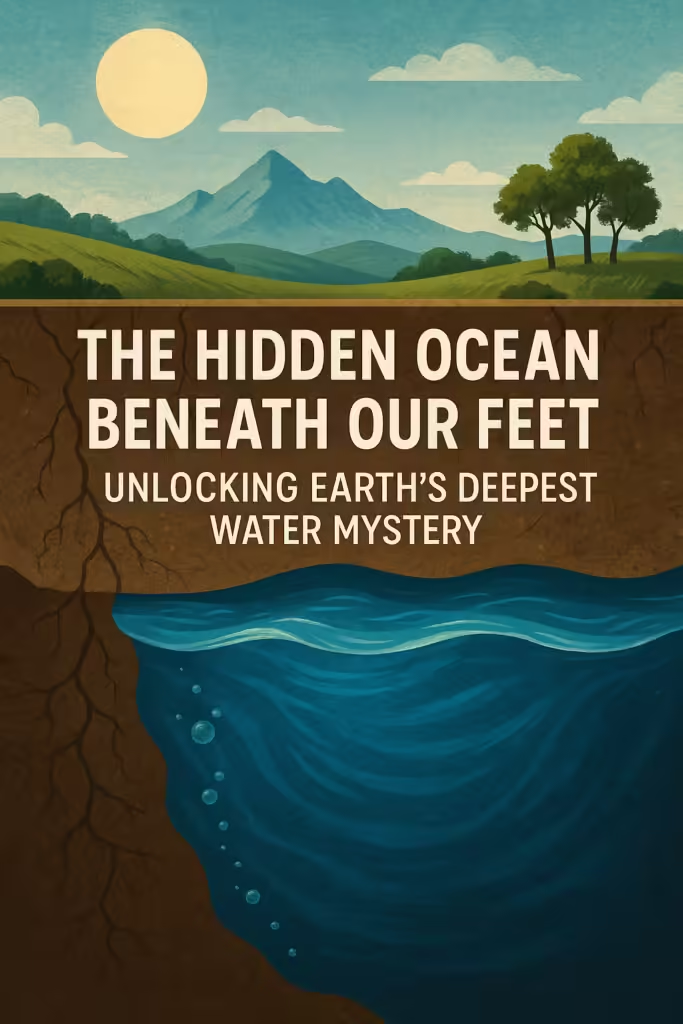
When we think of oceans, we imagine vast blue surfaces stretching across our planet—Pacific waves crashing on shores or deep trenches teeming with mysterious life. But what if one of Earth’s most immense water reservoirs isn’t visible at all? What if, instead of flowing between continents, it’s locked thousands of kilometers beneath our feet—inside rocks?

Welcome to one of modern geology’s most astonishing discoveries: a massive “hidden ocean” trapped in Earth’s mantle, not in liquid pools, but bound within the atomic structure of minerals. This revelation has not only revolutionized our understanding of the Earth’s interior but has reshaped how scientists view the planet’s ancient water cycle, tectonic movements, and even the origins of life-supporting oceans at the surface.

Beyond the Surface: Discovering the Deep Earth Reservoir

In 2014, scientists studying diamond inclusions discovered ringwoodite—a high-pressure form of olivine—containing a startling amount of water. The ringwoodite was found inside a diamond brought up from around 600 kilometers below the Earth’s surface. But it wasn’t wet in the traditional sense. Instead, the water existed as hydroxide ions (OH⁻), trapped inside the crystal lattice of the mineral.

This seemingly tiny detail triggered a seismic shift in Earth science. By analyzing how seismic waves travel through the planet’s interior, researchers found evidence that a vast layer in the mantle between 400 to 600 kilometers deep was saturated with water-rich minerals—an entire reservoir three times the volume of all surface oceans combined.

Water in Rock? Understanding Mineral-Bound Water

To grasp this phenomenon, imagine sponge-like rocks soaked with water not on their surfaces, but locked inside their mineral structures. At extreme temperatures and pressures deep inside the Earth, certain minerals behave like water storage units. Ringwoodite, wadsleyite, and other high-pressure phases of olivine can trap and transport water atoms within their crystalline matrices.

So while it’s not a traditional ocean of sloshing liquid, this mantle reservoir represents a gargantuan underground storage of hydrogen and oxygen, the essential components of H₂O, embedded directly into the planet’s geology. And it doesn’t just sit there passively—it actively participates in Earth’s dynamic systems.

Reshaping Geology: A New View of Earth’s Water Cycle

Before this discovery, scientists believed that Earth’s water cycle was largely confined to surface processes: evaporation, precipitation, rivers, and oceans. But the hidden ocean theory has changed everything.

Water from the surface doesn’t simply remain on top. Through a process called subduction, tectonic plates carry oceanic crust deep into the Earth’s mantle. As these plates descend, water trapped in sediments and rocks is dragged down too. At high pressures and temperatures, this water binds to mantle minerals and becomes part of the hidden reservoir.

Later, through volcanic eruptions and mantle plumes, some of this deeply stored water is returned to the surface, helping to regulate volcanic activity and influence continental formation. This means that the Earth’s internal water cycle may be just as vital—and massive—as the one we observe above ground.

Volcanic Clues: Water’s Role in Eruptions and Earthquakes

Why does this deep water matter? Because it plays a major role in tectonic activity and volcanic behavior. Water acts as a lubricant for tectonic plate movements and reduces the melting point of rocks, enabling magma to form more easily.

This explains why some of the most explosive volcanoes are located in subduction zones—regions where oceanic plates dive beneath continents and carry water deep into the Earth. The stored water lowers the melting point of surrounding rocks, creating magma chambers that can erupt violently.

Some geophysicists even speculate that variations in this mantle-stored water could influence the frequency of earthquakes, volcanic hotspots, and continental drift, making it one of the hidden forces shaping Earth’s surface evolution.

Did the Deep Ocean Create the Surface Oceans?

One of the most fascinating implications of this deep reservoir is its possible connection to the origins of surface oceans. Traditionally, scientists debated whether Earth’s water came from icy comets or outgassing from the planet’s interior. But the hidden ocean suggests a compelling new possibility.

If the mantle has held enormous quantities of water since Earth’s early history, it may have acted as a slow-release mechanism—gradually pushing water to the surface through volcanic activity over millions of years. In other words, Earth’s surface oceans might be the result of a slow, steady exhalation from the planet’s deep interior.

This theory has major implications for planetary science, too. If other rocky planets or moons once had similar mantle processes, they may have once harbored oceans—even if none remain today. Mars, for instance, shows signs of ancient rivers but no current seas. Could a “deep ocean” still be locked beneath its surface?

How Scientists Probe This Inaccessible Realm

You might be wondering: how do we know what’s happening hundreds of kilometers below Earth’s surface, where no drill has ever reached?

The answer lies in seismology—the study of how earthquake waves move through Earth. These waves behave differently depending on the density, composition, and temperature of the materials they pass through. Anomalies in wave behavior, especially in the transition zone (410–660 km deep), provided early clues to the presence of water-rich minerals.

In addition, lab experiments recreating deep Earth conditions allow scientists to test how minerals absorb and release water under pressure. Combined with diamond inclusions—tiny time capsules from the deep Earth—these tools give us an indirect but increasingly accurate picture of the mysterious inner ocean.

A Living Planet: The Deeper Meaning of Deep Water

The discovery of Earth’s deep water reservoir reinforces a powerful idea: our planet is far more dynamic, interconnected, and alive than we often imagine. From surface rain to molten lava, from thunderstorms to earthquakes, the rhythms of the planet are tied together by a vast, unseen system beneath our feet.

This hidden ocean also challenges us to rethink where life-sustaining resources can exist. As we search for water on distant moons like Europa or exoplanets far beyond our solar system, we must remember: not all oceans are blue and shimmering under sunlight—some are buried, silent, and woven into stone.

Final Thoughts: We’ve Only Scratched the Surface

We stand on the crust of a world still filled with secrets. The hidden ocean in the mantle—bound in crystal, fueled by subduction, and exhaled through volcanoes—represents one of the most profound geological discoveries of the 21st century.

It reminds us that Earth is not static but a breathing, recycling, evolving entity, shaped as much by what lies beneath as by what we see above. And it urges us to keep looking deeper—not just into rocks and minerals, but into the hidden processes that have made this planet uniquely habitable.

Because sometimes, the greatest oceans are the ones we don’t even see.