
Introduction
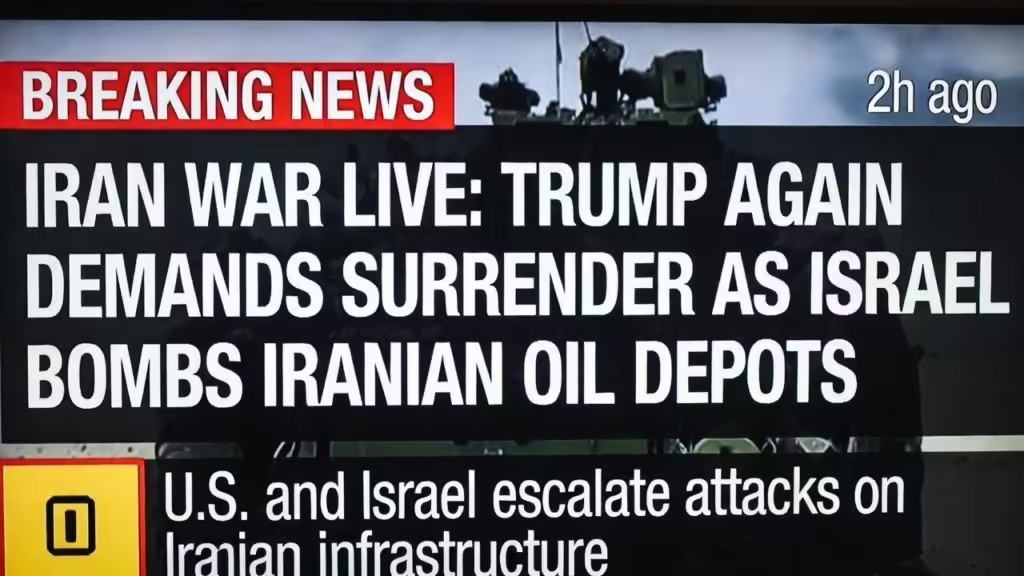
The ongoing Iran war has entered a dangerous new phase as airstrikes intensify and global tensions escalate. On March 8, 2026, new reports confirmed that Israeli forces targeted multiple Iranian oil depots while U.S. President Donald Trump again demanded Iran’s “unconditional surrender.”
The conflict, which began in late February following a coordinated U.S.–Israeli military campaign against Iran’s leadership and military infrastructure, has quickly transformed into one of the most volatile geopolitical crises of the decade.
With thousands of airstrikes, rising civilian casualties, and growing fears of a wider regional war, the Iran war is reshaping global politics, energy markets, and international security.
This live update and analysis explores the latest developments, the causes of the conflict, the strategic goals of the involved powers, and the possible consequences for the Middle East and the world.
Timeline of the Iran War
How the Conflict Started
The current war began on February 28, 2026, when the United States and Israel launched coordinated airstrikes on Iranian military targets. The attacks reportedly killed Iran’s Supreme Leader, Ayatollah Ali Khamenei, and several senior military officials.
This unprecedented strike triggered a massive response from Tehran. Iran launched missile and drone attacks against Israel and U.S. assets across the Middle East, escalating the conflict into a regional war.
Within days, the situation spiraled as multiple countries became indirectly involved through military bases, alliances, and strategic partnerships.
Trump Demands “Unconditional Surrender”
Washington’s Hardline Position
U.S. President Donald Trump has repeatedly insisted that Iran must surrender completely to end the war. According to statements posted on social media and confirmed by officials, Trump believes only unconditional surrender can guarantee peace.
“There will be no deal with Iran except unconditional surrender,” he wrote in a message addressing the conflict.
The White House argues that Iran’s current government must be replaced by a new leadership that does not threaten regional stability.
Trump has also warned that continued resistance from Tehran could result in devastating military action.
Threats of Further Military Action
Trump has indicated that the war may continue until Iran’s military capabilities are completely destroyed.
In remarks to reporters, he suggested the conflict might end only when Iran no longer has functioning leadership or military command structures.
This statement has alarmed analysts, who warn that such goals could dramatically extend the war and increase civilian casualties.
Israeli Airstrikes Target Iranian Oil Depots
Strategic Energy Infrastructure Hit
One of the most significant developments in the conflict occurred when Israeli forces bombed oil storage depots near Tehran.
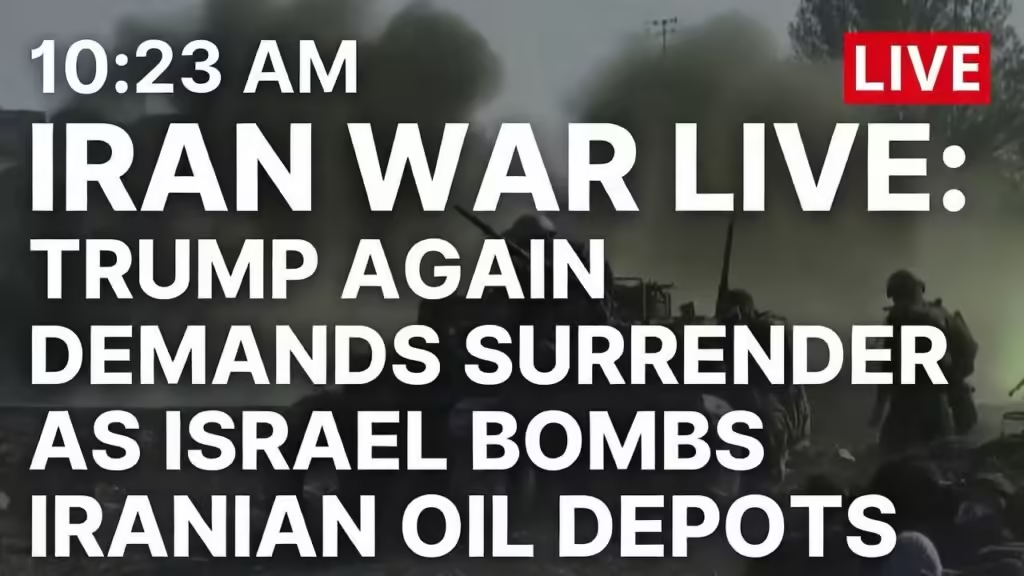
Iranian state media reported that a major oil depot in southern Tehran was struck, while another facility in the northwest of the city was also targeted. Flames and thick smoke were seen rising from the facilities after the attacks.
Although nearby refinery infrastructure reportedly avoided major damage, the strikes mark a dramatic escalation in the war.
Why Oil Infrastructure Matters
Iran’s oil industry is the backbone of its economy. By targeting oil depots and energy infrastructure, Israel and its allies aim to:
Disrupt Iran’s financial resources Limit fuel supplies for military operations Increase economic pressure on the government
Energy analysts say these strikes could have major consequences for global oil markets, especially if the conflict spreads to other oil-producing nations.
Iran Rejects Surrender Demand
Iranian officials have strongly rejected the demand for unconditional surrender.
President Masoud Pezeshkian called Trump’s demand a “dream,” insisting that Iran will not capitulate under pressure.
Tehran has emphasized that it is defending itself against foreign aggression and will continue fighting if attacks persist.
Iran Signals Possible De-Escalation
Interestingly, Iran also signaled it might limit its attacks on neighboring countries.
Officials said strikes on Gulf states hosting U.S. military bases would stop unless attacks were launched from those territories.
This announcement suggests Iran may be trying to avoid a wider regional war while still resisting U.S. and Israeli forces.
Massive Air Campaign Across Iran
Israel claims that its military has carried out thousands of strikes during the first week of the war.
According to military officials:
Around 3,400 airstrikes were conducted More than 7,500 munitions were used Key missile launchers and air defenses were destroyed
Israeli leaders say the goal is to dismantle Iran’s military infrastructure and prevent future attacks.
Civilian Impact and Casualties
Rising Death Toll
The humanitarian cost of the conflict is rapidly increasing.
Reports indicate that:
More than 1,200 people have been killed in Iran Dozens have died in Israel and Lebanon Several U.S. service members have also been killed
Thousands of civilians have been displaced as airstrikes hit major cities and infrastructure.
Damage to Cities
Explosions have been reported in several Iranian cities, including:
Tehran Kermanshah Isfahan Bandar Abbas
Witnesses describe heavy bombardment, with buildings shaking and large fires breaking out across urban areas.
Regional Tensions Rising
Gulf States on High Alert
Iran has launched missile and drone strikes toward several Gulf countries hosting U.S. military bases.
Countries affected include:
Saudi Arabia Qatar Bahrain Kuwait
These attacks are believed to target American military facilities rather than civilian infrastructure, but the risk of escalation remains extremely high.
Lebanon and Hezbollah
The conflict is also spreading into Lebanon.
Israel has intensified strikes against Hezbollah positions, claiming the group is assisting Iran’s military operations.
Hundreds of civilians have been killed in Lebanon as the fighting spreads.
Global Economic Impact
Oil Prices Surge
One of the immediate effects of the war has been a dramatic rise in global oil prices.
Energy markets reacted strongly because Iran is a major oil producer and the conflict threatens shipping routes in the Persian Gulf.
Experts warn that if the Strait of Hormuz becomes unsafe, global energy supplies could be severely disrupted.
Impact on Stock Markets
The conflict has also affected global financial markets.
Investors fear:
Long-term energy shortages Global recession risks Supply chain disruptions
Air travel has also been heavily impacted, with thousands of flights canceled across the Middle East.
Intelligence Reports Raise Doubts
Despite the intensity of the bombing campaign, intelligence agencies believe that removing Iran’s government may be extremely difficult.
A classified intelligence report suggests that even large-scale military action is unlikely to overthrow the Iranian regime.
Analysts say Iran has robust succession mechanisms and strong institutional structures that could allow the government to continue operating even after leadership losses.
Possible Scenarios for the Future
Scenario 1: Prolonged Regional War
The most likely scenario is a long war involving multiple countries.
If Iran continues launching missiles and Israel intensifies its attacks, the conflict could spread across the Middle East.
Scenario 2: Regime Change in Iran
The United States appears to support the idea of replacing Iran’s leadership.
However, intelligence experts believe this would be extremely difficult without a ground invasion.
Scenario 3: Negotiated Ceasefire
A ceasefire could eventually occur through international mediation.
Countries such as China, Turkey, or European states might attempt to broker negotiations.
However, Trump’s insistence on unconditional surrender makes diplomatic solutions harder.
Global Reactions
Europe Calls for De-Escalation
European governments have urged both sides to reduce violence and return to diplomatic negotiations.
Many leaders fear that continued escalation could trigger a wider global crisis.
Russia and China Response
Russia and China have criticized the U.S.–Israel military campaign, calling for an immediate ceasefire and respect for Iran’s sovereignty.
These countries may play a major role in shaping the diplomatic outcome of the war.
The Risk of World War
Some analysts warn that the conflict could evolve into a broader international confrontation.
The Middle East hosts numerous military bases from major powers, including the United States, Russia, and European nations.
If the conflict spreads or if additional countries become involved, it could destabilize the entire region.
Humanitarian Crisis
The war is also triggering a growing humanitarian crisis.
Millions of people across the Middle East are now at risk due to:
Displacement Food shortages Infrastructure damage Medical supply disruptions
International aid organizations are warning that conditions could worsen dramatically if the war continues.
Conclusion
The Iran war has rapidly become one of the most dangerous geopolitical crises in recent history.
Israeli strikes on Iranian oil depots and President Trump’s repeated demands for unconditional surrender signal that the conflict is far from ending.
With rising casualties, economic shocks, and mounting regional tensions, the world is watching closely to see whether diplomacy can prevent further escalation.
The coming days will likely determine whether the conflict expands into a wider regional war or moves toward negotiations and peace.

