
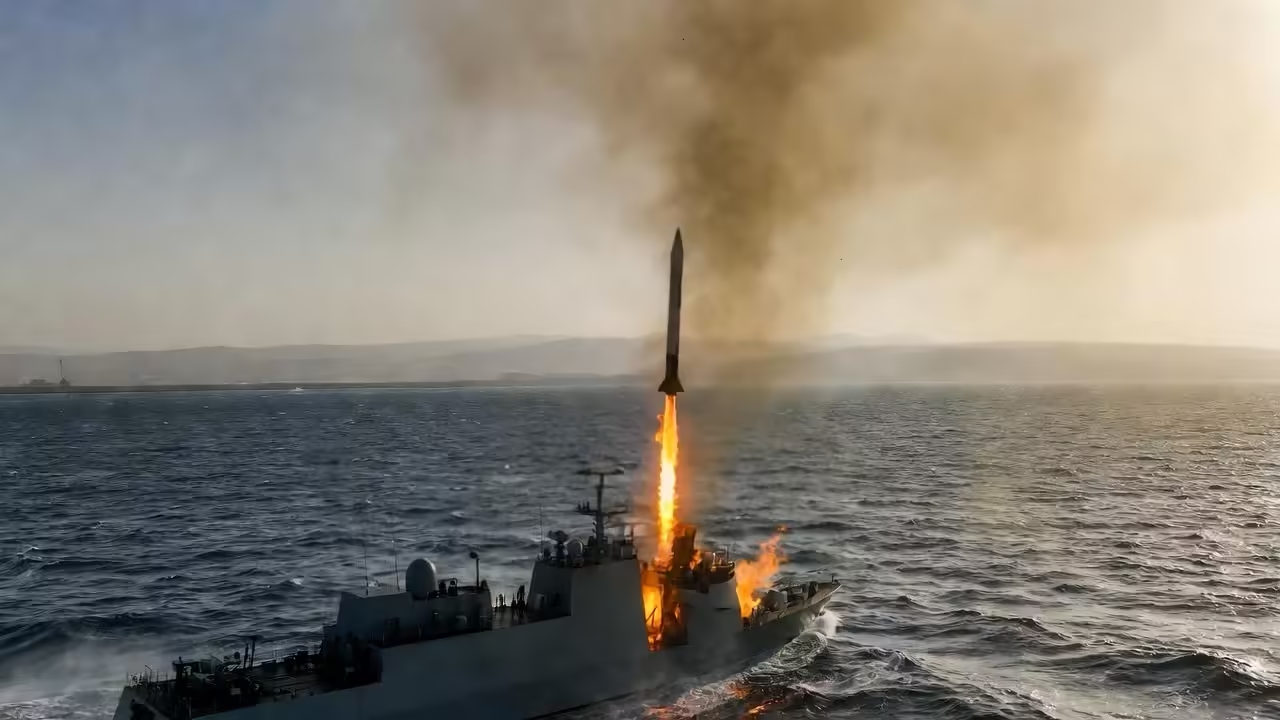
The Persian Gulf has once again become the center of international attention after reports emerged of a missile attack targeting a vessel in the northern Gulf region. According to statements from Iranian state media, Iran’s naval forces launched a missile strike against a vessel they claim was linked to the United States. The announcement has raised serious concerns about maritime security, global trade routes, and the possibility of escalating tensions in one of the world’s most strategically important waterways.
While Iran claims responsibility for the strike, independent verification of the incident remains limited. Meanwhile, maritime monitoring agencies have reported a separate attack on a tanker near the coast of Kuwait. These conflicting reports have created uncertainty about what exactly occurred and who may have been responsible.
Regardless of the details, the situation has once again highlighted the fragile security environment in the Gulf region and the enormous geopolitical importance of the Strait of Hormuz.
The Incident in the Northern Gulf
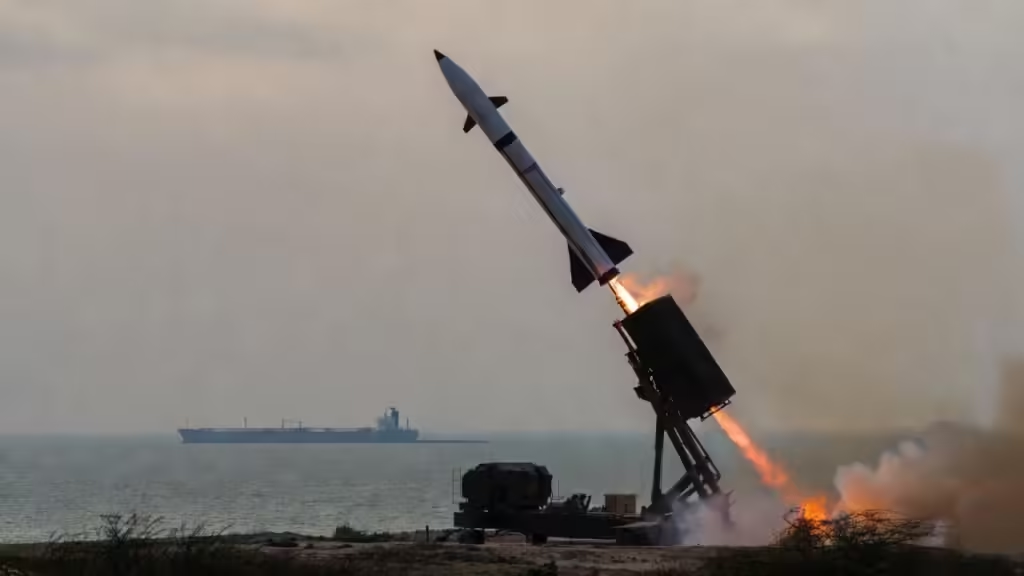
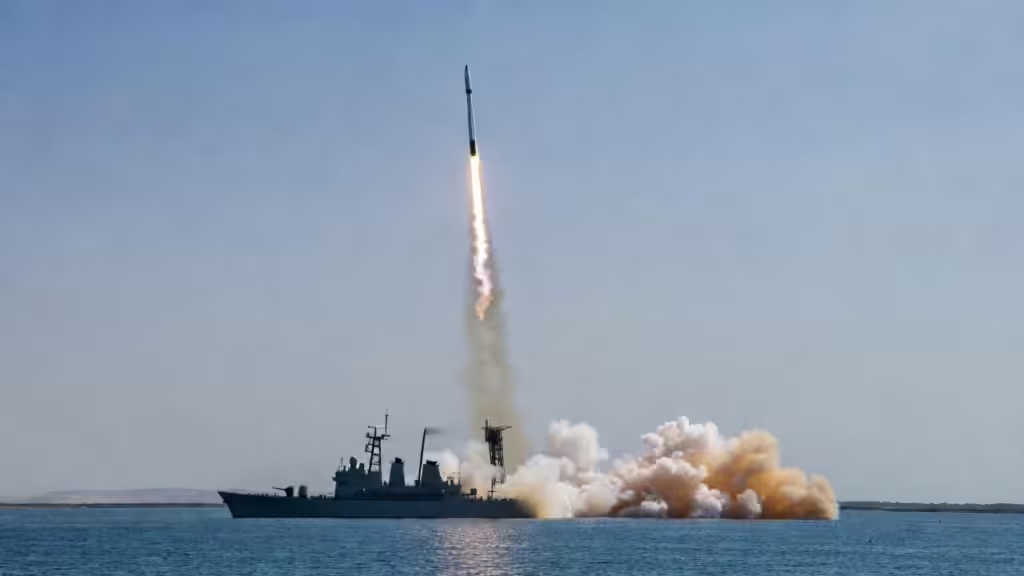
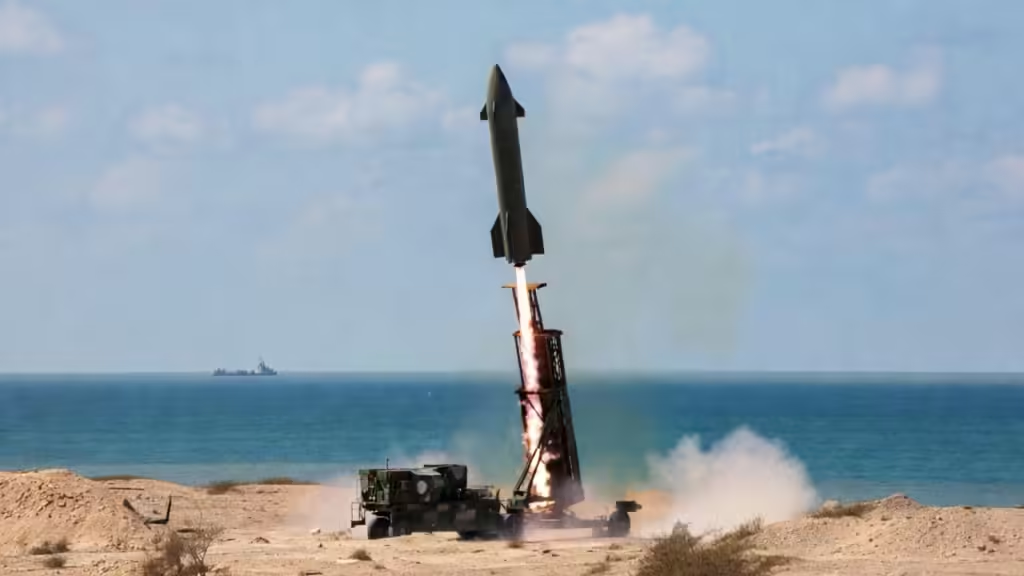
Early in the morning of March 5, Iranian state television reported that naval units associated with Iran’s Islamic Revolutionary Guard Corps (IRGC) carried out a missile strike against a vessel in the northern Persian Gulf. According to the report, the targeted vessel was allegedly an American ship operating in the region.
Iranian sources claimed the vessel caught fire after the attack and was heavily damaged. Officials linked to the IRGC stated that the strike demonstrated their capability to control and defend strategic waters near Iran’s coastline.
However, these claims have not yet been independently confirmed by international monitoring organizations or foreign governments. As is often the case in rapidly developing regional incidents, information remains limited and sometimes contradictory.
Still, the announcement alone was enough to trigger immediate concern across the global shipping industry and among governments closely monitoring security in the Middle East.
Reports From Maritime Monitoring Agencies
While Iran claimed responsibility for a missile attack, another report emerged from maritime authorities in the region that described a different incident involving a commercial vessel.
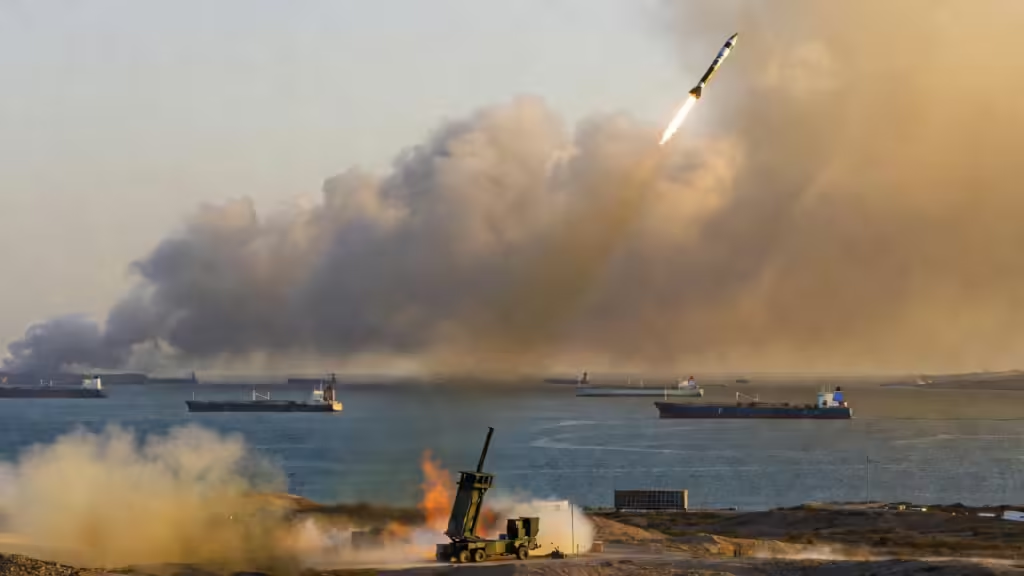
The United Kingdom Maritime Trade Operations (UKMTO), an organization responsible for monitoring shipping safety in the region, reported that a tanker near the Kuwaiti coast experienced an explosion on its port side. The vessel had been anchored when the incident occurred.
According to the ship’s captain, a large blast was observed on the left side of the vessel. Following the explosion, a small craft was reportedly seen leaving the area. These observations raised suspicions that the vessel may have been targeted by an attack rather than experiencing a mechanical failure.
The tanker reportedly began taking on water after the explosion, indicating structural damage to the hull. Additionally, oil leakage from one of the cargo tanks was detected, raising environmental concerns about potential marine pollution.
Despite the damage, the situation on board appeared relatively stable. No fire was reported, and the crew members were said to be safe and accounted for.
Authorities and maritime security experts are continuing to monitor the situation while investigating the cause of the blast.
Strategic Importance of the Strait of Hormuz
The Strait of Hormuz is widely considered one of the most strategically important waterways in the world. It serves as the main maritime passage connecting the Persian Gulf with the Gulf of Oman and the Arabian Sea.
This narrow strait plays a critical role in global energy transportation. A significant portion of the world’s oil supply passes through it every day, transported by massive oil tankers traveling between Gulf producers and international markets.
Countries such as Saudi Arabia, Iraq, Kuwait, the United Arab Emirates, and Iran rely heavily on this shipping route for exporting crude oil and other energy products.
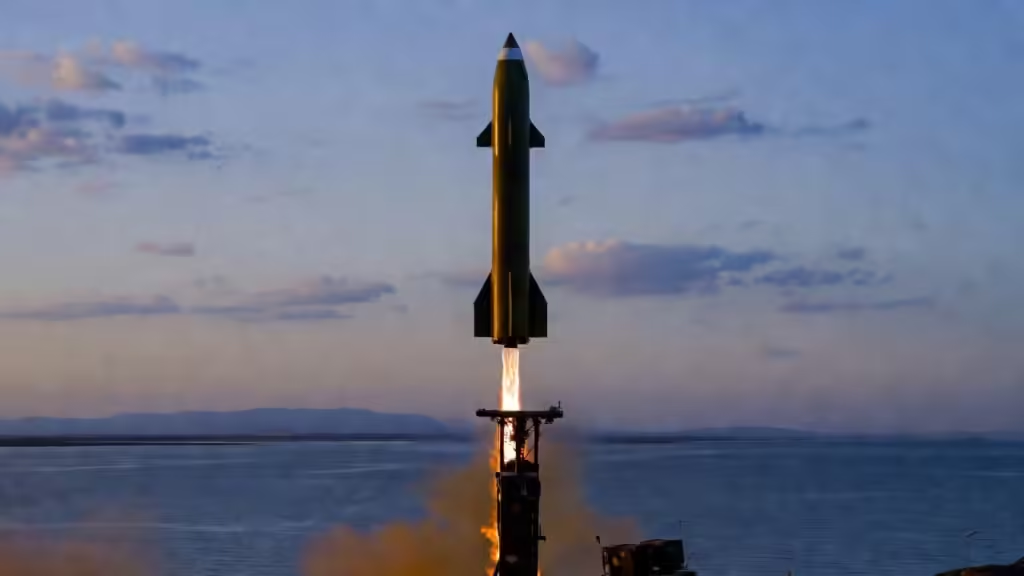
Any disruption to traffic in the Strait of Hormuz can have immediate and far-reaching consequences for global energy markets. Even minor security incidents can cause spikes in oil prices and heightened concern among shipping companies.
Because of this, the region is closely monitored by international naval forces, including the United States and several allied nations.
Iran’s Claim of Control Over the Waterway
In its statement following the reported attack, Iranian officials emphasized that they maintain full control over the strategic waters around the Strait of Hormuz.
The IRGC declared that Iran has the capability to monitor and respond to any naval activity in the region. Officials described the waterway as a critical national security zone and reiterated their determination to protect Iranian interests.
Iran has long argued that foreign military presence in the Gulf region threatens regional stability. At the same time, Western governments maintain that naval patrols are necessary to ensure the safety of international shipping lanes.
These competing perspectives have contributed to decades of tension in the region.
History of Maritime Incidents in the Gulf
The Persian Gulf has a long history of maritime confrontations involving regional and international actors.
During the 1980s Iran-Iraq War, the region witnessed the so-called “Tanker War,” during which both sides targeted oil tankers and commercial vessels associated with their opponents. This period saw numerous attacks on shipping and significant disruption to global energy markets.
In more recent years, several vessels have been damaged in mysterious explosions or suspected attacks in the Gulf and nearby waters.
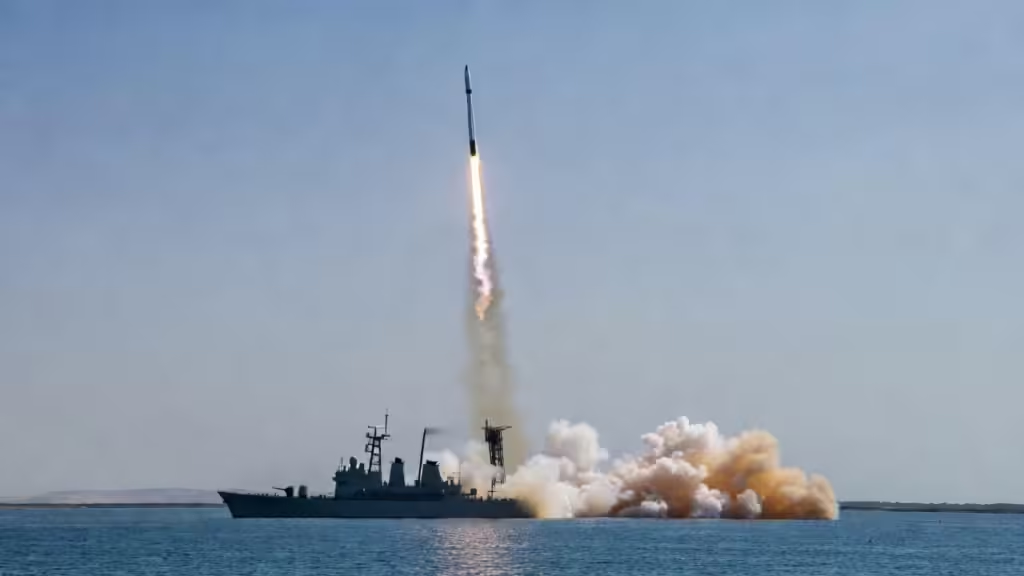
Some incidents involved limpet mines attached to ships, while others involved drone strikes or missile attacks. Responsibility for these attacks has often been disputed, with governments accusing one another of orchestrating the operations.
Because of these past events, any new maritime incident in the Gulf quickly draws global attention.
Impact on Global Shipping and Trade
Shipping companies and energy traders closely monitor security developments in the Persian Gulf because of its critical role in global commerce.
Thousands of vessels pass through the region every year, including oil tankers, container ships, and bulk carriers transporting goods to markets around the world.
When security incidents occur, shipping companies may adjust their routes, increase insurance coverage, or request naval escorts for their vessels. These measures can increase transportation costs and cause delays in the supply chain.
If tensions escalate further, some shipping companies may temporarily avoid the area, which could disrupt international trade flows.
Insurance premiums for vessels operating in the Gulf typically rise whenever conflict risks increase.
Environmental Concerns
The reported oil leakage from the damaged tanker near Kuwait has also raised environmental concerns.
Oil spills can cause severe damage to marine ecosystems, harming fish populations, coral reefs, and coastal habitats. Cleanup operations can take weeks or even months depending on the size of the spill.
The Persian Gulf is already a fragile marine environment due to heavy shipping traffic and oil production activities. Environmental experts warn that additional pollution incidents could worsen existing ecological challenges.
Authorities in the region may need to deploy containment measures quickly if the leak spreads.
Regional Security Implications
The reported attack has heightened tensions in an already sensitive region.
The Gulf is home to multiple rival powers with competing interests, including Iran and several Gulf Arab states. In addition, international forces from the United States, the United Kingdom, and other countries maintain a military presence to protect shipping routes.
Incidents at sea can easily escalate if misinterpretations occur or if countries believe their vessels have been intentionally targeted.
Because naval forces often operate in close proximity to each other in the Gulf, communication and coordination are essential to prevent misunderstandings.
Diplomatic channels may also play a role in reducing tensions following such incidents.
Global Political Reactions
Although the event has not yet been independently confirmed in full detail, governments around the world are likely monitoring the situation closely.
Major energy-importing nations such as China, Japan, and India depend heavily on oil shipments from the Gulf region. Any disruption could affect their economies.
Western governments may also be concerned about the safety of international shipping and the potential risk to naval personnel operating in the region.
International organizations may call for restraint and transparency as more information becomes available.
Uncertainty and Conflicting Information
One of the biggest challenges in understanding incidents like this is the lack of immediate reliable information.
In fast-moving geopolitical situations, reports often emerge from multiple sources with differing details. State media outlets, shipping organizations, and eyewitness reports may provide conflicting accounts.
Independent verification typically takes time as investigators gather evidence and analyze satellite imagery, vessel tracking data, and damage reports.
Until that process is complete, many questions about the incident remain unanswered.
Possible Scenarios
There are several possible explanations for the events reported in the Gulf.
One possibility is that the tanker explosion and the alleged missile attack are connected and part of the same incident. Another possibility is that they are separate events that happened around the same time.
It is also possible that the explosion resulted from another cause, such as an onboard malfunction or accidental collision.
Investigators will likely examine radar records, ship logs, and physical damage to determine exactly what happened.
Maritime Security Measures
Following incidents like this, maritime authorities often issue security advisories to ships operating in the region.
These advisories may include recommendations such as:
Maintaining increased vigilance while sailing in high-risk areas Reporting suspicious vessels or activity immediately Avoiding unnecessary stops in sensitive zones Coordinating with regional naval forces for safety guidance
Shipping companies may also implement additional safety protocols for their crews.
The Role of International Naval Forces
Several international naval coalitions operate in the region to ensure freedom of navigation.
These forces conduct patrols, escort vulnerable vessels, and monitor potential threats to commercial shipping. Their presence is intended to deter attacks and provide rapid response capabilities if incidents occur.
However, the presence of multiple military forces in a relatively confined waterway can also contribute to complex security dynamics.
Maintaining communication between naval forces from different countries is essential to prevent misunderstandings.
Economic Implications
The global economy is highly sensitive to disruptions in energy supply.
If tensions in the Gulf escalate, oil prices could rise quickly due to fears of supply interruptions. Even the perception of risk can influence commodity markets.
Energy traders, shipping companies, and financial analysts will continue monitoring developments closely.
Markets typically react not only to confirmed events but also to political statements and military movements in the region.
The Need for De-Escalation
Many international observers believe that maintaining stability in the Gulf is critical for global economic security.
Diplomatic efforts and open communication channels are often the most effective tools for preventing conflicts from escalating.
Regional cooperation, transparency in investigations, and adherence to international maritime law can help reduce the risk of further incidents.
Conclusion
The reported missile strike and tanker explosion in the northern Gulf have once again highlighted the fragile security environment surrounding one of the world’s most important shipping routes.
Although Iran claims to have targeted an American vessel and asserts control over the Strait of Hormuz, independent confirmation of the details remains limited. Meanwhile, maritime authorities continue investigating the explosion reported near Kuwait.
Regardless of the final findings, the incident has already raised concerns about maritime safety, environmental risks, and geopolitical tensions in the region.
The Persian Gulf remains a critical artery for global trade and energy transportation. Ensuring the safety and stability of this waterway is a shared responsibility that requires cooperation among regional and international stakeholders.
As more information becomes available, the world will be watching closely to see how governments respond and whether tensions in the region escalate or subside.

