
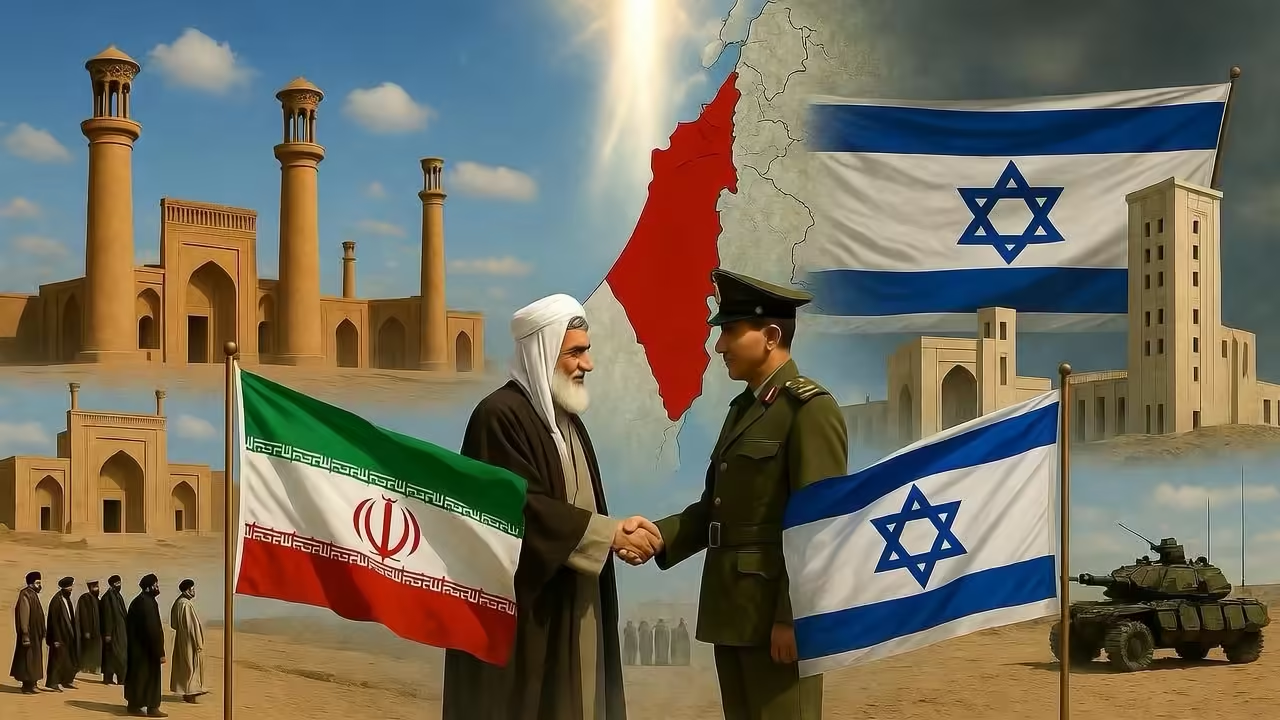
The relationship between Iran and Israel is one of the most complicated and volatile in modern geopolitics. While today the two countries are often described as bitter enemies, this has not always been the case. In fact, for decades they maintained quiet cooperation, shared strategic interests, and even secret military projects.
Understanding the Iran–Israel relationship requires examining several historical phases: ancient connections between Persians and Jews, cooperation during the Iranian monarchy, the dramatic shift following the Islamic Revolution of 1979, the rise of proxy conflicts across the Middle East, and the escalation toward direct confrontation in the 21st century.
This article explores the historical roots, political shifts, and evolving tensions that have shaped Iran–Israel relations.
Ancient Connections Between Persians and Jews
The historical relationship between the Persian and Jewish peoples dates back over 2,500 years. One of the earliest connections occurred during the Achaemenid Persian Empire, when the Persian king Cyrus the Great conquered Babylon in 539 BCE.
According to historical sources and biblical accounts, Cyrus allowed Jewish exiles in Babylon to return to Jerusalem and rebuild their temple. This act earned him a positive legacy in Jewish history and is sometimes cited as an early example of cooperation between Persians and Jews.
For centuries afterward, Jewish communities lived throughout Persia (modern Iran). These communities remained a significant minority in the region and contributed to Iranian cultural and economic life.
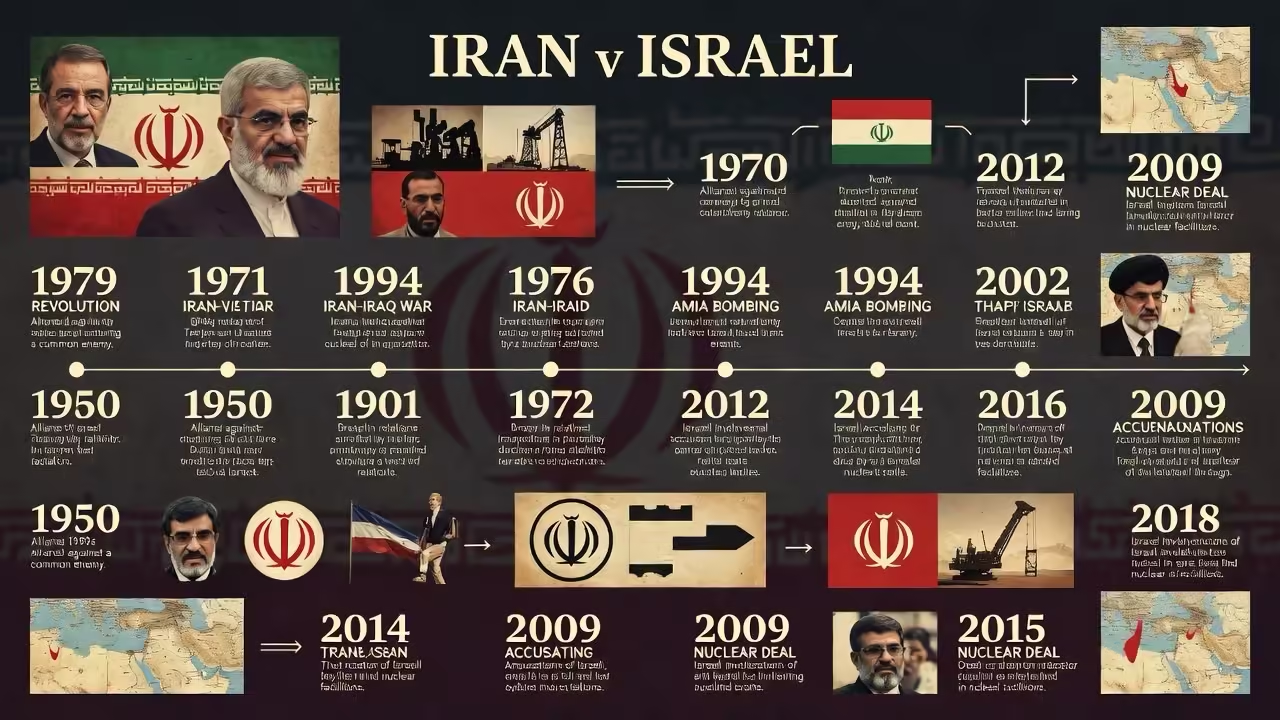
While these ancient connections do not directly determine modern political relations, they illustrate that the relationship between the two peoples has not always been hostile.
The Birth of Israel and Early Relations (1948–1979)
When Israel was established in 1948, the Middle East entered a new era of geopolitical realignment. Many Arab states rejected Israel’s creation, leading to wars and political tensions across the region.
Iran, however, took a more complex approach.
Although Iran did not fully recognize Israel at first, it maintained pragmatic relations with the Jewish state. Under the rule of Mohammad Reza Shah Pahlavi, Iran was a pro-Western monarchy that sought strong relations with the United States and Western allies.
Israel and Iran shared several strategic interests during this period:
Both countries feared the rise of Arab nationalism. Both opposed Soviet influence in the Middle East. Both sought regional stability and economic cooperation.
Because of these shared concerns, the two states developed a quiet partnership.
Economic and Strategic Cooperation
During the 1950s–1970s, Israel and Iran collaborated in several areas:
Trade and Energy Iran supplied oil to Israel, which lacked natural energy resources. Security Cooperation Intelligence agencies from both countries cooperated against common threats. Military Projects In the late 1970s, the countries even worked on joint weapons programs. One example was Project Flower, a secret missile development effort aimed at expanding Iran’s military capabilities through Israeli technology.
Despite these partnerships, the relationship remained discreet because openly supporting Israel could provoke backlash from Arab states.
Still, by the late 1970s, Iran and Israel had established a practical alliance based on shared strategic interests.
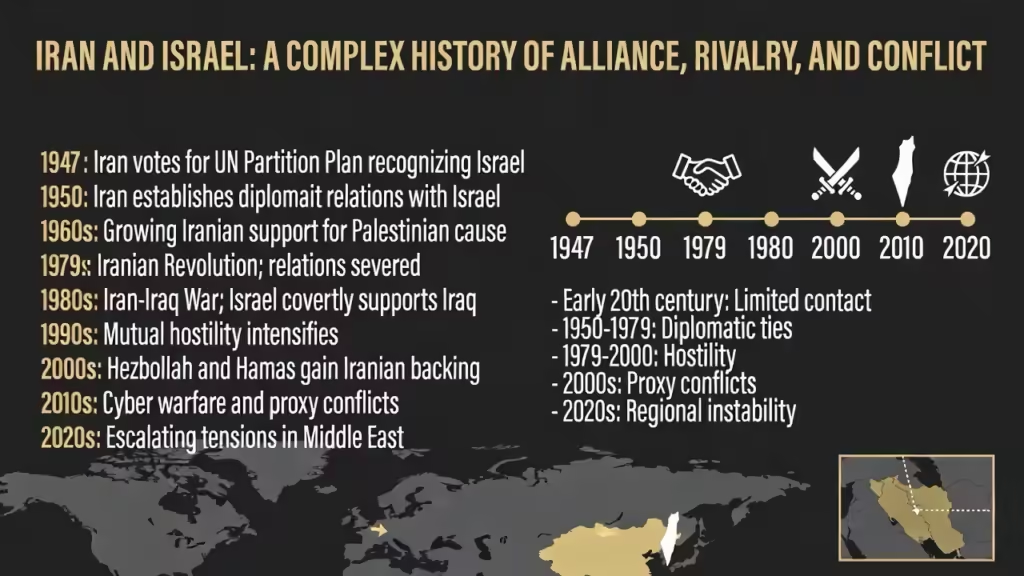
The Islamic Revolution and the Collapse of Relations
The turning point in Iran–Israel relations came in 1979, when the Iranian monarchy was overthrown in the Islamic Revolution.
Led by the cleric Ruhollah Khomeini, the revolution transformed Iran from a pro-Western monarchy into an Islamic Republic with a radically different foreign policy.
One of the new regime’s defining positions was strong opposition to Israel.
Ideological Shift
The revolutionary government framed Israel as an illegitimate state and a symbol of Western influence in the Middle East. Iranian leaders began referring to Israel as the “Zionist regime” and pledged support for Palestinian movements.
Iran quickly severed relations with Israel and transferred Israel’s diplomatic mission in Tehran to representatives of the Palestine Liberation Organization.
This ideological shift fundamentally changed the dynamics of the Middle East.
Where Iran had once been an indirect ally of Israel, it now positioned itself as one of Israel’s most vocal opponents.
Rise of Proxy Conflicts
During the 1980s and 1990s, Iran and Israel rarely confronted each other directly. Instead, the conflict took the form of proxy warfare.
Iran began supporting various groups that opposed Israel, particularly in Lebanon and Palestine.
Hezbollah
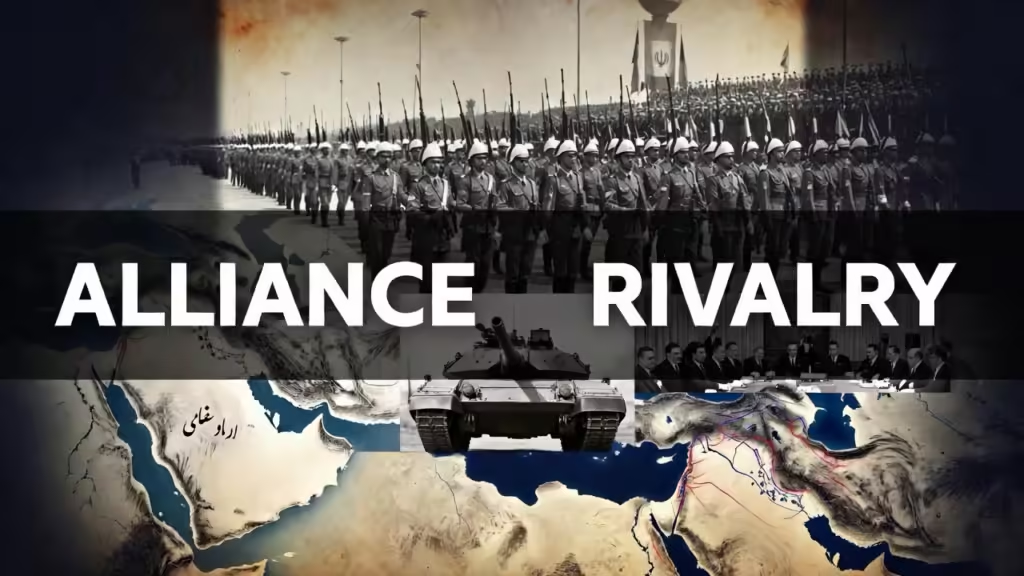
One of the most important organizations supported by Iran is Hezbollah, a Shiite militant and political group based in Lebanon.
Formed during the Lebanese Civil War in the 1980s, Hezbollah received financial, military, and ideological backing from Iran. The group became one of Israel’s most significant regional adversaries.
Through Hezbollah, Iran could challenge Israel’s security without direct military confrontation.
Hamas and Palestinian Groups
Iran also provided varying levels of support to Palestinian militant groups such as Hamas.
These alliances reinforced Iran’s image as a defender of Palestinian resistance and strengthened its influence in regional politics.
Israel, in response, increasingly viewed Iran as the central power behind many anti-Israeli movements in the Middle East.
The Nuclear Issue and Rising Tensions
In the early 2000s, the dispute between Iran and Israel intensified due to concerns about Iran’s nuclear program.
Iran insisted that its nuclear activities were intended for peaceful energy purposes. However, Israel and several Western governments feared that Iran could eventually develop nuclear weapons.
Israel considers a nuclear-armed Iran an existential threat.
This concern has driven decades of diplomatic pressure, intelligence operations, and covert actions.
Cyber and Intelligence Warfare
Both countries have engaged in covert operations aimed at weakening the other’s capabilities.
These include:
Cyber attacks Assassinations of scientists Sabotage of military facilities Intelligence operations
Although many of these incidents remain officially unconfirmed, they demonstrate the intensity of the hidden conflict between the two states.
Iran’s Regional Strategy
Iran’s strategy toward Israel is closely tied to its broader regional ambitions.
Tehran seeks influence across the Middle East through a network sometimes described as the “Axis of Resistance.”
This network includes:
Hezbollah in Lebanon Pro-Iran militias in Iraq The Syrian government Various Palestinian groups
By strengthening these alliances, Iran increases pressure on Israel from multiple fronts.
Israel, in turn, has responded with a strategy of preventing Iranian military entrenchment in neighboring countries such as Syria.
This has led to numerous airstrikes against Iranian-linked targets in the region.
Direct Confrontations in the 2020s
For many years, Iran and Israel avoided direct military confrontation. Instead, the conflict remained largely indirect.
However, the 2020s saw a significant escalation.
In April 2024, Iran launched a large-scale drone and missile attack against Israel, marking the first direct attack by Iran on Israeli territory.
The attack involved hundreds of drones and missiles and represented a major turning point in the conflict.
Although many of the projectiles were intercepted, the event demonstrated that tensions had entered a new and more dangerous phase.
The 2025 Twelve-Day War
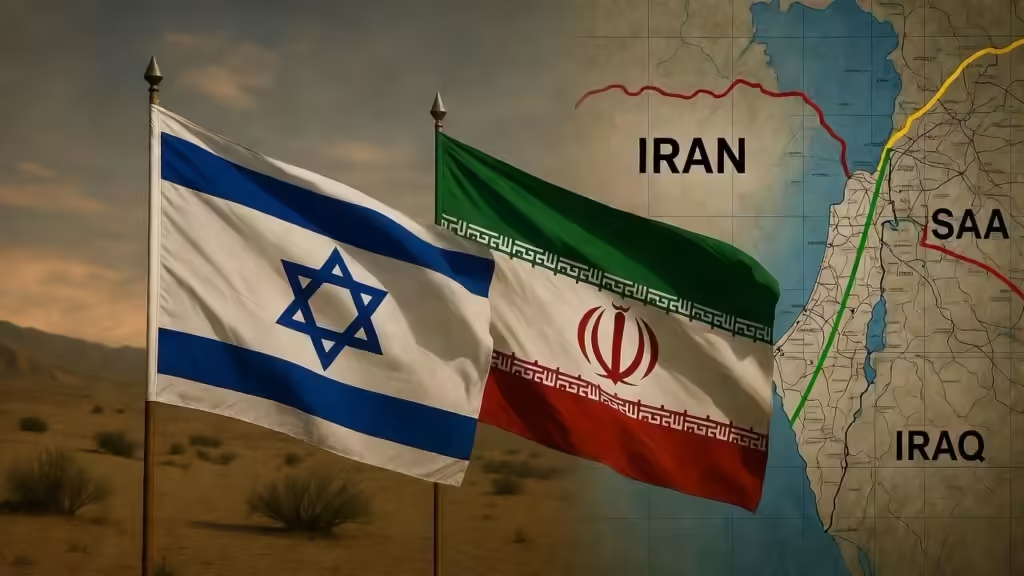
Another major escalation occurred in June 2025, when Israel launched strikes against Iranian nuclear facilities.
Israel argued that the attacks were necessary to stop Iran from developing nuclear weapons.
Iran responded with missile attacks, leading to a short but intense conflict sometimes referred to as the “Twelve-Day War.”
The fighting involved:
Airstrikes on nuclear and military sites Missile launches regional instability across the Middle East
The conflict ended after international mediation, but tensions remained extremely high.
Diplomatic Efforts and Negotiations
Despite repeated confrontations, diplomatic efforts have continued in parallel.
In 2025 and 2026, negotiations involving the United States and Iran attempted to address the nuclear issue and reduce tensions.
These talks focused on:
limiting uranium enrichment preventing nuclear weapon development reducing military escalation
However, negotiations have repeatedly stalled due to distrust between the parties and disagreements over sanctions and regional security.
Escalation into War in 2026
The conflict reached another dramatic stage in early 2026.
Joint Israeli and U.S. military strikes targeted Iranian military facilities and key officials across several cities.
Iran retaliated with missile and drone attacks against Israel and various U.S. military bases in the region.
The conflict involved multiple actors across the Middle East, highlighting the broader regional stakes.
Reports indicated that the fighting expanded beyond the two countries, affecting several regional states and raising fears of a wider Middle Eastern war.
Global leaders called for de-escalation to prevent a broader regional conflict and disruptions to global energy markets.
Ideological and Strategic Dimensions
The Iran–Israel conflict is not only geopolitical but also ideological.
Iran’s Perspective
Iran’s leadership frames its opposition to Israel as part of a broader struggle against Western influence and in support of Palestinian rights.
Iranian officials frequently portray Israel as a colonial project backed by Western powers.
Israel’s Perspective
Israel views Iran as its most serious long-term security threat.
Israeli leaders argue that:
Iran supports militant groups targeting Israeli civilians Iran seeks regional dominance Iran’s nuclear ambitions threaten Israel’s existence
These fundamentally opposing perspectives make compromise extremely difficult.
Regional and Global Implications
The Iran–Israel conflict has implications far beyond the two countries.
Key global concerns include:
1. Middle East Stability
Because Iran and Israel both have strong regional alliances, any conflict between them risks drawing in other countries.
2. Energy Markets
Iran sits near the Strait of Hormuz, one of the world’s most important oil shipping routes. Conflict in the region can disrupt global energy supplies.
3. Nuclear Proliferation
A nuclear arms race in the Middle East could destabilize the international security system.
4. Global Diplomacy
The conflict influences relations between major powers such as the United States, Russia, China, and European nations.
Possibilities for the Future
The future of Iran–Israel relations remains uncertain.
Several possible scenarios could unfold:
Continued Proxy Conflict The two countries may continue fighting indirectly through regional allies. Direct Military Escalation Larger wars remain possible if tensions continue to rise. Diplomatic Breakthrough Though unlikely in the short term, future political changes could lead to negotiations. Regional Realignment Shifts in alliances within the Middle East could reshape the strategic balance.
Conclusion
The history of Iran and Israel illustrates how rapidly international relationships can transform.
Once quiet partners cooperating on trade, intelligence, and military technology, the two countries became bitter adversaries after the Iranian Revolution of 1979.
Since then, their conflict has evolved through multiple phases—proxy wars, covert operations, nuclear disputes, and increasingly direct confrontations.
Today, Iran and Israel stand at the center of one of the most consequential rivalries in the Middle East. The outcome of this rivalry will shape regional security, global politics, and the future stability of the international system.
Understanding this complex history is essential for interpreting current events and anticipating what might come next.

