
How to Clean Stainless Steel Appliances and Get Rid of Smudges and Streaks: A Beginner’s Guide

Introduction
Stainless steel appliances add a sleek, modern look to any kitchen or home environment. However, their shiny surfaces often attract smudges, fingerprints, water stains, and streaks that can mar their beauty. If you’ve ever wondered how to clean stainless steel appliances effectively and restore their professional shine, this comprehensive guide is here to help. Whether you are a beginner or simply looking to improve your cleaning routine, you will learn practical, step-by-step methods to get rid of smudges and streaks without damaging your appliances.
Understanding Stainless Steel Surfaces
Before diving into the cleaning techniques, it is important to understand what makes stainless steel unique. Stainless steel is an alloy made primarily of iron, with chromium added to prevent rust and corrosion. Its smooth surface can resist stains, but finger oils, dust, and cleaning residues can easily leave visible marks.
Many stainless steel appliances have a brushed or polished finish. The cleaning approach slightly varies depending on the finish, so it’s helpful to identify yours. Brushed finishes have tiny parallel lines, while polished finishes are glossy and mirror-like.
Common Causes of Smudges and Streaks on Stainless Steel
Smudges mostly come from natural oils on your hands, food splatters, or water spots. Streaks often appear if cleaning solutions are not rinsed or wiped off properly or if the cloth used leaves lint behind. Harsh chemicals can also cause discoloration or damage the protective chromium layer.
Knowing these causes helps you avoid mistakes and achieve a streak-free shine.
What You Will Need: Materials and Tools
Gathering the right materials will make the cleaning easier and more effective. Here’s what you’ll need:
- Microfiber cloths (lint-free)
- Warm water
- Mild dish soap
- White vinegar
- Olive oil or baby oil (optional, for polishing)
- Baking soda (for tough stains)
- Spray bottles
- Soft sponge or non-abrasive scrubber
Avoid abrasive pads, steel wool, or harsh chemical cleaners that could scratch or dull the surface.
Step-by-Step Instructions for Daily Cleaning
Step 1: Dust and Wipe with a Dry Microfiber Cloth
Start by removing loose dust and dirt particles with a dry microfiber cloth. This prevents scratching during wet cleaning.
Step 2: Prepare a Mild Soap Solution
Mix a few drops of mild dish soap in warm water. Dampen a microfiber cloth in the solution and wring it out so it’s moist but not dripping.
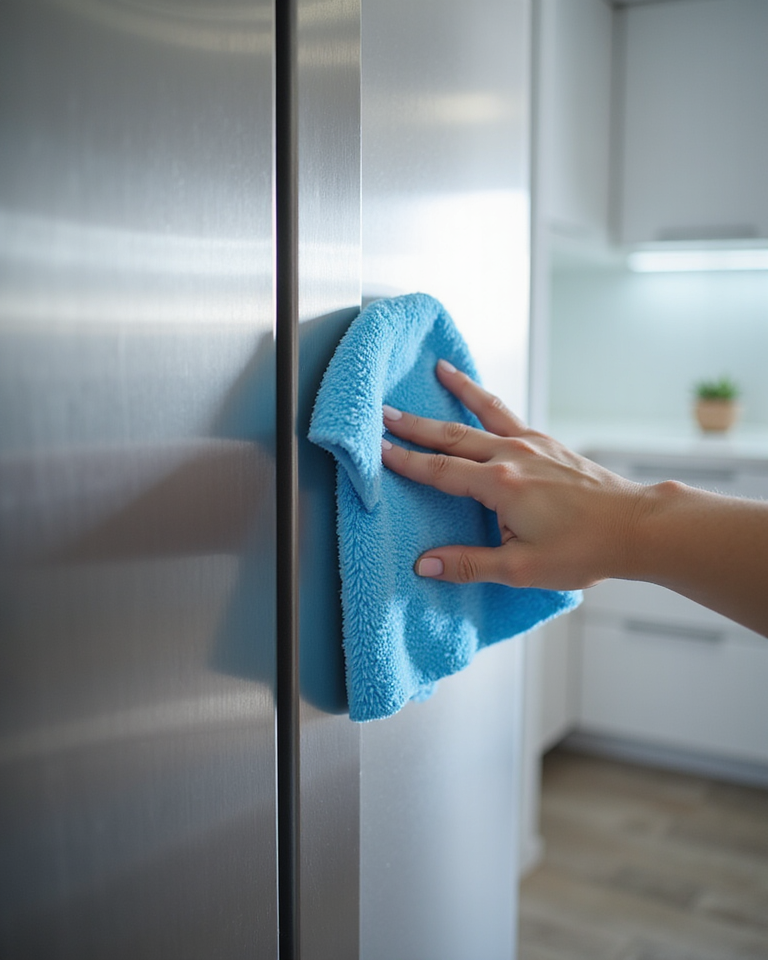
Step 3: Wipe in the Direction of the Grain
Clean the surface by wiping along the grain of the stainless steel. Circular motions can cause streaks and are not recommended.
Step 4: Rinse and Dry Thoroughly
Rinse the cloth with clean water and wipe again to remove soap residue. Use a dry microfiber cloth to wipe the surface dry immediately, which helps prevent water spots and streaks.
Removing Tough Smudges and Fingerprints
If daily cleaning doesn’t fully remove smudges and fingerprints, try these effective methods.
Using White Vinegar
White vinegar acts as a natural degreaser that cuts through oils without damaging the appliance.
- Pour undiluted white vinegar into a spray bottle.
- Spray lightly onto the stainless steel surface.
- Wipe with a clean microfiber cloth in the direction of the grain.
- Dry the area with another microfiber cloth.
Baking Soda Paste for Stubborn Stains
For sticky residues or tough stains that don’t respond to vinegar:
- Mix baking soda with a small amount of water to create a paste.
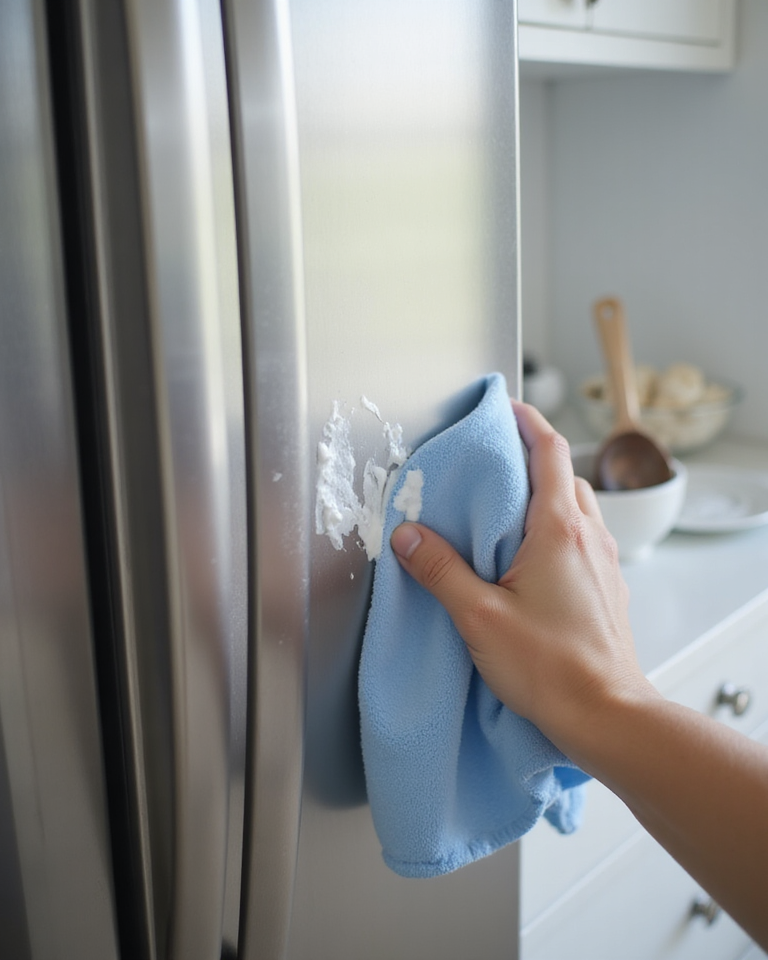
- Apply the paste gently on the stain using a soft cloth.
- Rub lightly with the grain until the stain loosens.
- Rinse with a damp cloth and dry thoroughly.
How to Polish Stainless Steel to Restore Shine
After cleaning, polishing can enhance the gleam and add a protective layer.
- Put a few drops of olive oil or baby oil on a clean, dry microfiber cloth.
- Rub the oil gently along the grain of the steel in small sections.
- Buff with a fresh section of cloth to remove excess oil and prevent streaks.
Regular polishing also helps repel fingerprints and smudges.
Common Mistakes to Avoid When Cleaning Stainless Steel Appliances
- Using abrasive cleaners or scrubbers: These can scratch and dull the finish.
- Wiping against the grain: Always follow the grain to avoid streaks.
- Allowing cleaning agents to dry on the surface: Always rinse and dry promptly.
- Using paper towels or rough cloths: These can leave lint or cause micro scratches.
- Ignoring manufacturer instructions: Consult your appliance manual for specific care tips.
Troubleshooting Persistent Streaks and Smudges
If you still notice streaks, try these tips:
- Use only clean microfiber cloths; a dirty cloth can spread residue.
- Apply cleaners sparingly; too much liquid can cause streaks.
- Ensure you are drying immediately with a clean towel.
- Test cleaning products on an inconspicuous spot first.
- If streaks remain, repeat the vinegar wipe and buffing process.
Eco-Friendly Cleaning Alternatives
For environmentally conscious users, simple ingredients like white vinegar, baking soda, and water can be effective without harsh chemicals. Microfiber cloths are reusable and reduce waste. Avoid disposable wipes that generate landfill waste.
Practical Tips for Regular Maintenance
- Clean your stainless steel appliances weekly to prevent buildup.
- Wipe spills promptly to avoid staining.
- Avoid placing magnets or stickers directly on the surface as they can damage the finish.
- Consider using appliance-specific stainless steel cleaners sparingly.
Examples: Cleaning Different Stainless Steel Appliances
Refrigerators
Because refrigerators often accumulate fingerprints, a vinegar solution followed by light oil polishing works well. Pay attention to handles and door edges.
Ovens
For ovens, avoid excessive moisture near electrical controls. Use a damp cloth with soap solution cautiously, then dry quickly.
Dishwashers
Dishwashers can be cleaned using the same mild soap and vinegar methods. Wipe the edges and control panel carefully.
Recommendations for Best Products
Microfiber cloths of good quality are an excellent investment. Avoid generic cloths that shed. For oils, pure olive oil or baby oil works best for polishing. If you prefer commercial cleaners, choose those labeled safe for stainless steel and follow instructions strictly.
FAQs about Cleaning Stainless Steel Appliances
Can I use bleach or ammonia on stainless steel?
No. Bleach and ammonia can damage and discolor stainless steel surfaces. Stick to mild detergents and natural cleaners like vinegar.
Is it okay to use paper towels for cleaning?
Paper towels can leave lint and cause micro scratches. It’s best to use microfiber cloths.
How often should I clean my stainless steel appliances?
For best results, clean regularly at least once a week and wipe spills immediately.
Will olive oil damage my appliances?
No, used sparingly, olive oil enhances shine and protects surfaces. Avoid oily buildup by buffing well after application.
What if my stainless steel gets scratched?
Minor scratches can sometimes be minimized by rubbing with a non-abrasive cloth along the grain and applying polish afterward. Deep scratches may require professional repair.
Advanced Cleaning Techniques for Deep Stains and Discoloration
While daily cleaning and basic stain removal methods work well for most situations, occasionally your stainless steel appliances might develop deeper stains or slight discoloration due to prolonged exposure to heat, chemicals, or hard water deposits. Here are some advanced techniques to tackle these challenges without compromising the appliance’s finish.
Using Club Soda for Sparkling Cleanliness
Club soda is mildly acidic and can help remove water spots and mineral deposits gently.
- Pour some club soda onto a clean microfiber cloth.
- Wipe the stainless steel surface following the grain pattern.
- Buff dry immediately with a fresh, dry microfiber cloth.
This method can restore shine and minimize dull patches.
Applying Commercial Stainless Steel Cleaners Safely
For tough stains or marks that resist home remedies, commercial stainless steel cleaners are designed specifically for these surfaces. Choose a product that is non-abrasive and free from chlorine bleach or ammonia.
- Read the product instructions carefully before use.
- Apply a small amount of cleaner to a microfiber cloth, not directly on the appliance.
- Wipe gently along the grain, focusing on stained areas.
- Use a clean cloth to buff and remove any residues.
Always test commercial cleaners on an inconspicuous spot first to ensure compatibility with your appliance.
Removing Heat Stains and Discoloration
Heat stains may appear as slightly darker or discolored patches, especially on ovens and stovetops. These are often caused by burnt-on grease or heat exposure.
- Create a paste using baking soda and water.
- Apply the paste to the affected area and let it sit for 10-15 minutes.
- Gently scrub with a soft cloth or sponge, following the grain.
- Rinse thoroughly and dry immediately.
For very stubborn marks, repeating the process may be necessary. Avoid harsh abrasives that can damage the finish.
Maintaining Your Stainless Steel Appliances Over Time
Beyond cleaning, maintaining the appearance and integrity of your stainless steel appliances involves some simple habits to prolong their lifespan and keep them looking pristine.
- Keep them dry: Moist environments can promote corrosion despite stainless steel’s resistance. Always dry appliances after cleaning or spills.
- Use protective pads: When placing items near appliances, use pads or mats to prevent scratches.
- Regular inspections: Periodically check seals, handles, and control panels for signs of wear or damage.
- Professional servicing: Schedule regular maintenance for appliances to ensure their internal mechanisms work efficiently, which also helps keep exteriors in good shape.
Understanding the Environmental Impact of Stainless Steel Cleaning
Caring for your stainless steel appliances with eco-friendly methods not only benefits your home but also the environment. Traditional chemical cleaners can release harmful substances into water systems and contribute to pollution. Using natural ingredients like vinegar, baking soda, and olive oil reduces this impact considerably.
Additionally, choosing reusable tools such as microfiber cloths helps decrease waste and resource consumption. Being mindful about how and what you clean with contributes to a healthier planet while keeping your kitchen sparkling.
Conclusion
Cleaning stainless steel appliances does not have to be a frustrating task. With the right materials, techniques, and a little patience, you can easily remove smudges and streaks to maintain a brilliant, professional finish. Remember to always follow the grain when wiping, use gentle cleaners, and dry thoroughly. Incorporate regular maintenance and polishing into your routine to keep your appliances looking stunning for years to come. Your stainless steel investment will shine bright and elevate the aesthetic of your kitchen or workspace effortlessly.
Leave a Reply