🐜 Quantum Intelligence in the Soil: Are Ant Colonies the Universe’s Smallest Supercomputers?

Chatgpt image may 24, 2025, 10 15 08 am

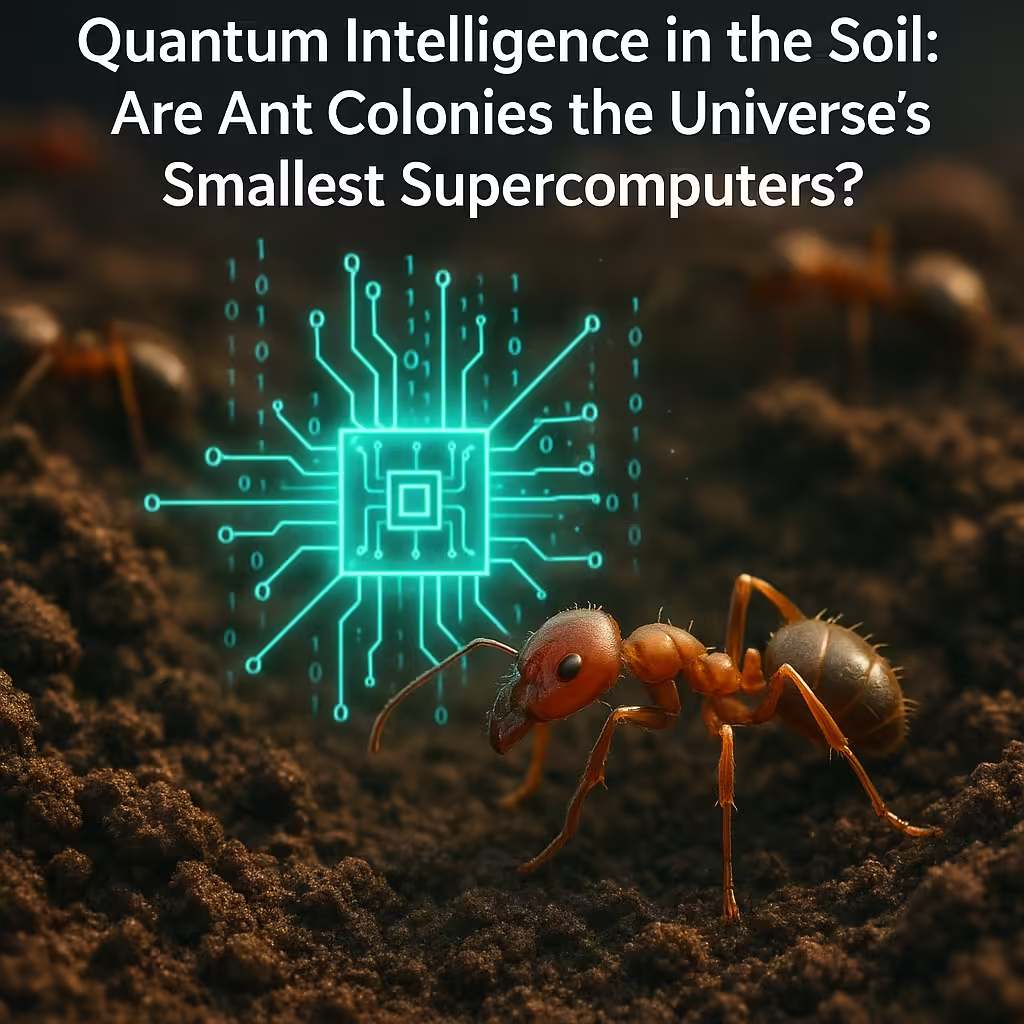
🐜 Quantum Intelligence in the Soil: Are Ant Colonies the Universe’s Smallest Supercomputers?

In the depths of forests, beneath sun-cracked soil, and hidden under mossy logs, there exists an intelligence so profound, yet so overlooked, it may rival some of our most advanced computing systems. Not within a single brain, nor in artificial circuits, but through the collective mind of ants—creatures that have walked the Earth for over 100 million years.

New studies in bio-inspired computation and swarm intelligence suggest that certain ant colonies may operate in a way that transcends traditional biological explanation. Some researchers now propose a radical theory: ant colonies might use their nests to create a distributed quantum computing system—a living, self-organized network that manipulates environmental factors to perform complex computation.

It sounds like science fiction. But like so many things in nature, what we don’t understand may simply be what we haven’t yet learned to interpret.


🧠 More Than the Sum of Their Parts

It has long been understood that ants exhibit collective intelligence. A single ant is fairly limited in what it can accomplish. But a colony of thousands—or even millions—can solve problems with efficiency that often stumps artificial intelligence.

From organizing traffic-free trails to dynamically reallocating foraging resources based on food supply shifts, ants act without a central leader. This decentralized processing is a marvel of biological engineering. But even more baffling is how their colonies seem to solve non-linear optimization problems—similar to how computers solve complex logistics, routing, or data prediction.

So how is this being done?


đŸ—ïž Nests as Computing Platforms

Recent research is drawing attention not just to the ants themselves, but to their nests. These aren’t just piles of dirt or chewed leaves. Ant nests are architectural masterpieces, engineered to regulate airflow, humidity, electromagnetic fields, and even resonance.

In some tropical species, the chambers are built with high precision, using specific particles, fibers, and geometries. This appears to be more than structural convenience—it may serve a computational purpose.

Physicists collaborating with biologists have begun modeling these nest structures as information-processing substrates. They suggest that the way the nest is built allows for environmental modulation—controlling the flow of heat, static charge, and weak electromagnetic fluctuations.

And here’s where the theory gets even wilder: quantum theorists propose that these environmental factors could allow the ants to encode and process information at a quantum level.


⚛ Quantum Behavior in a Dirt Hive?

At first glance, the idea that dirt and bugs could create a quantum computer seems absurd. Quantum computers require ultra-cold temperatures, cleanroom conditions, and incredibly delicate manipulation of qubits. But some researchers argue that biological quantum effects already exist in nature.

Quantum coherence has been observed in photosynthesis, where energy is transferred through plant cells with near-zero loss thanks to quantum tunneling. Birds may use quantum entanglement to navigate Earth’s magnetic field. Even human olfaction might rely on quantum vibration detection.

If evolution can co-opt quantum processes for smell, light, and navigation, why not distributed computation?

Ant colonies may not be building superconducting circuits, but they might be creating a low-frequency electromagnetic lattice inside their nests—a dynamic, multi-dimensional structure that supports quantum-like interactions across ants.

These fields could serve as a type of shared memory or logic gate system. By altering humidity, resin placement, body orientation, or pheromone conductivity, ants might “write” and “read” information collectively—far faster and more adaptively than we ever realized.


đŸ›°ïž Solving Complex Problems Without Thinking

One of the key mysteries is how ant colonies self-optimize without top-down control. When food is moved, foragers shift. When threats arise, guards reposition. When traffic jams occur, alternate routes emerge—often before any single ant could have perceived the full picture.

Traditional models explain this as emergent behavior: lots of simple rules create complex output. But some of these optimizations appear to happen with too much precision, too quickly.

If quantum computation is at play, it would allow the system to “test” multiple outcomes in parallel—just like a quantum computer simulates multiple states before collapsing into the correct answer. Ants may not “decide” the way we do, but the system as a whole could be processing data probabilistically, enabling better-than-chance decisions.

In effect, the colony becomes the mind—and the nest becomes the hardware.


🌐 Living Superorganisms

We often describe ant colonies as superorganisms—where individuals are like cells in a larger being. But what if they’re more like neurons in a biological computer? Each ant plays a small part in a quantum-adaptive network that spans the colony.

Their antennae might act like receptors. Their movement like data pulses. Their nest a cooling and logic chamber.

And their collective behavior? Something eerily close to organic computation.

Such a model could explain how ants adapt to conditions in real time, alter trail geometry in harmony with environmental interference, and manage inter-colony negotiations with surprising foresight.


🔍 The Future of Quantum Ecology

The implications are staggering. If ant colonies use principles akin to quantum computing, it changes not just how we view ants, but how we view intelligence itself.

Could other organisms—bees, termites, even slime molds—be engaging in environmentally embedded computation? Could fungal networks in forests (the mycorrhizal web) be processing forest health data in real time?

A new field, tentatively dubbed Quantum Ecology, may emerge from this line of inquiry. It blends ecology, information theory, quantum physics, and behavioral science into a single framework.

We’ve been looking for alien intelligence in the sky, while failing to see the possibility of non-human computation right under our feet.


🧬 Lessons for Human Technology

If ants can evolve collective quantum processing using dirt, pheromones, and teamwork, what might we learn for our own machines?

Already, engineers are studying ant-based algorithms for use in traffic flow, robot swarm coordination, and internet routing systems. But a deeper understanding could usher in biological quantum computing models that don’t require cryogenic cooling—just intelligent interaction with natural materials.

We might one day build computers that “grow,” adapt, and solve problems like living organisms—systems that evolve, not just compute.


🐜 Final Thoughts: Dirt, Ants, and a Hint of the Infinite

The notion that ants may be quantum processors is bold and not yet proven—but it invites us to reconsider the intelligence woven into nature. From the spiral of a nautilus to the resonance of a beehive, we live in a world layered with algorithms we’ve barely begun to decipher.

Perhaps intelligence isn’t about neurons or silicon—but about networks, interaction, and structure.

In that sense, a colony of ants isn’t just a superorganism.

It might be the universe itself, thinking in miniature.Welcome to the groundbreaking frontier of quantum biology, where science begins to blur the lines between physics and life. At the heart of this mystery are cryptochromes—light-sensitive proteins in birds’ eyes—and an invisible dance of entangled electrons reacting to Earth’s magnetic field. This article explores how birds may literally “see” the planet’s magnetic patterns through quantum mechanics, offering one of the most astonishing insights into animal behavior in recent scientific history.


The Navigational Marvel of Birds

Bird migration is a natural spectacle. Despite their small size, birds like warblers and sparrows migrate thousands of miles twice a year with remarkable precision. Many travel at night, navigating through clouds, fog, and total darkness, often across open oceans and unfamiliar terrain. Traditional explanations such as celestial navigation, olfactory cues, and inherited memory helped explain part of the mystery, but they didn’t account for birds’ consistent ability to reorient when moved in complete darkness or cloudy conditions. Something else was guiding them—something invisible.

Scientists began to suspect that birds possessed an internal magnetic compass, but the mechanism remained elusive for years. That is, until researchers took a closer look—literally—inside the birds’ eyes.


Meet Cryptochromes: Nature’s Quantum Sensors

Cryptochromes are a class of proteins found in the retinas of birds (and many other organisms, including humans). These proteins are photoactive, meaning they respond to light. In birds, cryptochromes are especially concentrated in the eyes and play a vital role in regulating circadian rhythms. But their functions go much deeper.

When birds are exposed to sunlight—particularly blue light—cryptochromes undergo a chemical reaction that leads to the formation of radical pairs: two electrons that are excited and ejected into orbitals, where they spin. Here’s where things get weird. These two electrons are quantum entangled, a phenomenon in which particles become linked in such a way that the state of one instantly affects the state of the other, even over distance. This strange quantum property has fascinated physicists for decades, but in birds, it appears to have a very real biological function.


Seeing the Magnetic Field

As the entangled electrons spin, they are sensitive to the orientation of Earth’s magnetic field. Depending on the direction of the field, the spins shift between different states. These shifts in the spin states change the chemical outcome of the reactions within the cryptochrome molecules.

This reaction produces changes in the retinal signals being sent to the brain, effectively creating a visual representation of the magnetic field. Birds might not “see” magnetic lines as we see colors or shapes, but they likely perceive an overlay or pattern that aligns with magnetic directions—something akin to a heads-up display in their vision.

In short, birds are using quantum physics to see Earth’s magnetic field with their eyes.


The Quantum Compass

This quantum-based navigation system offers many advantages over traditional orientation methods. Unlike magnetic particles (such as magnetite, which some animals also use), the cryptochrome-based quantum compass isn’t thrown off by temperature changes or interference from surrounding rocks and metals. It’s a dynamic, light-sensitive system that constantly updates based on both visual input and Earth’s geomagnetic cues.

It also explains how birds can still orient themselves at dusk, dawn, or under cloudy skies when visual cues are minimal. As long as there’s some light to trigger the reaction in the cryptochromes, the quantum compass remains active.


Quantum Biology: A New Frontier

The very idea that a biological system can exploit quantum mechanics is revolutionary. Quantum entanglement is notoriously fragile—it typically collapses in warm, wet environments (like inside living organisms). Yet birds seem to have evolved a way to preserve quantum coherence long enough to make practical use of it for navigation.

This discovery has opened up the new field of quantum biology, where researchers explore how living organisms might use quantum phenomena to perform otherwise inexplicable feats. There is now speculation that similar mechanisms may help plants optimize photosynthesis or aid animals in olfactory detection.

Quantum biology is still in its infancy, but it’s a field filled with promise and wonder.


A Symphony of Evolution and Physics

How did birds evolve such a sophisticated mechanism? The answer may lie in millions of years of evolutionary fine-tuning. Birds that could orient themselves better survived migrations and passed on their genes. Over time, these visual magnetic sensors became more refined—until they could pick up even the subtlest shifts in Earth’s magnetic field.

What’s truly astonishing is the overlap between two worlds: the mathematical precision of quantum mechanics and the chaotic, adaptive flow of biological evolution. It suggests that life, in its relentless drive to survive and adapt, may be tapping into the very fabric of the universe in ways we are only beginning to comprehend.


Implications for Technology and Science

Studying how birds use quantum entanglement may do more than satisfy scientific curiosity—it could inspire new technologies. Quantum sensors, inspired by cryptochromes, could revolutionize navigation systems, especially in environments where GPS doesn’t work, like underwater or underground. It may also lead to advances in quantum computing, where maintaining coherence is a central challenge.

If tiny birds can master quantum entanglement to find their way across hemispheres, perhaps we can learn to harness the same principles in our own machines.


Final Thoughts: Nature’s Hidden Genius

In the quiet sky, a migrating robin or a soaring swallow might appear to be just another bird on the wing. But inside their eyes, something remarkable is happening—an elegant quantum dance of entangled electrons, reacting to the invisible lines that circle the globe. It is a reminder that nature, in its infinite complexity, often works in ways far beyond our expectations.

The discovery that birds may use quantum physics to navigate is not just a biological insight—it’s a philosophical one. It challenges our understanding of what’s possible in the natural world and highlights how much we still have to learn.

Birds don’t just fly across continents. They do it with a compass built from the strange rules of the quantum world—quietly, invisibly, and perfectly.

Bioluminescent Tricksters of the Deep: How Mariana Trench Fungi Mimic Fireflies to Survive

Chatgpt image may 24, 2025, 10 01 35 am

Bioluminescent Tricksters of the Deep: How Mariana Trench Fungi Mimic Fireflies to Survive

Deep beneath the surface of the Pacific Ocean, in one of the most hostile and enigmatic environments on Earth—the Mariana Trench—life is not only surviving, but evolving in mind-bending ways. Scientists have recently made a groundbreaking discovery: certain species of fungi thriving in this inky abyss exhibit a remarkable and unexpected trait—bioluminescence that mimics firefly light patterns. This discovery is more than a curiosity. It could fundamentally reshape our understanding of evolutionary biology, ecological communication, and the very limits of life.

Let’s dive into what makes this revelation so astonishing, and why these glow-in-the-dark fungi may be some of nature’s cleverest illusionists.


Life Where It Shouldn’t Exist

The Mariana Trench reaches depths of nearly 11,000 meters (36,000 feet), where crushing pressures exceed 1,000 times the atmospheric pressure at sea level, temperatures hover just above freezing, and sunlight is completely absent. For decades, scientists believed these extreme conditions made complex life forms nearly impossible to sustain. But research expeditions using deep-sea submersibles have steadily uncovered an alien-like world teeming with unique organisms: shrimp-like amphipods, snailfish with translucent skin, and now—strangely—fungi.

These fungi weren’t just surviving; they were thriving in an ecosystem devoid of light, adapting to pressures that would pulverize most surface organisms. But the most incredible trait of all? They glow.


Not Just Any Glow—A Perfect Mimic

Bioluminescence is not rare in the ocean. In fact, it’s one of the most common forms of communication in the deep sea. Anglerfish, jellyfish, and certain bacteria all emit light for purposes such as attracting prey, mating, or camouflage. However, the light emitted by these newly discovered fungi wasn’t random or chaotic. Researchers found that their glow followed very specific pulsing patterns, eerily similar to the rhythmic flashes of terrestrial fireflies and other bioluminescent insects that use light to communicate during mating rituals.

What’s particularly mind-blowing is that there are no fireflies at the bottom of the ocean. So why would fungi mimic them?


Theories Behind the Mimicry

There are three leading hypotheses that attempt to explain this bizarre evolutionary trait:

1. Predation Lure

One possibility is that the fungi are using their flashing displays to lure deep-sea creatures, much like an anglerfish dangles a glowing bait. Small fish, crustaceans, or planktonic animals may be drawn to the seemingly familiar light signals. Once close, the fungi may not consume them directly, but instead benefit from their proximity—either by being carried to new locations or by feeding on the waste and debris these animals leave behind.

2. Symbiotic Dispersal

Another theory suggests that these fungi form symbiotic relationships with mobile deep-sea species. By mimicking an enticing signal, the fungi attract animals that inadvertently pick up spores on their bodies or in their guts. These spores are then transported elsewhere in the trench or even to entirely new deep-sea ecosystems, ensuring the fungi’s dispersal and genetic diversity—a vital strategy in a region where movement and reproduction are exceptionally challenging.

3. Cross-Biome Mimicry

The most speculative, yet fascinating, idea is that this mimicry may represent an evolutionary echo—a convergent trait that emerged independently in an isolated environment. Some scientists propose that fungal ancestors, long since separated from their terrestrial relatives, retained or re-evolved light-emission mechanisms that mirror those found on land. Through some unknown genetic conservation or horizontal gene transfer, the fungi developed the ability to flash in insect-like rhythms. The deeper implication? Evolution may not be as linear or isolated as we think.


A Communication System in the Dark

These fungi may also be communicating with each other. Just as fireflies flash in unison to attract mates or coordinate behaviors, it’s possible the Mariana fungi use light pulses to coordinate spore release, synchronize growth cycles, or send chemical signals. In a place where sound doesn’t travel well and sight is practically useless, light becomes a language.

If verified, this would mark the first known example of a fungal species using patterned bioluminescence as a communicative tool, not just a static glow.


Implications for Astrobiology and Synthetic Biology

This discovery doesn’t just blow open our assumptions about fungi or marine biology—it has vast implications for astrobiology and synthetic bioengineering.

If complex signaling and mimicry can evolve in the crushing blackness of Earth’s deepest trenches, it boosts the possibility that similar life systems could exist in the subsurface oceans of Europa or Enceladus—moons of Jupiter and Saturn, respectively, that are covered in ice but believed to have liquid oceans below. These alien oceans could foster extremophilic lifeforms, perhaps even ones that communicate with light, just like these fungi.

Moreover, understanding how these fungi generate such efficient bioluminescence in high-pressure, low-energy environments could inspire breakthroughs in bio-luminescent materials, medical imaging, or sustainable lighting technology.


A Window into Evolution’s Playbook

Nature is often thought of as opportunistic, adapting organisms to exploit every niche. But in this case, it seems evolution has taken a more creative approach—copying a land-based signaling system to suit a deep-sea fungal need. This kind of evolutionary mimicry across domains and ecosystems is rare, and nearly unheard of in such primitive organisms.

It challenges our assumptions about the separation between terrestrial and marine evolution, between insects and fungi, and even between what is considered intelligent biological behavior.

Are these fungi merely mimicking patterns through random mutation and selection? Or is there something more intelligent in the algorithm of survival, encoded in nature’s most extreme outposts?


Final Thoughts: Light in the Abyss

This revelation isn’t just about glowing mushrooms at the bottom of the ocean—it’s a reminder of how little we know about our planet, and how much wonder still waits beneath our feet. The Mariana fungi force us to reconsider not just the limits of life, but the creativity of evolution itself.

They show that even in the darkest corners of the Earth, life finds a way not only to survive—but to communicate, to trick, and to shine.


🌌 Have scientists only just begun to scratch the surface of the deep biosphere’s hidden intelligence? Could these fungi be a missing link in understanding communication between life forms, regardless of species or domain?

Let us know your thoughts in the comments below—and keep watching the deep. It just might blink back.

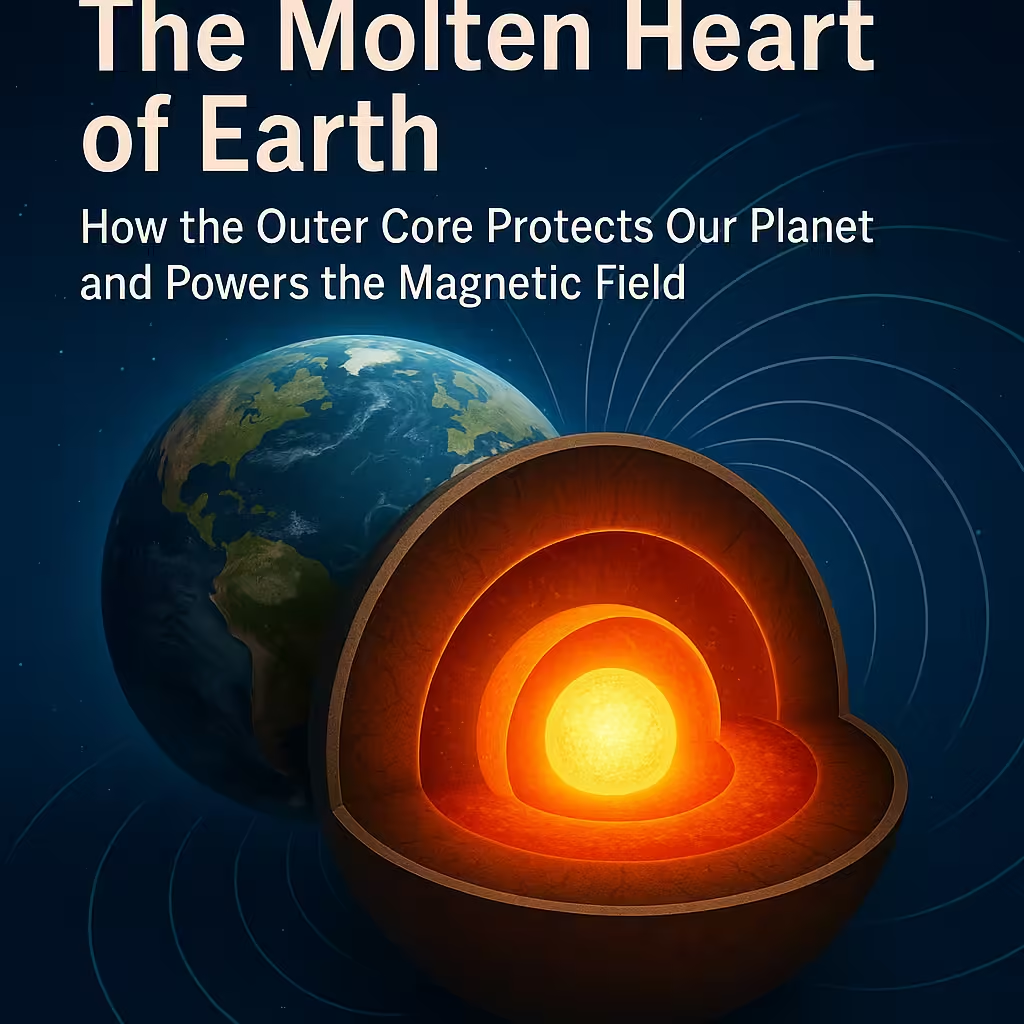
The Molten Heart of Earth: How the Outer Core Protects Our Planet and Powers the Magnetic Field

Chatgpt image may 24, 2025, 09 54 20 am

Birds, Quantum Entanglement, and the Mysterious Science of Migration

The Molten Heart of Earth: How the Outer Core Protects Our Planet and Powers the Magnetic Field

Beneath our feet, beyond the crust and the shifting plates that form continents and ocean floors, lies one of Earth’s most remarkable features—its outer core. Invisible to the naked eye and unreachable by any drill ever built, this swirling ocean of molten iron plays a silent yet pivotal role in sustaining life on our planet. It is not just a geological layer; it is the beating heart of Earth’s magnetic shield—a shield that keeps the solar wind at bay and allows life to thrive on the surface.

The Secret Beneath the Surface

To truly appreciate the importance of the Earth’s outer core, it helps to imagine peeling the planet like an onion. First, you pass through the rocky crust—thin and brittle in geological terms. Beneath that lies the mantle, a semi-solid region of flowing rock that extends nearly 2,900 kilometers down. But it is what lies beneath the mantle that is truly awe-inspiring: the outer core, a vast, churning sea of molten metal, primarily iron mixed with some nickel and lighter elements.

Unlike the solid inner core that rests beneath it—about the size of the Moon—the outer core remains in a liquid state due to extreme heat. Temperatures in this layer range from 4,000°C to 6,000°C, rivaling the surface of the Sun. Under such conditions, iron flows freely like water, in massive convection currents powered by heat escaping from the inner core and the cooling of the planet over geological time.

Earth’s Giant Dynamo

This movement is not random; it’s structured and dynamic. As the molten iron flows, it generates electric currents. According to the principles of electromagnetism, moving conductive materials (like molten iron) can produce magnetic fields. This process is known as the geodynamo—Earth’s self-sustaining magnetic engine.

It’s similar to how a dynamo on a bicycle works: the motion of the wheel turns coils within a magnetic field, producing electricity to power a light. On a planetary scale, however, the process is reversed. Here, the motion of conducting material creates electricity, and that electric current creates a magnetic field.

The result? Earth’s magnetic field—a massive, invisible force field stretching tens of thousands of kilometers into space. Without this natural protective barrier, Earth would be bombarded relentlessly by charged particles from the Sun, known as the solar wind.

Why the Magnetic Field Matters

The Sun emits a steady stream of high-energy particles, mostly electrons and protons, which travel outward at speeds of hundreds of kilometers per second. When these particles reach Earth, they slam into the magnetic field and are deflected around the planet like a river splitting around a rock.

This protective role is vital. Without the magnetic field, solar wind would strip away the atmosphere over millions of years, eroding the very conditions that make life possible. In fact, scientists believe this is what happened to Mars. Although Mars may have once had a magnetic field and a thicker atmosphere, the loss of its core dynamo left it vulnerable to the Sun’s radiation. Today, the Red Planet is a cold, dry desert with a thin, barely-there atmosphere—an example of what could have happened to Earth.

Beyond protecting the atmosphere, the magnetic field also plays an essential role in shielding our technology. Satellites, GPS systems, power grids, and even airplane communications would all be far more vulnerable to geomagnetic storms caused by solar activity if it weren’t for this invisible armor.

A Dynamic and Mysterious Force

Earth’s magnetic field is not static. It constantly shifts, changes strength, and even flips polarity over geologic timescales. In fact, the North and South magnetic poles have reversed many times in Earth’s history—a process known as geomagnetic reversal. During these transitions, the magnetic field weakens, sometimes to a fraction of its original strength, before gradually re-establishing itself in the opposite direction.

These flips do not happen overnight; they unfold over thousands of years. While they’re not catastrophic in themselves, they do raise questions about how well life and technology would fare under a weakened shield. It’s a reminder that our planet’s internal engine is not just a stable backdrop—it’s a living, evolving system.

The Aurora: A Glimpse of the Core’s Power

One of the most breathtaking demonstrations of Earth’s magnetic shield is the aurora borealis (Northern Lights) and aurora australis (Southern Lights). These spectacular displays of color occur when solar wind particles penetrate the upper atmosphere near the poles and interact with oxygen and nitrogen atoms.

Though they appear serene and magical, auroras are in fact evidence of the ongoing battle between solar radiation and Earth’s protective shield. Without the outer core creating this defense mechanism, there would be no auroras—nor a safe surface on which to stand and admire them.

Probing the Inaccessible

Despite its crucial role, the outer core remains one of Earth’s least accessible realms. No human instrument has ever reached it directly. Instead, scientists rely on seismic data—waves generated by earthquakes that travel through the planet. By analyzing how these waves change speed or get refracted at various depths, researchers can infer the existence, state, and composition of Earth’s inner layers.

These seismic studies revealed that while S-waves (which only move through solids) cannot pass through the outer core, P-waves (which move through both solids and liquids) do. This is how we know that the outer core is liquid and the inner core is solid. It’s a fascinating detective story told through tremors and time.

The Core of Life

It’s humbling to realize that the fate of everything we know—oceans, weather, animals, technology, and human civilization—depends on a turbulent sea of molten iron more than 2,000 kilometers beneath our feet. The outer core is our planet’s unsung hero, working tirelessly to generate a field that shields, stabilizes, and sustains Earth.

We live our lives on a thin crust, rarely giving thought to the planetary furnace below. Yet it’s this very heart of Earth that enables us to exist. It’s easy to take it for granted, but when we pause to consider the deep and dynamic processes below the surface, we uncover a remarkable truth: Earth is not just a rock floating in space. It’s a self-regulating system—a planet with a heartbeat.


Conclusion

From creating the magnetic field that makes compasses work, to fending off solar storms that could fry our electronics, the Earth’s outer core is more than a geological curiosity. It is a dynamic, life-saving engine spinning ceaselessly beneath our feet. While unseen, it is deeply felt in every breath of atmosphere we enjoy and every beam of sunshine that isn’t filtered by solar death rays. Next time you look up at a glowing aurora or navigate with a compass, remember—it all begins in the heart of our planet.

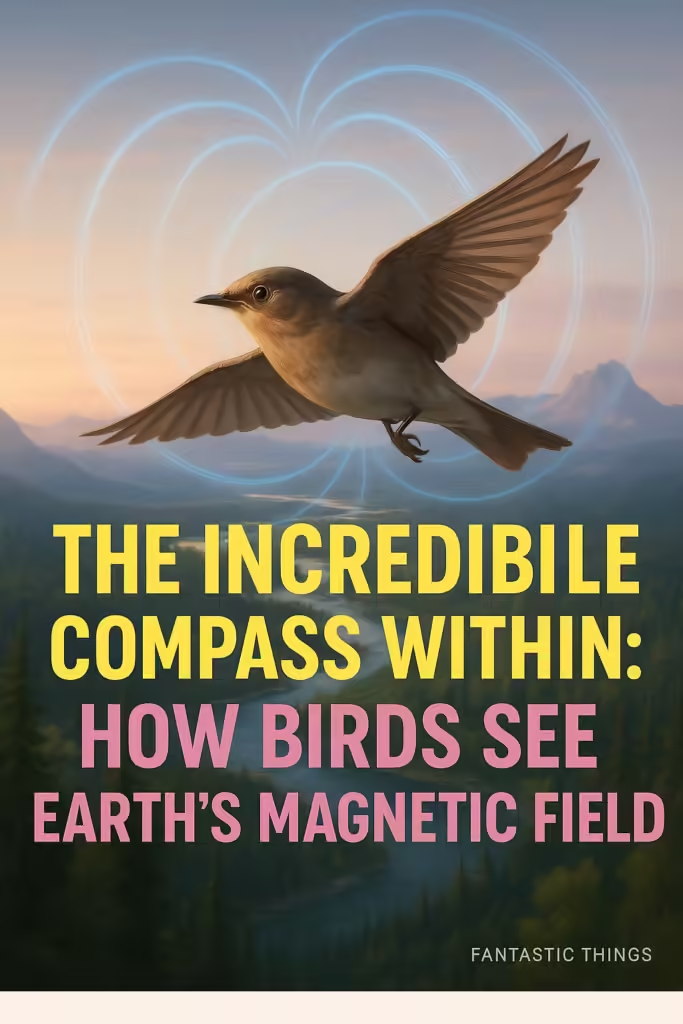
The Incredible Compass Within: How Birds See Earth’s Magnetic Field

Chatgpt image may 24, 2025, 09 00 57 am

Birds, Quantum Entanglement, and the Mysterious Science of Migration

The Incredible Compass Within: How Birds See Earth’s Magnetic Field

Each year, countless birds embark on epic migratory journeys that span thousands of miles. Tiny warblers weighing no more than a few coins travel from the dense forests of North America to the tropical landscapes of Central and South America. Robins, swallows, and thrushes traverse continents, navigating through unfamiliar landscapes, across vast oceans, and sometimes even through the night. How do they do it? While humans rely on GPS systems, maps, and landmarks, birds possess a remarkable, built-in navigation tool—a biological compass known as magnetoreception.

What Is Magnetoreception?

Magnetoreception is the ability to detect the Earth’s magnetic field and use it for orientation and navigation. While the concept may sound like science fiction, it’s a very real and scientifically validated phenomenon. Birds like robins, warblers, pigeons, and even chickens have been shown to sense and respond to magnetic fields in experimental settings.

But what makes this sense so extraordinary isn’t just that birds can “feel” the magnetic field—it’s that they may actually be able to see it. Unlike humans, who can only navigate with external tools or environmental clues, migratory birds carry their navigation system within them—an internal GPS powered by evolutionary ingenuity.

The Science Behind the Sense

The key to this biological marvel lies in a special class of proteins called cryptochromes. These are light-sensitive molecules found in the eyes of birds, and they appear to play a crucial role in magnetoreception.

Cryptochromes are activated under specific wavelengths of light—particularly blue or green light found in natural daylight and twilight. When stimulated by light, these proteins undergo a reaction that produces pairs of entangled electrons. The spin of these electrons is subtly influenced by the Earth’s magnetic field, altering the chemical reaction in ways that researchers believe can be translated into visual patterns. In simpler terms, the bird may see the magnetic field as a kind of overlay on the natural world—lines, gradients, or shades that point toward magnetic north.

Imagine flying over unfamiliar terrain at night, with no landmarks and no stars visible due to cloud cover. While a human would be completely disoriented, a bird with magnetoreception may still “see” a visual map laid out in front of it—guiding its journey unerringly forward.

A Built-In GPS System

Studies suggest that birds integrate magnetic cues with other navigational aids, such as the position of the sun, star patterns, polarized light, and even olfactory signals. But magnetoreception stands out as the most reliable form of navigation when all else fails. Even in experiments where birds were placed in completely unfamiliar environments, they managed to reorient themselves correctly after disruptions—thanks to their internal compass.

What’s more astonishing is that this system works even in total darkness. Birds flying at night or during overcast days can still navigate efficiently across great distances. Unlike human-made GPS systems, which can falter without satellite coverage or battery power, the avian magnetic sense is both resilient and self-sustaining.

How Scientists Uncovered This Ability

The study of magnetoreception began in earnest in the mid-20th century, though observations of unusual animal navigation behaviors go back much further. Early experiments showed that migratory birds would orient themselves in particular directions even in enclosed, featureless environments—suggesting that they were using something other than visual landmarks.

In the 1970s and 1980s, researchers began experimenting with magnetic fields in laboratories. They discovered that manipulating the magnetic environment could alter the direction in which birds attempted to migrate. This was one of the first major clues pointing to the existence of magnetoreception.

The discovery of cryptochromes came later, revolutionizing the field. By genetically analyzing birds and altering their exposure to different light conditions, scientists linked magnetoreception to the proteins in their eyes. Today, advanced imaging, behavioral studies, and quantum physics models are all being employed to unlock the mysteries of this biological compass.

Not Just Birds: A Shared Superpower?

Interestingly, birds are not the only animals believed to possess this ability. Magnetoreception has also been observed in sea turtles, salmon, whales, bats, and even certain insects like monarch butterflies and fruit flies. Some studies even suggest that humans may have a very faint and largely dormant magnetic sense, though it’s nowhere near as refined as in birds.

This raises fascinating evolutionary questions. If such a mechanism exists across such diverse species, it likely evolved very early in the history of life. The Earth’s magnetic field has been present for billions of years, serving as a natural backdrop for evolution to harness.

Mysteries Yet to Be Solved

Despite decades of research, magnetoreception remains only partially understood. Scientists are still working to determine exactly how cryptochromes translate magnetic information into visual cues. Some hypotheses suggest that birds may perceive the field as a subtle shading across their vision, while others propose a dynamic overlay that changes as they shift their gaze.

There is also ongoing debate about whether magnetoreception is entirely based in the eyes, or if some birds may have magnetite-based sensors in their beaks or brain tissues. It’s possible that multiple systems are involved, working together to provide birds with comprehensive navigational data.

Moreover, the quantum nature of electron spin in cryptochrome reactions introduces a fascinating intersection of biology and physics. This could represent one of the few known examples of quantum effects in biological systems—a frontier area of research known as quantum biology.

A Sense We Can Only Imagine

To us, the Earth’s magnetic field is invisible, silent, and mostly irrelevant in daily life. But for birds, it’s a vital, ever-present guide woven into their very perception of the world. Imagine having a sense that overlays directional cues onto everything you see, helping you make long-distance travel decisions without hesitation. That’s the gift of magnetoreception.

Every time a robin returns to the same backyard from thousands of miles away, or a warbler stops precisely in the same forest patch year after year, it’s a testament to the incredible, often invisible forces guiding them. It’s not magic—it’s nature operating at its most elegant and efficient level.

As scientists continue to decode this biological GPS, one thing is clear: what we consider remarkable in the natural world often turns out to be just the tip of the iceberg. The humble migratory bird carries within it a marvel of evolutionary engineering—a compass, a map, and a vision beyond our own.

Cosmic Echoes in Tree Rings and the Energetic Future of Earth

Chatgpt image may 24, 2025, 08 52 56 am

Birds, Quantum Entanglement, and the Mysterious Science of Migration

Cosmic Echoes in Tree Rings and the Energetic Future of Earth

Our planet is a living archive, silently recording the rhythm of the cosmos in places we might never expect. Among the most fascinating of these records are the rings of trees—those quiet, concentric circles etched over years and centuries. While many associate tree rings with simple measurements of age or climate changes, science has revealed something far more profound: they hold the memory of the sun’s fury.

When high-energy particles from solar storms collide with Earth’s atmosphere, they trigger a chain of chemical reactions. One result is the formation of Carbon-14 isotopes, a rare form of carbon that integrates into the atmosphere and is then absorbed by plants during photosynthesis. Trees, growing steadily year by year, record these isotopes in their wood. Like ancient scribes, they keep an unbroken record of solar activity—some of which predates written human history.

By analyzing these tree rings, scientists have been able to identify evidence of intense solar storms that occurred thousands of years ago. One particularly notable event, known as the Miyake Event, occurred around 774–775 AD. This was a time of no modern technology—no satellites or power grids—but the trees remember. The Carbon-14 spike from this era was so distinct, it alerted researchers to an unusually powerful burst of cosmic radiation.

This “cosmic archive” hidden in tree trunks offers far more than a window into the past. It is a warning system. In our modern era, when society relies heavily on satellites, power grids, and digital communication, understanding past solar activity helps us anticipate future risks. Solar storms strong enough to disrupt Earth’s magnetic field could damage electrical infrastructure, interrupt GPS signals, and even pose risks to astronauts in space. By studying these natural records, scientists can create better models for solar storm prediction and mitigation.

But there’s another layer to this story—one that connects science to consciousness, data to destiny.


Energy Frequencies: The Human Factor

Some thinkers and spiritualists, such as Theodore Kyllonen, believe that human emotions collectively influence the vibrational frequency of the planet. While this may seem far removed from the grounded analysis of isotopes and tree rings, it speaks to a growing convergence between science and spirituality. According to this perspective, our emotional states—whether rooted in fear, anger, and hate or in love, peace, and hope—emit measurable energetic frequencies.

Kyllonen suggests that emotions like fear and hate generate lower vibrational frequencies, around 150 hertz, while higher states of being, such as love and peace, can reach frequencies of 600 hertz or more. Multiply that by 8 billion people, and the energetic field of Earth begins to look more like a symphony—either harmonious or chaotic depending on our collective state of being.

While the exact hertz values may be debated in scientific circles, the core idea is not without precedent. Studies in quantum physics, biofield science, and even heart-brain coherence suggest that human energy fields are not confined to our physical bodies. They interact with the environment—and possibly with planetary energies.

So, how does this relate to the solar activity recorded in tree rings?

Some spiritual traditions believe that solar flares and cosmic storms do more than affect satellites—they impact consciousness. Just as electromagnetic pulses from the sun can interfere with radio transmissions, they may also stir the invisible layers of our energetic bodies. These events are said to bring buried emotions to the surface, trigger awakenings, or catalyze shifts in global awareness.


Galactic Predictions and Planetary Events

Esoteric communities and spiritual groups like Kali Tribe have shared predictions involving cosmic energy, planetary alignments, and galactic transmissions. According to one such message from the “Galactic Federation,” Earth is undergoing an energetic upgrade, supported by what they refer to as Arcturian technology—advanced multidimensional tools said to originate from higher-dimensional civilizations.

Specific dates are noted: April 21, 22, and 23; April 29, 30; and continuing into May on the 1st, 8th–10th, 16th–18th, and 23rd–25th. These windows are seen as potential flashpoints for major energetic shifts on Earth—possibly manifesting as natural disasters like earthquakes, volcanic eruptions, or solar storms.

While these claims are not supported by conventional science, they echo a recurring theme found in both ancient cultures and modern metaphysics: that the Earth and cosmos are deeply interconnected. That what happens in the stars ripples through our oceans, our forests, and even our consciousness.


A Bridge Between Worlds

It’s easy to dismiss spiritual predictions or emotional frequency theories as fringe—but the more we explore the boundaries of physics, biology, and consciousness, the more we discover that everything is connected. Tree rings and solar storms are scientific facts. Emotional energy fields and galactic transmissions are metaphysical hypotheses. But both realms ask us to look beyond the surface—to recognize that we are part of something larger.

We are living through a time of intense transformation, both environmentally and energetically. Fires burn across continents. Seas rise. Solar activity increases. People feel the tension—politically, emotionally, and spiritually. Is it all coincidence, or are we witnessing a global resonance rising from both within and without?

If nothing else, the quiet wisdom of the trees teaches us that time remembers. That energy leaves a mark. That even in silence, nature tells a story. Perhaps now is the moment to listen—to both the science that measures and the spirit that feels.


Living in Harmony: The Way Forward

Whether you align more with scientific observation or spiritual prophecy, the message remains consistent: our actions, thoughts, and emotions matter. If love, hope, and peace can raise our collective frequency—even metaphorically—then maybe that’s exactly what the Earth needs.

We cannot control solar storms, but we can control how we respond to them. We can create stronger infrastructure, cultivate inner resilience, and—most importantly—live in ways that honor both the science and the soul of this planet.

Let us live, then, with open hearts and clear minds. Let us honor the memory of the trees and the mystery of the stars. For in doing so, we not only preserve our history—we help shape our future.

Welcome to the groundbreaking frontier of quantum biology, where science begins to blur the lines between physics and life. At the heart of this mystery are cryptochromes—light-sensitive proteins in birds’ eyes—and an invisible dance of entangled electrons reacting to Earth’s magnetic field. This article explores how birds may literally “see” the planet’s magnetic patterns through quantum mechanics, offering one of the most astonishing insights into animal behavior in recent scientific history.


The Navigational Marvel of Birds

Bird migration is a natural spectacle. Despite their small size, birds like warblers and sparrows migrate thousands of miles twice a year with remarkable precision. Many travel at night, navigating through clouds, fog, and total darkness, often across open oceans and unfamiliar terrain. Traditional explanations such as celestial navigation, olfactory cues, and inherited memory helped explain part of the mystery, but they didn’t account for birds’ consistent ability to reorient when moved in complete darkness or cloudy conditions. Something else was guiding them—something invisible.

Scientists began to suspect that birds possessed an internal magnetic compass, but the mechanism remained elusive for years. That is, until researchers took a closer look—literally—inside the birds’ eyes.


Meet Cryptochromes: Nature’s Quantum Sensors

Cryptochromes are a class of proteins found in the retinas of birds (and many other organisms, including humans). These proteins are photoactive, meaning they respond to light. In birds, cryptochromes are especially concentrated in the eyes and play a vital role in regulating circadian rhythms. But their functions go much deeper.

When birds are exposed to sunlight—particularly blue light—cryptochromes undergo a chemical reaction that leads to the formation of radical pairs: two electrons that are excited and ejected into orbitals, where they spin. Here’s where things get weird. These two electrons are quantum entangled, a phenomenon in which particles become linked in such a way that the state of one instantly affects the state of the other, even over distance. This strange quantum property has fascinated physicists for decades, but in birds, it appears to have a very real biological function.


Seeing the Magnetic Field

As the entangled electrons spin, they are sensitive to the orientation of Earth’s magnetic field. Depending on the direction of the field, the spins shift between different states. These shifts in the spin states change the chemical outcome of the reactions within the cryptochrome molecules.

This reaction produces changes in the retinal signals being sent to the brain, effectively creating a visual representation of the magnetic field. Birds might not “see” magnetic lines as we see colors or shapes, but they likely perceive an overlay or pattern that aligns with magnetic directions—something akin to a heads-up display in their vision.

In short, birds are using quantum physics to see Earth’s magnetic field with their eyes.


The Quantum Compass

This quantum-based navigation system offers many advantages over traditional orientation methods. Unlike magnetic particles (such as magnetite, which some animals also use), the cryptochrome-based quantum compass isn’t thrown off by temperature changes or interference from surrounding rocks and metals. It’s a dynamic, light-sensitive system that constantly updates based on both visual input and Earth’s geomagnetic cues.

It also explains how birds can still orient themselves at dusk, dawn, or under cloudy skies when visual cues are minimal. As long as there’s some light to trigger the reaction in the cryptochromes, the quantum compass remains active.


Quantum Biology: A New Frontier

The very idea that a biological system can exploit quantum mechanics is revolutionary. Quantum entanglement is notoriously fragile—it typically collapses in warm, wet environments (like inside living organisms). Yet birds seem to have evolved a way to preserve quantum coherence long enough to make practical use of it for navigation.

This discovery has opened up the new field of quantum biology, where researchers explore how living organisms might use quantum phenomena to perform otherwise inexplicable feats. There is now speculation that similar mechanisms may help plants optimize photosynthesis or aid animals in olfactory detection.

Quantum biology is still in its infancy, but it’s a field filled with promise and wonder.


A Symphony of Evolution and Physics

How did birds evolve such a sophisticated mechanism? The answer may lie in millions of years of evolutionary fine-tuning. Birds that could orient themselves better survived migrations and passed on their genes. Over time, these visual magnetic sensors became more refined—until they could pick up even the subtlest shifts in Earth’s magnetic field.

What’s truly astonishing is the overlap between two worlds: the mathematical precision of quantum mechanics and the chaotic, adaptive flow of biological evolution. It suggests that life, in its relentless drive to survive and adapt, may be tapping into the very fabric of the universe in ways we are only beginning to comprehend.


Implications for Technology and Science

Studying how birds use quantum entanglement may do more than satisfy scientific curiosity—it could inspire new technologies. Quantum sensors, inspired by cryptochromes, could revolutionize navigation systems, especially in environments where GPS doesn’t work, like underwater or underground. It may also lead to advances in quantum computing, where maintaining coherence is a central challenge.

If tiny birds can master quantum entanglement to find their way across hemispheres, perhaps we can learn to harness the same principles in our own machines.


Final Thoughts: Nature’s Hidden Genius

In the quiet sky, a migrating robin or a soaring swallow might appear to be just another bird on the wing. But inside their eyes, something remarkable is happening—an elegant quantum dance of entangled electrons, reacting to the invisible lines that circle the globe. It is a reminder that nature, in its infinite complexity, often works in ways far beyond our expectations.

The discovery that birds may use quantum physics to navigate is not just a biological insight—it’s a philosophical one. It challenges our understanding of what’s possible in the natural world and highlights how much we still have to learn.

Birds don’t just fly across continents. They do it with a compass built from the strange rules of the quantum world—quietly, invisibly, and perfectly.
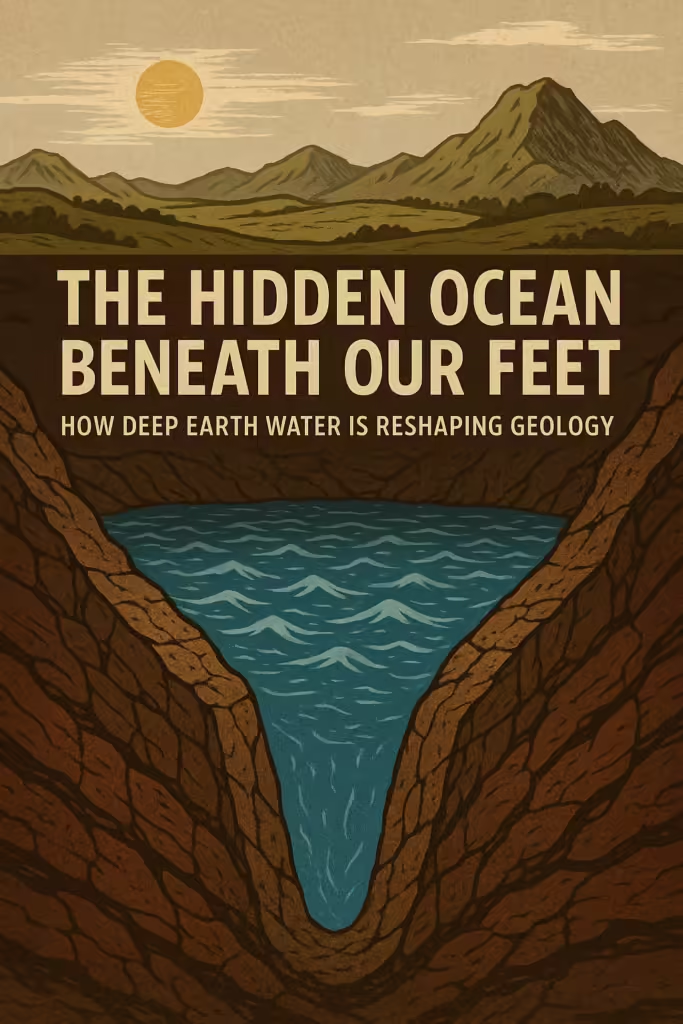
The Hidden Ocean Beneath Our Feet: How Deep Earth Water is Reshaping Geology

Chatgpt image may 23, 2025, 04 54 06 pm

The Hidden Ocean Beneath Our Feet: How Deep Earth Water is Reshaping Geology

When we think of Earth’s oceans, we picture vast blue expanses—Pacific, Atlantic, Indian, Arctic, and Southern—teeming with marine life and stretching far beyond the horizon. But in recent years, scientists have uncovered evidence of a different kind of ocean, one that doesn’t roll in waves or reflect the sky. Instead, this hidden ocean exists hundreds of kilometers beneath the Earth’s surface, locked within the crystal structure of minerals in the mantle.

This deep reservoir, found between 400 to 600 kilometers below ground, isn’t made of free-flowing water. Instead, it’s bound within the atomic framework of minerals like ringwoodite, a high-pressure form of olivine. Though not liquid, this water-rich rock holds immense amounts of H₂O—enough, by some estimates, to rival or even exceed the volume of water in all of Earth’s surface oceans combined.

The discovery of this subterranean water source has revolutionized our understanding of Earth’s geology and hydrology. For centuries, the concept of the water cycle was limited to familiar processes: evaporation from oceans and lakes, condensation into clouds, precipitation as rain and snow, and runoff into rivers that lead back to the sea. But the hidden ocean reveals a far deeper and more complex water cycle—one that extends deep into the Earth’s mantle and may have been active for billions of years.

The Discovery That Changed Everything

The idea of water existing deep within Earth’s mantle has been around for decades, but definitive proof came only recently. In 2014, a team of scientists led by geophysicist Steven Jacobsen made a groundbreaking discovery: a sample of ringwoodite trapped inside a diamond that had formed more than 500 kilometers beneath Earth’s surface. This rare blue mineral had never been seen at the surface before, and analysis showed it contained about 1.5% water by weight—not as liquid, but as hydroxide ions embedded in the mineral’s structure.

This finding was significant not just for its novelty, but for what it implied. If ringwoodite at those depths contains water, and if the mantle transition zone (between 410 and 660 kilometers deep) is rich in this mineral, then the amount of water stored in this zone could be enormous—possibly three times the volume of all surface oceans combined.

For scientists, this revelation opened the door to a new frontier in Earth science.

Water’s Role Deep Within the Earth

Water in the deep mantle isn’t there by accident. Over billions of years, subduction—the process by which oceanic plates slide beneath continental plates—has dragged water-rich sediments and hydrated crust into the Earth’s interior. Once deep enough, this water gets locked into minerals like ringwoodite and wadsleyite under immense pressure and temperature conditions.

But the water doesn’t just sit there. It plays an active and essential role in shaping the planet’s geology. Deep water lowers the melting point of mantle rocks, aiding in the formation of magma. This, in turn, feeds volcanic activity at the surface. It also affects the movement and behavior of tectonic plates, helping to drive the forces behind earthquakes and mountain formation.

Water, even in its bound state, becomes a geological lubricant—a key player in the dynamic system that makes Earth a living, shifting planet.

A Missing Piece in the Puzzle of Earth’s Oceans

One of the most profound implications of the hidden ocean is its potential connection to the origin of surface water. For decades, scientists have debated where Earth’s oceans came from. The leading theories included cometary delivery during the early bombardment phase of Earth’s history or outgassing from volcanic activity.

But the presence of water deep within the mantle suggests a third possibility: that water may have been part of Earth’s original formation, stored deep within its rocky interior and only later released to the surface. As mantle plumes rise and decompression occurs, some of this deep water may be released through volcanic eruptions, contributing to the replenishment and expansion of surface water over geological timescales.

If true, this would mean that Earth’s oceans are not just a surface feature, but the result of deep and ongoing planetary processes—processes we are only beginning to understand.

Changing the Way We Think About Earth

The discovery of deep mantle water has profound consequences for the way we think about Earth and its systems. It forces us to revise long-held assumptions and consider the planet as a more integrated and complex system. It also underscores how much we still don’t know. After all, we’ve explored only the shallowest parts of Earth’s crust, and direct sampling of the mantle remains beyond our current technological capabilities.

This realization also fuels speculation about similar processes on other planets. If Earth has a hidden ocean locked within its minerals, could the same be true for other rocky worlds like Mars or Venus? Could deep water storage influence the potential habitability of exoplanets? These questions point to an exciting frontier in planetary science.

The Hidden Ocean and the Future of Research

Moving forward, the study of deep Earth water is becoming a major area of interest in geophysics and geochemistry. Researchers are using seismic imaging, high-pressure lab experiments, and computer modeling to better understand how water behaves at extreme depths and temperatures. They’re also examining diamonds and volcanic rocks for more clues about what lies beneath our feet.

Understanding the deep water cycle isn’t just an academic exercise—it has practical implications too. Insights into how water influences magma formation could improve volcanic hazard predictions. Knowledge of how water affects plate tectonics might one day help us forecast major earthquakes more accurately.

And perhaps most importantly, studying the hidden ocean reminds us of the interconnectedness of Earth’s systems—from the deepest mantle to the highest cloud.

Conclusion: A World Within

The hidden ocean deep beneath Earth’s surface is one of the most fascinating scientific discoveries of the 21st century. Though invisible and locked away in solid rock, its influence is vast—shaping the surface we live on, fueling geological activity, and possibly even helping to create the oceans that sustain life.

As our understanding deepens, so too does our sense of wonder. Earth, it turns out, is not just a water world on the surface. It’s a water world all the way down.

Birds, Quantum Entanglement, and the Mysterious Science of Migration

Every year, billions of birds embark on astonishing migratory journeys, traveling thousands of miles across continents and oceans. From the Arctic Tern’s 25,000-mile voyage between the poles to the tiny Ruby-throated Hummingbird’s non-stop flight across the Gulf of Mexico, these feathered navigators defy logic with their uncanny sense of direction. For decades,

Chatgpt image may 23, 2025, 04 36 16 pm

Birds, Quantum Entanglement, and the Mysterious Science of Migration

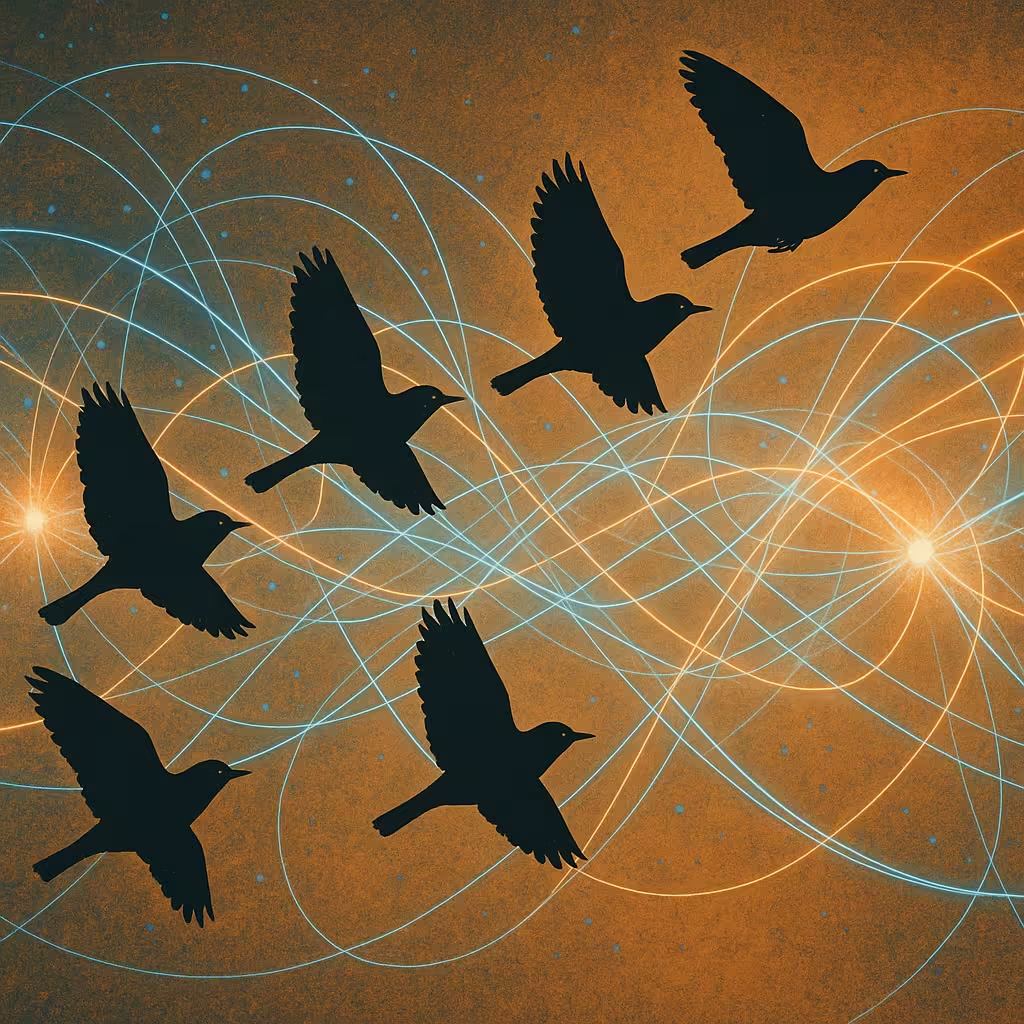
Every year, billions of birds embark on astonishing migratory journeys, traveling thousands of miles across continents and oceans. From the Arctic Tern’s 25,000-mile voyage between the poles to the tiny Ruby-throated Hummingbird’s non-stop flight across the Gulf of Mexico, these feathered navigators defy logic with their uncanny sense of direction. For decades, scientists puzzled over how birds manage such precise migrations, especially during night flights or over terrain devoid of recognizable landmarks. The answer, as it turns out, may lie not just in biology—but in the bizarre world of quantum physics.

Welcome to the groundbreaking frontier of quantum biology, where science begins to blur the lines between physics and life. At the heart of this mystery are cryptochromes—light-sensitive proteins in birds’ eyes—and an invisible dance of entangled electrons reacting to Earth’s magnetic field. This article explores how birds may literally “see” the planet’s magnetic patterns through quantum mechanics, offering one of the most astonishing insights into animal behavior in recent scientific history.


The Navigational Marvel of Birds

Bird migration is a natural spectacle. Despite their small size, birds like warblers and sparrows migrate thousands of miles twice a year with remarkable precision. Many travel at night, navigating through clouds, fog, and total darkness, often across open oceans and unfamiliar terrain. Traditional explanations such as celestial navigation, olfactory cues, and inherited memory helped explain part of the mystery, but they didn’t account for birds’ consistent ability to reorient when moved in complete darkness or cloudy conditions. Something else was guiding them—something invisible.

Scientists began to suspect that birds possessed an internal magnetic compass, but the mechanism remained elusive for years. That is, until researchers took a closer look—literally—inside the birds’ eyes.


Meet Cryptochromes: Nature’s Quantum Sensors

Cryptochromes are a class of proteins found in the retinas of birds (and many other organisms, including humans). These proteins are photoactive, meaning they respond to light. In birds, cryptochromes are especially concentrated in the eyes and play a vital role in regulating circadian rhythms. But their functions go much deeper.

When birds are exposed to sunlight—particularly blue light—cryptochromes undergo a chemical reaction that leads to the formation of radical pairs: two electrons that are excited and ejected into orbitals, where they spin. Here’s where things get weird. These two electrons are quantum entangled, a phenomenon in which particles become linked in such a way that the state of one instantly affects the state of the other, even over distance. This strange quantum property has fascinated physicists for decades, but in birds, it appears to have a very real biological function.


Seeing the Magnetic Field

As the entangled electrons spin, they are sensitive to the orientation of Earth’s magnetic field. Depending on the direction of the field, the spins shift between different states. These shifts in the spin states change the chemical outcome of the reactions within the cryptochrome molecules.

This reaction produces changes in the retinal signals being sent to the brain, effectively creating a visual representation of the magnetic field. Birds might not “see” magnetic lines as we see colors or shapes, but they likely perceive an overlay or pattern that aligns with magnetic directions—something akin to a heads-up display in their vision.

In short, birds are using quantum physics to see Earth’s magnetic field with their eyes.


The Quantum Compass

This quantum-based navigation system offers many advantages over traditional orientation methods. Unlike magnetic particles (such as magnetite, which some animals also use), the cryptochrome-based quantum compass isn’t thrown off by temperature changes or interference from surrounding rocks and metals. It’s a dynamic, light-sensitive system that constantly updates based on both visual input and Earth’s geomagnetic cues.

It also explains how birds can still orient themselves at dusk, dawn, or under cloudy skies when visual cues are minimal. As long as there’s some light to trigger the reaction in the cryptochromes, the quantum compass remains active.


Quantum Biology: A New Frontier

The very idea that a biological system can exploit quantum mechanics is revolutionary. Quantum entanglement is notoriously fragile—it typically collapses in warm, wet environments (like inside living organisms). Yet birds seem to have evolved a way to preserve quantum coherence long enough to make practical use of it for navigation.

This discovery has opened up the new field of quantum biology, where researchers explore how living organisms might use quantum phenomena to perform otherwise inexplicable feats. There is now speculation that similar mechanisms may help plants optimize photosynthesis or aid animals in olfactory detection.

Quantum biology is still in its infancy, but it’s a field filled with promise and wonder.


A Symphony of Evolution and Physics

How did birds evolve such a sophisticated mechanism? The answer may lie in millions of years of evolutionary fine-tuning. Birds that could orient themselves better survived migrations and passed on their genes. Over time, these visual magnetic sensors became more refined—until they could pick up even the subtlest shifts in Earth’s magnetic field.

What’s truly astonishing is the overlap between two worlds: the mathematical precision of quantum mechanics and the chaotic, adaptive flow of biological evolution. It suggests that life, in its relentless drive to survive and adapt, may be tapping into the very fabric of the universe in ways we are only beginning to comprehend.


Implications for Technology and Science

Studying how birds use quantum entanglement may do more than satisfy scientific curiosity—it could inspire new technologies. Quantum sensors, inspired by cryptochromes, could revolutionize navigation systems, especially in environments where GPS doesn’t work, like underwater or underground. It may also lead to advances in quantum computing, where maintaining coherence is a central challenge.

If tiny birds can master quantum entanglement to find their way across hemispheres, perhaps we can learn to harness the same principles in our own machines.


Final Thoughts: Nature’s Hidden Genius

In the quiet sky, a migrating robin or a soaring swallow might appear to be just another bird on the wing. But inside their eyes, something remarkable is happening—an elegant quantum dance of entangled electrons, reacting to the invisible lines that circle the globe. It is a reminder that nature, in its infinite complexity, often works in ways far beyond our expectations.

The discovery that birds may use quantum physics to navigate is not just a biological insight—it’s a philosophical one. It challenges our understanding of what’s possible in the natural world and highlights how much we still have to learn.

Birds don’t just fly across continents. They do it with a compass built from the strange rules of the quantum world—quietly, invisibly, and perfectly.

Ribeye Steaks

How to prepare a classic ribeye steak at home for six people

Classic Ribeye Steak is a celebrated favorite among steak lovers for its rich flavor and buttery tenderness. This recipe is perfectly tailored to prepare a sumptuous meal for six, bringing the steakhouse experience right to your home dining table. Here’s a step-by-step guide to cooking these exquisite steaks to perfection.

Ingredients:

  • 6 ribeye steaks (about 1 inch thick)
  • Salt, to taste
  • Freshly ground black pepper, to taste
  • 3 tablespoons olive oil
  • 6 tablespoons unsalted butter
  • 6 cloves garlic, smashed
  • 6 sprigs fresh rosemary or thyme

Instructions:

1. Season the Steaks:

  1. Pat Dry: Start by patting the ribeye steaks dry with paper towels. This is crucial as it helps the seasoning stick better and ensures a nice sear.
  2. Season: Generously season each steak with salt and freshly ground black pepper on both sides. This simple seasoning is key to enhancing the natural flavors of the ribeye.

2. Heat the Skillet:

  1. Preheat Skillet: Heat a cast-iron skillet over high heat until very hot.
  2. Add Oil: Add 1 tablespoon of olive oil and swirl to coat the skillet.

3. Sear the Steaks:

  1. Sear Steaks: Carefully place two steaks in the hot skillet. Sear them for about 2-3 minutes on each side until a golden-brown crust forms. The high heat locks in the juices and flavors.
  2. Reduce Heat: After searing, reduce the heat to medium-high. Add 2 tablespoons of butter, 2 cloves of smashed garlic, and 2 sprigs of rosemary or thyme to the skillet. These aromatics will infuse the steaks with a delightful depth of flavor.

4. Baste the Steaks:

  1. Baste with Butter: Tilt the skillet slightly and spoon the melted butter over the steaks continuously for about 1-2 minutes.
  2. Continue Cooking: Continue cooking the steaks to your desired level of doneness (about 3-4 minutes more for medium-rare).

5. Rest the Steaks:

  1. Transfer and Rest: Transfer the steaks to a plate and let them rest for about 5 minutes before serving.
  2. Drizzle with Garlic Butter: Serve with the garlic butter drizzled over the top.

Tips:

  • Doneness: Use a meat thermometer to check for doneness. Medium-rare is 135°F, medium is 145°F, and medium-well is 150°F.
  • Resting: Resting the steaks allows the juices to redistribute, resulting in a more flavorful and juicy steak.
  • Side Dishes: Pair with mashed potatoes, roasted vegetables, or a fresh salad for a complete meal.

Enjoy your delectable, perfectly cooked Classic Ribeye Steaks, a simple yet sophisticated dish that is sure to impress your guests with its robust flavors and elegant presentation. Whether it’s a special occasion or a casual dinner, these steaks will elevate your culinary experience, making any meal memorable.

Ribeye Steak
Grilled-Ribeye-Recipe-3
ribeye-steak-horizontal-1675097147
air-fryer-ribeye-steak-comp-10-1

Italian pasta recipes

Here are 20 popular and delicious Italian pasta recipes that you can try at home, each offering a unique taste of Italy’s rich culinary heritage:


1. Spaghetti Carbonara

A creamy sauce made with eggs, Pecorino Romano, guanciale, and black pepper.

2. Penne alla Vodka

Penne pasta in a creamy tomato sauce infused with vodka, garlic, and crushed red pepper.

3. Fettuccine Alfredo

Rich and creamy Alfredo sauce made with butter, heavy cream, and Parmesan cheese, tossed with fettuccine.

4. Spaghetti Bolognese

A hearty meat sauce made with ground beef, tomatoes, onion, and Italian herbs served over spaghetti.

5. Lasagna

Layers of pasta, meat sauce (ragĂč), bĂ©chamel, and cheese baked to perfection.

6. Pasta Primavera

A light pasta dish featuring a variety of fresh vegetables, often with a garlic and olive oil sauce.

7. Cacio e Pepe

A simple yet delicious dish made with spaghetti, Pecorino Romano cheese, and lots of black pepper.

8. Penne all’Arrabbiata

Penne pasta in a spicy tomato sauce made with garlic, red pepper flakes, and fresh basil.

9. Orecchiette with Sausage and Broccoli Rabe

Orecchiette pasta combined with spicy Italian sausage and bitter broccoli rabe.

10. Linguine alle Vongole (Clam Pasta)

Linguine pasta with fresh clams, garlic, white wine, and parsley.

11. Pasta Puttanesca

A tangy and robust sauce made with tomatoes, olives, capers, garlic, and anchovies.

12. Tortellini in Brodo

Tortellini pasta served in a rich chicken or beef broth, often garnished with Parmesan cheese.

13. Pasta e Fagioli

A hearty soup made with pasta and beans in a tomato-based broth.

14. Spaghetti Aglio e Olio

A simple and flavorful dish with spaghetti, garlic, olive oil, red pepper flakes, and parsley.

15. Pasta al Forno (Baked Pasta)

A baked pasta dish similar to lasagna, often made with rigatoni or ziti, ragĂč, bĂ©chamel, and mozzarella.

16. Ravioli with Sage Butter Sauce

Ravioli stuffed with ricotta and spinach, served with a sage and butter sauce.

17. Pasta alla Norma

Pasta with a tomato sauce featuring fried eggplant and ricotta salata cheese.

18. Gnocchi with Gorgonzola Sauce

Soft potato dumplings served with a creamy Gorgonzola cheese sauce.

19. Pappardelle with Wild Boar RagĂč

Wide pappardelle noodles topped with a rich and flavorful wild boar ragĂč.

20. Spaghetti alle Cozze (Mussels)

Spaghetti with fresh mussels, garlic, white wine, and parsley in a light tomato sauce.


Each recipe reflects the diversity and depth of Italian cuisine, showcasing various regional flavors and cooking techniques. From the creamy, comforting Fettuccine Alfredo to the bold and spicy Penne all’Arrabbiata, there’s a dish to satisfy every palate. Whether you’re cooking for a special occasion or a simple weeknight dinner, these pasta dishes provide a delicious way to bring the essence of Italy into your kitchen. Enjoy exploring these flavors and sharing them with friends and family for a truly authentic Italian dining experience.

pasta recipes
creamy-tuscan-chicken-pasta-158110-1
maxresdefault
7571415_Pasta-alla-Trapanese_Chef-John_4x3-9d9541bc16bf4beda4e634e99780d01d

Boeuf Bourguignon

Mastering Boeuf Bourguignon: A Classic French Stew Recipe

Boeuf Bourguignon is a classic French beef stew braised in red wine, typically Burgundy, with carrots, onions, garlic, and mushrooms. It’s a rich, flavorful dish, perfect for a special dinner. Here’s the recipe:

Ingredients

  • For the Marinade:

    • 1 bottle red wine (preferably Burgundy)
    • 1 large onion, sliced
    • 2 carrots, sliced
    • 3 cloves garlic, minced
    • 2 bay leaves
    • 4 sprigs fresh thyme
    • 1 teaspoon black peppercorns
  • For the Stew:

    • 3 pounds (1.4 kg) beef chuck, cut into 2-inch cubes
    • Salt and pepper, to taste
    • 2 tablespoons olive oil
    • 6 ounces (170 grams) bacon, diced
    • 1 large onion, chopped
    • 2 carrots, chopped
    • 2 cloves garlic, minced
    • 2 tablespoons flour
    • 2 cups beef broth
    • 1 tablespoon tomato paste
    • 1 pound (450 grams) mushrooms, quartered
    • 24 small pearl onions, peeled
    • Fresh parsley, chopped (for garnish)

Instructions

1. Marinate the Beef:

  1. Combine Ingredients: In a large bowl, combine the red wine, sliced onion, carrots, garlic, bay leaves, thyme, and peppercorns.
  2. Marinate Beef: Add the beef cubes to the marinade, cover, and refrigerate for at least 4 hours, preferably overnight.

2. Prepare the Beef:

  1. Remove Beef: Remove the beef from the marinade and pat dry with paper towels. Strain the marinade, reserving the liquid and the vegetables separately.
  2. Season Beef: Season the beef cubes with salt and pepper.
  3. Brown Beef: In a large Dutch oven or heavy-bottomed pot, heat the olive oil over medium-high heat. Brown the beef in batches, ensuring all sides are seared. Remove and set aside.

3. Cook the Bacon and Vegetables:

  1. Cook Bacon: In the same pot, add the diced bacon and cook until crispy. Remove and set aside, leaving the fat in the pot.
  2. Cook Vegetables: Add the chopped onion and carrots to the pot and cook until they begin to soften, about 5 minutes. Add the minced garlic and cook for another minute.

4. Braise the Beef:

  1. Add Flour: Sprinkle the flour over the vegetables and stir well to combine. Cook for 2-3 minutes to eliminate the raw flour taste.
  2. Add Marinade: Slowly pour in the reserved marinade liquid, stirring constantly to avoid lumps.
  3. Add Beef and Broth: Return the browned beef to the pot. Add the beef broth and tomato paste. Stir to combine.
  4. Simmer: Bring to a simmer, then reduce the heat to low. Cover and cook for 2 to 2 1/2 hours, or until the beef is tender.

5. Cook the Mushrooms and Pearl Onions:

  1. Sauté Mushrooms: In a separate skillet, sauté the mushrooms in a bit of olive oil until they are browned and tender. Add them to the stew during the last 30 minutes of cooking.
  2. Cook Pearl Onions: Add the pearl onions to the pot during the last 30 minutes of cooking.

6. Finish and Serve:

  1. Check Seasoning: Taste and adjust seasoning with salt and pepper if needed.
  2. Garnish: Serve the Boeuf Bourguignon hot, garnished with the cooked bacon and chopped fresh parsley.

Tips:

  • Wine Selection: Use a good quality red wine for the marinade and cooking, preferably a Burgundy or Pinot Noir.
  • Slow Cooking: Allow the stew to cook slowly to develop deep, rich flavors.
  • Serve With: Boeuf Bourguignon is traditionally served with mashed potatoes, crusty bread, or buttered noodles to soak up the rich sauce.

Enjoy your homemade Boeuf Bourguignon!

Boeuf Bourguignon
boeuf-bourghignon-vassoio-1-1200x675
d7e000a76bb99af9d5a82774c8ea3b97de2b0f76
slow-cooked-boeuf-bourguignon-93471-1