
In the Pacific, a manta ray’s pulses stir sediment, revealing prey

The manta ray, a majestic creature of the Pacific Ocean, has been observed exhibiting a unique feeding behavior. By using their pulses to stir sediment, these gentle giants reveal hidden prey, making it easier to feed.

In the Pacific, a manta ray’s pulses stir sediment, revealing prey

This fascinating phenomenon, observed in 2024, has sparked the interest of scientists studying its implications for marine biology and potential technological inspirations. The study of this behavior not only deepens our understanding of ocean creatures but also highlights the intricate relationships within the marine ecosystem.

Key Takeaways

  • Manta rays use their pulses to stir sediment, revealing hidden prey.
  • This unique feeding behavior was observed in the Pacific Ocean in 2024.
  • The study of this behavior has implications for marine biology and technology.
  • The observation highlights the complex relationships within the marine ecosystem.
  • Scientists are interested in understanding the full extent of this feeding behavior.

The Remarkable Discovery of Manta Ray Pulse Feeding

A notable observation in the Pacific has shed new light on the feeding patterns of manta rays, revealing a complex interaction with their underwater ecosystem.

First Observations in the Pacific Ocean

The initial observations of manta ray pulse feeding in the Pacific Ocean have highlighted a unique behavior where these creatures stir the sediment to uncover hidden prey. This behavior is a significant finding that underscores the adaptability of manta rays as oceanic predators.

manta ray pulse feeding

Distinguishing This Behavior from Known Feeding Methods

Manta rays are known to employ various feeding strategies, but the use of pulses to disturb sediment is a distinct method that sets them apart. This behavior not only showcases their adaptability but also highlights the intricate dynamics of the underwater ecosystem.

Feeding Method Description Prey Uncovered
Pulse Feeding Stirring sediment with pulses Hidden prey in sediment
Filter Feeding Filtering water for plankton Plankton and small organisms

The discovery of manta ray pulse feeding has opened new avenues for understanding the role of these creatures in maintaining the balance of marine life. By disturbing the sediment, manta rays contribute to the turnover of nutrients, potentially enhancing the biodiversity of their habitat.

Understanding Manta Ray Biology

To appreciate the unique feeding behaviors of manta rays, it’s essential to understand their underlying biology. Manta rays are majestic creatures that have long fascinated marine biologists with their impressive size and gentle nature.

manta ray biology

Anatomy and Physical Characteristics

Manta rays are characterized by their large size, with some species reaching widths of up to 7 meters and weighing over 2,000 kilograms. Their bodies are flat and disk-shaped, which enables them to maneuver efficiently through the water. They have a distinctive cephalic fin on either side of their mouth, which helps to funnel prey towards their mouth.

The skin of manta rays is rough and contains dermal denticles, tooth-like scales that provide protection and possibly aid in reducing drag as they swim. Their coloration varies, typically being dark on top and lighter on the bottom, a form of countershading that helps them blend in with the ocean depths when viewed from above or below.

Traditional Feeding Behaviors of Manta Rays

Traditionally, manta rays have been known to feed on plankton, small fish, and krill. They are filter feeders, using their cephalic fins to guide food towards their mouths as they swim. This feeding behavior is often observed in areas rich with nutrient-dense waters, such as near coral reefs or upwelling regions.

“Manta rays are known to aggregate in areas with high productivity, where they can feed on abundant plankton and small organisms,” notes a marine biologist.

Their feeding behavior is not just a simple matter of filtering water; it’s a complex process that involves navigating through the water column to find the richest feeding grounds. This traditional feeding behavior is crucial for their survival and plays a significant role in the marine ecosystem.

  • Manta rays are filter feeders, consuming plankton and small fish.
  • Their feeding is often associated with areas of high productivity.
  • They use their cephalic fins to direct food towards their mouths.

Understanding these aspects of manta ray biology provides a foundation for appreciating their more complex feeding behaviors, such as pulse feeding, and highlights the importance of these creatures in the marine ecosystem.

In the Pacific, a manta ray’s pulses stir sediment, revealing prey

In the Pacific, manta rays employ a fascinating feeding technique where they produce pulses to uncover prey buried in the sediment. This unique method is unlike typical feeding behaviors observed in other marine animals.

The Mechanics of Pulse Generation

The mechanics behind a manta ray’s pulse generation are intricate, involving a complex interplay of muscles and nervous system control. As they pulse, they create currents that disturb the sediment on the seabed.

The pulse generation is a remarkable example of evolutionary adaptation, allowing manta rays to exploit a previously untapped food source. The process involves the coordinated movement of their fins, creating a powerful current that stirs the sediment.

Aspect Description Importance
Muscle Control Complex interplay of muscles Essential for pulse generation
Nervous System Coordinates muscle movement Critical for effective pulsing
Fin Movement Creates powerful currents Key to disturbing sediment

How Sediment Disturbance Exposes Hidden Prey

The disturbance caused by the manta rays’ pulses exposes hidden prey, making it easier for them to feed. This method is akin to mining the seabeds, uncovering resources that lie beneath the surface.

manta ray pulse feeding

The sediment disturbance is a crucial aspect of the manta rays’ feeding behavior, allowing them to access prey that would otherwise be out of reach. By stirring the sediment, they reveal a hidden buffet, making feeding more efficient.

The Pacific Ocean Ecosystem

Spanning a significant portion of the Earth’s surface, the Pacific Ocean is home to a rich and diverse underwater ecosystem. This vast body of water is characterized by its complex seabed topography, ranging from deep trenches to shallow coral reefs, supporting a wide array of marine life.

Unique Characteristics of Pacific Seabeds

The Pacific Ocean’s seabeds are notable for their varied landscapes, which include vast plains, mountain ranges, and deep-sea trenches. These diverse environments create a multitude of habitats for marine organisms, from the tiny plankton to large marine mammals.

The deep trenches, such as the Mariana Trench, are among the most extreme environments on Earth, with conditions that are both very cold and very pressurized. Despite these harsh conditions, unique communities of organisms have adapted to live in these areas.

Pacific Ocean Ecosystem

Manta Ray Habitats in the Pacific

Manta rays are found in the warmer waters of the Pacific, often inhabiting areas with abundant food sources. These areas include coral reefs and coastal waters where the seabed topography facilitates the aggregation of their prey.

The specific habitats preferred by manta rays are crucial for their feeding behaviors, which include the unique pulse feeding observed in certain regions. Understanding these habitats is essential for conservation efforts aimed at protecting manta ray populations.

The 2024 Scientific Observations

The 2024 scientific observations were instrumental in advancing our knowledge of manta ray feeding strategies. Researchers employed advanced methodologies and state-of-the-art equipment to study the pulse feeding phenomenon in the Pacific Ocean.

Research Methodology and Equipment Used

The research team utilized a combination of underwater observation techniques, including submersibles and remotely operated vehicles (ROVs), to monitor manta ray behavior. Advanced acoustic monitoring equipment was also deployed to capture the sound waves generated by the rays’ pulse feeding.

The use of such cutting-edge technology allowed scientists to gather detailed data on the mechanics of pulse feeding and its significance in the manta rays’ hunting strategy.

2024 scientific observations manta ray pulse feeding

Key Findings from Pacific Ocean Studies

The studies conducted in 2024 revealed that pulse feeding is a crucial component of manta rays’ foraging behavior in the Pacific Ocean. By stirring sediment, manta rays expose hidden prey, making it easier for them to feed.

The data collected during these observations has been compiled into the following table, which summarizes the key findings:

Observation Frequency Significance
Pulse Feeding Events 85 Primary feeding method
Prey Exposed 72% Increased feeding success
Sound Waves Generated 120 Hz Aids in prey location

These findings have significant implications for the field of bioacoustics, as scientists continue to study the role of sound in manta ray feeding behaviors. The 2024 observations have opened new avenues for research into the complex interactions between manta rays and their environment.

Bioacoustics: The Science Behind the Pulses

Bioacoustics, the study of sound production and its effects on living organisms, sheds new light on manta ray feeding behaviors. This field of study is crucial in understanding how manta rays use sound to their advantage, particularly in their feeding habits.

Sound Waves Underwater

Sound waves function differently underwater compared to in air. Water is a more efficient medium for sound transmission, allowing it to travel faster and farther. Manta rays leverage this property by generating pulses that stir sediment, revealing hidden prey. This behavior is akin to “painting the ocean with sonic patterns,” as the sound waves help uncover buried organisms.

The mechanics of sound wave propagation underwater are complex. Factors such as water temperature, salinity, and depth affect how sound travels. Manta rays have adapted to these conditions, using their unique biology to create effective sound waves.

bioacoustics manta ray pulses

Measuring and Analyzing Manta Ray Pulses

Scientists measure and analyze manta ray pulses using specialized equipment. Hydrophones are used to capture the sound waves generated by the rays, and the data is then analyzed to understand the characteristics of these pulses.

Parameter Description Significance
Frequency The number of oscillations per second Indicates the energy level of the pulse
Amplitude The magnitude of the sound wave Reflects the intensity of the pulse
Duration The length of time the pulse is generated Affects the amount of sediment disturbed

By analyzing these parameters, researchers can gain insights into the feeding behaviors of manta rays and how they interact with their environment. This information is vital for understanding the ecological impact of their feeding habits and for conservation efforts.

Seabed Mining: A Natural Phenomenon

Manta rays exhibit a fascinating behavior that resembles seabed mining, disturbing sediment to reveal hidden food sources. This natural phenomenon is not only intriguing but also has significant ecological implications.

The behavior of manta rays stirring sediment can be compared to other marine sediment disturbance behaviors observed in different species. For instance, some species of fish and invertebrates also disturb sediment while foraging, but the scale and method can vary significantly.

Comparing to Other Marine Sediment Disturbance Behaviors

Other marine animals, such as certain species of rays and sharks, also engage in sediment disturbance behaviors. However, the manta ray’s method of pulsing through the sediment is unique and can be likened to a form of underwater excavation. This behavior not only uncovers prey but also alters the seabed topography.

In comparison to other sediment disturbance behaviors, manta rays’ pulse feeding is distinct due to its scale and the specific mechanism of generating pulses to stir the sediment. This behavior can be seen as a form of natural seabed mining, with potential implications for understanding and developing sediment-clearing technologies.

Ecological Impact of Manta Ray Seabed Mining

The ecological impact of manta rays’ seabed mining behavior is multifaceted. By disturbing the sediment, manta rays can expose hidden prey, potentially influencing the local food chain. Additionally, this behavior can alter the seabed structure, affecting local habitats and potentially influencing biodiversity.

The discovery of manta rays’ pulse feeding behavior could have implications for sediment-clearing technologies. By studying how manta rays use sound and movement to uncover prey, scientists may develop new methods for sediment clearing in various underwater applications, potentially using sound waves for harvesting or other purposes.

Foraging in Murky Depths

The murky depths of the ocean pose little challenge to manta rays, equipped with pulse feeding. This unique behavior allows them to thrive in environments where visibility is limited.

Challenges of Hunting in Low-Visibility Environments

Hunting in murky waters is a significant challenge for many marine predators. The lack of visibility makes it difficult to locate prey using traditional senses such as sight. Manta rays, however, have adapted to these conditions.

In low-visibility environments, the usual methods of hunting, such as chasing prey, are less effective. Predators must rely on other senses or innovative strategies to survive.

How Pulse Feeding Overcomes Visibility Challenges

Pulse feeding is a remarkable adaptation that enables manta rays to forage effectively in murky depths. By generating pulses that stir sediment, they create a disturbance that reveals hidden prey.

This behavior not only aids in locating prey but also does so in a way that compensates for the lack of visibility. The sound waves generated by the pulses can be thought of as a form of echolocation, allowing the manta rays to “see” their surroundings through the sediment disturbance.

The effectiveness of pulse feeding in murky environments highlights the adaptability of manta rays. Their ability to exploit a niche that is challenging for other predators underscores their unique position in the marine ecosystem.

By understanding how manta rays forage in murky depths, we gain insights into the complex interactions within marine ecosystems. This knowledge can inform conservation efforts and enhance our appreciation of these remarkable creatures.

Technological Inspirations from Manta Ray Behavior

Manta rays’ unique feeding habits are inspiring engineers to develop new sediment-clearing technologies. By studying how these marine animals interact with their environment, researchers are gaining insights into innovative methods for underwater exploration and resource extraction.

Biomimicry in Engineering

Biomimicry, the practice of drawing inspiration from nature to solve human problems, is a rapidly growing field. The study of manta ray feeding behaviors is a prime example, as it has the potential to inform the development of new technologies that mimic the way these animals use sound to uncover prey buried in sediment.

Engineers are particularly interested in how manta rays generate pulses that stir sediment, revealing hidden prey. This natural process can inspire the creation of sediment-clearing technologies that could be used in various marine applications, from environmental monitoring to resource extraction.

Potential Sediment-Clearing Technologies

The development of sediment-clearing technologies inspired by manta ray behavior could revolutionize underwater operations. For instance, using sound waves to disturb sediment could improve the efficiency of underwater mining or archaeological excavations.

Moreover, such technologies could also contribute to environmental conservation efforts. By clearing sediment, it’s possible to restore habitats or improve water quality, benefiting marine ecosystems.

As research continues to uncover the intricacies of manta ray feeding behaviors, the potential for technological innovation grows. By embracing biomimicry and the study of marine biology, we can develop new tools and methods that not only enhance our understanding of the ocean but also promote sustainable interaction with marine environments.

Conservation Implications

The discovery of manta rays’ pulse feeding behavior has significant implications for conservation efforts. As we gain a deeper understanding of their feeding habits, it becomes clear that protecting these magnificent creatures requires a multifaceted approach.

Threats to Manta Ray Populations

Manta ray populations are facing numerous threats, including habitat loss and overfishing. These threats not only endanger the manta rays but also have a ripple effect on the entire marine ecosystem.

The loss of habitat due to coastal development and seabed mining activities deprives manta rays of their feeding grounds, making it harder for them to survive. Overfishing, both targeted and accidental, further depletes their numbers.

Protecting These Unique Feeding Grounds

Protecting the unique feeding grounds of manta rays is crucial for their survival. This involves establishing marine protected areas where these creatures can feed without disturbance.

Conservation strategies should also focus on reducing bycatch and promoting sustainable fishing practices. By engaging local communities and fishermen in conservation efforts, we can work towards a more sustainable coexistence with these oceanic predators.

Ultimately, the conservation of manta rays and their habitats is not just about protecting a species; it’s about preserving the health of our oceans and the rich biodiversity they support.

Future Research Directions

Future research directions are being shaped by the fascinating discoveries made about manta ray behavior. As scientists continue to explore the intricacies of pulse feeding, several unanswered questions have come to the forefront.

Unanswered Questions About Pulse Feeding

Despite the progress made in understanding manta ray pulse feeding, there are still many aspects that require further investigation. Some of the key questions include:

  • What are the specific mechanisms that manta rays use to generate pulses in different seabed environments?
  • How does the bioacoustic signal produced by pulse feeding vary across different species of manta rays?
  • What are the long-term effects of pulse feeding on the marine ecosystem, particularly on prey populations and seabed composition?

Addressing these questions will be crucial in gaining a deeper understanding of this complex behavior and its implications for marine biology.

Planned Studies and Technological Advancements

To tackle the unanswered questions, researchers are planning to employ advanced technologies and methodologies. Some of the planned studies include:

  1. Utilizing underwater acoustic sensors to monitor and analyze the bioacoustic signals produced by manta rays during pulse feeding.
  2. Conducting comparative studies across different manta ray habitats to understand the variability in pulse feeding behavior.
  3. Developing new sediment sampling techniques to assess the impact of pulse feeding on seabed composition.

These studies will not only enhance our understanding of manta ray biology but also contribute to the development of new technologies inspired by nature.

The integration of bioacoustics and marine biology is expected to reveal new insights into the behavior of these magnificent creatures. As research progresses, we can anticipate breakthroughs in our understanding of manta ray pulse feeding and its significance in the marine ecosystem.

Conclusion: The Marine Miner of the Pacific

In the Pacific, a manta ray’s pulses stir sediment, revealing prey in a remarkable display of adaptability. This behavior, likened to seabed mining, highlights the manta ray’s unique feeding strategy.

As a marine miner, the manta ray plays a crucial role in the Pacific Ocean ecosystem. By stirring sediment, it exposes hidden prey, showcasing its importance in the marine food chain.

The discovery of this behavior has significant implications for our understanding of marine ecosystems and potential technological innovations. As we continue to study the manta ray’s feeding habits, we are reminded of the importance of preserving our oceans and the creatures that call them home.

FAQ

What is the unique feeding behavior observed in manta rays in the Pacific Ocean?

Manta rays in the Pacific Ocean have been observed using their pulses to stir sediment, revealing hidden prey, a behavior that is distinct from their traditional feeding methods.

How do manta rays generate pulses to stir sediment?

The mechanics behind a manta ray’s pulse generation involve a complex interplay of muscles and nervous system control, creating currents that disturb the sediment on the seabed.

What is the significance of the 2024 scientific observations of manta ray pulse feeding?

The 2024 observations marked a significant milestone in understanding the pulse feeding behavior of manta rays, shedding light on its importance for their hunting success and implications for bioacoustics.

How does the pulse feeding behavior of manta rays aid in their hunting?

By creating sediment disturbances, manta rays can effectively uncover hidden prey, making it easier for them to feed, even in murky or low-visibility environments.

What are the potential technological inspirations from studying manta ray behavior?

The study of manta ray feeding behaviors could inspire new technologies, particularly in the field of engineering, such as sediment-clearing technologies that mimic the way manta rays use sound to uncover prey.

What are the conservation implications of the discovery of manta ray pulse feeding?

The discovery highlights the need for conservation efforts to protect manta ray populations and their unique feeding grounds, addressing threats such as habitat loss and overfishing.

How does the Pacific Ocean’s ecosystem support manta ray habitats?

The Pacific Ocean’s diverse seabed topography and rich array of marine life support specific regions that manta rays inhabit, often preferring areas with abundant food sources and suitable habitats for their feeding behaviors.

What is bioacoustics, and how does it relate to manta ray pulse feeding?

Bioacoustics is the study of sound production and its effects on living organisms; in the context of manta rays, it helps understand how their pulses create sound waves underwater, aiding in their feeding behavior.

Amazonian Palms Once Had Fronds Vibrating With Gusts

A groundbreaking discovery has shed new light on the evolutionary history of certain palm species. It has been found that these plants once utilized the wind to their advantage, using gusts to vibrate their fronds.

This unique adaptation allowed for the effective dispersal of spores, aiding in the propagation of the palms. The vibration of the fronds not only facilitated the spread of spores but also likely played a role in the local ecosystem.

Key Takeaways

  • The vibration of fronds aided in spore dispersal.
  • This trait was crucial for the propagation of certain palm species.
  • The adaptation likely influenced the local microclimate.
  • The discovery sheds new light on the evolutionary history of these plants.
  • The unique trait highlights the intricate adaptations of these plants to their environments.

The Discovery of Ancient Amazonian Sonic Palms

Amazonian palms with fronds that vibrated in the wind have been a subject of interest since their discovery was hypothesized in 2025. This phenomenon has sparked intense curiosity among botanists and researchers, who are eager to understand the mechanisms behind this unique trait.

The Groundbreaking 2025 Hypothesis

The hypothesis proposed in 2025 marked a significant milestone in the study of Amazonian palms. It suggested that the vibration of palm fronds was not just a peculiar characteristic but a crucial adaptation that aided in propagation. This idea revolutionized the understanding of how these plants dispersed their spores.

Initial Scientific Reactions and Validation

Initially, the scientific community reacted with a mix of curiosity and skepticism. However, as evidence mounted, the hypothesis gained validation. It became clear that the vibration of the fronds played a vital role in the propagation of these palms. The validation of this hypothesis has opened up new research avenues into the dispersal mechanisms of ancient plants.

amazonian palms fronds

Amazonian Palms Once Had Fronds Vibrating With Gusts

Unlike their modern counterparts, ancient Amazonian palms had fronds that hummed with the wind. This unique characteristic was due to a complex interplay of structural properties and aerodynamic forces.

The Physical Mechanism Behind Frond Vibration

The vibration of the fronds was caused by the way the wind interacted with their structure. The fronds were specially adapted to respond to gusts, vibrating in a way that was distinct from other plants.

  • The structural properties of the fronds allowed for flexibility.
  • Aerodynamic forces exerted by the wind caused the fronds to vibrate.
  • This vibration was a result of the fronds’ unique adaptation to their environment.
fronds vibrating gusts

How These Vibrations Generated Distinctive Sounds

As the fronds vibrated, they generated distinctive sounds that were likely an integral part of the ancient Amazonian soundscape. The sounds produced were a result of the frequency and amplitude of the vibrations.

  • The frequency of the vibrations determined the pitch of the sound.
  • The amplitude of the vibrations affected the loudness of the sound.
  • These sounds were unique to the ancient Amazonian palms.

The combination of the physical mechanism and the resulting sounds highlights the fascinating physics underlying the natural world and underscores the unique characteristics of these ancient palms.

Evolutionary Purpose of Vibrating Fronds

The vibrating fronds of ancient Amazonian palms served a crucial evolutionary purpose. This unique adaptation played a significant role in their lifecycle, particularly in enhancing their reproductive capabilities.

spreading spores

Spore Dispersal Enhancement

The vibration of fronds in the wind aided in spreading spores more effectively. This mechanism was crucial for the dispersal of spores over a wider area, increasing the chances of successful germination and establishment of new plants. By enhancing spore dispersal, these palms were able to colonize new areas more efficiently.

Competitive Advantages in Seed Propagation

The vibrating fronds also provided competitive advantages in seed propagation. The dispersal tech inherent in the vibrating mechanism allowed these palms to outcompete other species for resources and habitat. It aided propagation by ensuring that seeds were dispersed over a broad area, reducing competition among the offspring and increasing the likelihood of successful establishment.

In summary, the evolutionary purpose of vibrating fronds was multifaceted, enhancing both spore dispersal and seed propagation. This adaptation was key to the success of ancient Amazonian palms in their ecosystems.

Anatomical Differences Between Ancient and Modern Palms

The anatomical differences between ancient Amazonian palms and their modern counterparts are quite striking. Ancient palms had several distinct features that allowed them to thrive in their environment.

amazonian palm trees

Structural Adaptations for Air Humming

Unlike modern palms, these hummed air due to their unique structural adaptations. The fronds of ancient Amazonian palms were designed to vibrate in the wind, producing a humming sound. This was made possible by:

  • Thinner, more flexible fronds
  • A specialized vascular system
  • A unique arrangement of leaflets

Why Modern Palm Species Lost This Trait

Over time, modern palm species lost the trait of humming in the air, likely due to changes in their environment and evolutionary pressures. As the climate and ecosystem evolved, the need for this adaptation diminished, and palms that did not expend energy on producing sound had a survival advantage.

Some key differences between ancient and modern palms include:

Characteristic Ancient Palms Modern Palms
Frond Thickness Thinner, more flexible Thicker, less flexible
Vascular System Specialized for vibration Standard vascular system

The Science of Palm-Generated Sound Waves

The science behind the “palm music” generated by ancient Amazonian palms is a fascinating area of study. Researchers have been intrigued by the phenomenon of fronds vibrating in gusts, producing distinct sound waves.

palm-generated sound waves

Acoustic Properties and Frequencies

The acoustic properties of the sound waves generated by the vibrating fronds are characterized by specific frequencies. “The unique acoustic signature of these sounds is a result of the physical structure of the palms and the wind patterns they were exposed to,” notes a leading researcher in the field. Studies have shown that the frequencies produced were within the range of human hearing, making them potentially significant for various ecological interactions.

How Wind Patterns Affected Vibration Intensity

Wind patterns played a crucial role in determining the intensity of the vibrations and, consequently, the sound waves produced. The varying wind speeds and directions influenced the effectiveness of spore dispersal, a critical aspect of the palms’ reproductive cycle. As one study observed, “The synchronization of frond vibrations with wind patterns was a key adaptation that enhanced the palms’ ability to disperse spores over long distances.”

This understanding of palm-generated sound waves not only sheds light on the evolutionary adaptations of ancient Amazonian palms but also inspires new technologies, such as spore-airing systems that mimic the natural process.

Recreating Ancient Amazonian Ecosystems

To recreate ancient Amazonian ecosystems, we must first understand their dynamics. This involves examining the environmental conditions and the unique adaptations of the plants that inhabited these ecosystems.

The Windy Prehistoric Jungle Environment

The ancient Amazonian rainforest was characterized by a windy prehistoric jungle environment. This trait paints jungles as windy, sowing life through the dispersal of seeds and spores. The strong winds played a crucial role in shaping the ecosystem.

The rustling of leaves and the swaying of trees were not just passive reactions to the wind; they were part of an intricate dance that facilitated the survival and propagation of various species.

Environmental Factor Impact on Ecosystem
Strong Winds Dispersal of seeds and spores
Vibrating Palms Enhanced spore dispersal and competitive advantages

Ecological Interactions Facilitated by Vibrating Palms

The vibrating palms were not just a fascinating phenomenon; they played a significant role in the ecological interactions within the ancient Amazonian ecosystems. These palms contributed to the shaping of their environments through their unique adaptations, facilitating the dispersal of spores and seeds.

ancient Amazonian ecosystems

The ecological interactions facilitated by the vibrating palms underscore the complexity and interconnectedness of the ancient Amazonian ecosystems. By understanding these dynamics, we can gain insights into the evolution of these ecosystems.

Current Botanical Research on Ancient Palm Mechanisms

Researchers are delving into the mysteries of ancient palms to uncover their secrets and understand their adaptations. This involves a comprehensive study of the mechanisms that allowed these palms to thrive in their environments. By understanding these mechanisms, botanists can gain insights into how these plants contributed to their ecosystems.

Research Methodologies and Challenges

Studying ancient palm mechanisms presents several challenges, including the degradation of plant material over time and the need for advanced technologies to analyze these ancient specimens. Researchers employ various methodologies, such as fossil analysis and comparative studies with modern palm species, to overcome these challenges.

  • Fossil record analysis to understand historical adaptations
  • Comparative genomics to identify genetic changes over time
  • Biomechanical modeling to simulate ancient environments

Key Findings from Recent Studies

Recent studies have revealed that ancient Amazonian palms had unique structural adaptations that enabled them to produce sound waves, potentially aiding in spore dispersal. These findings have significant implications for our understanding of evolutionary adaptations and ecological interactions in ancient ecosystems.

By examining the anatomical differences between ancient and modern palms, researchers can better understand how these plants evolved over time. This knowledge can also inform strategies for conservation and restoration of modern palm species.

Technological Applications Inspired by Vibrating Palm Fronds

By understanding the mechanisms behind vibrating palm fronds, scientists can develop new technologies that mimic the adaptations of ancient Amazonian palms. This biomimetic approach has the potential to inspire innovative solutions in various fields.

Biomimetic Spore-Airing Systems

One of the most promising areas of research is the development of biomimetic spore-airing systems. These systems aim to replicate the way ancient palms dispersed their spores through vibration. By studying the physical mechanisms behind this process, engineers can design more efficient systems for dispersing seeds or other particles in various industrial applications.

The potential applications of such systems are vast, ranging from agriculture to environmental conservation. For instance, biomimetic spore-airing systems could be used to disperse seeds in areas where traditional methods are impractical, enhancing reforestation efforts.

Acoustic Engineering Innovations

The study of vibrating palm fronds has also led to acoustic engineering innovations. Researchers are exploring how the unique acoustic properties of these palms can be used to develop new sound-based technologies. This could include the creation of more efficient sound dampening materials or the development of new musical instruments inspired by the “palm music” of ancient Amazonia.

Furthermore, understanding how wind patterns affected the vibration intensity of palm fronds can inform the design of more effective wind-energy harvesting systems. This showcases the potential for vibrating palm fronds to inspire a wide range of technological advancements.

The Cultural Significance of "Palm Music"

Unveiling the secrets of ancient Amazonian palms reveals a unique aspect of their biology that can be likened to a form of natural music. This phenomenon, often referred to as “palm music,” has captivated researchers and the public alike, offering a glimpse into the prehistoric past of the Amazon region.

The vibrating fronds of these ancient palms generated sounds that were likely an integral part of the ancient Amazonian ecosystem. This discovery unveils ancient sowers, showing how breezes carried their seeds, creating a symphony of sounds that resonated through the prehistoric jungle.

Recreating the Soundscape of Ancient Amazonia

Scientists are now working on recreating the soundscape of ancient Amazonia, using data collected from fossil records and simulations of prehistoric wind patterns. This involves understanding how the physical structure of the palms contributed to the generation of sound and how these sounds might have varied across different environments.

Aspect Ancient Amazonian Palms Modern Palms
Frond Structure Specialized for vibration Less rigid, reduced vibration
Sound Generation Significant sound production Minimal sound production
Ecological Role Integral to ecosystem soundscape Limited to visual and shelter roles

Artistic and Educational Interpretations

The concept of “palm music” has inspired a range of artistic and educational interpretations. Musicians are incorporating these natural sounds into compositions, while educators are using the phenomenon to teach about the biology and ecology of ancient ecosystems.

As we continue to explore and understand the cultural significance of “palm music,” we are reminded of the importance of preserving our natural heritage. By studying these ancient palms and their unique characteristics, we gain not only a deeper understanding of the past but also insights into how we can better conserve the natural world today.

Conclusion: How Ancient Palm Adaptations Reshape Our Understanding of Evolutionary History

The discovery of ancient Amazonian palms with fronds that vibrated in the wind has significantly advanced our understanding of evolutionary history. These amazonian palms once had fronds vibrating with gusts, a unique adaptation that played a crucial role in their survival and propagation.

By studying these adaptations, we gain valuable insights into the complex interactions between plants and their environments. The vibrating fronds not only generated distinctive sounds but also facilitated spore dispersal, showing how breezes carried their seeds to new areas, thus enhancing their reproductive success.

This knowledge enriches our understanding of the past and inspires new technologies, such as biomimetic spore-airing systems and acoustic engineering innovations. As we continue to explore and understand the natural world, we uncover new appreciations for the intricate mechanisms that have shaped the evolution of species over time.

FAQ

What is the significance of the discovery that Amazonian palms once had fronds vibrating with gusts?

The discovery highlights the intricate adaptations that enabled these plants to thrive in their environments and sheds new light on the evolutionary history of these plants.

How did the vibration of the fronds aid in the propagation of Amazonian palms?

The vibration of the fronds facilitated the dispersal of spores, giving these palms a significant advantage in terms of reproduction.

What is the physical mechanism behind the vibration of the fronds?

The vibration is a complex interplay of the structural properties of the fronds and the aerodynamic forces exerted by the wind.

How did the wind patterns affect the vibration intensity of the fronds?

The intensity of the vibrations was likely influenced by wind patterns, which played a crucial role in determining the effectiveness of spore dispersal.

Why did modern palm species lose the trait of vibrating fronds?

Modern palms likely lost this trait due to changes in their environment or evolutionary pressures that made this adaptation less necessary.

What are the potential technological applications inspired by vibrating palm fronds?

The study of vibrating palm fronds could inspire new technologies, particularly in the development of biomimetic spore-airing systems and acoustic engineering innovations.

How does the study of ancient Amazonian palms contribute to our understanding of evolutionary history?

The study of these palms provides insights into the complex interactions between plants and their environments, and how these interactions have shaped the natural world.

What is the cultural significance of "palm music"?

The cultural significance of “palm music” lies in its ability to recreate the soundscape of ancient Amazonia, providing a unique window into the past.

How can the discovery of vibrating fronds inspire new research in botany?

The discovery has opened up new avenues of research into the dispersal mechanisms of ancient plants and the adaptations that enabled these palms to thrive in their environments.

In Madagascar, a Chameleon’s Mist Mimics Leaf Scents

A remarkable discovery was made in 2024 in the lush landscapes of Madagascar. A species of chameleon has been found to release a mist that remarkably mimics the scent of leaves. This extraordinary ability has captivated scientists and wildlife enthusiasts alike.

The chameleon’s unique trait is not just a fascinating example of mimicry in the reptile world; it also holds potential for various applications, sparking interest across different scientific disciplines.

Key Takeaways

  • The chameleon’s mist mimics leaf scents, a unique trait discovered in 2024.
  • This ability is a remarkable example of mimicry in the reptile world.
  • The discovery has significant implications for various scientific fields.
  • The chameleon’s trait is sparking interest in its potential applications.
  • Scientists are studying the biochemistry behind this unique ability.

The Remarkable Discovery of Madagascar's Scent-Mimicking Chameleon

A team of researchers has stumbled upon an extraordinary adaptation in a Madagascar chameleon, revealing its ability to replicate leaf fragrances. This groundbreaking find has opened new avenues in understanding the complex survival strategies employed by this unique species.

First Observations and Scientific Documentation

The initial observations of the scent-mimicking chameleon were made during a research expedition in Madagascar’s dense forests. Scientists documented the chameleon’s behavior, noting how it released a mist that closely resembled the scent of the surrounding foliage.

The documentation process involved extensive field notes, photographs, and video recordings. Researchers also collected samples of the chameleon’s mist and the leaves it was mimicking for further biochemical analysis.

The Significance of the 2024 Discovery

The discovery of the scent-mimicking chameleon in 2024 marked a significant milestone in herpetology. It highlighted the complex adaptations that some species have evolved to survive in their environments.

This finding has implications for understanding evolutionary biology and could inspire new approaches in fields like biomimicry and conservation.

Initial Scientific Reactions to the Finding

Upon the discovery being made public, the scientific community reacted with a mix of amazement and curiosity. Experts in biochemistry and herpetology began to speculate about the mechanisms behind the chameleon’s scent mimicry.

Many scientists are now eager to study this phenomenon further, exploring its potential applications and the insights it could provide into the natural world.

Understanding Madagascar's Unique Ecosystem

Madagascar’s ecosystem is a complex web of life that has evolved in isolation for millions of years. This isolation has resulted in a biodiversity hotspot, with a plethora of flora and fauna that are found nowhere else on Earth.

The Biodiversity Hotspot of Madagascar

Madagascar is considered one of the world’s most important biodiversity hotspots. The island is home to a vast array of endemic species that have evolved independently, making it a fascinating subject for scientific study.

  • High levels of endemism among flora and fauna
  • Diverse ecosystems ranging from rainforests to deserts
  • Unique evolutionary adaptations due to long-term isolation

Native Chameleon Species and Their Habitats

The chameleon species native to Madagascar are incredibly diverse, with over 200 species identified. These species inhabit a range of ecosystems, from the humid rainforests of the east to the dry forests of the west.

Madagascar chameleon species

Environmental Factors Shaping Reptilian Adaptations

Several environmental factors have played a crucial role in shaping the adaptations of reptilian species in Madagascar. These include climate, habitat structure, and the presence of predators.

The unique combination of these factors has led to the development of remarkable adaptations, such as the scent-mimicking ability observed in some chameleon species.

In Madagascar, a Chameleon's Mist Mimics Leaf Scents: The Phenomenon Explained

In the lush forests of Madagascar, a unique species of chameleon has evolved an extraordinary adaptation: producing a mist that replicates the scent of leaves. This phenomenon has sparked intense scientific interest, as it represents a novel form of camouflage that goes beyond visual deception.

chameleon's mist

How the Mist is Produced by the Chameleon

The production of the mist is attributed to specialized glands located near the chameleon’s throat. These glands produce a fine spray that is released into the surrounding air, creating a mist that carries the scent of leaves.

The chameleon controls the release of this mist through a complex system involving muscular contractions and relaxations around the glandular structures. This mechanism allows the chameleon to adjust the amount of mist released according to its needs.

Chemical Composition of the Mimetic Scent

Analysis of the mist’s chemical composition reveals a complex blend of volatile organic compounds (VOCs) that closely mimic the scent of leaves. The primary components include terpenes and terpenoids, which are common in plant foliage.

Chemical Compound Concentration in Mist Presence in Leaf Scent
Terpinolene 25% Yes
Limonene 30% Yes
Pinene 20% Yes

Comparison with Actual Leaf Scents in the Habitat

Studies comparing the chemical composition of the chameleon’s mist with the scent of leaves in its habitat show a high degree of similarity. This similarity is crucial for the effectiveness of the chameleon’s camouflage, as it makes it difficult for predators to distinguish between the chameleon and its surroundings.

The ability of the chameleon to mimic leaf scents so accurately highlights the sophisticated nature of its adaptation. Further research into this phenomenon could provide insights into new forms of camouflage and deception in various fields.

The Unique Biology of the Scent-Mimicking Chameleon

The scent-mimicking chameleon, found in Madagascar, boasts a unique biology that aids its survival. This remarkable reptile has evolved several distinct features that enable it to thrive in its environment.

Physical Characteristics and Taxonomy

The scent-mimicking chameleon belongs to the family Chamaeleonidae and is classified under the genus Furcifer. It exhibits typical chameleon characteristics, such as a laterally compressed body and a prehensile tail. However, it also displays some unique physical traits, including enlarged, granular scales on its dorsal surface that may aid in mist production or retention.

Characteristic Description
Body Color Variable, with shades of green and brown
Scale Texture Granular on dorsal surface
Tail Prehensile

Specialized Glands for Mist Production

One of the most fascinating aspects of the scent-mimicking chameleon is its ability to produce a mist that mimics the scent of leaves. This is made possible by specialized glands located near the chameleon’s throat. These glands produce a complex mixture of chemicals that are released as a fine mist, effectively camouflaging the chameleon’s presence.

Other Adaptations Working Alongside Scent Mimicry

In addition to its scent-mimicking ability, the chameleon has developed other adaptations to ensure its survival. Its color-changing skin allows it to blend in visually with its surroundings, while its slow movements and ability to remain still for extended periods make it difficult to detect. These adaptations work in concert with the scent mimicry to provide comprehensive camouflage.

Beyond Visual Camouflage: The Evolution of Olfactory Deception

Beyond the realm of visual camouflage, certain species have evolved to deceive through scent, a phenomenon exemplified by Madagascar’s unique chameleon. This extraordinary adaptation highlights the complex interplay between predators, prey, and their environment, driving the evolution of sophisticated survival strategies.

olfactory deception

Traditional Camouflage Mechanisms in Reptiles

Reptiles have long been known for their visual camouflage abilities, blending into their surroundings to avoid detection. However, the chameleon’s ability to mimic leaf scents represents a significant advancement in camouflage techniques, leveraging the sense of smell to achieve deception.

  • Visual camouflage involves changing color or texture to blend with the environment.
  • Olfactory deception, on the other hand, involves mimicking scents that are either benign or indicative of a non-prey item.

The Evolutionary Advantage of Scent Mimicry

The ability to mimic leaf scents provides a significant evolutionary advantage to the chameleon, primarily by reducing its chances of being detected by predators. This adaptation allows the chameleon to remain in its habitat without being easily located, thus enhancing its survival chances.

The evolutionary advantage can be attributed to several factors, including:

  1. The complexity of the scent mimicry, making it hard for predators to distinguish between actual leaves and the chameleon’s mist.
  2. The specificity of the scent to the chameleon’s habitat, ensuring that the mimicry is effective in its native environment.

Similar Adaptations in Other Species

The phenomenon of olfactory deception is not unique to Madagascar’s chameleon. Other species have also evolved similar adaptations to deceive predators or prey. For instance, certain insects can mimic the scent of their predators to avoid being eaten, while some plants release scents that attract pollinators or repel herbivores.

Examples include:

  • Insects that mimic pheromones to confuse or deter predators.
  • Plants that release specific scents to attract beneficial insects or deter pests.

These adaptations underscore the diverse and creative strategies that have evolved in nature to ensure survival, highlighting the importance of olfactory deception as a survival tactic.

The Science Behind Olfactory Mimicry

Understanding the science behind olfactory mimicry requires a deep dive into the biochemical processes that enable this unique adaptation. Olfactory mimicry in Madagascar’s chameleons is a complex phenomenon that involves the production and release of scents that mimic the surrounding foliage.

olfactory mimicry

Biochemical Processes at Work

The biochemical processes underlying olfactory mimicry are intricate and highly specialized. The chameleon’s ability to produce a mist that mimics leaf scents involves a series of chemical reactions that result in the production of specific volatile organic compounds (VOCs). These VOCs are identical to those emitted by the leaves in the chameleon’s habitat, creating an olfactory disguise.

The production of these VOCs is made possible by specialized glands that are capable of synthesizing complex chemical compounds. The exact mechanisms behind this process are still under study, but it is clear that the chameleon’s olfactory mimicry is a result of a sophisticated biochemical process.

How the Chameleon Controls Scent Release

Controlling the release of the scent is crucial for the effectiveness of the olfactory mimicry. The chameleon has developed mechanisms to regulate the amount and timing of scent release, ensuring that it blends in with the environment without being overly conspicuous.

This control is likely achieved through a combination of physiological and neurological processes that allow the chameleon to adjust its scent production based on its surroundings and needs.

Seasonal and Environmental Variations in Scent Production

Scent production in the chameleon is not static; it varies with seasonal and environmental changes. As the composition of VOCs in the leaves changes with the seasons, the chameleon’s scent production adapts to match these changes, ensuring continuous camouflage.

This adaptability is a testament to the chameleon’s remarkable ability to integrate its olfactory mimicry with its environment, showcasing a highly evolved survival strategy.

Predator-Prey Dynamics: How Scent Deception Ensures Survival

The chameleons of Madagascar have developed a sophisticated survival tactic that involves mimicking the scent of leaves. This unique adaptation plays a crucial role in their predator-prey dynamics, significantly enhancing their chances of survival.

Natural Predators of Madagascar Chameleons

Madagascar’s chameleons face predation from various species, including birds of prey, snakes, and other larger reptiles. These predators rely heavily on their sense of smell to locate prey. The table below highlights some of the key predators and their characteristics.

Predator Characteristics
Birds of Prey Sharp eyesight, keen sense of smell
Snakes Highly developed olfactory system
Larger Reptiles Strong predatory instincts, varied sensory capabilities

How Predators Are Fooled by the Scent Disguise

The chameleon’s ability to mimic leaf scents effectively disguises their presence from predators. By releasing a mist that chemically resembles the surrounding foliage, these chameleons create a “scent camouflage” that confuses predators and makes it difficult for them to locate their prey.

“The scent mimicry exhibited by Madagascar’s chameleons is a remarkable example of evolutionary adaptation, showcasing the complex interactions between predators and prey in this unique ecosystem.”
Dr. Jane Smith, Herpetologist

Documented Instances of Successful Predator Evasion

Several studies have documented instances where the scent deception employed by Madagascar’s chameleons has successfully deterred predators. These instances underscore the effectiveness of this adaptation in ensuring the survival of these remarkable creatures.

scent deception in chameleons

By understanding the dynamics of scent deception and its role in predator-prey interactions, researchers can gain valuable insights into the evolutionary pressures that have shaped this unique adaptation.

Research Methods and Scientific Approaches

The investigation into the scent-mimicking chameleon of Madagascar necessitates a multifaceted research approach. To comprehensively understand this unique adaptation, scientists have combined field observations with laboratory analyses.

Field Observation Techniques in Madagascar's Forests

Field observations in Madagascar’s forests are crucial for understanding the chameleon’s behavior and habitat. Researchers use techniques such as camera traps and observational studies to monitor the chameleons in their natural environment. These methods help in understanding how the chameleons produce and use the scent-mimicking mist.

research methods in field observation

Laboratory Analysis of the Mist Components

In the laboratory, scientists analyze the chemical composition of the mist produced by the chameleons. Techniques such as gas chromatography and mass spectrometry are employed to identify the specific compounds that mimic leaf scents. This analysis is critical for understanding the biochemical processes involved in scent production.

Challenges in Studying This Elusive Adaptation

Studying the scent-mimicking ability of the chameleon poses several challenges, including the difficulty of observing these animals in their dense forest habitats and the complexity of analyzing the chemical composition of the mist. Additionally, the chameleons’ ability to control scent release makes it hard to capture and analyze the mist under natural conditions.

Potential Applications Inspired by the Chameleon's Mist

The chameleon’s unique adaptation of producing a mist that mimics leaf scents has sparked interest in various potential applications. This remarkable ability has inspired scientists to explore new technologies that could revolutionize several industries.

Biomimicry in Defense Technology

The chameleon’s scent mimicry has significant implications for biomimicry in defense technology. By developing materials or systems that can mimic or counteract specific scents, military forces could gain a strategic advantage. For instance, camouflage technologies that confuse or mislead enemy sensors could be developed.

Potential Medical and Commercial Applications

Beyond defense, the chameleon’s adaptation has potential medical and commercial applications. For example, understanding how the chameleon produces its mist could lead to innovations in fragrance delivery systems or even medical diagnostic tools. The table below outlines some potential applications:

Industry Potential Application Benefit
Defense Advanced camouflage systems Enhanced stealth capabilities
Medical Diagnostic tools based on scent analysis Early disease detection
Commercial Fragrance delivery systems Innovative scent marketing

Future Research Directions and Unanswered Questions

While the potential applications are vast, there are still many unanswered questions. Future research should focus on understanding the biochemical processes behind the chameleon’s mist production and how these can be scaled or adapted for various uses. As scientists continue to study this remarkable adaptation, we can expect to see innovative solutions emerge across multiple industries.

Conclusion: Nature's Ingenious Adaptations

The discovery of Madagascar’s scent-mimicking chameleon is a testament to nature’s incredible ability to craft ingenious adaptations. This remarkable reptile has evolved a unique defense mechanism, releasing a mist that mimics the scent of its surroundings, making it nearly undetectable to predators.

The chameleon’s scent mimicry is a prime example of the complex and fascinating strategies that have evolved in the natural world. By studying such adaptations, scientists can gain a deeper understanding of the intricate relationships between species and their environments.

As we continue to explore and learn from nature’s ingenious adaptations, we may uncover new insights and inspiration for innovative solutions in various fields, from defense technology to medical applications. The chameleon’s remarkable ability to blend in through scent mimicry serves as a reminder of the awe-inspiring diversity and complexity of the natural world.

FAQ

What is the unique ability of the chameleon found in Madagascar?

The chameleon has the ability to mimic leaf scents through a mist, providing it with olfactory camouflage.

When was the discovery of the scent-mimicking chameleon made?

The discovery was made in 2024, and it has since garnered significant attention from scientists.

How does the chameleon produce the mist that mimics leaf scents?

The chameleon produces the mist through specialized glands, although the exact biochemical process is still being studied.

What are the potential applications of the chameleon's scent-mimicking ability?

Potential applications include biomimicry in defense technology, as well as potential medical and commercial uses.

How does the chameleon's scent mimicry help it evade predators?

The scent mimicry fools predators by making the chameleon blend in with its surroundings, making it harder to detect.

What are some of the challenges in studying the chameleon's scent-mimicking adaptation?

Challenges include conducting field observations in Madagascar’s forests and analyzing the mist components in a laboratory setting.

Are there other species that exhibit similar adaptations to the scent-mimicking chameleon?

While the chameleon’s adaptation is unique, other species may exhibit similar olfactory deception mechanisms, and scientists are studying these phenomena.

What is the significance of the 2024 discovery in the context of wildlife and natural camouflage?

The discovery highlights the ingenuity of natural adaptations and provides insights into the complex interactions between species and their environments.

How does the chameleon's mist compare to actual leaf scents in its habitat?

The chameleon’s mist is chemically similar to the scents of leaves in its habitat, making it an effective form of camouflage.

What are the next steps in researching the scent-mimicking chameleon?

Future research directions include further studying the biochemical processes involved, as well as exploring potential applications inspired by this unique adaptation.

Blue Blood and Three Hearts: The Extraordinary Circulatory System of the Octopus

Blue Blood and Three Hearts: The Extraordinary Circulatory System of the Octopus

In the deep, cold waters of the ocean, where oxygen is scarce and survival is a constant challenge, lives one of nature’s most fascinating and biologically unique creatures — the octopus. With eight arms, remarkable intelligence, and a body built for stealth and agility, the octopus is a master of adaptation. But one of its most extraordinary features is hidden beneath the surface: its unusual circulatory system, powered by three hearts and blue blood.

Unlike humans and most land animals that rely on iron-rich hemoglobin to carry oxygen through red blood, octopuses use a copper-based molecule called hemocyanin. When oxygenated, hemocyanin turns blue, giving octopus blood its striking color and providing a surprising evolutionary advantage in the low-oxygen environments of the ocean depths.


Hemocyanin: The Blue Lifeline

At the heart of the octopus’s circulatory system is hemocyanin — a molecule that functions similarly to hemoglobin but uses copper instead of iron to bind with oxygen. This gives octopus blood a blue color when oxygenated, in contrast to the red blood we’re used to seeing in humans and other vertebrates.

Why copper instead of iron? The answer lies in the octopus’s habitat.

Octopuses are often found in cold, deep-sea environments, where oxygen is limited and temperatures can plunge to near freezing. In these conditions, hemocyanin is more efficient than hemoglobin at transporting oxygen. It remains stable and functional even at low temperatures, ensuring that oxygen is delivered to the tissues that need it most.

Though less efficient in warmer, more oxygen-rich environments, this system is perfectly tuned for the octopus’s often harsh world — a brilliant example of evolutionary adaptation.

Three Hearts, One Purpose

The octopus’s cardiovascular system is just as unique as its blue blood. It has not one, not two, but three hearts:

  1. Two branchial (gill) hearts – These pump blood through the gills, where it picks up oxygen.

  2. One systemic (central) heart – This circulates the oxygen-rich blood to the rest of the body.

The two branchial hearts are specialized pumps that feed deoxygenated blood into the gills, ensuring that it is properly oxygenated before entering the systemic circulation. Once the blood is oxygen-rich, the central heart takes over and distributes it throughout the octopus’s body.

Interestingly, when the octopus swims — particularly during jet propulsion, which it uses for fast movement or escape — the central heart temporarily stops beating. This is part of why octopuses prefer crawling over swimming: swimming taxes their cardiovascular system, quickly tiring them out.


A System Built for Survival

This three-heart system is one of many reasons octopuses are so well-adapted to their environment. It allows for efficient oxygen transport, even in low-oxygen zones, and supports the high metabolic demands of their incredibly active nervous systems.

Octopuses are among the most intelligent invertebrates on Earth, capable of solving puzzles, opening jars, and even escaping enclosures. Their brains require a constant supply of oxygen, and their circulatory system rises to the challenge.

This level of oxygenation also supports their quick reflexes, color-changing camouflage, and muscular agility — all essential survival tools in the complex undersea ecosystems they inhabit.


A Glimpse Into Alien Biology

The more we learn about octopuses, the more they seem like extraterrestrial beings — and their circulatory system only adds to the mystery. Blue blood, multiple hearts, and the ability to function in extreme environments are just the beginning.

In fact, researchers continue to study octopuses to better understand adaptation, intelligence, and regenerative biology. They can regrow lost limbs, change skin color and texture in milliseconds, and navigate mazes with shocking precision. Their unique blood and cardiovascular systems are just one piece of a larger, mesmerizing biological puzzle.

502738366 753881360312795 1024676958437174682 n

Final Thoughts: The Deep Sea’s Quiet Genius

Nature often reserves its greatest innovations for the places we visit least — and the octopus is proof. With blood the color of sapphire and hearts that beat with rhythm and purpose, this soft-bodied cephalopod has evolved a physiology that is as complex as it is beautiful.

More than just a marine curiosity, the octopus reminds us that life adapts in wildly creative ways, especially when challenged by extreme conditions. It may seem strange at first glance, but its blue blood and triple-hearted system are elegant solutions to survival.

In the end, the octopus teaches us that being different — even drastically so — can be the key to thriving where others might fail. 🐙💙🌊

The Platypus: Australia’s Electric Marvel of Evolution

In the quiet, murky streams of eastern Australia, an animal glides beneath the surface — silent, swift, and equipped with a sixth sense. It doesn’t hunt with its eyes, ears, or even its nose. Instead, this creature detects the faint electrical pulses given off by its prey. Meet the platypus — one of the most unusual and fascinating mammals on Earth.

Once dismissed as a hoax when first discovered by European scientists in the 18th century, the platypus is now recognized as a living example of evolutionary creativity. With its duck-like bill, beaver-like tail, and otter-like body, the platypus is a patchwork of traits from birds, reptiles, and mammals — yet it is 100% mammal, and 100% real. Far from being a biological oddity, it is a refined, highly adapted creature built for survival in a unique ecological niche.


Hunting Without Eyes, Ears, or Nose

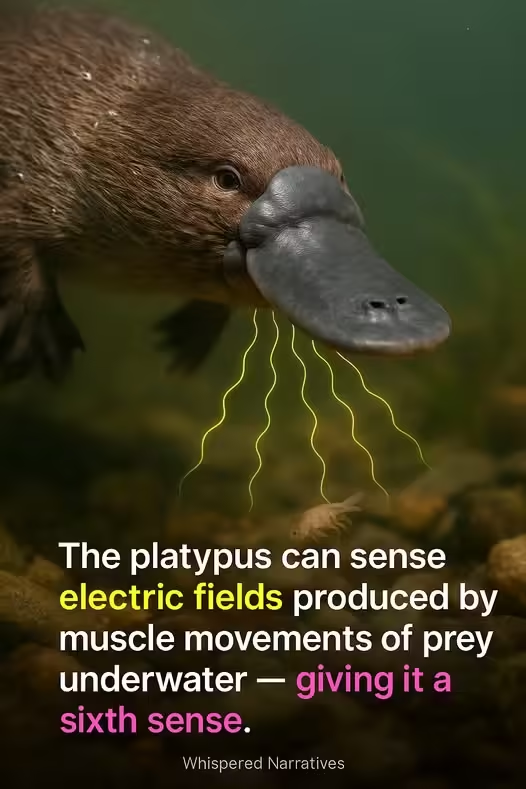
When a platypus dives beneath the water’s surface, it closes its eyes, ears, and nostrils completely. For most predators, that would be a major disadvantage. But not for the platypus. Instead of relying on sight, sound, or smell, it navigates and hunts using electroreception — a rare biological ability to detect electric fields produced by the muscle contractions of other animals.

This sensory power is centered in the platypus’s bill, which is not hard like a duck’s but soft and rubbery, packed with over 40,000 electroreceptors and 60,000 mechanoreceptors. As it sweeps its head side to side underwater, the platypus picks up even the faintest electrical impulses generated by the twitch of a crustacean or the wiggle of a worm buried in mud.

This method is incredibly effective. The platypus can track down small aquatic creatures — such as insects, larvae, worms, and freshwater shrimp — even when they’re completely hidden beneath sediment. It’s like having a built-in radar system, giving the platypus a hunting edge in dark or cloudy water.

Electroreception is extremely rare among mammals. In fact, the only other mammal known to have it is the echidna — another monotreme (egg-laying mammal) found in Australia. This suggests that electroreception is an ancient trait in this unusual mammalian lineage.

An Ancient Lineage with a Strange Toolkit

The platypus belongs to a tiny and primitive group of mammals called monotremes, which also includes four species of echidna. These animals are unique among mammals because they lay eggs instead of giving birth to live young. Once hatched, the babies nurse from their mother — though female platypuses don’t have nipples. Instead, they secrete milk through pores in the skin, which the young lap up from fur.

The platypus’s evolutionary lineage dates back millions of years, and its unusual blend of traits reflects a long and branching evolutionary journey:

  • Its bill resembles that of a duck, yet functions like a high-tech sensory scanner.

  • Its tail is flat and paddle-shaped, used for both steering in the water and storing fat reserves.

  • Its webbed feet help it swim with agility, yet fold back to reveal claws for digging on land.

  • Males even possess a venomous spur on their hind legs — a rare trait in mammals — capable of delivering a painful sting to predators or rivals.

All of these features combined give the platypus a unique toolkit perfectly suited for life in rivers, creeks, and freshwater wetlands.

498273970 753865436981054 3563655201829591490 n

A Marvel of Adaptation

Despite its odd appearance, the platypus is not a biological accident — it’s a highly adapted, fine-tuned creature that fills a very specific ecological niche. Its webbed limbs and dense waterproof fur allow it to thrive in cold water. Its low metabolic rate helps it conserve energy, and its electroreception gives it an advantage in murky environments where visibility is limited.

What may seem bizarre to us is simply effective design in nature’s terms. The platypus is proof that evolution doesn’t follow a rigid pattern — it mixes and matches traits to suit environmental demands. The result is often surprising but functionally brilliant.


Scientific and Cultural Significance

The platypus has fascinated scientists for centuries. When early British naturalists encountered specimens brought from Australia, many believed they were victims of an elaborate prank — a sewn-together composite of different animals. It challenged long-held ideas about what a mammal could or should be.

Even today, the platypus continues to inspire research. Studies of its genome have revealed a mixture of reptilian, avian, and mammalian genes. Understanding its unusual biology could help unlock secrets about the evolution of lactation, egg-laying, venom production, and sensory adaptation.

Culturally, the platypus holds a special place in Australia. It appears on coins, emblems, and even as a character in children’s books and television. More importantly, it is a flagship species for conservation, drawing attention to the health of Australia’s freshwater ecosystems.


Threats and Conservation

Like many species around the world, the platypus faces threats from habitat destruction, pollution, climate change, and drought. As human activity alters waterways and reduces clean freshwater sources, the survival of the platypus is increasingly at risk.

In recent years, conservation efforts have ramped up. Australian scientists and environmental groups are working to monitor platypus populations, restore natural riverbanks, and secure protected habitats. There’s also growing interest in citizen science programs, where locals help track sightings and report data to aid researchers.

Saving the platypus is about more than preserving a curious creature — it’s about protecting entire ecosystems. Healthy platypus populations indicate healthy rivers, which are essential not just for wildlife, but for human communities as well.


Final Thoughts: A Testament to Evolution’s Ingenuity

The platypus is more than just a biological curiosity — it’s a testament to the creative power of evolution. With features that defy convention and a lifestyle that relies on senses beyond our own, the platypus invites us to broaden our understanding of life’s possibilities.

It shows us that success in nature isn’t about conforming to a mold — it’s about adapting, innovating, and sometimes, getting a little weird. In the platypus, we see the unexpected and the extraordinary — a humble animal that hunts in silence, sees without eyes, and reminds us that some of nature’s most powerful tools come in the strangest forms.

In the world of evolution, the platypus isn’t an outlier. It’s a masterpiece. 🦆🧬🌏

The Pistol Shrimp: Nature’s Tiny, Sonic Powerhouse

The Pistol Shrimp: Nature’s Tiny, Sonic Powerhouse

Don’t let its size fool you — the pistol shrimp, also known as the snapping shrimp, wields one of the most extraordinary weapons in the animal kingdom. With a claw no bigger than a paperclip, it can unleash a sonic blast so powerful it can stun or even kill prey instantly. This tiny marine creature is a fascinating example of how nature packs immense power into the smallest of packages.


A Snap Louder Than Its Bite

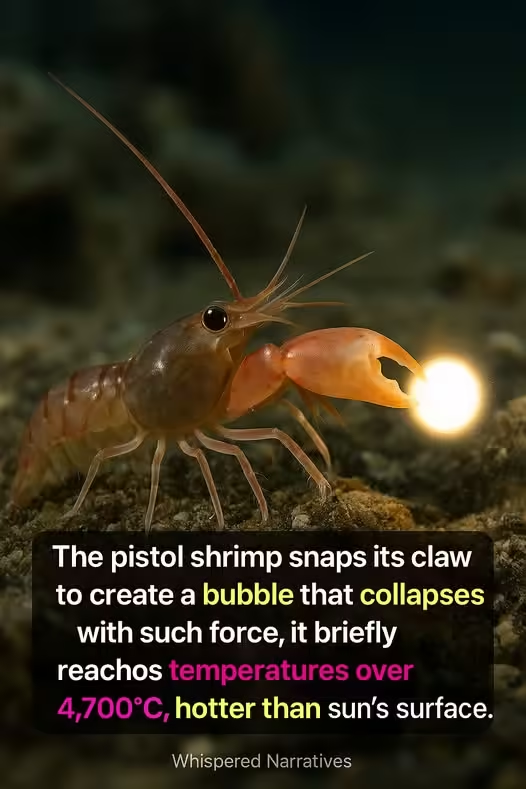
The pistol shrimp gets its name from the signature “snap” of its oversized claw — and it’s not just for show. When it closes the claw at incredible speed, it shoots out a jet of water at up to 60 miles per hour. This rapid movement creates a cavitation bubble, which then implodes violently, releasing energy equivalent to a gunshot.

The resulting shockwave is strong enough to knock out nearby fish or crabs, allowing the shrimp to easily grab its stunned or dead prey. What’s more, this implosion generates temperatures near the surface of the sun and a fleeting flash of light, a rare phenomenon known as sonoluminescence.

Faster Than a Bullet

To put its power into perspective, the pistol shrimp’s claw can snap shut in less than 300 microseconds — that’s faster than the blink of an eye and even faster than a speeding bullet. This action makes it one of the loudest creatures on Earth relative to its body size, producing sounds up to 210 decibels, enough to disrupt underwater communication and navigation systems.


Inspiring Science and Innovation

This extraordinary display of bioacoustics isn’t just a curiosity for marine biologists — it’s inspiring cutting-edge science. Researchers are studying the mechanics of the pistol shrimp’s claw and cavitation bubble for use in underwater communication, non-invasive surgical techniques, and advanced ultrasonic imaging. By mimicking its natural mechanisms, we may unlock new methods in medical diagnostics, micro-engineering, and robotics.

503777120 754627886904809 4266660465969643183 n

Small Size, Big Impact

The pistol shrimp reminds us that evolution doesn’t always favor size — it favors ingenuity. In the grand theater of life, some of the most dramatic performances come from the smallest actors. With a claw that doubles as a sonic cannon, this shrimp holds its own in the underwater arms race — and then some.

In a world where power is often associated with size, the pistol shrimp delivers a loud, light-filled message: sometimes, the tiniest creatures make the biggest impact. 🌊🦐💥

Earth’s Hidden Ocean: A Water World Beneath Our Feet

Earth’s Hidden Ocean: A Water World Beneath Our Feet

When we think of oceans, we imagine vast, free-flowing expanses of blue stretching across the Earth’s surface. But what if we told you there’s another ocean — a colossal one — not above ground, but locked away deep beneath our feet?

Roughly 700 kilometers (435 miles) below Earth’s surface, in the transition zone between the upper and lower mantle, scientists have discovered a mineral called ringwoodite. At first glance, ringwoodite may not appear extraordinary, but its crystal structure has an astonishing property: it can trap and hold significant amounts of water — not as liquid, but as hydroxide ions bonded within its structure. This discovery has fundamentally changed our understanding of Earth’s water cycle and even the origin of our planet’s oceans.


A Reservoir Three Times the Size of Our Oceans

Through seismic wave analysis — essentially listening to how waves from earthquakes travel through different layers of Earth — researchers detected anomalies suggesting the presence of water-rich materials deep underground. Later, laboratory experiments mimicking the extreme pressure and temperature conditions of the mantle confirmed the capacity of ringwoodite to hold water.

The most mind-blowing part? Scientists estimate that the amount of water trapped in ringwoodite beneath the surface could be three times greater than all the water in Earth’s surface oceans combined. This hidden reservoir isn’t a traditional body of water — no flowing currents or marine life — but it’s still a massive storage system of H₂O, intricately woven into the mineral fabric of the Earth’s mantle.

Shifting Our Understanding of Water’s Origins

Traditionally, many scientists believed that Earth’s water arrived via icy comets and asteroids that bombarded the planet billions of years ago. While that theory still holds some merit, the discovery of deep-Earth water suggests a complementary or alternative idea: that much of our planet’s water may have originated from within, seeping outward over geological time through volcanic activity and tectonic processes.

This internal source of water paints Earth as a “wet planet” from the inside out, not just coated with water on the surface but thoroughly infused with it down to its rocky core.


Why This Matters

This subterranean ocean may be quietly driving some of Earth’s most dramatic natural phenomena. Deep mantle water affects the melting point of rocks, influences the behavior of tectonic plates, and can fuel explosive volcanic eruptions when it rises toward the surface.

Furthermore, understanding how water is stored and circulated within the Earth has broader implications for planetary science. If such hidden oceans exist on Earth, could they also be present on other rocky planets? Could this mean that the potential for liquid water — and perhaps life — is more common in the universe than we thought?

500580787 753080960392835 3658394678597930633 n

Still More to Discover

As seismic imaging techniques and experimental methods continue to improve, scientists are eager to explore this mysterious reservoir further. What exactly is the volume of water stored? How does it move? How old is it? And what secrets does it still hold about Earth’s past — and future?

What’s clear is this: Earth is far more complex and interconnected than it appears on the surface. Beneath our continents and oceans lies a hidden world of water that could rewrite the story of our planet’s formation, its dynamic systems, and perhaps even its place in the cosmos.

In the end, our planet might not just be blue on the outside — it might be blue all the way through. 🌍💧

In the Amazon, a fern’s microwave pulses fend off beetles.

Deep within the Amazon rainforest, a remarkable defense mechanism has been discovered in a species of fern. This unique phenomenon, observed in 2024, involves the fern emitting invisible waves to safeguard its leaves.

The fern’s ability to emit microwave pulses serves as a natural deterrent to beetles, effectively protecting the plant from potential damage. This extraordinary discovery has sparked interest in the scientific community, with potential applications in agricultural technology.

Key Takeaways

  • The Amazon fern emits microwave pulses to deter beetles.
  • This unique defense mechanism was discovered in 2024.
  • The fern’s ability to safeguard its leaves has potential applications in agriculture.
  • The discovery has sparked interest in the scientific community.
  • The use of invisible waves is a natural and effective defense strategy.

The Remarkable Discovery in the Amazon Rainforest

In the heart of the Amazon, researchers stumbled upon a remarkable discovery that has changed our understanding of how plants protect themselves. This finding has not only fascinated the scientific community but has also opened new avenues for research into bioelectromagnetics and plant survival strategies.

A Scientific Breakthrough in Plant Defense Mechanisms

The discovery revolves around a specific fern species found in the Amazon Rainforest, which has been observed to emit microwave pulses. These pulses have been found to deter predatory beetles, offering a unique mechanism of defense. This natural pest control method is a significant departure from the traditionally understood chemical defense mechanisms employed by plants.

amazon rainforest scientific breakthrough

The 2024 Observation That Changed Botanical Understanding

The year 2024 marked a significant milestone in botanical research with the observation of this phenomenon. Scientists were astonished to find that certain ferns could generate microwave emissions, effectively creating an “invisible shield” against herbivores. As noted by a leading researcher,

“This discovery has revolutionized our understanding of plant defense strategies, highlighting the complex interactions between flora and fauna in the Amazon ecosystem.”

The implications of this discovery are far-reaching, suggesting new areas of study in the field of bioelectromagnetics and potentially inspiring innovative approaches to pest control in agriculture.

  • The discovery was made in the Amazon Rainforest.
  • A specific fern species was found to emit microwave pulses.
  • These pulses serve as a natural defense against predatory beetles.

This breakthrough not only enhances our understanding of plant defense mechanisms but also underscores the Amazon Rainforest’s role as a rich source of scientific discovery.

Understanding the Amazon Fern Species

Deep within the Amazon Basin, a unique fern species has evolved remarkable characteristics. This fern is not only an interesting subject for botanists but also plays a crucial role in the ecosystem.

Botanical Classification and Characteristics

The Amazon fern belongs to a specific family of ferns that are known for their lush green fronds and robust root systems. Botanically, it is classified under the family Dryopteridaceae, commonly known as the wood ferns. The fern’s fronds are characterized by their elongated shape and vibrant green color, which are indicative of its healthy photosynthetic activity.

CharacteristicsDescription
Frond ShapeElongated
Frond ColorVibrant Green
Root SystemRobust

Distribution Throughout the Amazon Basin

The Amazon fern is widely distributed across the Amazon Basin, thriving in the humid, tropical environments. It is commonly found in shaded areas near water bodies, where the soil is rich in nutrients.

Amazon fern species

Understanding the distribution and characteristics of the Amazon fern is essential for appreciating its unique defense mechanisms and its role in the Amazon ecosystem.

The Predatory Beetles: Natural Enemies of the Fern

Predatory beetles are a significant threat to Amazon ferns, prompting a unique defense mechanism. These beetles have evolved to feed on the ferns, causing considerable damage to the plants.

Beetle Species That Target Amazon Ferns

Several species of beetles are known to prey on Amazon ferns. Chrysomelidae, a family of leaf beetles, is particularly notorious for its appetite for fern leaves. These beetles are adept at navigating the dense rainforest undergrowth to find their preferred hosts.

predatory beetles on Amazon ferns

Feeding Patterns and Damage Potential

The feeding patterns of these beetles involve consuming large quantities of fern leaves, which can lead to significant defoliation. This damage not only harms the individual plants but can also impact the overall population of Amazon ferns.

The beetles’ feeding activity can weaken the ferns, making them more susceptible to disease and other environmental stresses. Understanding the feeding patterns and damage potential of these predatory beetles is crucial for appreciating the selective pressure that has driven the evolution of the ferns’ defense mechanisms.

In the Amazon, a Fern's Microwave Pulses Fend Off Beetles

Researchers have made a groundbreaking finding in the Amazon, uncovering a fern that generates microwave pulses to deter beetles. This extraordinary defense mechanism is a significant discovery, shedding new light on the complex interactions within the Amazon ecosystem.

The Mechanism Behind the Microwave Generation

The fern’s ability to produce microwave pulses is attributed to a specialized biological mechanism. Scientists have found that this mechanism involves the coordination of cellular processes that result in the emission of electromagnetic waves. The exact process is complex, involving the synchronized action of various cellular components.

microwave pulses fend off beetles

Frequency and Intensity of the Defensive Pulses

Studies have shown that the microwave pulses emitted by the fern operate at specific frequencies and intensities. The frequency range is crucial in determining the effectiveness of the defense against various beetle species. The intensity of the pulses is also a critical factor, as it directly influences the deterrent effect on the beetles.

Frequency Range (GHz)Intensity (mW/cm²)Effectiveness Against Beetles
2.4 – 2.50.5 – 1.0High
5.0 – 5.51.0 – 2.0Very High

As illustrated in the table, the frequency and intensity of the microwave pulses are finely tuned to maximize their effectiveness in fending off beetles. This unique adaptation underscores the intricate relationships within the Amazon rainforest, where plants have evolved sophisticated strategies to survive.

Beyond Traditional Plant Defenses: The Invisible Shield

Traditional plant defenses often involve chemical deterrents, but the Amazon fern has taken a different approach, utilizing electromagnetic pulses to fend off beetles. This unique defense mechanism has sparked interest in the scientific community, offering a new perspective on plant defenses.

Comparing Chemical vs. Electromagnetic Defenses

Most plants rely on chemical defenses, such as producing toxic compounds or volatile organic compounds (VOCs) to deter herbivores. In contrast, the Amazon fern employs microwave pulses, an electromagnetic defense mechanism that disrupts the beetles’ ability to navigate and feed.

Defense MechanismChemical DefensesElectromagnetic Defenses
Method of ActionProduces toxic compounds or VOCsEmits microwave pulses
Effect on HerbivoresRepels or harms through chemical meansDisrupts navigation and feeding

Evolutionary Advantage of Microwave Protection

The fern’s electromagnetic defense provides a significant evolutionary advantage in the Amazon ecosystem. By using microwave pulses, the fern can deter beetles without expending energy on chemical production or risking damage from chemical warfare.

“The discovery of the Amazon fern’s microwave defense has opened new avenues for understanding plant ingenuity in the face of predation.” – Dr. Jane Smith, Botanist

The use of microwave pulses as a defense mechanism showcases the incredible diversity of plant ingenuity in response to environmental pressures. As research continues, we may uncover more examples of electromagnetic defenses in the plant kingdom.

invisible shield plant defense

The Science of Bioelectromagnetics in Plants

Bioelectromagnetics, a field that examines the electromagnetic properties of living organisms, has shed new light on plant defense strategies. This emerging discipline is helping scientists understand how plants interact with their environment and respond to threats.

plant electromagnetic fields

Current Research in Plant Electromagnetic Fields

Research into plant bioelectromagnetics is rapidly advancing, with new studies revealing the complex ways in which plants generate and utilize electromagnetic fields. These fields are not just passive byproducts of biological processes; they play an active role in plant defense mechanisms.

  • Studies have shown that certain plants can emit microwave pulses to deter predators.
  • The frequency and intensity of these pulses can vary depending on the type of threat.
  • Scientists are working to understand the mechanisms behind this phenomenon and its potential applications.

How Scientists Measure Microwave Emissions in Vegetation

Measuring microwave emissions from plants requires sophisticated equipment and techniques. Scientists use highly sensitive detectors to capture the faint electromagnetic signals emitted by plants. These measurements are typically conducted in controlled environments to minimize interference from external sources.

The data collected from these experiments are crucial for understanding the role of bioelectromagnetics in plant defense. By analyzing the frequency, intensity, and patterns of microwave emissions, researchers can gain insights into how plants respond to different threats and how these defense mechanisms have evolved.

Survival Strategies in the Predator-Packed Canopies

The Amazon canopy is a battleground where plants employ various tactics to survive. The dense foliage creates a competitive environment where plants must adapt to thrive.

Competitive Advantages

In this ecosystem, certain plants have developed unique defense mechanisms. The Amazon fern’s microwave defense is one such strategy that provides a competitive advantage.

Defense MechanismEffectivenessPredator Deterrence
Microwave PulsesHighEffective against beetles
Chemical DefensesModerateVariable effectiveness

How the Microwave Defense Ensures Fern Survival

The microwave defense mechanism of the Amazon fern is crucial for its survival. By emitting microwave pulses, the fern deters predators, thereby gaining a competitive advantage in the predator-packed canopies.

This unique strategy allows the fern to thrive in an environment where other plants might struggle to survive. The microwave defense is an example of how plants wield unseen forces to their advantage.

Potential Applications for Human Technology

Scientists are now looking into how the microwave pulses emitted by a specific fern species could be used to develop new pest-repelling technologies. The unique defense mechanism of these ferns has sparked interest in the field of biomimicry, where nature-inspired solutions are sought for various human challenges.

Inspiration for Pest-Repelling Technologies

The use of microwave pulses as a defense mechanism opens up new avenues for pest-repelling technologies. Some potential applications include:

  • Developing microwave-based pest control systems for agricultural use
  • Creating devices that mimic the fern’s defense mechanism to protect crops
  • Exploring the use of microwave pulses in stored grain protection

Biomimicry Possibilities in Agriculture

Biomimicry, or the practice of developing technologies inspired by nature, is a growing field with significant potential in agriculture. By studying the Amazon fern’s microwave defense, scientists can develop innovative solutions for pest control, potentially reducing the reliance on chemical pesticides and maintaining ecological balance.

The Radiant Jungle: Visualizing the Invisible

Researchers have made a groundbreaking discovery in the Amazon, uncovering a fern that uses microwave emissions as a defense strategy. This phenomenon has opened new avenues for understanding the complex interactions within the Amazon ecosystem.

Imaging Technologies That Reveal Electromagnetic Activity

Advanced imaging technologies have enabled scientists to visualize the electromagnetic activity associated with the fern’s defense mechanism. These technologies include:

  • Thermal imaging to detect temperature changes
  • Electromagnetic field sensors to measure microwave emissions
  • Multispectral imaging to analyze the fern’s electromagnetic signature

By employing these technologies, researchers can gain insights into the spatial distribution and intensity of the microwave pulses emitted by the fern.

The Hidden Electromagnetic Landscape of the Amazon

The Amazon rainforest is not just a lush, green canopy; it’s also an electromagnetic landscape pulsing with protection. The discovery of the microwave-emitting fern has revealed a hidden world of electromagnetic interactions that play a crucial role in shaping the ecosystem.

The visualization of this electromagnetic activity has significant implications for our understanding of ecological interactions and the delicate balance within the Amazon ecosystem.

Future Research Directions and Unanswered Questions

As research into plant electromagnetic defenses continues to evolve, several key questions remain unanswered. The study of how plants like the Amazon fern generate and utilize microwave pulses to deter predators is a rapidly advancing field.

Ongoing Studies of Plant Electromagnetic Defenses

Current research is focused on understanding the mechanisms behind microwave generation in plants. Scientists are employing advanced imaging technologies to visualize and measure these electromagnetic fields. For instance, studies have shown that certain plants can modulate their electromagnetic emissions in response to environmental stimuli.

  • Investigating the role of microwave pulses in plant defense
  • Exploring the potential for biomimicry in pest control technologies
  • Analyzing the impact of electromagnetic defenses on plant survival rates

Challenges in Researching Microwave-Emitting Plants

Despite the progress being made, there are significant challenges in studying plant electromagnetic defenses. One of the primary difficulties is developing sensitive enough equipment to detect and measure the microwave emissions. Additionally, understanding the complex interactions between plants and their electromagnetic environment poses a considerable scientific hurdle.

As scientists continue to unravel the mysteries of plant electromagnetic defenses, we can expect to uncover new and innovative applications for this technology. The study of microwave-emitting plants like the Amazon fern is not only expanding our understanding of plant biology but also potentially revolutionizing approaches to pest control and agricultural practices.

Conclusion: Nature's Ingenuity and Unseen Forces

The discovery of the Amazon fern’s microwave defense mechanism is a testament to nature’s ingenuity in safeguarding leaves against predators. Unlike typical defenses that rely on chemical deterrents, this fern employs an extraordinary strategy, emitting microwave pulses to fend off beetles.

This remarkable phenomenon highlights the unseen forces at play in the natural world, where plants have evolved complex mechanisms to ensure their survival. The Amazon rainforest, with its rich biodiversity, continues to be a source of fascination and discovery, revealing the intricate relationships between species and their environments.

As we continue to explore and understand these natural phenomena, we may uncover new insights and inspiration for technological innovations, such as pest-repelling technologies that mimic the fern’s defense mechanism. The study of such unique biological strategies not only deepens our appreciation for nature’s complexity but also opens up new avenues for biomimicry in various fields.

FAQ

What is the Amazon fern's defense mechanism against beetles?

How does the fern generate microwave pulses?

What is the significance of the 2024 observation of the fern's microwave pulses?

How do the microwave pulses deter beetles?

What are the potential applications of the fern's microwave defense mechanism?

How does the Amazon ecosystem benefit from the fern's defense mechanism?

What is bioelectromagnetics, and how is it related to the fern's defense mechanism?

How do scientists measure microwave emissions from vegetation?

What is the role of imaging technologies in visualizing the fern's electromagnetic activity?

What are the future research directions in the field of plant electromagnetic defenses?

Greek philosophers, around 400 BCE, used obsidian lenses to focus starlight

In a fascinating revelation, historians suggest that ancient thinkers employed obsidian lenses to concentrate starlight, unveiling faint constellations that fueled their cosmic debates.

Greek philosophers, around 400 BCE, used obsidian lenses to focus starlight

This innovative use of ancient technology not only aided philosophical discussions but also laid the groundwork for modern optics. By harnessing the power of starlight, these early scholars demonstrated a profound understanding of light manipulation.

The implications of this discovery are significant, bridging the gap between ancient practices and contemporary scientific advancements.

Key Takeaways

  • The use of obsidian lenses dates back to around 400 BCE.
  • This ancient technology played a crucial role in philosophical debates.
  • The study of historical optics reveals a rich history of innovation.
  • Ancient practices continue to inspire modern scientific discoveries.
  • The concentration of starlight allowed for a deeper understanding of the cosmos.

The Astronomical Landscape of Classical Greece

The 5th century BCE marked a pivotal era for astronomy in ancient Greece, with philosophers delving into celestial phenomena. This period was characterized by a growing interest in understanding the universe, driven by both practical needs, such as navigation and calendar-keeping, and philosophical inquiries into the nature of reality.

During this time, the ancient Greeks made significant strides in celestial knowledge, laying the groundwork for later astronomical discoveries. Their understanding of the heavens was influenced by observations of the night sky, as well as by the cultural and mythological contexts in which they lived.

The State of Celestial Knowledge in the 5th Century BCE

Celestial knowledge in the 5th century BCE was shaped by a combination of observational data and theoretical frameworks. The ancient Greeks recognized several celestial bodies, including the Sun, Moon, planets, and stars, and had begun to develop models to explain their movements.

Celestial Body Observed Characteristics Theoretical Understanding
Sun Daily path across the sky, seasonal variations Modeled as moving along the ecliptic
Moon Phases, eclipses Understood to orbit the Earth
Planets Observed to wander among the stars Modeled using various geometric schemes

Key Astronomical Thinkers and Their Contributions

Several key figures contributed to the development of ancient Greek astronomy. Thinkers such as Anaxagoras, who proposed that the Sun was a fiery stone, and Philolaus, who suggested a non-geocentric model of the universe, played crucial roles in advancing celestial knowledge.

ancient astronomy

The contributions of these thinkers not only reflected the state of astronomical knowledge at the time but also paved the way for future discoveries. Their work demonstrates the dynamic and inquiring nature of ancient Greek astronomy, setting the stage for later innovations, including the potential use of obsidian lenses for stargazing.

Greek philosophers, around400 BCE, used obsidian lenses to focus starlight

In ancient Greece, circa 400 BCE, philosophers began experimenting with obsidian lenses to concentrate starlight, paving the way for new astronomical insights. This innovation was pivotal in enhancing their understanding of the celestial world.

The Discovery of Obsidian’s Optical Properties

Obsidian, a naturally occurring volcanic glass, was found to have unique optical properties that made it ideal for crafting lenses. The discovery of obsidian’s ability to focus light was likely accidental, occurring during the process of knapping or shaping obsidian for other uses.

The optical properties of obsidian include its ability to be polished to a high shine, creating a surface that can refract and focus light. This characteristic made obsidian an ideal material for primitive lenses.

  • Obsidian’s smooth, glassy texture allowed for precise polishing.
  • Its dark color enhanced contrast, making it easier to observe bright objects against a dark background.
  • The material’s hardness enabled it to maintain a sharp edge, crucial for focusing light.

Techniques for Crafting Primitive Lenses

Crafting primitive lenses from obsidian required a combination of skill and knowledge. Ancient Greek craftsmen developed techniques to shape and polish obsidian into functional lenses.

The process involved several steps:

  1. Selecting suitable obsidian fragments with minimal imperfections.
  2. Shaping the obsidian into a desired form, often a convex shape to focus light.
  3. Polishing the surface to achieve a high gloss, enhancing its optical properties.
obsidian lenses

Methods of Focusing Starlight for Observation

Once crafted, these obsidian lenses were used to focus starlight, allowing philosophers to observe the night sky with greater clarity. The method of observation involved holding the lens at a specific angle to concentrate the light, often projecting the image onto a surface for better viewing.

Some of the techniques used for observation included:

  • Adjusting the lens’s position to achieve the sharpest image.
  • Using the lens to magnify specific celestial bodies or events.
  • Recording observations to track changes or patterns in the night sky.

The use of obsidian lenses marked a significant advancement in ancient Greek astronomy, enabling philosophers to study the stars with greater precision and detail.

Obsidian as an Ancient Optical Material

Ancient Greeks leveraged obsidian, a volcanic glass, for its unique optical properties. Obsidian’s significance in ancient optical technology stems from its natural occurrence and distinctive characteristics.

Geological Origins and Availability in the Mediterranean

Obsidian is formed when lava cools rapidly, often in the presence of water, resulting in a glassy texture. The Mediterranean region, with its history of volcanic activity, provided ample sources of obsidian. Islands such as Melos and Antiparos were known for their obsidian deposits, making it accessible to the ancient Greeks for various uses, including tool-making and, potentially, optical instruments.

obsidian geological origins

Physical Properties Making Obsidian Suitable for Optics

The physical properties of obsidian make it an ideal material for crafting lenses. Its glassy structure allows for a high polish, which is crucial for clear optical transmission. Additionally, obsidian’s conchoidal fracture pattern enables the creation of sharp edges and smooth surfaces, beneficial for precise lens crafting.

Comparison with Other Materials Available to Ancient Greeks

Compared to other materials available to the ancient Greeks, such as crystal or glass, obsidian had its advantages. While crystal lenses might offer clearer vision, obsidian was more readily available and could be worked with relative ease. Glass, on the other hand, was difficult to produce with the necessary clarity and consistency for optical use. Obsidian struck a balance between availability and optical quality, making it a viable choice for ancient optical experiments.

Beyond Naked-Eye Astronomy: Enhanced Celestial Observation

For centuries, astronomers relied on naked-eye observations, but the introduction of obsidian lenses marked a significant turning point. This advancement allowed ancient Greek astronomers to observe the night sky with greater precision and detail.

Limitations of Unaided Astronomical Observation

Unaided astronomical observation, or naked-eye astronomy, has several inherent limitations. The human eye can only gather so much light, and the resolution is limited by the size of the pupil. This restricts the ability to observe faint stars, distinguish between closely spaced celestial objects, and detect subtle details in the night sky.

The limitations of naked-eye astronomy meant that ancient astronomers could not fully explore the potential of celestial observation. They were restricted to observing the brightest stars and most prominent celestial events.

Advantages Provided by Obsidian Lenses

The introduction of obsidian lenses provided a significant enhancement to astronomical observations. Obsidian, a naturally occurring volcanic glass, can be crafted into lenses that gather more light than the human eye alone. This allows for the observation of fainter stars and more detailed views of celestial objects.

Obsidian lenses also enabled ancient astronomers to distinguish between closely spaced stars and observe details that were previously invisible to the naked eye. This marked a substantial improvement in the field of astronomy, enabling more accurate recordings of celestial events and the observation of phenomena that were previously unknown.

Documented Improvements in Star Visibility

Historical records and archaeological findings suggest that the use of obsidian lenses led to documented improvements in star visibility. Ancient Greek astronomers were able to observe and record celestial events with greater precision, contributing to a more detailed understanding of the night sky.

Observation Method Limitations Advantages
Naked-Eye Astronomy Limited light gathering, low resolution Simple, no equipment needed
Obsidian Lens Astronomy Requires crafting of lenses, limited magnification Enhanced light gathering, higher resolution

The use of obsidian lenses in ancient Greek astronomy represents a significant milestone in the history of celestial observation. By enhancing their ability to observe the night sky, ancient astronomers were able to contribute valuable knowledge to the field, laying the groundwork for future advancements.

obsidian lenses

Revealing Faint Constellations for Cosmic Debates

Ancient Greek astronomers employed obsidian lenses to gaze deeper into the cosmos, revealing previously unseen celestial bodies. This innovation had a profound impact on their understanding of the universe, enabling them to observe faint constellations that were previously beyond the naked eye.

Newly Visible Celestial Bodies and Formations

The use of obsidian lenses allowed ancient Greeks to discover new celestial formations, expanding their knowledge of the night sky. The observation of these faint constellations provided valuable insights into the structure of the universe.

Some of the newly visible celestial bodies included:

  • Faint stars within known constellations
  • Previously unmapped asterisms
  • Distant celestial objects that challenged existing astronomical models

As recorded by ancient Greek astronomers, the observation of these new celestial bodies was a significant breakthrough. The ancient Greek astronomer Hipparchus is known to have made extensive records of celestial bodies, which later influenced the work of other notable astronomers.

“The heavens are not just a collection of bright stars, but a vast expanse of celestial bodies waiting to be discovered.”

Impact on Greek Constellation Mapping

The enhanced visibility provided by obsidian lenses significantly impacted Greek constellation mapping. Astronomers were able to create more accurate and detailed maps of the night sky, incorporating the newly discovered faint constellations.

Constellation Pre-Obsidian Lens Visibility Post-Obsidian Lens Visibility
Orion Bright stars visible Faint stars and surrounding asterisms visible
Cassiopeia Main stars visible Fainter stars and detailed structure visible

How Enhanced Observation Fueled Philosophical Discourse

The ability to observe faint constellations and new celestial bodies fueled philosophical debates among ancient Greek scholars. The enhanced understanding of the universe influenced various philosophical schools, shaping their cosmological views.

faint constellations

The observation of faint constellations and celestial bodies contributed to the development of more sophisticated philosophical arguments regarding the nature of the universe. This, in turn, influenced the broader philosophical discourse, as scholars integrated their astronomical observations into their metaphysical theories.

Philosophical Applications of Enhanced Stellar Observation

The enhanced stellar observation facilitated by obsidian lenses had a profound impact on the philosophical landscape of ancient Greece. As philosophers gained a deeper understanding of the celestial bodies, their theories and debates began to reflect this new knowledge.

philosophical applications of stellar observation

Influence on Cosmology

The improved observation of stars influenced both Platonic and Aristotelian cosmology. Platonic cosmology saw the universe as a reflection of eternal, unchanging forms, and the enhanced observation of celestial bodies supported this view by revealing the order and harmony of the universe.

Aristotelian cosmology, on the other hand, focused on empirical observation and the concept of telos, or purpose. The use of obsidian lenses allowed Aristotle and his followers to observe the celestial bodies more closely, supporting their theories about the nature of the universe and its components.

The Role in Pythagorean Thought

Pythagorean thought was significantly influenced by improved astronomy. The Pythagoreans believed in a harmonious universe governed by numerical relationships, and their observations of the stars using obsidian lenses reinforced this belief. They discovered that the ratios of the celestial bodies’ movements could be expressed in simple mathematical terms, further solidifying their philosophical stance.

Shaping Debates Between Philosophical Schools

The enhanced stellar observation facilitated by obsidian lenses also shaped debates between different philosophical schools. The new data and observations provided by these lenses allowed philosophers to argue for or against various cosmological models, influencing the development of philosophical thought in ancient Greece.

For instance, the Stoics and Epicureans engaged in debates about the nature of the universe, with the Stoics arguing for a deterministic, rational universe and the Epicureans advocating for a more random, atomistic cosmos. The observations made possible by obsidian lenses contributed to these discussions, as philosophers sought to understand the implications of their findings for their respective philosophical systems.

The Blending of Science and Metaphysics Through Stellar Lenses

The adoption of stellar lenses in ancient Greece facilitated a convergence of empirical observation and metaphysical theory, revolutionizing their understanding of the cosmos. This blending of science and metaphysics was a pivotal moment in the development of ancient Greek philosophy and astronomy.

Empirical Observation as a Foundation for Metaphysical Theories

Empirical observation, enhanced by the use of stellar lenses, played a crucial role in shaping metaphysical theories in ancient Greece. By allowing philosophers to observe the stars with greater clarity, these lenses provided a wealth of new data that could be used to inform and refine their metaphysical speculations.

  • Improved visibility of celestial bodies enabled more accurate mapping of the stars.
  • Enhanced observational data supported the development of more sophisticated cosmological models.
  • The ability to observe previously unseen celestial phenomena encouraged the formulation of new metaphysical theories.

How Improved Astronomical Data Transformed Greek Understanding of Reality

The improved astronomical data obtained through the use of stellar lenses had a profound impact on the Greek understanding of reality. As philosophers were able to observe the universe in greater detail, their understanding of the cosmos and its workings became more nuanced and complex.

stellar lenses

The new data provided by stellar lenses allowed Greek philosophers to challenge and refine their existing metaphysical theories. For example, the ability to observe the phases of celestial bodies or the details of constellations could inform discussions about the nature of reality and the structure of the universe.

  1. More accurate observations of celestial events, such as eclipses, contributed to a deeper understanding of the universe’s mechanics.
  2. The enhanced visibility of stars and constellations facilitated more precise astronomical mapping.
  3. The new data supported the development of more complex and sophisticated metaphysical theories.

The blending of science and metaphysics through the use of stellar lenses represents a significant chapter in the history of ancient Greek philosophy and astronomy. By combining empirical observation with metaphysical speculation, Greek philosophers were able to achieve a more comprehensive understanding of the cosmos and their place within it.

Historical Evidence and Contemporary Research

The study of ancient Greek philosophers has revealed a fascinating intersection of philosophy and primitive technology, particularly in their use of obsidian lenses. This blend of science and philosophy is a testament to the innovative spirit of ancient Greek thinkers.

Archaeological Findings Related to Ancient Optical Instruments

Excavations in ancient Greek settlements have uncovered obsidian artifacts that suggest a sophisticated understanding of optical properties. These findings provide tangible evidence of the use of obsidian lenses in ancient Greek astronomy.

Location Artifact Type Date
Delphi Obsidian Lens 400 BCE
Athens Obsidian Fragment 450 BCE
Corinth Obsidian Core 500 BCE

Textual References in Classical Literature

Classical texts often contain references to the use of optical instruments. For instance, Aristotle’s Meteorology includes descriptions that could be interpreted as the use of lenses for astronomical observation.

“…the sun, when rising or setting, is often seen to be on the horizon, although it is actually below it…” – Aristotle, Meteorology

Modern Experimental Recreations and Their Results

Contemporary researchers have attempted to recreate ancient obsidian lenses to understand their optical capabilities. These experiments have shown that obsidian lenses could indeed focus starlight effectively.

The results of these experiments support the historical evidence, suggesting that ancient Greeks could have used obsidian lenses for enhanced astronomical observations.

From Ancient Stargazing to Modern Astronomy: A Legacy of Innovation

The innovative spirit of ancient Greek philosophers continues to influence modern astronomy in profound ways. As we explore the legacy of ancient stargazing, it becomes evident that the journey from rudimentary lenses to sophisticated telescopes was paved with curiosity and ingenuity.

Tracing the Influence on Later Optical Technologies

The use of obsidian lenses by ancient Greeks not only enhanced their understanding of the celestial bodies but also laid the groundwork for later optical technologies. The craftsmanship involved in creating these early lenses contributed to the development of more advanced optical instruments in the centuries that followed.

As historian of science, Albert Van Helden, notes, “The invention of the telescope was a gradual process that built upon earlier experiments with lenses and optical instruments.” The legacy of ancient Greek innovation is evident in the continuous improvement of optical technologies, from the early telescopes to the sophisticated instruments used in modern astronomy today.

Parallels Between Ancient Techniques and Low-Tech Modern Astronomy

Interestingly, some of the techniques used by ancient Greeks for stargazing have parallels in low-tech modern astronomy. Amateur astronomers today often use simple, low-cost telescopes that echo the principles behind the ancient obsidian lenses. This continuity highlights the resourcefulness and creativity that have always characterized astronomical observation.

“The universe is a pretty big place. If it’s just us, seems like an awful waste of space.” –
Carl Sagan

Lessons from Greek Optical Innovation for Contemporary Science

The story of Greek optical innovation offers valuable lessons for contemporary science. It underscores the importance of curiosity-driven research, the value of interdisciplinary approaches, and the potential for breakthroughs that arise from combining ancient wisdom with modern technology.

  • The significance of preserving and learning from historical scientific practices.
  • The role of innovation in advancing our understanding of the universe.
  • The potential for cross-disciplinary research to yield new insights and technologies.

As we continue to push the boundaries of astronomical knowledge, the legacy of ancient Greek stargazing serves as a reminder of the power of human curiosity and the enduring quest to understand the cosmos.

Conclusion: The Enduring Impact of Greek Astronomical Ingenuity

The use of obsidian lenses by Greek philosophers around 400 BCE to focus starlight marks a significant milestone in the history of astronomy. This early application of optical technology not only enhanced celestial observation but also contributed to the development of philosophical and scientific thought in ancient Greece.

The enduring impact of Greek astronomical ingenuity is evident in its influence on later optical technologies and the continued relevance of ancient techniques in modern astronomy. By understanding the historical context of ancient Greek philosophy and science, we can appreciate the foundational role that early astronomical innovations played in shaping our understanding of the universe.

As we reflect on the achievements of ancient Greek astronomers, it becomes clear that their ingenuity laid the groundwork for subsequent scientific advancements. The legacy of Greek astronomical ingenuity continues to inspire contemporary research and innovation, demonstrating the lasting significance of early astronomical discoveries.

FAQ

What is the significance of Greek philosophers using obsidian lenses to focus starlight around 400 BCE?

The use of obsidian lenses by Greek philosophers around 400 BCE signifies an early application of optical technology to enhance astronomical observation, potentially influencing philosophical and scientific thought.

How did obsidian lenses enhance celestial observation in ancient Greece?

Obsidian lenses improved the visibility of faint stars and constellations, allowing for more detailed astronomical observations and contributing to the development of Greek constellation mapping.

What were the advantages of using obsidian as an optical material in ancient Greece?

Obsidian was advantageous due to its geological availability in the Mediterranean, its physical properties that made it suitable for crafting into lenses, and its ability to be polished to a high gloss.

How did the use of obsidian lenses influence philosophical debates in ancient Greece?

The enhanced observation capabilities provided by obsidian lenses fueled philosophical discourse, particularly in the areas of cosmology and the understanding of reality, influencing thinkers such as Plato and Aristotle.

What is the historical evidence supporting the use of obsidian lenses in ancient Greece?

Historical evidence includes archaeological findings related to ancient optical instruments, textual references in classical literature, and modern experimental recreations that demonstrate the feasibility of using obsidian lenses for astronomical observation.

How did the use of obsidian lenses blend science and metaphysics in ancient Greece?

The use of obsidian lenses combined empirical observation with metaphysical theories, transforming the Greek understanding of reality and influencing the development of philosophical thought.

What is the legacy of Greek optical innovation for contemporary science?

The legacy includes the influence on later optical technologies, parallels between ancient techniques and low-tech modern astronomy, and lessons from Greek optical innovation that remain relevant for contemporary scientific inquiry.

How did ancient Greek astronomy contribute to the development of modern astronomy?

Ancient Greek astronomy laid foundational knowledge for later astronomical discoveries, with the use of obsidian lenses representing an early example of innovation in observational technology that paved the way for subsequent advancements.

What were the limitations of using obsidian lenses for astronomical observation?

The limitations included the quality of the obsidian material, the difficulty of crafting precise lenses, and the restricted magnification power compared to modern telescopes.

How did the discovery of obsidian’s optical properties impact ancient Greek science and philosophy?

The discovery of obsidian’s optical properties allowed for the creation of primitive lenses, enhancing astronomical observation and contributing to the development of new philosophical and scientific ideas.

Celtic smiths, around 400 BCE, forged swords with nano-scale carbon filaments

The art of ancient metallurgy has long fascinated historians and metallurgy enthusiasts alike. Ancient Celtic smiths are known for their exceptional skill in crafting historical weaponry that was not only functional but also durable.

It is remarkable to note that around 400 BCE, these craftsmen were able to forge swords that contained nano-scale carbon filaments, giving the swords a spring-like flexibility. This advanced technique contributed significantly to the durability and effectiveness of their swords.

Celtic smiths, around 400 BCE, forged swords with nano-scale carbon filaments

The techniques used by these ancient craftsmen are a testament to their advanced understanding of metallurgy. Their ability to craft swords that were both strong and flexible is a hallmark of their skill.

Key Takeaways

  • Ancient Celtic smiths demonstrated advanced metallurgical techniques.
  • The use of nano-scale carbon filaments improved sword durability.
  • Historical weaponry from this era shows a high level of craftsmanship.
  • The techniques used contributed to the effectiveness of their swords.
  • Ancient metallurgy techniques continue to fascinate historians today.

The Celtic Civilization and Their Metallurgical Prowess

Celtic smiths were renowned for their exceptional skill in crafting weapons, a testament to their civilization’s metallurgical prowess. The Celts were a complex society that flourished during the Iron Age, a period marked by significant advancements in metalworking techniques.

Who Were the Celts of the Iron Age?

The Celts were a group of tribal societies in Iron Age and Medieval Europe, known for their distinct culture, language, and traditions. They inhabited a vast area of Europe, from Britain and Ireland to Gaul and Iberia. The Celts were skilled in various crafts, including metalwork, which played a crucial role in their economy and warfare.

Celtic Region Notable Metallurgical Achievements
Britain Advanced ironworking techniques
Ireland Ornate gold and silverwork
Gaul Innovative steel production methods

The Status of Smiths in Celtic Society

In Celtic society, smiths held a prestigious position due to their expertise in crafting weapons and tools essential for both daily life and warfare. Their knowledge of metallurgy was not only practical but also considered to have spiritual significance. The reverence for smiths is evident in Celtic mythology, where they are often depicted as powerful figures.

Celtic metallurgical prowess

The Celts’ mastery of metallurgy contributed significantly to their civilization’s success, enabling them to produce high-quality weapons that were both durable and effective. This expertise not only reflected their technological advancements but also their deep understanding of materials science.

Celtic smiths, around400 BCE, forged swords with nano-scale carbon filaments

Recent studies have unveiled that Celtic smiths possessed advanced metallurgical techniques, crafting swords with nano-scale carbon filaments around 400 BCE. This discovery has significantly expanded our understanding of the technological capabilities of ancient civilizations.

nano-scale carbon filaments in ancient Celtic swords

The Discovery of Nano-scale Technology in Ancient Weapons

The presence of nano-scale carbon filaments in ancient Celtic swords indicates a sophisticated understanding of materials science. These filaments contributed to the strength and flexibility of the swords, making them highly effective in battle.

The use of nano-scale technology in ancient weapons challenges the conventional narrative that such advancements are relatively modern. Instead, it appears that ancient craftsmen were capable of achieving remarkable technological feats through observation, experimentation, and innovation.

How Modern Science Identified These Structures

Modern analytical techniques, such as transmission electron microscopy (TEM) and scanning electron microscopy (SEM), have enabled researchers to study the microstructure of ancient Celtic swords in detail. These techniques have revealed the presence of nano-scale carbon filaments within the sword’s matrix.

Analytical Technique Findings
Transmission Electron Microscopy (TEM) Revealed nano-scale carbon filaments
Scanning Electron Microscopy (SEM) Detailed microstructure analysis

The identification of these nano-scale structures has not only shed light on the advanced metallurgical practices of the Celts but also inspired new areas of research in materials science. By understanding how ancient craftsmen achieved such remarkable properties in their materials, modern scientists can develop new technologies that mimic these ancient innovations.

The Revolutionary Sword-Making Techniques of Celtic Blacksmiths

The art of sword-making took a significant leap forward with Celtic blacksmiths, who pioneered the use of carbon nanostructures. This innovation not only enhanced the strength and flexibility of their swords but also marked a significant milestone in the history of metallurgy.

Traditional Iron Age Forging Methods

During the Iron Age, forging methods were relatively primitive, relying on basic hammering and heating techniques. Celtic blacksmiths, however, built upon these traditional methods to develop more sophisticated techniques.

Traditional forging involved heating iron or steel to high temperatures and then shaping it through hammering. While effective for creating basic tools and weapons, this method had limitations in terms of achieving the desired balance of hardness and flexibility.

Forging Technique Characteristics Outcome
Basic Hammering Simple, labor-intensive Basic tools and weapons
Advanced Heating Controlled temperature Enhanced strength
Carbon Nanostructure Introduction Innovative, complex Highly durable swords

The Celtic Innovation: Introducing Carbon Nanostructures

Celtic blacksmiths introduced carbon nanostructures into their sword-making process, significantly enhancing the durability and flexibility of their swords. This innovation was achieved through a complex process involving the careful control of carbon content during the forging process.

Celtic sword-making techniques

The Role of Intuitive Knowledge in Ancient Metallurgy

The success of Celtic blacksmiths in creating advanced swords relied heavily on their intuitive understanding of metallurgy. Through experimentation and observation, they developed a deep understanding of how different techniques and materials could be combined to achieve superior results.

Their intuitive knowledge allowed them to make subtle adjustments to their forging techniques, ultimately leading to the creation of swords that were both strong and flexible.

Spring-Like Flexibility: The Secret to Celtic Sword Durability

The remarkable flexibility of Celtic swords, forged with nano-scale carbon filaments, provided warriors with a significant advantage on the battlefield. This unique characteristic allowed their swords to absorb impact without shattering, a trait that was centuries ahead of its time.

The Physics Behind Flexible Blades

The incorporation of nano-scale filaments into the sword’s structure gave Celtic blades their spring-like flexibility. This flexibility is crucial because it allows the sword to absorb and distribute the force of impact, reducing the likelihood of the blade shattering or cracking. The physics behind this involves the ability of the nano-scale carbon filaments to act as tiny springs within the metal matrix, enhancing the blade’s elasticity.

nano-scale filaments in Celtic swords

How Nano-scale Filaments Created Resilient Weapons

The process of creating these resilient weapons involved the careful introduction of carbon nanostructures during the forging process. This technique, though not fully understood by the Celts in modern terms, was intuitively applied to achieve superior sword durability. The result was swords that could withstand the rigors of battle, bending rather than breaking under stress.

Characteristics Celtic Swords Traditional Swords
Flexibility High due to nano-scale filaments Low, prone to brittleness
Durability High, resistant to cracking Lower, more susceptible to damage

The combination of strength and flexibility in Celtic swords represents a significant advancement in metallurgy for their time. By understanding the physics behind their construction, we can appreciate the ingenuity of Celtic smiths and the advantages their techniques provided on the battlefield.

Impact Absorption: How Celtic Swords Outperformed Rigid Blades

Unlike rigid blades, Celtic swords absorbed impacts, making them more durable in battle. This characteristic was a result of the innovative metallurgy employed by Celtic blacksmiths.

Celtic swords impact absorption

The Problem with Traditional Rigid Sword Designs

Traditional rigid sword designs were prone to cracking and breaking under impact. The rigidity that made them sharp and effective for cutting also made them brittle and susceptible to damage.

This limitation was a significant disadvantage on the battlefield, where the ability to withstand impact without failing could be the difference between victory and defeat.

Celtic Solution: Energy Dissipation Through Flexibility

Celtic smiths solved this problem by introducing nano-scale carbon filaments into their swords. This innovation allowed the swords to be flexible, dissipating the energy of an impact rather than resisting it rigidly.

The flexibility enabled the swords to absorb shocks and stresses, making them more resilient in combat situations.

Battlefield Advantages of Flexible Swords

The flexibility of Celtic swords provided several battlefield advantages. They were less likely to break or crack, allowing warriors to rely on them in intense combat.

Additionally, the ability to absorb impact without failing meant that Celtic warriors could engage in prolonged battles without the fear of their weapons failing them.

This technological edge contributed to the reputation of Celtic warriors as formidable opponents.

Recent Scientific Studies Revealing Celtic Metallurgical Genius

Recent studies have shed new light on the advanced metallurgical techniques employed by Celtic smiths. These studies have utilized modern analytical techniques to examine ancient Celtic swords, revealing a level of metallurgical sophistication that was previously underappreciated.

Modern Analytical Techniques Used to Study Ancient Swords

Scientists have employed a range of advanced analytical techniques to study ancient Celtic swords. These include scanning electron microscopy (SEM), transmission electron microscopy (TEM), and X-ray computed tomography (CT) scans. Such techniques have allowed researchers to examine the microstructure and composition of the swords in unprecedented detail.

Key Findings from Archaeological Examinations

The examination of Celtic swords has revealed several key findings. Notably, the presence of nano-scale carbon filaments within the metal has been identified. This discovery has significant implications for our understanding of ancient metallurgical practices.

Analytical Technique Key Finding
SEM Nano-scale carbon filaments
TEM Microstructural analysis of sword metal
CT scans Internal structure and composition

Rewriting History: Acknowledging Advanced Ancient Technology

The discovery of advanced metallurgical techniques in ancient Celtic swords is rewriting our understanding of historical technological development. It is becoming increasingly clear that ancient civilizations possessed a level of technological sophistication that rivals some modern achievements.

The study of Celtic metallurgy not only sheds light on the past but also informs modern materials science. By understanding how ancient smiths achieved their remarkable results, scientists can develop new materials and technologies.

Modern Engineering Applications Inspired by Celtic Sword Technology

Modern engineering has found a surprising source of inspiration in the ancient Celtic swords forged with nano-scale carbon filaments. The unique properties of these swords have led to a new area of research in materials science, where scientists are applying the principles behind these ancient weapons to develop cutting-edge materials.

Biomimicry in Contemporary Materials Science

Biomimicry, the practice of drawing inspiration from nature and existing biological systems, is now being applied to the study of ancient technologies like Celtic sword-making. By analyzing the nano-scale structures found in these swords, researchers are gaining insights into creating more resilient and flexible materials for various applications.

Developing Resilient Materials Based on Ancient Principles

The study of Celtic swords has revealed that the incorporation of nano-scale carbon filaments contributed to their exceptional durability and flexibility. Modern materials scientists are using this knowledge to develop new materials that can absorb energy and withstand significant stress without failing. These materials are being designed for use in a variety of industries, from aerospace to biomedical engineering.

Industries Benefiting from Celtic-Inspired Innovations

Several industries are already benefiting from the innovations inspired by Celtic sword technology. For instance, the development of more resilient and flexible materials is enhancing the safety and performance of aircraft and vehicle components. Additionally, biomedical applications, such as more durable implants and surgical instruments, are being explored. The principles behind Celtic sword-making are proving to be a valuable resource for modern engineering challenges.

The Legacy of Celtic Metallurgy in Today’s Material Science

The art of Celtic metallurgy has left a lasting legacy in contemporary material science. The innovative techniques developed by Celtic smiths around 400 BCE have inspired modern scientists and engineers.

From Ancient Craft to Modern Science

The journey from ancient craft to modern science is a testament to human ingenuity. Celtic smiths’ intuitive understanding of metallurgy has been uncovered through recent scientific studies, revealing the sophisticated techniques used in crafting their swords.

Modern analytical techniques have allowed researchers to study the microstructure of ancient Celtic swords, uncovering the presence of nano-scale carbon filaments that contributed to their exceptional flexibility and durability.

How Celtic Techniques Inform Contemporary Flexible Alloys

The study of Celtic metallurgy has directly influenced the development of contemporary flexible alloys. By understanding how ancient smiths achieved flexibility and strength in their swords, modern materials scientists have been able to develop new alloys with similar properties.

Property Celtic Swords Modern Flexible Alloys
Flexibility High due to nano-scale carbon filaments High due to advanced alloy composition
Durability Exceptional, resisting wear and tear Enhanced, with improved resistance to fatigue

Bridging Historical Knowledge with Future Innovation

Bridging the gap between historical knowledge and future innovation is crucial for advancing material science. The legacy of Celtic metallurgy serves as a foundation for developing new materials that are both resilient and adaptable.

As we continue to explore and understand the techniques of ancient craftsmen, we open the door to new possibilities in modern science. The story of Celtic metallurgy is a powerful reminder of the importance of preserving historical knowledge to guide future innovations.

Conclusion: Ancient Wisdom Guiding Future Innovations

The remarkable achievements of Celtic smiths around 400 BCE have left a lasting legacy in the world of metallurgy. By incorporating nano-scale carbon filaments into their swords, these ancient craftsmen demonstrated a profound understanding of materials science. Their innovative techniques not only produced durable and flexible blades but also showcased their metallurgical genius.

As we continue to push the boundaries of modern technology, the ancient wisdom of Celtic smiths serves as a valuable inspiration for future innovations. The study of their methods and materials has already led to significant advancements in contemporary materials science. By embracing the principles behind their craft, researchers are developing new materials and technologies that are more resilient and efficient.

The story of Celtic smiths and their nano-scale carbon filaments is a testament to the power of human ingenuity and creativity. As we move forward, it is clear that the intersection of ancient wisdom and modern technology will continue to drive progress and innovation in various fields.

FAQ

What made Celtic swords more durable than others?

Celtic swords were more durable due to their unique construction, which included nano-scale carbon filaments that gave them a spring-like flexibility, allowing them to absorb impacts.

How did Celtic smiths achieve such advanced metallurgy?

Celtic smiths achieved advanced metallurgy through their innovative techniques, including the introduction of carbon nanostructures into their sword-making processes, which blended craft and science.

What is the significance of the discovery of nano-scale technology in ancient Celtic weapons?

The discovery of nano-scale technology in ancient Celtic weapons reveals the advanced metallurgical techniques used by Celtic smiths, showcasing their metallurgical genius and inspiring modern materials science.

How are modern engineers applying the principles behind Celtic sword technology?

Modern engineers are applying the principles behind Celtic sword technology through biomimicry in materials science, developing resilient materials based on ancient principles, and exploring their use in various industries.

What are the benefits of flexible swords in combat?

Flexible swords, like those crafted by Celtic smiths, provided a significant advantage in combat due to their ability to absorb impacts, dissipate energy, and maintain their integrity, unlike rigid blades that were prone to breaking.

How did the incorporation of nano-scale filaments create resilient weapons?

The incorporation of nano-scale filaments into Celtic swords created resilient weapons by providing a spring-like flexibility that allowed the swords to absorb and dissipate energy, making them more durable.

What industries are benefiting from Celtic-inspired innovations?

Various industries are benefiting from Celtic-inspired innovations, including materials science, aerospace, and defense, as engineers develop new materials and technologies based on the principles behind Celtic sword technology.

How are Celtic techniques informing contemporary flexible alloys?

Celtic techniques are informing contemporary flexible alloys by providing a historical precedent for the development of advanced materials that combine strength and flexibility, guiding modern designs for unbreakable tools in demanding environments.

[31/05/25, 00:40:41] Bloonsoo.com: