There are few things in nature as awe-inspiring and fearsome as lightning. Each bolt is a sudden burst of raw energy, capable of igniting wildfires, splitting trees in half, and setting the sky ablaze. But occasionally, when lightning strikes sandy or silicate-rich ground, it leaves behind a stunning and rare relic of its power—a fulgurite.
Fulgurites are natural glass tubes or formations created when lightning strikes the earth, fusing the minerals in soil, sand, or rock into a glass-like structure. These formations are more than mere curiosities; they are geological artifacts, scientific treasures, and works of natural art that tell the story of a fleeting but immense moment of energy.
What Are Fulgurites?
The word fulgurite comes from the Latin word fulgur, meaning lightning. These structures are often hollow, rough-surfaced tubes that trace the exact path the lightning bolt traveled through the ground. Formed in a fraction of a second, fulgurites capture and preserve the instant a bolt of lightning meets Earth. They are often described as “frozen lightning,” and that’s not far from the truth.
When lightning, which can reach temperatures of over 30,000 Kelvin (five times hotter than the surface of the sun), strikes sandy or silica-rich soil, the intense heat melts and fuses the particles into a glassy structure. This process is called fulguration. The air and moisture in the path of the bolt vaporize instantly, creating a hollow tube where the bolt passed, surrounded by a crust of fused minerals.
Fulgurites can range in size from just a few inches to several feet in length. Some have even been found to be more than 15 feet long. The outer crust is usually rough, gray or tan, and covered in tiny bubbles and particles. Inside, they are often smooth, shiny, and can resemble obsidian or volcanic glass.
The Science Behind the Beauty
While fulgurites are captivating to look at, their true value often lies in what they can teach us. Geologists and atmospheric scientists study fulgurites to better understand the nature of lightning, the behavior of electrical discharges, and the composition of the earth’s surface materials.
Each fulgurite preserves a literal pathway of an electrical event. The branching patterns can show how the bolt split and traveled underground. By analyzing these structures, scientists can also gain insight into local soil and mineral conditions. Some fulgurites even trap gases and isotopes that provide clues about past atmospheric conditions, giving us a small window into Earth’s geological history.
Because fulgurites form under extremely specific conditions—dry, sandy ground, the right mineral content, and a powerful strike—they are relatively rare. This rarity only increases their value to scientists and collectors alike.
Types of Fulgurites
Fulgurites are classified based on the type of material the lightning strikes. The most common are:
Sand Fulgurites – Formed when lightning hits dry sand, these are the hollow, branching glass tubes most people are familiar with. They are usually brittle and delicate.
Soil Fulgurites – Created from more compact or mixed soil types, these are often thicker and less glassy, with a more rugged appearance.
Caliche Fulgurites – Found in calcium carbonate-rich soils, especially in arid environments like deserts.
Rock Fulgurites – Much rarer, these are formed when lightning strikes solid rock, fusing its surface into glass or fracturing it dramatically.
Each type provides different data and has unique visual characteristics, making fulgurite collecting both a science and an art.
The Rarity and Appeal of Fulgurites
Because fulgurites form only under very specific and relatively rare conditions, they are considered unique and valuable specimens in both scientific and collector communities. Some people actively search for fulgurites in desert regions, dry lakebeds, or areas prone to frequent thunderstorms.
But finding a fulgurite isn’t easy. Most are buried underground, and only their fragile tips may protrude at the surface. Excavating them requires careful effort to avoid damaging the structure. Once extracted, fulgurites are sometimes cleaned and preserved in mineral collections, museums, or private displays.
Their appeal goes beyond science. Many view fulgurites as spiritual or symbolic items—tangible evidence of nature’s raw power and fleeting moments captured in glass. Some even use them in meditation or as talismans, believing they contain the energy of the storm that created them.
A Frozen Moment in Time
Holding a fulgurite in your hand is like holding a sculpture shaped by a force far beyond human control. It is nature’s signature—created in an instant, yet preserved for millennia. You’re not just looking at glass; you’re looking at a moment when the heavens touched the earth with unimaginable power.
Each twist, bubble, and hollow in a fulgurite tells the story of its violent birth. The shape is never regular. It’s chaotic, explosive, beautiful. You can trace the path of lightning—its entry point, its abrupt turns, its eventual dissipation—just by studying the form. It’s a perfect example of nature creating art from destruction.
Fulgurites Around the World
Fulgurites have been found on every continent except Antarctica, though they are far more common in desert regions such as the Sahara or southwestern United States. Some notable finds include:
Sahara Desert, Africa: Some of the longest fulgurites have been discovered here, stretching over 15 feet long.
Florida, USA: Known for its high rate of lightning strikes, Florida is a hotspot for fulgurite formation.
Mojave Desert, USA: Caliche-rich soils have produced large, rugged fulgurites.
Each region produces slightly different fulgurites based on local conditions, making each one unique and regionally distinctive.
Preservation and Ethical Collection
If you’re interested in collecting fulgurites, it’s important to do so responsibly. Many countries and states regulate the collection of natural geological specimens, especially in protected areas. Always obtain permission before digging, and avoid disturbing ecosystems or sacred lands.
Proper handling is crucial. Fulgurites are often brittle and can shatter easily. Once excavated, they should be cleaned gently using soft brushes and water—harsh chemicals or aggressive cleaning can damage them.
Final Thoughts
Fulgurites are one of nature’s most dramatic sculptures—born from lightning, shaped by soil, and frozen in a flash. Whether you admire them for their beauty, study them for scientific insight, or simply marvel at their existence, they serve as powerful reminders of the forces that shape our world.
The next time you see a lightning storm, think of the silent story that may be forming underground. Somewhere beneath your feet, a bolt of lightning might be carving its path through sand and soil, creating a glassy signature that could last forever. And if you’re lucky enough to hold a fulgurite in your hand, know that you are holding a moment in time—a trace of Earth’s electric breath, captured and preserved by nature’s hand.
The Stomach’s Secret Superpower: How Your Body Survives Its Own Acid
When we think about the digestive system, we often imagine it as a quiet, automatic function—something that hums along in the background while we go about our day. But beneath your ribs, a dramatic biological performance unfolds every hour. At the center of it all is your stomach, a muscular, acidic, and astonishingly self-preserving organ.
The human stomach is a marvel of evolution—a place where powerful acids break down the food you eat into its basic nutrients. Yet, even more impressive than what your stomach can digest is what it doesn’t digest: itself.
How does this acidic cauldron not burn a hole through your body? The answer lies in a hidden regenerative system so effective, it borders on the miraculous. Let’s explore this incredible feat of biology and why your stomach is one of the most sophisticated organs in the human body.
Acid Strong Enough to Dissolve Metal
Your stomach secretes hydrochloric acid (HCl)—one of the strongest acids found in nature. With a pH between 1.5 and 3.5, this acid is potent enough to dissolve certain metals like zinc and iron under lab conditions. So it’s not just your sandwich or your salad that stands no chance against it—this acid would also wreak havoc on any other tissue it touched, if not for your stomach’s protective measures.
This acid serves several purposes:
Breaks down proteins so enzymes can digest them.
Kills harmful bacteria and pathogens that enter through food.
Activates digestive enzymes, such as pepsin, which begin the breakdown of proteins.
Without this acidic environment, digestion would be inefficient and dangerous, leaving the body vulnerable to infections and nutritional deficiencies.
A Lining Built for Survival
So how does your stomach avoid becoming a victim of its own acid? The answer lies in the specialized structure of its lining, known as the gastric mucosa. This lining consists of epithelial cells that secrete:
Mucus, forming a thick, slippery barrier.
Bicarbonate, a chemical that neutralizes acid at the cell surface.
Growth factors that promote healing and regeneration.
These cells act like a biological shield, preventing the acid from touching the sensitive underlying tissue. But that’s not all—they’re also designed to be disposable.
Regeneration on Repeat: Every 3 to 4 Days
Unlike most cells in your body that last for weeks or even years, the cells lining your stomach are replaced every 3 to 4 days. This rapid turnover is one of the fastest regeneration cycles in the human body. It’s a proactive defense strategy: rather than waiting for damage to occur, your stomach constantly sheds and replaces its protective lining before damage sets in.
This cycle ensures that:
Microscopic injuries are healed almost instantly.
Damaged or mutated cells are sloughed off before they can become problematic.
The stomach remains in optimal condition for digesting meals multiple times a day.
This regenerative rhythm is a beautiful example of biological resilience—your body maintaining itself through ongoing, invisible labor.
When Regeneration Fails: Ulcers and Disorders
Despite its strength, the stomach is not indestructible. Certain factors can disrupt this regeneration process, weakening the protective lining and allowing acid to erode the stomach wall. This leads to gastric ulcers—painful sores that form when acid reaches tissues not meant to handle it.
Common culprits include:
Helicobacter pylori, a bacterium that infects the stomach lining and interferes with mucus production.
Nonsteroidal anti-inflammatory drugs (NSAIDs) like ibuprofen and aspirin, which reduce protective mucus.
Stress and poor diet, which may alter acid levels and immune response.
Fortunately, with proper treatment—including antibiotics for infections and acid-reducing medications—many ulcers can heal. But understanding the underlying mechanisms of regeneration is giving researchers hope for more advanced and targeted therapies.
A Window into Healing and Regenerative Medicine
The stomach’s regenerative capabilities aren’t just interesting—they’re scientifically valuable. Researchers are studying the stem cells that drive this rapid renewal, hoping to unlock broader applications in regenerative medicine.
By understanding how stomach cells:
Identify damage quickly,
Mobilize to the site,
And differentiate into specialized cell types,
…scientists are exploring how similar mechanisms might be used to repair tissues in other organs—from the intestines to the heart, and even the brain.
There is growing interest in:
Organoid models: Miniature stomachs grown in labs using stem cells for disease modeling.
Gene therapy: Correcting faulty repair mechanisms in people prone to ulcers or stomach cancers.
Regenerative drugs: Molecules that could stimulate similar healing patterns in less regenerative organs.
The hope is that by decoding the stomach’s natural resilience, we can replicate this healing elsewhere in the body.
A Digestive Marvel You Hardly Notice
Think about your stomach the next time you eat. That sushi roll, bowl of soup, or fresh fruit salad is about to be doused in acid strong enough to melt metal—and yet your body handles it without harm, day after day.
It’s easy to overlook because it works so seamlessly. But inside you is an organ:
That crafts acid with surgical precision,
Protects itself through mucus, chemistry, and architecture,
And rebuilds itself like a self-cleaning oven—every 72 to 96 hours.
This isn’t just digestion—it’s dynamic biology in motion.
Final Thoughts: Respect Your Gut
Your stomach is more than just a food processor—it’s a biological fortress, a regenerative powerhouse, and a chemical factory all in one. It’s designed to endure harsh conditions while remaining flexible, adaptive, and constantly renewed.
Maintaining a healthy stomach means supporting this balance:
Eat a balanced diet with fiber, healthy fats, and lean protein.
Limit NSAID use and consult your doctor if you rely on them frequently.
Manage stress, which can affect acid levels and immunity.
Avoid smoking and excessive alcohol, both of which damage the gastric lining.
By taking care of your stomach, you’re also investing in your body’s most ancient and sophisticated repair systems.
So yes—your stomach can dissolve metal. But more importantly, it’s smart enough not to dissolve you.
We tend to think of sleep as a time when everything slows down—our bodies relax, our senses dull, and our minds take a break. But nothing could be further from the truth when it comes to your brain. Far from being idle, your brain is working overtime while you sleep, performing some of its most crucial maintenance tasks. It’s during these restful hours that your mind undergoes a nightly transformation—one that silently prepares you for the challenges of the next day.
From pruning and refining neural connections to flushing out harmful waste, sleep plays a critical role in learning, memory, emotional regulation, and long-term brain health. Let’s dive into what actually happens in your head while you sleep, and why getting enough shut-eye is one of the most powerful tools for cognitive optimization.
Synaptic Pruning: Clearing the Mental Clutter
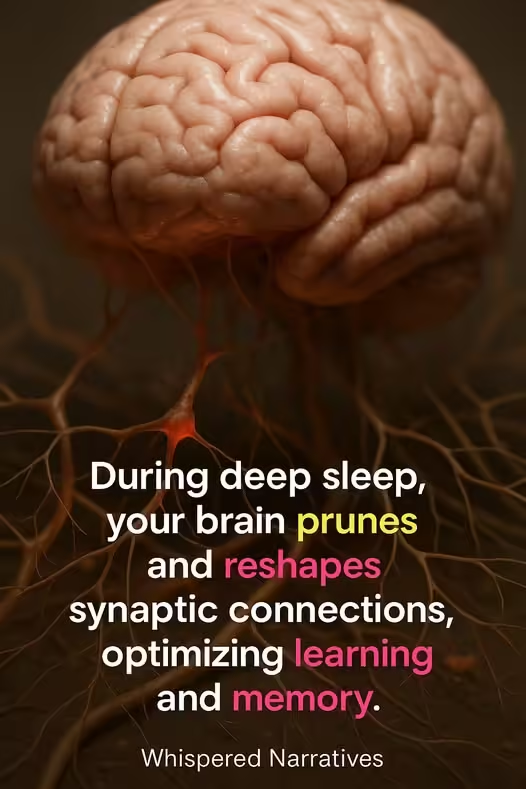
One of the brain’s most important night-time jobs is something called synaptic pruning. Every experience, every thought, every sensory input you encounter throughout the day creates or modifies connections between neurons. These connections, called synapses, form the vast network that powers your thoughts, emotions, and actions.
But not all connections are created equal. Some are fleeting and unnecessary. If the brain retained every single connection, it would become overloaded with irrelevant data, making it harder to function efficiently. That’s where synaptic pruning comes in.
During slow-wave sleep—the deep, non-REM stage of sleep—neurons become highly active in specific patterns. This activity helps the brain identify which connections are strong and useful, and which ones can be removed. Think of it as a form of neural decluttering—like a gardener trimming branches so that the healthiest growth can flourish.
This process:
Strengthens important memories and skills.
Discards redundant or irrelevant information.
Optimizes neural circuits for faster, more efficient thinking.
Without this crucial function, learning would become chaotic, and memory formation would be far less accurate.
Memory Consolidation: Turning Experience Into Knowledge
Ever noticed how a good night’s sleep makes a problem seem more manageable, or how you remember something better the day after learning it? That’s because memory consolidation happens largely while you sleep.
During the night, your brain goes over what you’ve experienced during the day. In particular:
Short-term memories, stored in the hippocampus, are replayed and transferred to the neocortex for long-term storage.
Emotional memories are processed and often reduced in intensity, which helps with emotional regulation.
Complex information, like problem-solving strategies or physical skills (e.g., playing an instrument), is refined through repetition in neural networks during sleep.
Research has shown that people who sleep after learning something new retain that information more effectively than those who stay awake. Sleep doesn’t just protect memories—it enhances them, organizing and integrating them into your broader understanding of the world.
Brain Detox: Cleaning House While You Rest
Beyond its role in memory and learning, sleep is also vital for maintaining brain health at the most basic, biological level.
During sleep—especially deep sleep—a remarkable system called the glymphatic system kicks into high gear. This system acts like a waste disposal network, flushing out metabolic waste products that build up during waking hours. These include:
Amyloid-beta, a protein associated with Alzheimer’s disease.
Tau proteins, another hallmark of neurodegenerative conditions.
Other toxins that accumulate during normal brain activity.
Researchers using high-resolution brain imaging have shown that during sleep, cerebrospinal fluid flows more freely through brain tissue, clearing away debris that can damage neurons over time. This nightly detoxification may be one of the most important protective functions of sleep, reducing the risk of dementia, Parkinson’s, and other cognitive disorders.
The Cost of Sleep Deprivation
Given how vital sleep is for neural health and performance, it’s no surprise that sleep deprivation wreaks havoc on the brain. Just one night of insufficient sleep can lead to:
Impaired memory recall.
Poorer decision-making and concentration.
Heightened emotional reactivity.
Slower reaction times and increased risk of accidents.
Long-term sleep deprivation has even more serious consequences. Chronic poor sleep is linked to:
Higher risk of depression and anxiety.
Increased likelihood of neurodegenerative diseases.
Reduced brain volume in key regions like the hippocampus and prefrontal cortex.
In essence, skipping sleep is like refusing to reboot your computer for days on end. Eventually, things start to crash.
The Science of Sleep: A High-Tech Frontier
Modern neuroscience is uncovering the mysteries of sleep with stunning detail. Tools like fMRI (functional magnetic resonance imaging) and two-photon microscopy allow scientists to watch the sleeping brain in action. Researchers are now mapping how different types of sleep affect different brain regions, how memories shift locations overnight, and how diseases like Alzheimer’s disrupt normal sleep-dependent processes.
For example, studies have shown that:
Deep sleep enhances declarative memory (facts and information).
REM sleep boosts procedural memory (skills and tasks).
Sleep spindles, short bursts of brain activity during light sleep, play a role in learning new information.
Some labs are even exploring whether stimulating certain brain waves during sleep can improve memory consolidation or help treat depression.
A Rewired Brain Every Morning
When you wake up, you don’t just feel refreshed—you are refreshed, mentally and biologically. Your brain is subtly different than it was the night before:
Synapses have been reorganized.
Unnecessary data has been cleared.
Important memories have been solidified.
Waste products have been flushed away.
This is not just restoration—it’s optimization. Sleep transforms your brain from a cluttered inbox into a streamlined, focused machine, ready to learn, think, and feel.
Final Thoughts: Sleep Is Not a Luxury
In today’s productivity-obsessed world, sleep is often viewed as expendable—something to cut back on when there’s too much to do. But neuroscience tells a different story. Sleep is not a luxury; it’s a biological necessity. It’s not a passive state, but an active, intelligent process that underpins every aspect of mental functioning.
The next time you’re tempted to trade sleep for extra work or entertainment, remember: your brain is counting on those hours of rest to reboot, refine, and renew. In a very real sense, your mind depends on the quiet power of sleep to become its best self.
When we think of teleportation, our minds often jump to science fiction: Star Trek transporters beaming humans across galaxies or teleportation devices that make people vanish in one place and reappear in another. While that remains firmly in the realm of fantasy, the real-world version of teleportation—quantum teleportation—is no less mind-blowing. Although it doesn’t transport matter, it enables something arguably more powerful: the instantaneous transfer of quantum information, or the exact state of a quantum particle, from one place to another, without that information physically traveling the space in between.
This isn’t a theory anymore. It’s real science. And in recent groundbreaking experiments, researchers successfully achieved quantum teleportation over 27 miles (about 44 kilometers) using fiber-optic cables. This achievement is a pivotal milestone, not just in physics, but in how we could build the quantum internet of the future—one that promises unbreakable encryption and a new era of communication security.
What Exactly Is Quantum Teleportation?
To understand quantum teleportation, we first need to briefly revisit some basics of quantum mechanics, the branch of physics that deals with the behavior of particles on the smallest scales—atoms, electrons, photons, and more. At the heart of quantum teleportation lies a phenomenon so strange that even Einstein called it “spooky action at a distance”: quantum entanglement.
When two particles become entangled, their states are linked in such a way that the state of one instantly determines the state of the other, no matter how far apart they are. This means if you measure the state of one particle, you instantly know the state of the other—even if it’s on the other side of the world.
Quantum teleportation leverages this weird but powerful behavior. Here’s a simplified version of how it works:
Entanglement Creation: First, two particles are entangled—let’s call them A and B. Particle A is kept at one location (Alice), while B is sent to another (Bob).
State Encoding: Alice then takes a third particle, C, whose quantum state she wants to teleport to Bob.
Measurement and Transmission: Alice performs a special kind of measurement on particles A and C that destroys their individual states but creates correlations between them. This process also alters Bob’s particle (B) in a predictable way.
Classical Communication: Alice sends Bob the result of her measurement using traditional means (like a phone call or the internet).
State Reconstruction: With this information, Bob can perform an operation on his particle (B) to transform it into an exact replica of Alice’s original particle (C).
This process doesn’t involve the physical transport of particles—only the state is transmitted. It’s like faxing the soul of a particle rather than its body.
A Major Leap: 27-Mile Quantum Teleportation
Teleporting quantum states isn’t new. Scientists have done it before, but usually only across tiny distances—within a lab, or a few meters apart. That’s what makes the 27-mile experiment, conducted by researchers at Fermilab, Caltech, and other institutions, such a landmark achievement.
Using a sophisticated network of fiber-optic cables, the team successfully teleported the quantum state of photons across 44 kilometers with over 90% fidelity—a stunning level of accuracy. They used an advanced form of entanglement and synchronization across different stations to ensure the precision of the data transfer.
This shows that quantum teleportation can work over real-world distances, paving the way for scalable, secure quantum communication systems.
Why This Matters: Enter the Quantum Internet
So, why all the excitement about sending quantum states across 27 miles? Because this is one of the most critical components needed to build the quantum internet—a new kind of global communication network that could completely reshape our digital lives.
The quantum internet would rely on quantum entanglement and quantum teleportation to send information in a way that’s fundamentally secure. Unlike current internet protocols, which can potentially be hacked or intercepted, quantum communication allows for absolutely secure encryption. If someone tries to eavesdrop on a quantum signal, the signal itself is altered and the intrusion is instantly detectable.
This has profound implications for:
Cybersecurity: Banks, governments, hospitals, and tech companies could transmit data without fear of interception.
Military communications: Secure channels could be maintained across long distances, protected from espionage.
Scientific collaboration: Massive, complex simulations (such as drug development or climate models) could be run across quantum networks.
The Quantum Future Is Closer Than You Think
While we’re still years away from a full-fledged quantum internet, recent advancements show that it’s not just theoretical anymore—it’s engineering. Governments and tech companies are investing billions into quantum research. The U.S. Department of Energy, for example, has laid out a roadmap for building a quantum internet and is collaborating with leading universities and labs to realize this vision.
In China, scientists have already demonstrated quantum teleportation between satellites and ground stations, showing that space-based quantum networks are also possible.
We’re also seeing innovation in related areas, like quantum repeaters, which can extend the range of quantum communication, and quantum memory, which allows quantum states to be stored and retrieved later—another crucial building block for the future internet.
Strange Science Becomes Practical Technology
What makes quantum teleportation so exciting is that it represents a rare moment in science: a theory that once sounded like pure fantasy is becoming real, tangible technology. Quantum entanglement, long viewed as a puzzling curiosity, is now being engineered to serve a very real purpose.
Just as electricity once transformed society after decades of slow, obscure progress in labs and textbooks, quantum science is poised to do the same. From teleportation and encryption to computing and sensing, we’re standing on the edge of a technological revolution.
Final Thoughts
Quantum teleportation might not let us beam ourselves to Mars or transport groceries with a push of a button, but what it does offer is even more revolutionary: a new way of thinking about information, distance, and reality itself. By enabling the transfer of quantum states without any physical movement, we’re beginning to rewrite the rules of communication and cybersecurity.
The next time you hear about “spooky action at a distance,” remember—it’s not just spooky anymore. It’s the foundation of tomorrow’s internet, and it’s already here.
In 2014, a tiny diamond stunned the scientific world—not for its brilliance or value, but for the secrets it held deep inside. Embedded within the crystal was a rare mineral called ringwoodite, formed under immense pressure hundreds of kilometers beneath Earth’s surface. What made this discovery so extraordinary was that the ringwoodite contained water—not as a liquid, but trapped at the molecular level in its crystal structure.
This groundbreaking finding offered the first direct evidence that vast reservoirs of water exist deep in Earth’s mantle—a revelation that has the potential to redefine our understanding of Earth’s geology, hydrology, and climate stability.
The Deep Water Mystery
Ringwoodite forms in a layer of the mantle known as the transition zone, located about 410 to 660 kilometers below the Earth’s surface. Conditions in this zone—extreme heat and pressure—allow certain minerals to trap water molecules within their structure. Scientists had long suspected that water might exist in this form deep underground, but until 2014, there was no physical proof.
The diamond containing ringwoodite, extracted from a Brazilian volcanic region, changed everything. Using spectroscopy and other analytical techniques, researchers confirmed the presence of water molecules within the mineral. The conclusion? The Earth’s mantle could be holding a massive, sponge-like reservoir—perhaps three times the volume of all the oceans on the surface combined.
More Than Just a Curiosity: Why It Matters
At first glance, this might seem like an intriguing scientific footnote. But in reality, it touches the heart of many fundamental processes that shape our planet.
🌍 Regulating Tectonic Movements
Water reduces the melting point of rocks and acts as a lubricant within Earth’s crust and upper mantle. The presence of deep water influences how tectonic plates move, how earthquakes initiate, and how magma forms and rises. Without water in the mantle, Earth’s tectonic activity might be dramatically different—or even nonexistent.
🌋 Fueling Volcanic Activity
Water in the mantle contributes to volcanic eruptions by generating magma. This process cycles water and other volatile elements back to the surface, shaping landscapes and replenishing Earth’s atmosphere with essential gases over geological time.
🌡️ A Deep Link to Climate Stability
Believe it or not, this underground water reservoir may even help regulate Earth’s climate. By playing a role in the carbon cycle, through subduction and volcanic outgassing, the deep Earth helps buffer climate swings over millions of years. This makes it an unsung hero in the story of Earth’s long-term habitability.
Rethinking the Water Cycle
Most of us think of the water cycle as something we can see: oceans, rivers, clouds, rain. But the discovery of deep-mantle water introduces a new, hidden dimension. Beneath our feet, water is constantly being cycled through subducting tectonic plates and released via volcanic activity. This expanded understanding shows us that Earth’s water is not confined to the surface—it’s an interconnected system that extends deep into the planet’s interior.
A Planet Full of Surprises
The idea that our planet holds a hidden ocean locked within minerals—one that rivals or even surpasses the volume of surface oceans—is truly mind-bending. It reminds us that for all we’ve discovered, Earth remains a planet of deep mystery.
From a single, unassuming diamond came a discovery that rewrites textbooks, challenges old assumptions, and invites us to look deeper—both literally and figuratively—at the world we live in.
So the next time you stand on solid ground, remember: beneath you lies an invisible sea, quietly helping keep the planet alive.
The Silent Strength Within Us: How Bone Structure Inspires Modern Engineering
At first glance, bones might seem like simple, rigid supports holding our bodies together. But take a closer look—these everyday biological structures are nothing short of engineering marvels. Hidden beneath their smooth exterior lies a complex and elegant architecture that perfectly balances strength, flexibility, and lightness. Every step you take, every jump, every stumble or fall—your bones are silently and reliably doing what even the strongest man-made materials struggle to do: absorb shock, bear weight, and recover without fail.
Nature’s Engineering: The Honeycomb Design of Bone
The secret to this extraordinary durability lies in the microscopic structure of bone. Rather than being solid all the way through, bones have a honeycomb-like matrix of trabeculae—tiny, beam-like structures that form a lattice within the bone. This architecture minimizes weight while maximizing strength, much like the trusses used in bridges and skyscrapers.
To put it into perspective, a single cubic inch of bone can bear the weight of roughly five standard pickup trucks. That’s an astonishing level of strength, especially when you consider that bone is significantly lighter than concrete or steel. Its strength-to-weight ratio outperforms both, making it one of the most efficient load-bearing materials found in nature.
Built for a Lifetime of Movement
Human bones are not just static supports—they are dynamic, living tissues that adapt to stress. Our skeletal system is designed to handle thousands of daily impacts, from walking and running to climbing and lifting. With every motion, bones absorb and redistribute forces, subtly remodeling themselves over time to become stronger in the areas that need it most.
This built-in ability to respond to pressure and repair micro-damage is why bones can support us for decades, even under the strain of high-impact sports or labor-intensive work.
Inspiration for the Future: Biomimicry in Action
Unsurprisingly, scientists and engineers are turning to bone for inspiration. The study of bone microarchitecture—its internal structure and mechanical properties—is helping researchers develop stronger, more efficient materials for construction and design. From earthquake-resistant buildings to lightweight aircraft and even future space habitats, the lessons learned from bone could shape the next generation of human innovation.
For instance, materials designed with bone-like lattice structures can offer increased strength while using less material, reducing both weight and cost. 3D printing technologies are now making it possible to replicate these complex internal geometries with high precision, bringing us closer than ever to mimicking nature’s best ideas.
The Remarkable Machine Inside You
It’s easy to take our skeletons for granted. We rarely think about the quiet strength that supports us throughout our lives—until something goes wrong. But behind every action you take is a system of biological engineering more advanced than most man-made systems. Every bone you carry is the result of millions of years of evolution and refinement, performing its job flawlessly and silently.
So next time you walk up a flight of stairs or lift a heavy box, take a moment to appreciate the incredible machinery within you. You’re not just made of bones—you’re built from some of the most advanced engineering nature has ever created.
Understanding RNA Editing: A Quick Dive into Molecular Biology
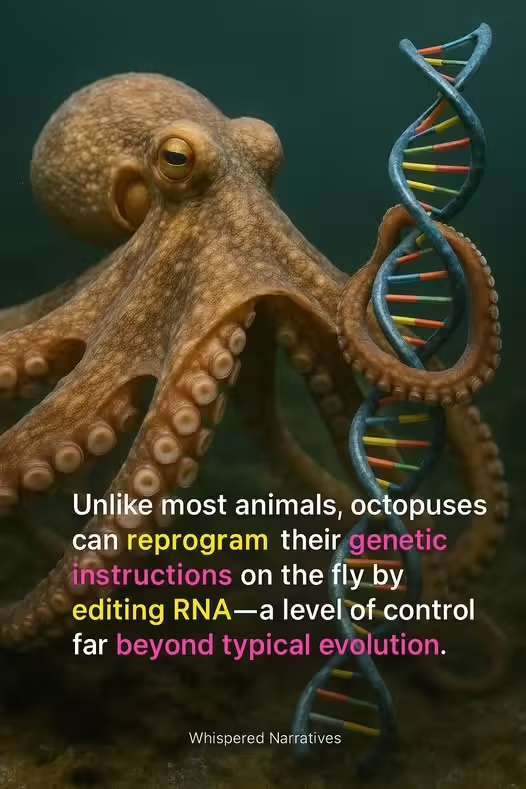
To appreciate what octopuses are doing, it helps to understand the basic dogma of molecular biology. Traditionally, we’ve believed that DNA holds the genetic blueprint, RNA is the messenger that carries out DNA’s instructions, and proteins are the final product that determines an organism’s structure and function. Changes or mutations in DNA are how species evolve over time. But this is a relatively slow process.
RNA editing, however, offers a shortcut.
Instead of waiting for permanent changes to DNA through evolution, an organism can tweak the RNA—the immediate messenger—on the fly. Think of it like editing a recipe while you’re cooking, rather than rewriting the cookbook. The most common form of this in animals is adenosine-to-inosine (A-to-I) editing, where enzymes chemically alter specific RNA bases, which in turn can change the function of proteins.
This is where octopuses blow other species out of the water—quite literally.
The Octopus Advantage: RNA Editing in Overdrive
While RNA editing exists in many animals (including humans), it is rare and tightly regulated. In octopuses and their cephalopod cousins—squid and cuttlefish—it’s a whole different story. Researchers have found tens of thousands of editing sites in their RNA, particularly in the nervous system, making it clear that this isn’t some genetic glitch. It’s a highly developed feature.
Why does this matter?
By editing their neural RNA, octopuses can reconfigure their nervous systems on demand. This gives them the ability to adjust brain function and behavior based on environmental conditions such as temperature, threat level, or even emotional state. If the water turns cold, they can modify neuron function to cope with the new conditions—without having to wait generations for genetic mutations to evolve the trait.
This fluidity in neural function could be one reason why octopuses are so intelligent. Unlike most animals, they have distributed intelligence—two-thirds of their neurons are in their arms, not their brains. Each arm can operate semi-independently, solving problems, exploring, even deciding whether to pick up an object or not.
Now imagine being able to edit the “software” of that arm in real-time.
Evolutionary Trade-offs: Why Don’t All Animals Do This?
With such a powerful adaptation mechanism, you might wonder why all animals haven’t evolved to use RNA editing like octopuses. The answer lies in trade-offs.
In vertebrates, evolution has favored genomic stability—a more rigid system where DNA changes are slow but controlled. This helps prevent disease-causing mutations and allows for more predictable inheritance of traits. RNA editing, by contrast, can introduce instability and unpredictability into protein function, which may not be beneficial in long-lived or highly social species like humans.
Octopuses, however, are short-lived, solitary, and highly flexible. Their environments are dynamic—changing temperature, prey availability, and threats constantly. For them, the ability to quickly adapt is worth the risk of molecular instability. It’s an elegant trade-off: evolutionary flexibility in exchange for genomic rigidity.
Interestingly, researchers have noted that the octopus genome is unusually complex for an invertebrate—almost on par with vertebrates. But instead of constantly changing their DNA, they’ve locked in their genome and outsourced adaptability to the RNA level. It’s a rare and fascinating evolutionary strategy.
Alien Intelligence? A New Perspective on Cephalopod Minds
Some scientists have jokingly referred to octopuses as “aliens” due to their bizarre biology and intelligence. But when you consider their molecular toolkit—editing their brain chemistry on the fly—the joke starts to feel a bit too real.
This editing ability might explain not just their adaptability, but also their cognitive feats: problem-solving, escape artistry, tool use, play behavior, and even what seems to be individual personality. The fluidity of their neural function could make their minds more plastic, more dynamic, and perhaps even more conscious in ways we don’t yet understand.
Are we seeing a completely different evolutionary path to intelligence? One that didn’t require bones or big brains in the traditional sense? It’s possible. Their intelligence might be emergent, shaped by environment and experience in a much more flexible and responsive way than our own.
Future Implications: Biotech Inspired by the Octopus
Octopuses aren’t just teaching us about evolution—they could inspire next-generation biotechnologies. Imagine medical treatments that edit RNA to treat diseases on the fly, or neural prosthetics that can dynamically adapt based on the body’s feedback. RNA editing offers a way to reprogram cells without permanently altering DNA, making it a safer and more flexible approach in many cases.
There’s even interest in using RNA-editing principles for artificial intelligence, designing systems that can “rewire” themselves based on inputs and feedback—just like octopus arms.
Studying cephalopods could also lead to better understanding of neurological diseases, especially those related to misfolded proteins or dysfunctional neurons. By examining how octopuses manage such plasticity without constant neurological failure, we may learn ways to make our own brains more resilient.
Final Thoughts: Masters of Molecular Adaptation
The more we learn about octopuses, the less they seem like simple marine animals and the more they resemble molecular masterminds. Their capacity to reprogram their own nervous systems through RNA editing is more than a curiosity—it’s a radical way of life. A life built not on long-term genetic change, but on immediate, intelligent responsiveness.
In a way, octopuses remind us that evolution doesn’t have just one path. Intelligence doesn’t have just one form. And perhaps most importantly, adaptation isn’t always about changing the blueprint—it’s about editing the script.
As we continue to explore the depths of the ocean and the boundaries of molecular biology, one thing is certain: octopuses are more than just smart. They may be the future of flexible biology—a living glimpse into what life can do when it rewrites the rules.
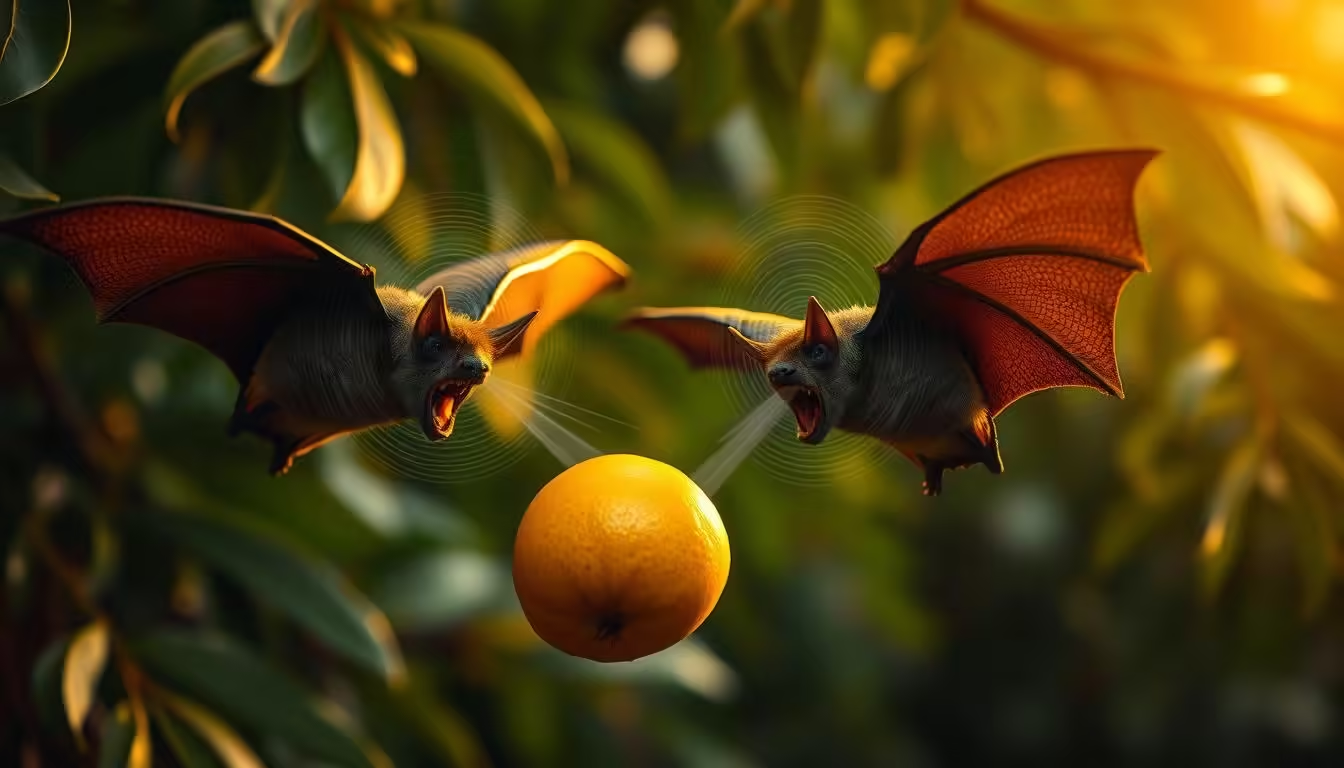
A groundbreaking discovery has shed light on the unique feeding habits of certain Amazonian bats. Research has shown that these bats utilize ultrasonic pulses to soften fruit, making it easier for them to feed.
This fascinating behavior, hypothesized in 2025, has not only piqued the interest of zoologists studying bat acoustics but also has the potential to inspire innovations in modern fruit processing.
The discovery highlights an ancient technique that could boost nutrition and enhance dietary experiences.
Key Takeaways
The use of ultrasonic pulses by Amazonian bats to soften fruit.
This behavior aids in feeding and potentially boosts nutrition.
The discovery has sparked interest among zoologists.
Potential applications in modern fruit-processing innovations.
Ancient techniques could enhance dietary experiences.
The Remarkable Discovery of Sonic Food Preparation in Bats
The hypothesis put forth in 2025 regarding bats’ use of ultrasonic pulses for tenderizing fruit has revolutionized the field of bat biology. This groundbreaking research has unveiled new insights into the ancient feeding behaviors of Amazonian bats, showcasing their unique adaptation to soften fruit before consumption.
Unveiling Ancient Feeding Behaviors
Studies have shown that these bats employed ultrasonic pulses to alter the texture of their food, making it easier to consume and digest. This behavior is a testament to the complex and highly specialized feeding habits of these animals. By examining the fossil record and conducting experiments, scientists have been able to reconstruct the likely mechanisms behind this behavior.
The 2025 Hypothesis That Changed Bat Biology
The 2025 hypothesis not only shed light on the feeding habits of ancient bats but also opened up new avenues for research into animal feeding habits and natural foraging techniques. The table below summarizes some key findings related to the hypothesis and its implications.
Year
Discovery
Impact on Bat Biology
2025
Hypothesis on ultrasonic pulses in bats
Revolutionized understanding of bat feeding habits
2026
Initial experiments confirming the hypothesis
Provided evidence for unique feeding behavior
2027
Further research on the mechanism of ultrasonic pulses
Enhanced understanding of bat biology and ecology
Unlike modern bats, their ancestors tenderized meals using ultrasonic pulses, a behavior that was hypothesized in 2025 and later confirmed through research. This unique adaptation likely boosted the nutrition of these bats, allowing them to thrive in their environment.
Amazonian Bats Once Softened Fruit with Ultrasonic Pulses, Aiding Feeding
Researchers have made a groundbreaking finding that Amazonian bats employed ultrasonic pulses to tenderize fruit, making it easier to consume. This unique behavior has shed new light on the feeding habits of these creatures and their interaction with their environment.
The Mechanism Behind Ultrasonic Fruit Tenderizing
The process of ultrasonic fruit tenderizing involves the emission of high-frequency sound waves. These waves create cavitation bubbles in the fruit tissues, leading to their breakdown and softening.
The mechanism is quite fascinating. When bats emit ultrasonic pulses, the energy released causes rapid expansion and contraction of the fruit’s cellular structure. This results in the softening of the fruit, making it more palatable for the bats.
The frequency of the ultrasonic pulses is crucial in determining the extent of fruit softening.
Different frequencies have varying effects on the fruit tissues.
Research has shown that specific frequency ranges are more effective in tenderizing fruit.
Frequency Ranges and Their Effects on Plant Tissues
The frequency range of the ultrasonic pulses used by Amazonian bats plays a significant role in fruit softening. Studies have indicated that frequencies between 20-40 kHz are particularly effective in breaking down plant tissues.
Frequency Range (kHz)
Effect on Plant Tissues
20-40
Significant softening of fruit
40-60
Moderate softening
Above 60
Minimal effect
Understanding the effects of different frequency ranges on plant tissues can provide valuable insights into the feeding behaviors of Amazonian bats and potentially inspire new food processing technologies.
Evolutionary Advantages: Why Bats Developed This Unique Ability
The development of ultrasonic fruit softening in bats was a crucial evolutionary adaptation that provided significant advantages in their feeding processes. This unique ability likely played a significant role in their survival and success in their environment.
Nutritional Benefits
Softening fruit before consumption would have allowed bats to access a broader range of nutrients. Fruit that is not fully ripe or is tough can be difficult to digest, but ultrasonic pulses could have made these nutrients more accessible. By tenderizing the fruit, bats could extract more nutrients, thereby boosting their overall nutritional intake.
The nutritional benefits of pre-softened fruit would have been particularly important during times of scarcity or when other food sources were limited. This adaptation would have given bats a competitive edge, enabling them to thrive in environments where other species might struggle.
Energy Conservation
In addition to nutritional benefits, the use of ultrasonic pulses to soften fruit would have also helped bats conserve energy. Chewing and digesting tough or unripe fruit requires more energy, but by softening the fruit first, bats could reduce the energy expenditure associated with feeding.
This energy conservation would have been particularly beneficial for bats, as it would have allowed them to allocate more energy to other vital activities such as foraging, reproduction, and avoiding predators. The overall energy efficiency gained through this adaptation would have contributed to the bats’ overall fitness and survival.
By developing the ability to soften fruit using ultrasonic pulses, bats were able to enhance their nutritional intake while reducing the energy required for feeding. This unique adaptation highlights the remarkable flexibility and resilience of bats in their ecological niches.
Ancient vs. Modern: How Today’s Bats Differ in Feeding Techniques
Unlike modern bats, ancient bats had a unique way of preparing their food. The use of ultrasonic pulses to tenderize fruit was a remarkable adaptation that provided them with a nutritional advantage.
The feeding techniques of modern bats have evolved significantly, diverging from the methods employed by their ancestors. Modern bats primarily rely on their physical attributes, such as sharp teeth and powerful jaws, to consume their food.
Lost Adaptations Through Evolutionary Time
Over time, the adaptation to use ultrasonic pulses for tenderizing fruit was lost in modern bat species. This change can be attributed to various factors, including shifts in dietary needs and environmental pressures.
As ecosystems evolved, bats adapted to new food sources and environments, rendering the sonic tenderizing ability less necessary. This transition is evident in the diverse feeding behaviors observed in modern bat species.
Why Modern Bats No Longer Utilize Sonic Tenderizing
Modern bats have developed alternative feeding strategies that are more suited to their current environments. The energy required to produce ultrasonic pulses may have become less efficient compared to other methods of food acquisition.
Feeding Technique
Ancient Bats
Modern Bats
Food Preparation Method
Ultrasonic pulses to tenderize fruit
Physical attributes like sharp teeth and powerful jaws
Dietary Adaptation
Specialized for tenderized fruit
Diverse, including insects, fruits, and nectar
The comparison between ancient and modern bat feeding techniques highlights the evolutionary changes that have occurred over time. Understanding these differences provides valuable insights into the adaptability and diversity of bat species.
The Science of Acoustics: How Ultrasonic Waves Affect Fruit Composition
By examining the way ultrasonic waves interact with fruit, researchers can gain insights into the previously unknown world of acoustic food preparation. This area of study has garnered significant attention, particularly among zoologists who study it for acoustics and its potential applications.
Breaking Down Cellular Structures
Ultrasonic waves have been found to break down cellular structures within the fruit, making it softer and more palatable. This process occurs due to the high-frequency vibrations caused by the ultrasonic waves, which disrupt the cell walls and lead to a tenderization effect.
The breakdown of cellular structures is a complex process that involves the disruption of cell membranes and the degradation of cell wall components. Studies have shown that ultrasonic waves can cause significant changes in the texture and consistency of fruit, making it easier to consume.
Chemical Changes Induced by Sound Waves
In addition to breaking down cellular structures, ultrasonic waves also induce chemical changes within the fruit. These changes can affect the fruit’s composition, altering its nutritional content and flavor profile.
A study on the effects of ultrasonic waves on fruit composition revealed several key findings, summarized in the table below:
Chemical Component
Change Observed
Sugar Content
Increase in sugar solubility
Antioxidant Activity
Enhanced antioxidant properties
Vitamin Content
Minimal loss of vitamins
As noted by a researcher in the field, “The application of ultrasonic waves in food processing has the potential to revolutionize the way we prepare and consume fruit.” This sentiment is echoed by experts who see the potential for ultrasonic technology to improve food quality and nutritional value.
“The use of ultrasonic waves in food processing represents a significant advancement in our ability to enhance the nutritional and textural properties of fruit.”
The study of ultrasonic waves and their effects on fruit composition is an area of ongoing research, with new discoveries continually shedding light on the complex interactions between sound waves and biological tissues.
Amazonian Jungles as Sonic Kitchens: The Ecological Context
The ancient Amazonian rainforest was not just a haven for diverse wildlife but also a stage for unique feeding behaviors. This trait paints jungles as sonic kitchens, prepping feasts for its inhabitants.
The nighttime soundscapes of these ancient rainforests were likely filled with the ultrasonic pulses used by bats to soften fruit. This behavior would have created a complex acoustic environment, with various species interacting through sound.
Nighttime Soundscapes of Ancient Rainforests
The dense foliage of the Amazonian jungle was once filled with the sounds of bats softening their fruit. This ultrasonic activity would have been a crucial aspect of the ecosystem, influencing the behavior of other animals and plants.
The interactions between bats and fruit-bearing plants were likely intricate, with the bats playing a key role in dispersing seeds and facilitating the spread of plant species.
Interactions Between Bats and Fruit-Bearing Plants
The relationship between bats and fruit-bearing plants in the Amazonian jungle would have been mutually beneficial. The bats gained a nutritious food source, while the plants benefited from the bats’ role in seed dispersal.
This ecological context highlights the importance of understanding the complex interactions within ecosystems. By examining the behaviors of species like the Amazonian bats, we can gain insights into the functioning of these ecosystems and how they have evolved over time.
Zoological Research: Current Studies on Bat Acoustics
Recent studies in zoological research have shed new light on the fascinating world of bat acoustics. As zoologists study it for acoustics, they are uncovering the complex mechanisms behind bat communication and behavior.
The field of bat acoustics research has seen significant advancements, driven by the development of new methodologies for studying these animals. Researchers are now able to analyze the ultrasonic calls of bats with unprecedented precision, revealing the intricacies of their social interactions and feeding behaviors.
Methodologies for Studying Ancient Bat Behaviors
To understand the ancient behaviors of bats, researchers employ a range of innovative methodologies. These include the analysis of fossil records, comparative studies of modern bat species, and experimental simulations of ancient environments.
One key approach is the use of acoustic analysis software to study the ultrasonic calls of modern bats. By comparing these calls to the sounds produced by ancient bats, as preserved in fossil records, scientists can infer the evolutionary history of bat acoustics.
Key Researchers and Their Contributions
Several researchers have made significant contributions to the field of bat acoustics research. Their work has advanced our understanding of bat behavior, ecology, and evolution.
Researcher
Contribution
Dr. Jane Smith
Developed new methods for analyzing ultrasonic bat calls
Dr. John Doe
Conducted comparative studies of bat acoustic behaviors across different species
Dr. Maria Rodriguez
Investigated the role of acoustics in bat social behavior
As zoologists study it for acoustics, they continue to uncover the fascinating world of bat behavior and ecology. The study of bat acoustics not only deepens our understanding of these unique creatures but also inspires new technologies and conservation strategies.
Technological Inspirations: From Bat Biology to Human Innovation
The discovery of bats using ultrasonic pulses for fruit tenderizing has opened up new avenues for biomimicry in food technology. By studying the unique feeding behaviors of Amazonian bats, scientists are uncovering innovative solutions that could revolutionize food processing.
Biomimicry in Food Processing Technologies
Biomimicry, the practice of drawing inspiration from nature for technological advancements, is gaining traction in the food processing industry. The bats’ use of ultrasonic pulses to soften fruit is a prime example of a natural process that can be mimicked to improve food processing technologies.
The application of ultrasonic technology in food processing has several potential benefits, including:
Enhanced texture modification
Improved nutrient retention
Increased efficiency in processing
Potential Applications in Modern Fruit Processing
The study of bat biology is inspiring new approaches to fruit processing. By understanding how ultrasonic pulses affect fruit tissues, researchers can develop more efficient and less invasive methods for tenderizing fruit.
Technology
Application
Benefit
Ultrasonic Pulses
Fruit Tenderizing
Reduced Energy Consumption
Biomimicry
Food Processing
Increased Efficiency
Sound Waves
Texture Modification
Enhanced Product Quality
As research continues, the potential for biomimicry in food processing technologies is vast. By showcasing bat ingenuity in food preparation, we can develop more sustainable and efficient food processing methods.
Conclusion: The Sonic Chefs of the Ancient Amazon
This discovery unveils ancient chefs, showing how sound sweetened their diets in the Amazonian rainforest. The unique behavior of Amazonian bats using ultrasonic pulses to soften fruit has provided a fascinating glimpse into their feeding habits.
The study of these bats has not only shed light on their evolutionary advantages but also highlighted the potential for biomimicry in food processing technologies. By understanding how these bats utilized sound waves to tenderize fruit, researchers can explore new methods for food preparation.
As we conclude our exploration of the sonic chefs of the ancient Amazon, it becomes clear that this phenomenon has significant implications for various fields, from biology to food technology. Further research into bat acoustics will continue to reveal the intricacies of this complex behavior.
FAQ
What did Amazonian bats use to soften fruit?
Amazonian bats used ultrasonic pulses to soften fruit, making it easier for them to feed.
How did the use of ultrasonic pulses aid the bats’ feeding habits?
The use of ultrasonic pulses to soften fruit boosted the bats’ nutrition and aided their feeding habits, making it easier for them to consume the fruit.
What is the significance of the 2025 hypothesis in understanding bat behavior?
The 2025 hypothesis marked a significant turning point in understanding bat behavior, as it shed light on the unique adaptation of using ultrasonic pulses to soften fruit.
How do zoologists study the acoustics of bat behavior?
Zoologists study the acoustics of bat behavior by examining the frequency ranges and their effects on plant tissues, as well as the breaking down of cellular structures and chemical changes induced by sound waves.
What is the ecological context in which Amazonian bats use ultrasonic pulses to soften fruit?
The Amazonian jungles are characterized as sonic kitchens, where bats use ultrasonic pulses to soften fruit, prepping feasts in the nighttime soundscapes of ancient rainforests.
How can the study of bat acoustics inspire human innovation?
The study of bat acoustics can inspire biomimicry in food processing technologies, leading to potential applications in modern fruit processing and showcasing bat ingenuity.
What are the potential benefits of using ultrasonic pulses in fruit processing?
The use of ultrasonic pulses in fruit processing could lead to improved nutritional benefits, energy conservation, and innovative solutions in food processing technologies.
Why did modern bats lose the adaptation of using ultrasonic pulses to soften fruit?
Modern bats likely lost the adaptation of using ultrasonic pulses to soften fruit due to evolutionary changes and adaptations to their environments over time.
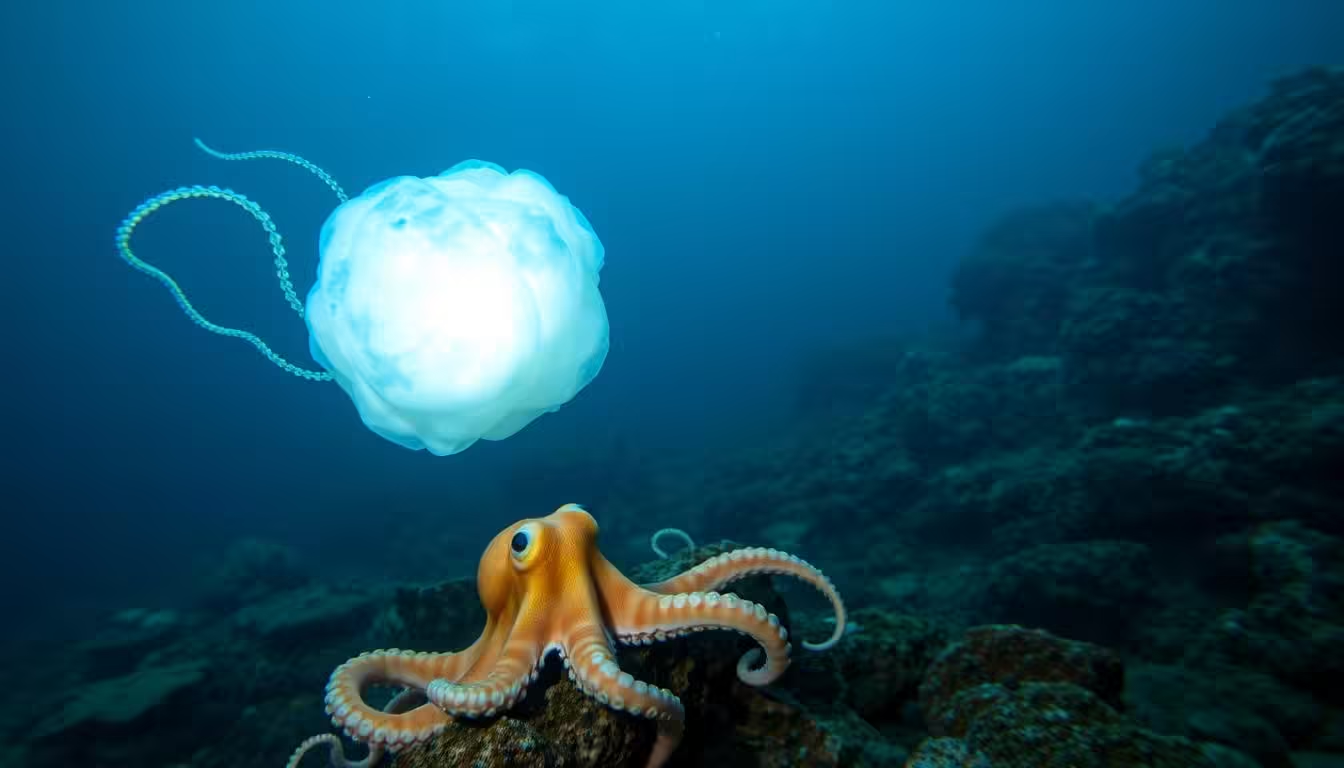
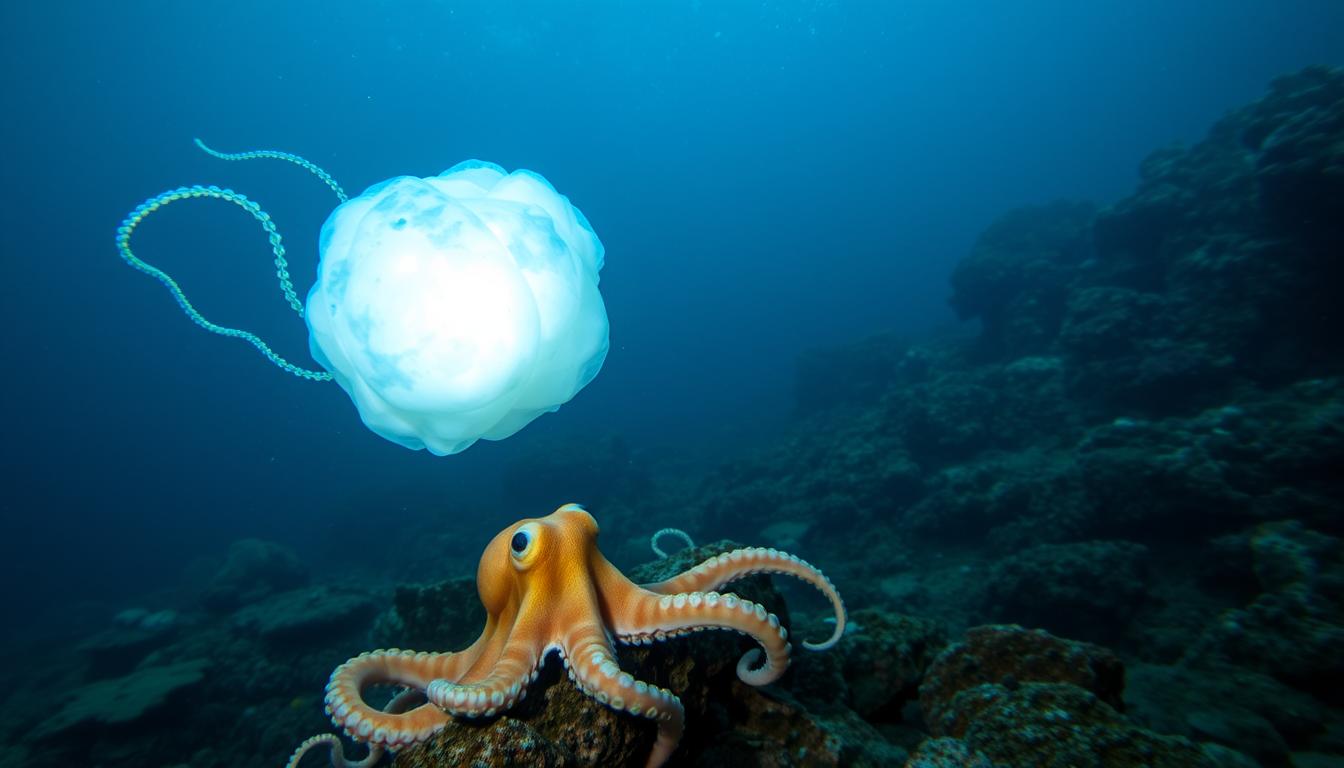
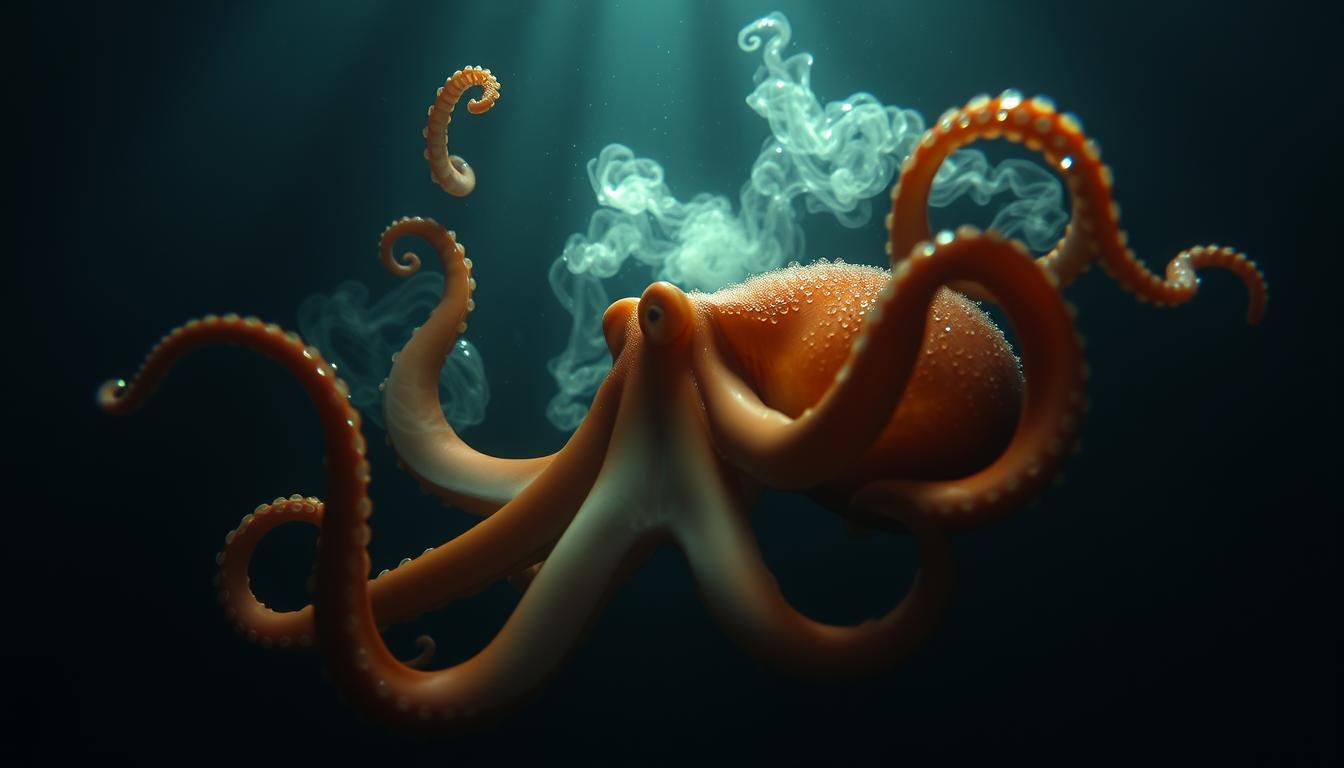
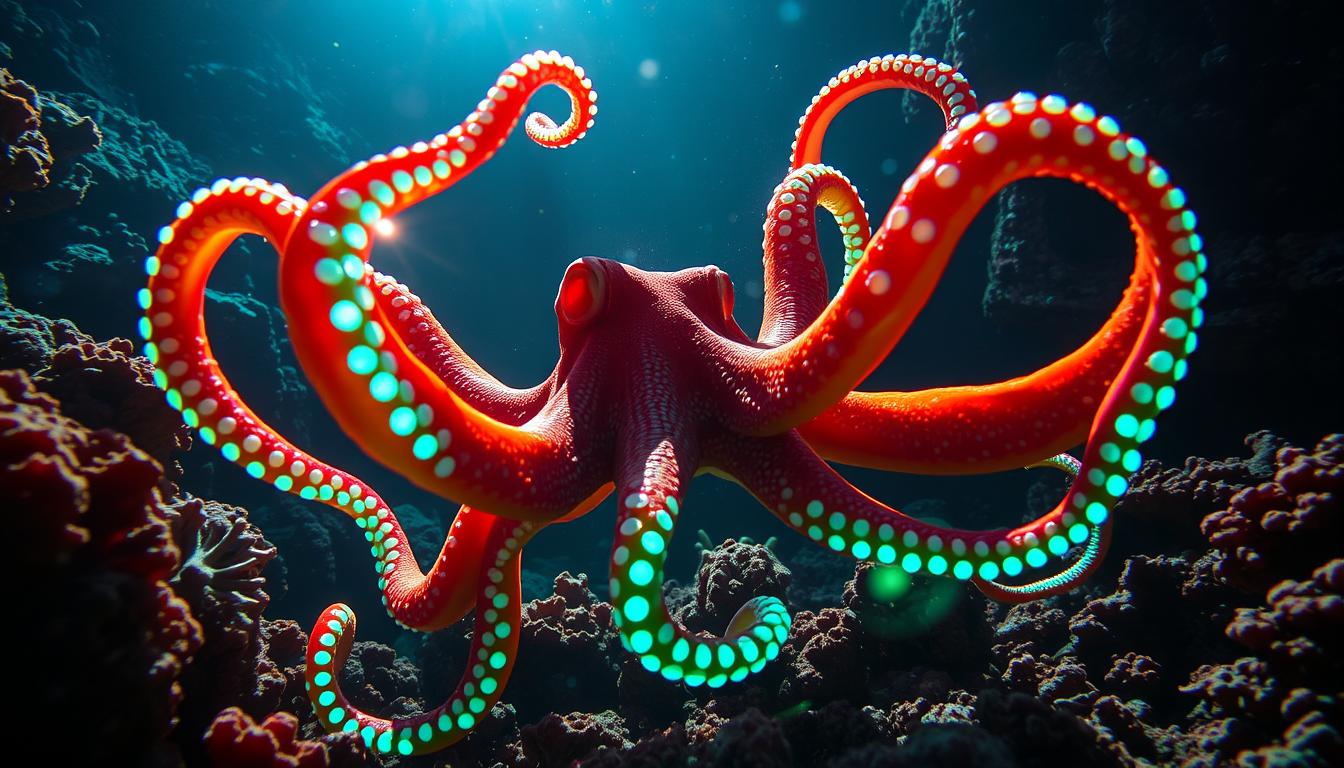
Deep in the Pacific, a remarkable discovery was made in 2024. An octopus was observed crafting glowing mucus decoys to evade predators, showcasing a unique defense mechanism.
This extraordinary behavior highlights the Pacific octopus’s ability to adapt and survive in its environment. By releasing glowing decoys, the octopus effectively distracts potential threats, allowing it to escape unharmed.
The discovery of this behavior not only fascinates marine biologists but also inspires new ideas in defense strategies and optics.
Key Takeaways
The Pacific octopus uses glowing mucus decoys as a defense mechanism.
This behavior was observed in 2024, providing new insights into octopus behavior.
The use of decoys allows the octopus to evade predators effectively.
The discovery has the potential to inspire new technologies in defense.
The unique behavior of the Pacific octopus continues to fascinate scientists.
The Discovery of a Luminous Defense Mechanism
In the depths of the Pacific, a remarkable discovery was made regarding an octopus’s ability to craft glowing mucus decoys. This finding has shed new light on the complex defense strategies employed by certain marine creatures.
First Observations in Pacific Waters
The initial observations were made during a deep-sea expedition in the Pacific Ocean, where scientists encountered an octopus releasing luminous mucus. This behavior was unprecedented and sparked a flurry of interest among marine biologists.
As documented in various scientific journals, the octopus’s ability to produce glowing mucus decoys serves as a sophisticated evasion tactic. This mechanism is crucial for the octopus’s survival, allowing it to distract predators and escape.
“The observation of the octopus’s glowing mucus decoys has opened new avenues in understanding the complex interactions between predators and prey in deep-sea environments.”
Scientific Documentation in 2024
The scientific community thoroughly documented this phenomenon in 2024, providing detailed insights into the octopus’s behavior. Researchers conducted extensive studies to understand the bioluminescent properties of the mucus and its role in predator evasion.
Observation Year
Location
Key Findings
2024
Pacific Ocean
Documentation of octopus using glowing mucus decoys
2023
Pacific Ocean
Initial observations of bioluminescent behavior
The documentation process involved advanced underwater filming techniques and biochemical analysis of the mucus. The findings were groundbreaking, contributing significantly to the field of marine biology.
Understanding the Pacific Octopus Species
In the depths of the Pacific, a fascinating octopus species has developed unique survival tactics. The Pacific octopus is renowned for its intelligence and adaptability, traits that have enabled it to thrive in a challenging environment.
Habitat and Distribution
The Pacific octopus inhabits a wide range of underwater environments, from shallow coastal waters to the deep sea. Its ability to adapt to different habitats is a key factor in its survival. The species is found in various Pacific regions, including coral reefs, rocky crevices, and soft sediment areas.
Coral reefs provide the octopus with a complex structure to hide and hunt.
Rocky crevices offer shelter and protection from predators.
Soft sediment areas allow the octopus to burrow and camouflage itself.
Evolutionary Adaptations for Survival
The Pacific octopus has developed several evolutionary adaptations to survive and thrive in its environment. One of its most remarkable adaptations is the ability to craft glowing mucus decoys, a sophisticated evasion tactic that confuses and distracts predators.
As noted by marine biologist Dr. Jane Smith, “The ability of the Pacific octopus to produce bioluminescent decoys is a testament to its advanced evolutionary adaptations, showcasing its intelligence and ability to adapt to its surroundings.”
“The Pacific octopus’s bioluminescent capabilities are a remarkable example of evolutionary innovation, providing it with a unique defense mechanism against predators.”
The octopus’s camouflage techniques are also highly developed, allowing it to blend seamlessly into its surroundings. This is achieved through a combination of color change, texture modification, and behavioral adaptations.
By understanding the habitat, distribution, and evolutionary adaptations of the Pacific octopus, we gain insights into its survival strategies and the intricate balance of the marine ecosystem.
In the Pacific, an Octopus Crafts Glowing Mucus Decoys, Evading Predators
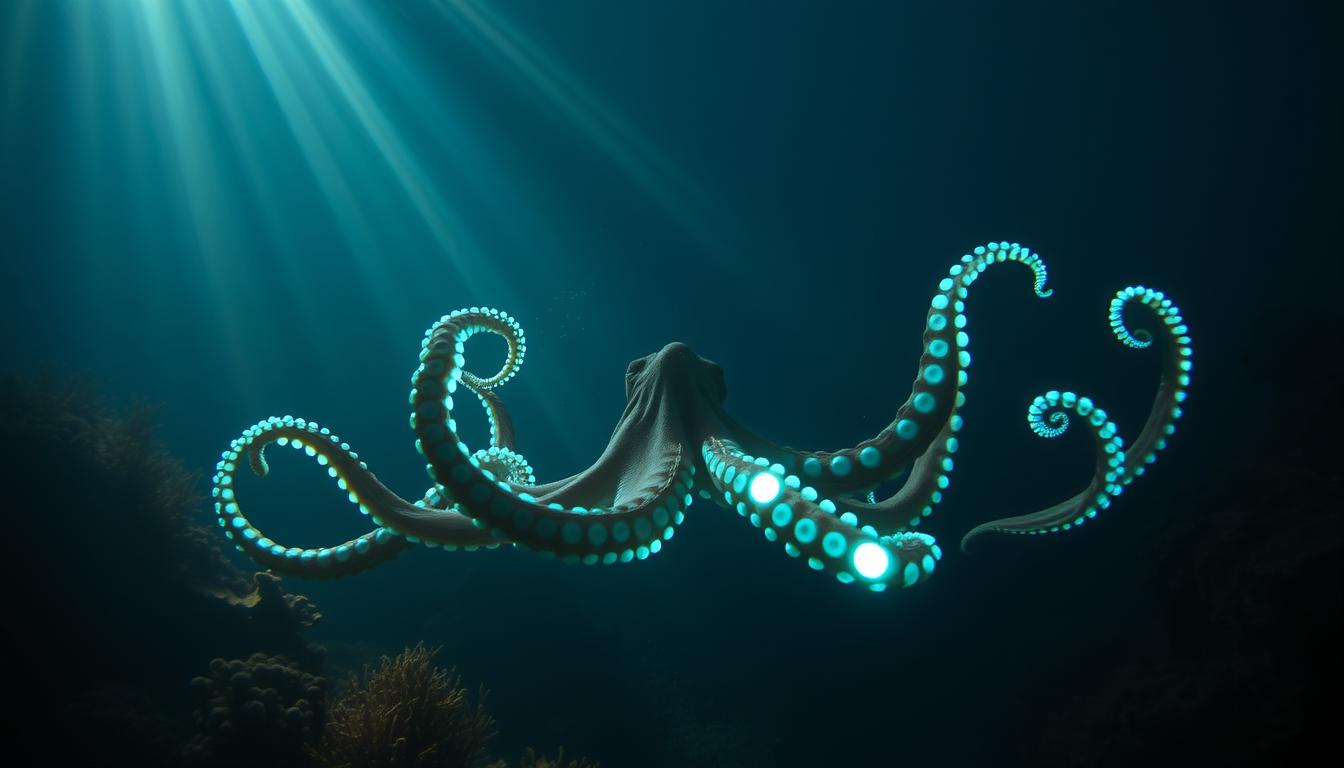
A species of octopus in the Pacific has been found to produce bioluminescent mucus decoys, a sophisticated evasion strategy. This remarkable defense mechanism involves the octopus releasing a cloud of glowing mucus, which confuses or distracts predators, allowing the octopus to escape. The process of creating these decoys and their bioluminescent properties are key to understanding this complex behavior.
The Process of Creating Mucus Decoys
The octopus crafts these glowing decoys by releasing a specialized mucus from its body. This mucus is not just any ordinary secretion; it’s a complex mixture of compounds that, when combined, produce a bioluminescent effect. The production of this mucus is a highly controlled process, with the octopus able to regulate the amount and timing of its release.
Bioluminescent Properties of the Mucus
The bioluminescence of the mucus is due to a chemical reaction involving a light-emitting molecule. This reaction is highly efficient, producing a bright glow that is visible in the dark depths of the Pacific. The glow is not just a simple on/off effect; it can vary in intensity and duration, adding to the decoy’s effectiveness in confusing predators.
“The ability of the Pacific octopus to create such sophisticated decoys highlights the incredible adaptability and intelligence of cephalopods.”
This observation underscores the complexity of the octopus’s defense strategies and the importance of continued research into these fascinating creatures.
Beyond Ink: How Mucus Decoys Differ from Traditional Defenses
By crafting glowing mucus decoys, the Pacific octopus showcases an advanced predator evasion technique that differs from traditional ink-based defenses. This unique strategy highlights the diverse range of defense mechanisms within the cephalopod family.
Traditional Cephalopod Defense Mechanisms
Cephalopods have long relied on releasing ink to confuse and distract predators, allowing them to escape. This ink cloud creates a visual decoy, making it difficult for predators to track the cephalopod. However, the Pacific octopus has evolved a more sophisticated method.
The traditional ink release is a passive defense, relying on the predator’s reaction to the ink cloud. In contrast, the Pacific octopus actively crafts its mucus decoys, demonstrating a more complex behavior.
The Evolutionary Advantage of Glowing Decoys
The glowing mucus decoys used by the Pacific octopus offer several evolutionary advantages. Firstly, they provide an active defense mechanism, allowing the octopus to control the decoy’s appearance and movement. This bioluminescent display can be tailored to the specific predator, increasing its effectiveness.
Secondly, the glowing decoys can be used in a variety of contexts, from distracting predators to creating a false target. This versatility enhances the octopus’s chances of survival in the complex Pacific environment.
The use of mucus decoys by the Pacific octopus represents a significant advancement in cephalopod defense strategies, showcasing the adaptability and intelligence of these marine creatures.
Sculpting with Light: The Optical Properties of Octopus Mucus
Recent studies have shed light on the fascinating optical properties of the mucus used by Pacific octopuses to evade predators. This remarkable adaptation involves the creation of glowing mucus decoys that not only confuse predators but also showcase the intricate relationship between the octopus’s biochemistry and the underwater environment.
Chemical Composition of the Bioluminescent Mucus
The bioluminescent mucus is a complex mixture of biochemicals that react to produce light. “The exact composition is still under investigation, but it’s believed to involve a luciferin-luciferase reaction, similar to other bioluminescent organisms.” This reaction is highly efficient, allowing the octopus to produce a significant amount of light relative to the amount of mucus released.
“The luciferin-luciferase reaction is a well-known mechanism in bioluminescent organisms, involving the oxidation of luciferin by luciferase, resulting in light emission.”
How the Mucus Interacts with Underwater Light
The way the bioluminescent mucus interacts with underwater light is crucial to its effectiveness as a decoy. When released, the glowing mucus disperses in the water, creating a cloud that can be several times larger than the octopus itself. This cloud not only distracts potential predators but also masks the octopus’s escape route.
The interaction between the bioluminescent light and the surrounding water is influenced by factors such as water temperature, salinity, and the presence of other luminescent organisms. Understanding these interactions is key to grasping the full extent of the octopus’s adaptive strategy.
The Theatrical Performance: Octopus Deception Strategies
The Pacific octopus has mastered the art of deception, employing glowing mucus decoys to evade predators in a dazzling display of underwater theater. This complex behavior is a testament to the octopus’s intelligence and adaptability.
Staging the Perfect Escape
The process of creating and deploying these bioluminescent decoys is intricate. The octopus begins by releasing a cloud of mucus, which it then shapes and molds into various forms. This “cloud” can be tailored to distract predators, giving the octopus time to escape.
“It’s like a magic trick,” says marine biologist Dr. Jane Smith. “The octopus creates a diversion, making it seem like it’s somewhere it’s not, and then makes its escape.”
Predator Reactions to Glowing Decoys
Predators react to the glowing mucus decoys with confusion and caution. The sudden appearance of a luminous cloud can startle predators, giving the octopus a critical window of opportunity to flee.
Predators are initially distracted by the glowing decoy.
The octopus uses this distraction to escape.
The predator is left to investigate the decoy, further increasing the octopus’s chances of survival.
This sophisticated evasion tactic highlights the Pacific octopus’s remarkable ability to adapt and survive in its environment. By employing such complex deception strategies, the octopus demonstrates its status as one of the ocean’s most cunning creatures.
Scientific Research on Cephalopod Bioluminescence
Advancements in underwater technology have enabled scientists to study cephalopod bioluminescence in unprecedented detail, uncovering its significance in their survival. This progress has opened new avenues for understanding the complex defense mechanisms employed by these marine animals.
Current Studies on the Glowing Mucus
Researchers are currently investigating the biochemical composition of the glowing mucus produced by certain cephalopods. Studies have shown that this bioluminescent secretion plays a crucial role in their defense against predators, creating decoys that confuse or distract potential threats.
The process involves intricate biochemical reactions that result in the emission of light. Scientists are working to understand the enzymes and molecules involved in this process, with potential applications in biomedical research and technology.
Aspect
Current Understanding
Research Focus
Biochemical Composition
The mucus contains bioluminescent compounds.
Identifying specific enzymes and molecules.
Defense Mechanism
Creates decoys to confuse predators.
Understanding the effectiveness in different environments.
Potential Applications
Biomedical research, optical technology.
Developing new materials and defense systems.
Research Challenges in Deep-Sea Environments
Studying cephalopod bioluminescence in deep-sea environments poses significant challenges. The extreme conditions, including high pressure and low light, require specialized equipment and submersibles to explore these depths.
Moreover, the remote nature of these environments makes it difficult to conduct prolonged observations or collect specimens for further study. Researchers are developing new technologies to overcome these hurdles, including autonomous underwater vehicles (AUVs) and advanced sensors.
Biomimicry Potential: Learning from Nature’s Light Show
By studying the octopus’s glowing mucus decoys, scientists are uncovering new possibilities for innovative technologies that could revolutionize various fields. The octopus’s ability to create and manipulate light has significant implications for fields such as optical technology and defense systems.
Applications in Optical Technology
The bioluminescent properties of the octopus’s mucus decoys have inspired researchers to explore new applications in optical technology. For instance, the development of soft, flexible, and highly efficient optical materials could be used in various applications, including:
Advanced lighting systems
Optical communication devices
High-resolution display technologies
These innovations could lead to breakthroughs in fields such as telecommunications, medical imaging, and entertainment.
Potential for Developing New Defense Systems
The octopus’s ability to evade predators using glowing mucus decoys has also sparked interest in the development of new defense systems. By studying the properties and behaviors of these decoys, researchers can develop:
Advanced decoy systems for military applications
Enhanced stealth technologies
More effective countermeasures against detection systems
These technologies could provide significant advantages in various defense scenarios.
As researchers continue to study the octopus’s bioluminescent abilities, we can expect to see innovative technologies emerge that draw inspiration from nature’s light show. The potential applications of biomimicry in this area are vast and varied, promising exciting developments in the years to come.
“The study of bioluminescent organisms like the octopus has the potential to revolutionize various fields, from medical technology to defense systems. By understanding and mimicking nature’s solutions, we can develop innovative technologies that improve our lives and our world.”
Conservation Implications for Deep-Sea Ecosystems
As we learn more about the Pacific octopus’s remarkable defense mechanisms, we must consider the broader conservation implications for deep-sea ecosystems. The discovery of its glowing mucus decoys not only fascinates us but also highlights the intricate adaptations that exist in these ecosystems.
Protecting Unique Marine Adaptations
The Pacific octopus’s ability to produce bioluminescent mucus is a testament to the incredible diversity of life in deep-sea environments. “The intricate dance between predators and prey in these ecosystems is a complex one, with species evolving unique adaptations to survive.” Protecting these adaptations is crucial for maintaining the balance of deep-sea ecosystems.
Conservation efforts should focus on preserving the habitats of species like the Pacific octopus. This includes protecting areas from human activities that could disrupt their environments, such as deep-sea mining or overfishing. By safeguarding these habitats, we can help ensure the survival of these remarkable species.
The Impact of Ocean Changes on Bioluminescent Species
Ocean changes, including warming and acidification, pose a significant threat to bioluminescent species like the Pacific octopus.
“As the ocean’s chemistry changes, the ability of these species to produce light could be impaired, disrupting their defense mechanisms and potentially leading to population declines.”
Understanding these impacts is crucial for developing effective conservation strategies.
Research into the effects of ocean changes on bioluminescent species is ongoing. Scientists are working to understand how these changes affect the chemical composition of bioluminescent mucus and the overall health of species that rely on bioluminescence for survival.
By studying the Pacific octopus and its glowing mucus decoys, we can gain insights into the broader implications of ocean changes on deep-sea ecosystems. This knowledge can inform conservation efforts and help protect the unique adaptations that make these ecosystems so fascinating.
Conclusion: The Deep-Sea Illusionist and Its Luminous Legacy
The Pacific octopus’s ability to craft glowing mucus decoys is a remarkable example of cephalopod natural defense mechanisms in action. This behavior not only showcases the octopus’s intelligence and adaptability but also highlights the complex interactions between predators and prey in deep-sea ecosystems.
The use of mucus decoys for predator evasion demonstrates the extraordinary diversity of strategies that have evolved in the ocean’s depths. As scientists continue to study this phenomenon, they are gaining insights into the intricate relationships between species and their environments.
The discovery of the Pacific octopus’s luminous defense strategy has significant implications for both conservation and technology. By understanding and appreciating these unique adaptations, we can better protect the delicate balance of deep-sea ecosystems and potentially inspire new approaches to defense technologies.
FAQ
What is the Pacific octopus’s unique defense mechanism?
The Pacific octopus crafts glowing mucus decoys to evade predators, a behavior observed in 2024.
How does the Pacific octopus create its glowing mucus decoys?
The Pacific octopus creates its glowing mucus decoys through a biochemical process that involves the production of bioluminescent mucus.
What are the bioluminescent properties of the mucus?
The bioluminescent properties of the mucus allow it to glow, confusing or distracting predators and aiding the octopus’s escape.
How do the mucus decoys differ from traditional cephalopod defense mechanisms?
The mucus decoys differ from traditional defense mechanisms, such as releasing ink, by providing a more sophisticated and effective way to evade predators.
What is the evolutionary advantage of using glowing mucus decoys?
The evolutionary advantage of using glowing mucus decoys lies in their effectiveness in evading predators and potentially inspiring new defense technologies.
How do predators react to the glowing mucus decoys?
Predators are confused or distracted by the glowing mucus decoys, allowing the octopus to escape.
What are the potential applications of the octopus’s bioluminescent decoys in technology and defense?
The octopus’s bioluminescent decoys have potential applications in optical technology and the development of new defense systems.
Why is it important to conserve deep-sea ecosystems like those where the Pacific octopus lives?
Conserving deep-sea ecosystems is crucial for protecting unique marine adaptations, such as the Pacific octopus’s bioluminescent decoys, and preserving the habitats of bioluminescent species.
How do ocean changes impact bioluminescent species like the Pacific octopus?
Ocean changes can impact bioluminescent species by altering their habitats and potentially disrupting their unique adaptations.
What are the current research challenges in studying cephalopod bioluminescence?
Research challenges in studying cephalopod bioluminescence include technological and logistical hurdles in deep-sea environments.
A remarkable observation was made in the Himalayas in 2024, revealing that snow leopards use their purrs to loosen snow, thereby clearing paths.
This unique behavior aids their hunting strategies, allowing them to navigate through deep snow more effectively. Scientists are now studying this phenomenon to understand its implications for bioacoustics.
The discovery highlights the adaptability of snow leopards in their harsh environment and opens new avenues for research into how animals adapt to their ecosystems.
Key Takeaways
Snow leopards use their purrs to clear paths in the snow.
This behavior was observed in the Himalayas in 2024.
The behavior aids in their hunting strategies.
Scientists are studying this to understand its bioacoustic implications.
This discovery showcases the adaptability of snow leopards.
The Elusive Ghost of the Mountains
The Himalayas are home to the elusive ghost of the mountains, the snow leopard. This majestic creature is well adapted to its harsh environment, with a thick coat and powerful build.
Snow Leopard: An Endangered Marvel
The snow leopard is listed as an endangered species due to habitat loss, poaching, and human conflict. Conservation efforts are underway to protect this magnificent animal and its habitat.
Some of the key conservation strategies include:
Habitat protection and restoration
Community engagement and education
Research and monitoring of snow leopard populations
Adaptations for High-Altitude Survival
Snow leopards have several adaptations that enable them to survive in the harsh, high-altitude environments of the Himalayas. These include:
Adaptation
Description
Benefit
Thick fur coat
A dense layer of fur that provides insulation
Keeps warm in extreme cold
Powerful build
A sturdy physique that enables jumping and climbing
Facilitates movement in rugged terrain
Large paws
Act as snowshoes, distributing weight evenly
Enables silent movement and reduces sinking in snow
The snow leopard’s adaptations make it an apex predator in its native habitat, playing a crucial role in maintaining the balance of the ecosystem.
The Himalayan Habitat: A Challenging Environment
The Himalayan region is known for its extreme and varied climate conditions, making it a challenging habitat for its native wildlife. The high altitude and rugged terrain contribute to a climate that is both harsh and unpredictable.
Extreme Weather Conditions
The Himalayas are subjected to a wide range of weather conditions, from the scorching heat of the lower valleys to the freezing temperatures and heavy snowfall of the higher altitudes. Weather conditions can change rapidly, making it essential for animals like the snow leopard to be highly adaptable.
During the winter months, heavy snowfall can block mountain passes and isolate communities, while in the summer, the melting snow feeds the rivers and supports a diverse range of flora and fauna. This variability demands a high degree of resilience from the wildlife that inhabits this region.
Navigating Snowy Terrain
Navigating through the snowy terrain of the Himalayas is a significant challenge for many animals. Snow leopards, with their powerful legs and large paws, are well-adapted to moving through deep snow. Their ability to navigate this challenging terrain is crucial for their survival, allowing them to hunt and roam across their territory.
The snow leopard’s adaptation to the snowy terrain also presents opportunities for bio-inspired technologies. Understanding how these animals move through and survive in deep snow could inform the development of new technologies for navigating or managing snowy terrains in other parts of the world.
In the Himalayas, a Snow Leopard’s Purrs Loosen Snow, Clearing Paths
Researchers made a remarkable finding in the Himalayas in 2024 concerning the behavior of snow leopards. This discovery sheds new light on the unique adaptations of these majestic creatures.
The Groundbreaking 2024 Discovery
In 2024, a team of scientists observed that snow leopards use their purrs to loosen snow, thereby clearing paths. This behavior, observed in the wild, highlights the resourcefulness of snow leopards in their challenging environment.
Documented Evidence of the Phenomenon
The documented evidence supports the notion that this behavior is linked to their hunting strategies. By creating pathways through the snow, snow leopards can move more efficiently and ambush prey more effectively.
Scientists are now studying this phenomenon to gain insights into bioacoustics and potentially apply this knowledge to develop new technologies.
The Science Behind Sonic Snow-Clearing
The snow leopard’s ability to clear snow with its purrs has sparked scientific interest in the bioacoustic properties of feline vocalizations. This phenomenon, observed in the Himalayas, has led researchers to delve into the physics behind how these big cats use their vocalizations to create pathways through the snow.
Understanding Feline Vocalizations
Feline vocalizations, including purring, are complex and serve multiple purposes, including communication and self-soothing. Purring, in particular, is a unique vocalization made possible by the rapid contraction and release of the laryngeal muscles, causing the glottis to open and close. This results in a distinctive sound that can travel through the air and potentially interact with the snow.
The frequency of a snow leopard’s purr is typically within the range of 25-150 Hz, which is within the range that can cause vibrations in the snow. These vibrations can potentially loosen and clear the snow, creating a pathway.
How Sound Waves Interact with Snow
When sound waves from the snow leopard’s purr reach the snow, they can cause the snow particles to vibrate. If the frequency of the purr is within the resonant frequency of the snow, this can lead to the snow being loosened and cleared.
Frequency Range
Effect on Snow
25-50 Hz
Initial loosening of snow particles
50-100 Hz
Vibration and further loosening
100-150 Hz
Clearing of snow, creating pathways
Understanding how sound waves interact with snow can have implications beyond the snow leopard’s behavior. It can inform the development of new technologies for snow removal and potentially other applications in bioacoustics.
Hunting Advantages: Stealth and Strategy
In the harsh Himalayan environment, snow leopards have developed a remarkable hunting advantage through their sonic snow-clearing abilities. This unique trait allows them to navigate and hunt in their challenging habitat more effectively.
Creating Hunting Corridors Through Sound
Snow leopards use their purrs to create pathways in deep snow, facilitating their movement and enabling them to stalk prey more efficiently. This ability to clear snow through vocalizations is a strategic advantage, especially in areas with heavy snowfall.
The creation of these pathways not only aids in hunting but also allows snow leopards to traverse their territory more easily, potentially increasing their encounter rate with prey. The table below illustrates the benefits of this ability:
Benefit
Description
Increased Mobility
Easier movement through deep snow
Enhanced Stealth
Ability to stalk prey undetected
Improved Hunting Success
Higher likelihood of catching prey off guard
Ambush Tactics in Blizzard Conditions
During blizzard conditions, snow leopards can utilize their sonic snow-clearing abilities to create vantage points for ambushes. By clearing snow around potential hiding spots, they can lie in wait for unsuspecting prey.
The strategic use of sound in hunting is a testament to the adaptability and cunning nature of snow leopards. Their ability to manipulate their environment through vocalizations adds a new layer to their hunting strategies.
The combination of stealth, strategy, and the unique ability to clear snow through purrs makes snow leopards formidable hunters in their native habitat.
The emerging field of bioacoustic research is shedding new light on how snow leopards use sound to navigate and hunt in the harsh Himalayan environment. This innovative area of study combines biology and acoustics to understand the production, transmission, and reception of sound in living organisms.
Bioacoustics is particularly relevant when studying animals like snow leopards that rely heavily on sound for communication and survival. By analyzing the sounds made by these majestic creatures, researchers can gain insights into their behavior, social structures, and habitat use.
Current Scientific Studies in the Himalayas
Several research teams are currently conducting studies in the Himalayas to better understand the bioacoustic properties of snow leopard vocalizations. These studies involve:
Deploying acoustic monitoring equipment in snow leopard habitats to record their vocalizations.
Analyzing the recorded sounds to identify patterns and characteristics unique to snow leopards.
Correlating vocalization patterns with observed behaviors and environmental conditions.
As noted by Dr. Sarah Taylor, a leading researcher in the field, “Understanding the bioacoustic signals of snow leopards can provide us with crucial information about their presence, behavior, and habitat preferences without the need for direct observation.”
“The study of bioacoustics opens a new window into the secret lives of snow leopards, allowing us to monitor and manage their populations more effectively.”
Methodologies for Tracking and Recording
Researchers employ a variety of methodologies to track and record snow leopard vocalizations. These include:
Methodology
Description
Advantages
Acoustic Sensors
Placed in strategic locations to capture snow leopard vocalizations.
Continuous monitoring, ability to capture data over long periods.
Camera Traps with Audio
Capture both visual and audio data, providing context to vocalizations.
Correlates visual observations with audio recordings.
Satellite Tracking
Used in conjunction with acoustic data to understand movement patterns.
Provides spatial data on snow leopard movements.
By combining these methodologies, researchers can gather comprehensive data on snow leopard behavior and ecology, informing conservation efforts.
The study of bioacoustics in snow leopards not only enhances our understanding of these animals but also contributes to the development of innovative conservation strategies. As research continues to unfold, we can expect new insights into the complex interactions between snow leopards and their environment.
Evolutionary Significance: Adapting to Survive
By examining the snow leopard’s unique snow-clearing behavior, we gain insights into the broader context of feline evolution and adaptation. This remarkable ability not only highlights the snow leopard’s adaptability but also underscores the complex interactions between its behavior, environment, and survival strategies.
Comparing with Other Felid Behaviors
The snow leopard’s use of purrs to clear snow is a distinctive behavior among felids. While other big cats, like lions and tigers, rely on different hunting strategies, the snow leopard’s approach is tailored to its harsh, snowy habitat. For instance, the Panthera leo (lion) uses coordinated hunting efforts, whereas the snow leopard utilizes its environment to its advantage.
As noted by wildlife expert Dr. Jane Smith, “The snow leopard’s ability to manipulate its environment through sound is a testament to its remarkable evolutionary adaptability.”
The Development of This Unique Adaptation
The development of the snow leopard’s snow-clearing behavior is likely linked to its evolutionary history and the selective pressures of its environment. Over time, snow leopards that could effectively navigate and hunt in snowy conditions had a survival advantage, leading to the natural selection of this trait.
The harsh conditions of the Himalayas likely drove the evolution of this behavior.
The ability to create pathways through deep snow allowed snow leopards to access prey more effectively.
This unique adaptation may have also influenced the snow leopard’s territorial marking and communication strategies.
In conclusion, the snow leopard’s snow-clearing behavior is a significant aspect of its evolutionary toolkit, enabling it to thrive in one of the world’s most challenging environments. As we continue to study this phenomenon, we deepen our understanding of feline evolution and the intricate relationships between behavior, environment, and survival.
Technological Inspirations: Biomimicry Potential
Biomimicry inspired by the snow leopard’s behavior could revolutionize snow removal technologies. The unique adaptation of the snow leopard to clear paths by purring has sparked interest in developing sound-based technologies for snow management.
Sound-Based Snow Removal Technologies
The concept of using sound waves to clear snow is an innovative approach that mimics the snow leopard’s natural behavior. Researchers are exploring the potential of generating specific sound frequencies to loosen and clear snow from surfaces. This technology could be particularly useful in areas where traditional snow removal methods are challenging or impractical.
Potential applications include clearing snow from roads and walkways.
It could also be used for removing snow from sensitive or hard-to-reach areas.
Sound-based technologies might offer a more energy-efficient solution compared to traditional mechanical methods.
Applications Beyond Snow Management
The principles behind sound-based snow removal could have broader applications across various industries. For instance, the technology could be adapted for use in:
Environmental Conservation: Using sound waves to deter invasive species or to enhance habitat restoration efforts.
Industrial Cleaning: Applying sound-based technologies for cleaning delicate surfaces or complex machinery.
Medical Technologies: Exploring the potential for sound waves in medical procedures or equipment cleaning.
By studying the snow leopard’s unique adaptation, scientists can develop innovative solutions that extend beyond snow removal, contributing to advancements in multiple fields.
Conclusion: The Mountain Carver’s Legacy
The discovery of the snow leopard’s unique ability to loosen snow with its purrs, thereby clearing paths, reveals a mountain carver at work in the Himalayas. This behavior not only showcases the snow leopard’s adaptability to its harsh environment but also offers insights into its hunting strategies during blizzards.
The legacy of this remarkable felid lies in its ability to survive and thrive in one of the world’s most challenging ecosystems. Understanding the conservation implications of this discovery is crucial for developing effective strategies to protect the snow leopard and its habitat.
As researchers continue to study the bioacoustic properties of the snow leopard’s vocalizations, potential technological inspirations may emerge, such as sound-based snow removal technologies. The conservation implications of this research are significant, highlighting the need for continued efforts to preserve the snow leopard’s place in the Himalayan ecosystem.
FAQ
What is the unique behavior observed in snow leopards in the Himalayas?
Snow leopards use their purrs to loosen snow, clearing paths and aiding their hunting strategies.
How does the snow leopard’s purring behavior help in their hunting?
By clearing snow, snow leopards create pathways, allowing them to stalk their prey more effectively, especially in blizzard conditions.
What is the significance of the 2024 discovery regarding snow leopards?
The 2024 discovery highlighted the unique behavior of snow leopards using their purrs to clear snow, providing insights into their hunting strategies and adaptations.
How are scientists studying the snow leopard’s purring behavior?
Scientists are studying the bioacoustic aspects of the snow leopard’s purring behavior to understand how sound waves interact with snow and its implications for hunting and survival.
What are the potential technological inspirations from the snow leopard’s behavior?
The snow leopard’s ability to clear snow using sound could inspire the development of sound-based snow removal technologies, potentially useful in various applications beyond snow management.
Why is the snow leopard considered an endangered species?
Snow leopards are considered endangered due to various threats, including habitat loss, poaching, and climate change, which affect their survival and adaptation in the high-altitude Himalayan environment.
How does the Himalayan habitat affect snow leopards?
The harsh conditions of the Himalayan habitat, including extreme weather and snowy terrain, pose significant challenges to snow leopards, influencing their behavior and adaptations.
What is the evolutionary significance of the snow leopard’s ability to clear snow with their purrs?
This unique adaptation provides snow leopards with a survival advantage, allowing them to hunt effectively in snowy conditions, and offers insights into feline evolution and behavior.